CFP In Other Words: Otherness

“PublicationCall for proposals: In Other Words (IOW), an online dictionary of contextualized keywords that focuses on how words (re)produce different forms of Otherness.

There is a recent increase of online dictionaries. So, what is IOW’s specificity?

  • The first is precisely its focus: how does a specific word, in a specific context, (re)produce Otherness? And how can discriminating narratives be contested, destablized, subverted?
  • The second is its structure: the discussion of the keywords is highly interdisciplinary, critical, and creative, using different elements from different fields – visual arts, literature, videos, media texts, etc.
  • The third is its addresses: the dictionary does not speak to academics only, but it is a resource to be used for free to favor discussions and appropriations in/by different educational and social contexts.
  • The fourth is its co-construction: it is a collaborative, ongoing project that welcomes the participation of scholars, teachers, practitioners, professionals, educators, activists, artists, individuals from different various fields, formations and experiences.

We invite you to have a tour of IOW dictionary. Submissions are welcome and peer-reviewed year round. For further info, please contact the Editorial Board. Looking forward to receiving your proposals!

Paola Giorgis for IOW Editorial Board
Constance Mbassi Manga Profile

ProfilesConstance Mbassi Manga earned her Ph.D. from Lancaster University, UK, and wrote her thesis on Camfranglais in use by diasporic Cameroonians living in Western cities, from a sociolinguistic and ethnographic perspective.

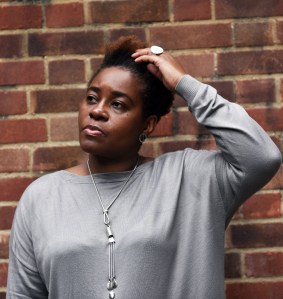
Constance Mbassi Manga
Photo credit: Ewane Nja Kwa

A French native of Cameroonian origin, she was raised multilingual and has been working in the field of language for 30+ years, in various capacities (from working as a freelance translator and interpreter, then heading her own translation agency, and later as a Team Lead/an Account Director in Marketing Communications). Moreover, she spent her childhood in a highly multilingual country (Cameroon, where over 250 languages are spoken), speaking 4 languages (2 African languages, English, French) from birth, learning a 5th (German) from the age of 10. She has always been fascinated by language practices and by the unique and powerful link that people draw between the language(s) they speak and who they are.

In terms of academic study, she was introduced to the study of multilingualism and sociolinguistics during her Masters at Kings College London; her Masters thesis focused on ‘Language Practices of Francophone Cameroonians in London.’ Since that time, she has been interested in language practices of non-European background adults in diasporic contexts, and how these tie in with ideologies of language, home and ‘belonging’.

Selected Publications:

Mbassi Manga, C. (2025). Language, home and belonging in migratory contexts: The case of Camfranglais. London: Routledge. (To be published June 10th, 2025)

Mbassi Manga, C. (2019). A case study of Camfranglais in superdiverse contexts: France, the UK and the USA. In R. Siebetcheu & S. Machetti (Eds.), Le camfranglais dans le monde global Contextes migratoires et perspectives sociolinguistiques (175-191). Paris, France: L’Harmattan.


Work for CID:
Constance Mbassi Manga is the author of KC108: Superdiversity, has translated that into French, translated KC23: Afrocentricity into French, and also has served as a reviewer for French.

Peace Direct Free Course on Conflict

Intercultural PedagogyConflict Transformation: Your Practical Toolkit for Peacebuilding, Peace Direct, Online course. Deadline: Free until August 31, 2021, available at a cost after that.

Peace Direct has launched a new course for people wanting to learn more about peacebuilding. The course is available online and is free until the end of August during the test phase. The course is self paced, and takes on average between two hours and two weeks to complete. The course can be used by peacebuilders or anyone working in conflict situations, as a practical toolkit for peacebuilding. It is relevant to people working in fields such as: human rights, development, democracy, healing and environmental sustainability as well as other areas of work related to peace. Upon completion, participants should have a greater knowledge of the practical skills and techniques required to resolve conflict and build peace successfully at a local level.

The course consists of eight modules:

  • Perspectives and values
  • Self-awareness and learning
  • Influencing through relationships: conflict and power
  • Violence, peace and healing
  • Participative conflict analysis
  • Strategy and nonviolence
  • Exploring options from ourselves to building a movement
  • Being the change

Identity, Digital Storytelling & Linguistic Citizenship (UK but Online)

Events

Identity, Digital Storytelling and Linguistic Citizenship, Hub for Education & Language Diversity, King’s College, London, UK, 22 July 2021, 15:00 BST.

This event is part of the Hub for Education & Language Diversity (HELD) summer school, July 21-23, 2021, but is open to everyone.

What is the relationship between identity, digital storytelling and linguistic citizenship? Due to advances in digital technology, there are new relations of power at micro and macro levels, and digital literacy has become essential in “claiming the right to speak.” As language learners navigate these changing times, they need to negotiate new identities, investments, and imagined futures.

In this presentation, Dr Bonny Norton demonstrates that while there are social structures that may constrain a language learner’s linguistic citizenship, digital stories in multiple languages can help these learners claim the right to be heard. Drawing on her recent research on digital storytelling in both wealthy and poorly resourced communities worldwide, she discusses how freely available digital stories in multiple languages can harness the linguistic capital of language learners in homes and schools, with exciting implications for the promotion of linguistic citizenship in communities worldwide.

Suzie Suriam Wordofa Profile

ProfilesDr. Suzie Suriam Wordorfa was born in mainland France. Her roots are in Martinique, in the Caribbean. She studied French Literature, Comparative Literature, and Linguistics in Paris before getting her Ph.D. in French and Francophone Studies at the University of Montreal.

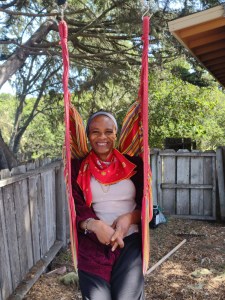
Suzie Wordofa

She has taught French/Francophone Language and Culture mostly at the college level for over 20 years. She lives in California with her family and chairs the French Department of a premium language institute.


Work for CID:
Suzie Suriam Wordofa translated KC33: Moral Conflict into French. She also has served as a reviewer for French.

I Belong (Australia)

Applied ICDI belong, a film made by the Melton City Council, Melton, Australia, to document how residents, who have come from 130 countries, are comfortable as neighbors, due to the welcoming environment.

I just love it when I see everyone gathered together and they come together and they have like different identities but they come together for one thing and that is the community event.

IAIR: Researching Intercultural Perspectives (Online)

EventsResearching Intercultural Perspectives, Problems, and Relationships Beyond the Pandemic, International Academy for Intercultural Research (IAIR), Webinar, July 12-13, 2021.

The International Academy for Intercultural Research (IAIR) Biennial Conference which was planned for July 2021 has been postponed and will now take place July 25-28, 2022. To provide a setting for our continued interaction around the important work of the Academy, instead IAIR has organized this “IAIR Webinar” during part of the original conference dates of July 12-13, 2021. Join the webinar for keynotes, awards, and future directions in intercultural research. There is no registration fee.

UNESCO: COVID and Intercultural Dialogue

“UNESCO”

UNESCO. (2020). The socio-cultural impact of COVID-19: Exploring the role of intercultural dialogue in emerging responses. Paris, France: UNESCO.

This report published by UNESCO argues that intercultural dialogue (ICD) is a substantial part of how the world responds to global challenges such as the pandemic.

[T]he emerging post COVID-19 world will be shaped by new dynamics and complex realities immersed in virtual inter-connectivity and driven by cross-sectoral engagements. To this end, the ICD agenda will have a significant role to play in developing a new socio-cultural compact that will contribute to shaping the way we live, work, connect and engage across national, ethnic and civilizational lines. (p. 15)

In addition to agreeing with the general sentiment, I was delighted to read the friendly comments about the report I prepared for UNESCO 8 years ago:

In its influential 2013 report ‘Intercultural Competencies: conceptual and operational framework‘ UNESCO approaches intercultural dialogue (ICD) as assuming ‘that participants agree to listen to and understand multiple perspectives, including even those held by groups or individuals with whom they disagree’. (p. 2)

Wendy Leeds-Hurwitz, Director
Center for Intercultural Dialogue


UNESCO: Chief of Inclusion, Rights & Dialogue Section (France)

“JobChief of Inclusion, Rights and Dialogue Section, Social and Human Sciences, UNESCO, Paris, France. Deadline: 25 July 2021.

The Inclusion, Rights and Dialogue Section supports Member States to promote inclusive policies and actions, by countering racism and discrimination, advancing intercultural dialogue and pursuing gender equality.  Under the supervision of the Assistant Director-General for the Social and Human Sciences Sector (ADG/SHS), the incumbent will be responsible for the following flagship programmes and projects:

  • UNESCO’s Roadmap on Anti-racism and non-discrimination, including its toolkit
  • Intercultural dialogue and competencies, promoting a culture of peace
  • Arts for human rights and social justice
  • The promotion of gender equality and the fight against gender stereotypes
  • The international coalition of inclusive and sustainable cities
  • The Slave Route Project
  • The right to science and scientific freedom
  • Long Description

Under the overall authority and close supervision of the ADG/SHS and reporting to the Director for Policies and Programmes (DIR/PPD) on programme management issues, the incumbent will lead the design, coordination, execution and evaluation of the programme and projects for the Inclusion, Rights and Dialogue Section.

Mary Immaculate College: EDI & Interculturalism (Ireland)

“Job

Director of Equality, Diversity, Inclusion & Interculturalism, Mary Immaculate College, Limerick, Ireland. Deadline: 13 July 2021.

Mary Immaculate College wishes to appoint a suitable candidate to the position of Director of Equality, Diversity, Inclusion (EDI) & Interculturalism on a permanent, full-time basis. This is a senior management appointment and will be made at Principal Lecturer grade.

The Director of EDI & Interculturalism will assume responsibility for the broad range of operational tasks and intra-institutional coordination necessary to deliver on the College’s Gender Equality, EDI and Interculturalism strategies. This will include Athena Swan activity, alongside other relevant aspects of gender equality work, as well as diversity, inclusion and intercultural work, and coordination of efforts to address gender-based violence and sexual harassment, within a coherent and cohesive EDI context.

Mary Immaculate College (MIC) is an autonomous, university-level, Catholic College of Education and the Liberal Arts. Founded in 1898, and linked academically with the University of Limerick, MIC is the oldest higher education institution in Limerick.