CFP CIES 2023: Improving Education for a More Equitable World (USA Hybrid)

Conferences

Call for Papers: CIES: Improving Education for a More Equitable World, 14-15 February 2022 online; 18-22 February 2023 onsite at the Grand Hyatt Washington, Washington, DC, USA. Deadline: 8 August 2022.

The Comparative and International Education Society (CIES) 2023 theme is Improving Education for a More Equitable World. Educational improvement is not merely a technical term, evidenced by the emerging, fast-growing, and interdisciplinary field of educational improvement studies. It constitutes a powerful approach and a dynamic process to advance education, through which reality and uncertainty are examined and problems are tackled. It varies across educational levels, forms, and contexts, including but not limited to equity, inclusion, diversity, quality, effectiveness, and sustainability. Each deserves stronger policy actions and more integrated theories and applications, requiring capacity- and community-building, a systemic approach, and multi-perspective inquiries.

Comparative and international perspectives are essential to fulfilling the dream of educational equity. How should we critically look at and meet desired outcomes across time and space? In what ways may micro, meso, and/or macro educational strategies, structures, and processes be improved along with their environments? How do we know through rigorous methods that we ARE making progress responsively? What changes can bring about responsible and sustainable advancement in learning, teaching, and schooling? What implications may these changes have on individual systems, contexts, and the already vulnerable planet? And how may our endeavors help redefine comparative and international education in a way that reconnects it with contextualized educational policy and practice?

CFP Journal of Transdisciplinary Peace Praxis #9

“Publication

Call for Papers for the 9th issue of Journal of Transdisciplinary Peace Praxis. Deadline: 15 August 2022. (Deadline later extended to 25 August 2022)

The next issue of the Journal of Transdisciplinary Peace Praxis (JTPP) will focus on the broad theme of social identity.
They encourage co-authored works that stretch common assumptions about what constitutes the traditional academic disciplines, looking forward to broad participation from scholars, activists, and peacemaking professionals grappling with the immense complexities of social identity in conflict.

Those interested in submitting to the journal are encouraged to frame their contributions in ways that shed light on the challenges and complex dynamics of proactively engaging actors’ social identity in social conflict. They are especially interested in academic manuscripts, books reviews, and/or shorter creative expressions which address the following sub-topics and themes:

  • The interplay between multiple social identities in change movements (e.g., women’s/LGBTQIA rights, anti-racism, and/or religious-based movements for social justice);
  • Separating and teasing out elements of culture in expressions of social identity;
  • Exploring the clashing values of competing social identities;
  • Differentiating the impacts of victim identity narratives from more positive identity constructions.

CFP Multilingual, Multicultural, Migrant & Diasporic Radio, Audio and Podcasting

“Publication

Call for Papers for a special issue of Journal of Radio & Audio Media: Multilingual, Multicultural, Migrant & Diasporic Radio, Audio and Podcasting. Deadline: 1 August 2022.

Symposium editors: Anne MacLennan (York University) and Masudul Bissau (Loyola University).

Radio connects communities regionally, nationally, and transnationally. Multilingual, multicultural, migrant & diasporic radio, audio, and podcasting connect communities within larger communities crossing boundaries and barriers. This call for papers for a symposium in the May 2023 issue of the Journal of Radio & Audio Media.

Organizers invite submission of research on the roles of multicultural, multilingual, migrant, and diasporic radio stations audio and podcasting in a multicultural society. The scope of research can be geared towards the community radio stations that serve immigrant, refugee, ethnic minority, or diasporic communities. Research on how mainstream radio stations incorporating multi-lingual programming to reach a wide range of audiences as well as diasporic podcasting and audio can fall within the purview of this special edition.

U Luxembourg: Geography PhD Studentship in Migration (Luxembourg)

“Studentships“PhD Studentship in Geography (migration, mobility, integration, asylum), University of Luxembourg, Belval, Luxembourg. Deadline: none listed; posted 5 July 2022.

The successful candidate is expected to submit a PhD thesis after 3 years under the supervision of Prof. Dr. Birte Nienaber. He/she will:

  • Conduct research in the frame of the PhD thesis
  • Write the PhD thesis in the field of migration, intra-European mobility, integration, asylum and/or reception
  • Participate in the UL Doctoral School in Humanities and Social Sciences
  • Disseminate PhD results at international conferences
  • Support teaching in the Master in Border Studies and Master in Geography and Spatial Planning
  • Publish academic articles in peer-reviewed journals
  • Perform any other task within the framework of the position

Expected from you…

  • M.Sc. (or equivalent) in Geography, Border Studies, Migration Studies, or any other related field
  • Knowledge in the field of migration studies
  • Knowledge in the field of border studies would be an advantage
  • Ability to work independently and within an interdisciplinary team
  • Experience in qualitative research methods will be an asset

As the candidate will have to work in a multilingual context, he/she must be fluent in English (written and spoken) and French or German (written and spoken).

Social Service, Daily Routine, and Intercultural Adaptation

“Associate

In addition to state (or public) primary and secondary schools, with students in my study abroad program, which ended on July 18, 2022, I visited two NGOs during our second week of study, the London Chinese Community Centre (CCC) in London’s Chinatown and the Islington Centre for Migrants and Refugees in the Islington district just north of the City of London. Our goal was to have direct exposure to how community-based organizations help newcomers in their intercultural adaptation in the U.K., as well as some of their challenges and successes in this regard.

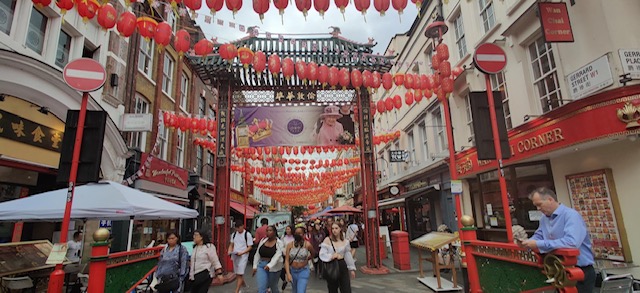
London’s Chinatown, a communal center for generations of immigrants of Chinese heritage in the U.K. (Photo credit: Casey Lum)

During the initial stage of adaptation, one of the most immediate needs of new migrants is the acquisition of services in helping them settle into their new daily routines. Such can prove to be a difficult task, especially for those who do not have a sufficient level of social or functional English. As such, community-based NGOs like the two we visited last week can play a vital role. For example, CCC routinely assists their immigrant members with legal aid for securing social services from the local government or otherwise offering a place for them to build a new social network with their compatriots.

On the other hand, the Islington Centre also regularly helps their clients, many of whom are refugees from conflict regions, with various kinds of legal aids referral services to help them address issues such as political asylum status application, as well as various other everyday life matters related to poverty or job seeking, health maintenance (some of their clients do not know how to fill their medical prescriptions), housing or homelessness, learning about their rights like all other citizens, learning their way around the city, and so on.

One of the challenges facing the staff at these organizations has to do with how, and the extent to which, they can maintain a balance between their professional obligation to their clients and their own personal emotional well-being. On the one hand, one needs to be compassionate about the lives of the newcomers – especially since many of the refugees come from conflict or war-torn regions or escape from political persecution – and many of these people are going through an extremely traumatic stage of their lives. One legal aid staff member of the Centre confided that their day rarely concludes at the end of the workday as their clients’ (at times desperate) needs do not end then.

But there also are moments of joy and great satisfaction. Many members at the Chinese Community Centre enjoy taking part in the various Chinese arts and culture events and workshops, as well as English-language classes. This has been a source of encouragement for the center’s staff and volunteers to continue with their work. An executive at the Islington Centre told us that at times they organize field trips for their clients, to visit museums or attend cultural events across London. During these field trip events and various other such social activities, they sense noticeable joy among their clients. As their clients see or learn something new, their cultural experiences allow them to begin to regain some sense of normalcy in their intercultural adaptation to an otherwise unfamiliar social landscape.

Casey Man Kong Lum, Associate Director
Center for Intercultural Dialogue

City U of Hong Kong: Media & Communication 2022 (China)

“JobChair Professor / Professor / Associate Professor / Assistant Professor, Department of Media and Communication, City University of Hong Kong, China. Deadline: 31 August 2022.

The Department of Media and Communication invites applications and nominations for faculty appointment at the rank of Chair Professor/Professor/Associate Professor/Assistant Professor beginning in January/August 2023. Specialization sought is open, with preferred areas including Mass Communication, Political Communication, Digital and Social Media, Visual Communication, Broadcast Journalism, and Marketing and Strategic Communication. The appointees will work in one of the areas described above; and are expected to conduct quality research, seek external funding, teach undergraduate and postgraduate courses, develop curriculum, supervise students, and undertake administrative and service-related activities.

Requirements: A PhD in Communication or a closely related field from a globally accredited institution. The appointees for Chair Professor/Professor should command a superb record of scholarly achievements and exert leadership in the field of media and communication. The appointees for Associate Professor should have an outstanding record of scholarly achievements in both teaching and research, a strong record in research grant and/or academic management expertise. The appointees for Assistant Professor should have a solid record of, or evidence of high promise for, scholarly achievements in both teaching and research. The appointees are expected to work well with colleagues. Preference will be given to those who are willing to teach skills-oriented courses; and possess industrial experience or particular expertise in Journalism, TV Production, Digital Media Planning, Data Analytics, Marketing and Strategic Communication, or Social Media Management.

U College London: Language and Intercultural Communication (UK)

“JobLecturer in Language and Intercultural Communication,
Department of Culture, Communication and Media, University College London, London, UK. Deadline: 28 July 2022.

The Department of Culture, Communication and Media (CCM) is a department of the Institute of Education. It is committed to excellence in teaching, research and consultancy in the areas of: Media and Cultural Studies, Art, Design and Museology; Academic writing; English Education; Applied Linguistics; Language Learning and Intercultural Communication, Music Education; Multimodality studies; Learning with Digital Technologies.

This lecturership in Language and Intercultural Communication will be located in the International Centre for Intercultural Studies and the Centre for Applied Linguistics. The newly established International Centre for Intercultural Studies promotes intellectually rigorous, practically relevant and interdisciplinary Intercultural Studies that advance understanding of the role of culture in society, education and communication and inform intercultural practices and policy.

The UCL Centre for Applied Linguistics is dedicated to research in Applied Linguistics. It has as its mission to promote IOE as a centre of international excellence in research and teaching in applied linguistics. The post holder will contribute to Masters, PhD programmes and other programmes in the Centres and to research knowledge exchange and consultancy activities in the Centres. You will play a significant role in planning and development of the International Centre for Intercultural Studies. The post holder will contribute to the advancement of scholarship in the fields of Intercultural Communication and Applied Linguistics, through publications and other research activities. You will take a part in academic policy and planning at programme, department, and institutional levels. You will teach specialist modules on the MA Intercultural Communication and MA Applied Linguistics in areas of language and intercultural communication, and language and identity.

You will have PhD in Intercultural Communication, Applied Linguistics, or closely relevant subject areas, and have a sound knowledge of key concepts, debates and challenges in Intercultural Communication and Applied Linguistics. You will also have experience of teaching at postgraduate levels and have good understanding of the learning needs of a diverse body of students.

New Voices for Europe Podcasts

Podcasts

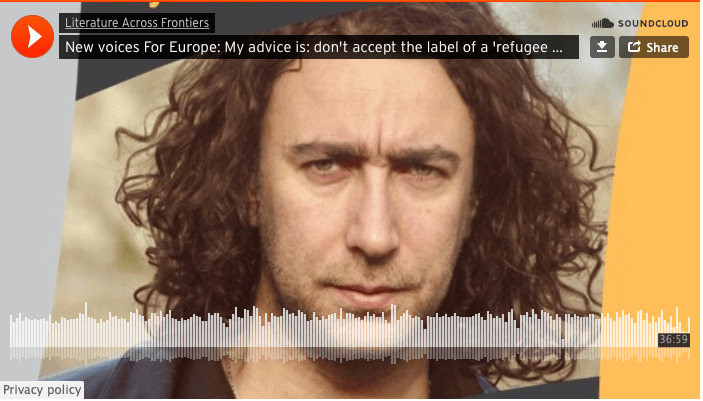
New Voices for Europe: An interview series by Literature Across Frontiers, Wales, UK. Ghayath Almadhoun

New Voices for Europe is a podcast and interview series that has emerged from the Literary Europe Live Plus (LEUL+) project with which Literature Across Frontiers (LAF) continued forging links between European literary scenes and those of other regions, something they had done for fifteen years with collaborations in SWANA (South West Asian/ North African) region. This work mostly ceased as a result of the political turmoil that in turn created a vibrant artistic diaspora in Europe. LEUL+ aimed to highlight the contribution of writers and artists who had been forced to flee conflict zones and find a home in Europe, whether temporary or permanent. Interviewees were asked to tell about their journey, personal and creative, and how they continued working in their chosen discipline in an initially unfamiliar environment. What the interviews have in common is the speakers’ admirable tenacity and perseverance in the face of the obstacles and challenges they encountered along the way. Following up from a previous project entitled New Voices from Europe, which selected and promoted emerging European writers internationally, Literature Across Frontiers chose to call this collection of podcasts and interview-based articles New Voices for Europe.

LAF, the European Platform for Literary Exchange, Translation and Policy Debate, was established in 2001 with support from the then Culture Programme of the European Union. Their aim is to develop intercultural dialogue through literature and translation, and highlight less translated literatures.

CFP Culture & COVID-19

“Publication

Call for Book Chapter Proposals: Culture and COVID-19. Editor: Nadezhda Sotirova. Deadline for abstracts: 20 August 2022.

What is the role of culture in navigating the pandemic? Despite the seemingly dissipating pandemic, and just as it might seem “things are going back to normal,” new strains and vaccine boosters continue to compete for our attention and countries around the world are once again struggling to answer COVID-19 questions. Are we going back to “normal”? How do we re-think vaccination and boosters?

The ongoing uncertainty continues to produce opposition and questioning. Some locations, individuals, and communities have had more trouble implementing and sustaining COVID-19 rules than others and a discussion as to the reason behind these occurrences soon followed. While some communities seemed to have an easier time following and dealing with the rules, others continued to struggle and rebel against both mandates and the virus itself (denial, refusals of vaccines, or even tracking local numbers, etc.).

Throughout the pandemic, the role of culture as focal in such vastly different responses has been brought up in public discussions, editorials, opinion pieces, conference presentations, and panel discussions. Even the CDC site linked to a study highlighting the part culture plays in unpacking health messages while UNESCO urged for more projects exploring the role and impact of culture on recovery.

Frequently, such discussions have focused on collectivism and cultural psychology, national culture, and mindsets but has been hesitant to make generalizations and proscribe solutions as “culture” is not easy to define, quantify, or link to specific policy outcomes. Why do some communities seem to be complying more with mandates? Which communities have more trust in science? What government structures are linked to more COVID-19 compliance? Is it about larger notions of “freedom” and individual responsibility? Or is it about who the perceived authorities are? Numerous questions with no simple or easy answers to guide mandates and policies.

The editor invites proposals from scholars who would like to contribute to an edited volume, in which a publisher has expressed preliminary interest. Prospective contributors may submit a 350-word chapter abstract, and a 150-word biography, to Nadezhda Sotirova by August 20, 2022, with decisions to be shared by October 15, 2022.

Some possible chapter themes include (but are not restricted to) exploring the role of culture in/and:

– Covid norms/regulation and peer policing/commenting
– Discursive forms and cultural norms
– Role of local conceptualizations/discourse on democracy (rights and responsibilities)
– Agency and community
– Local norms restricting/allowing Covid compliance
– Discourse of authority
– Local context’s role in compliance
– Local cultural terms related to covid
– Ethnographic explorations of covid and culture
– Role of ideology in public health
– Public health messaging and culture
– Sense-making and vaccination hesitancy
– Context and vaccination

Again, the topics are not restricted and can employ various methodologies, with focus on the role of culture. International collaboration is welcomed and much appreciated!

The volume’s audience would be:

– Scholars in cultural communication interested in culture and health.
– Upper-level undergraduates or graduate students in cultural and health communication.

Nadezhda Sotirova is associate professor of Communication, Media, and Rhetoric at University of Minnesota Morris. Her research focuses on cultural communication, identity, and migration from an ethnographic perspective. She is the author of The Cultural Communication of Emigration in Bulgaria.

American-Scandinavian Foundation: Grants & Fellowships

Grants

The American-Scandinavian Foundation offers a range of grants and fellowships intended to encourage exchanges between the United States and Nordic countries. Deadline: Each program has its own deadline.

These include fellowships for Americans for study or research in Scandinavia, fellowships for Scandinavians for study or research in the US, translation prizes for outstanding translations of poetry, fiction, drama, or literary prose written by a 20th or 21st-century Nordic author, and grants for a wide variety of programs that bring American and Scandinavian culture, art and thought to public audiences, among others.

The American-Scandinavian Foundation (ASF) promotes firsthand exchange of intellectual and creative influence between the United States and the Nordic countries: Denmark, Finland, Iceland, Norway, and Sweden (some opportunities also include Greenland, Faroe Islands, and Sámpi). A publicly supported American nonprofit 501(c)(3) organization based in New York City, ASF has an extensive program of fellowships, grants, intern/trainee sponsorship, publishing, and cultural activities.