Translation is a Place of Resting

“Intercultural Dialogue Quotes”

Cutler-MacKenzie, Kathryn. (2020, December 15). Translation is a place of resting, of being in common. Lucy Writers.


In this article, artist and art historian Kathryn Cutler-MacKenzie describes her experience during an Erasmus exchange in Paris, including this wonderful comment about translation:

Thus when we speak of the relevance of translation today, we speak of the importance of shared conversation, shifting perspectives and creating spaces of together. Translation, like collage, is conversation, across geographical and time-bound zones: it is the space between, rather than of, voices. And in translation, just as in collage, we always lose something of the original picture – we must be content in not knowing the full picture. Indeed, speaking, thinking and making between languages has taught me that what we have now is never all that there is; in other words, that we can always surprise ourselves, that change is possible, even in the most confined of settings with the most limited of tools.

Update: UNESCO Futures of Education Focus Groups

“UNESCO”

Update, UNESCO Futures of Education focus groups organized by the Center for Intercultural Dialogue.


UNESCO Futures of EducationFirst, thanks to all those who immediately responded to last week’s invitation by saying they want to participate in a focus group on this topic, and contribute ideas to the UNESCO Commission. Participation is now closed, and we’re actively organizing to hold multiple focus groups, as a way to include as many people as possible. (UNESCO requested one focus group; we’ll be giving them three.)

Second, thanks to Nazan Haydari, member of the CID Advisory Board, who has agreed to serve as one of the focus group leaders. The other two will be led by Wendy Leeds-Hurwitz, CID Director. [update: final report now posted here]

For everyone else with an interest in the topic but who was unable to respond quickly enough to participate, the following are relevant materials to read.

Publications on education produced by prior UNESCO Commissions, which serve as the background for this one:

Faure, E., et al. (1972). Learning to be: The world of education today and tomorrow. Paris: UNESCO.

Delors, J. (1996). Learning: The treasure within; report to UNESCO of the International Commission on Education for the Twenty-first Century. Paris: UNESCO.

Elfert, M. (2015). Learning to live together: Revisiting the humanism of the Delors report. Education Research and Foresight Working Papers, 12.

UNESCO. (2015). Rethinking education: Towards a global common good? Paris: UNESCO.

Materials already produced by the current Commission:

UNESCO. (2020). Visioning and framing the Futures of Education. Paris: UNESCO.

UNESCO. (2020). Education in a post-COVID world: Nine ideas for public action. Paris: UNESCO.

Social Networking, Language Learning & Intercultural Competence

“Book NotesÁlvarez Valencia, J. A., & Fernández Benavides, A. (2019). Using social networking sites for language learning to develop intercultural competence in language education programs. Journal of International and Intercultural Communication, 12(1), 23-42. DOI: 10.1080/17513057.2018.1503318

Álvarez Valencia & Fernández Benavides examine the influence of Livemocha, a social networking site for language learning (SNSLL) on the intercultural competence of undergraduates learning English in Colombia. They define intercultural competence as “a capability that enables people from different cultural backgrounds to interact, bringing into their act of sign-making their societal, cultural, and individual knowledge about the world to make possible an effective negotiation of meanings” (pp. 25-26).

They found that:

Students decentered and opened themselves to examine their own cultural practices, their own meaning-making processes, and those of other learners of Livemocha” (p. 38)

So the answer was that it had a positive influence on both attitudes and knowledge. There were some issues with what this particular chat system permitted, but overall the results were successful.

CFP World Communication Association 2021

Conferences

Call for Papers: Communicating for Our Future, World Communication Association, virtual, 12-18 July 2021. Deadline: March 1, 2021.

The theme will be Communicating for Our Future: As our world struggles with Covid-19, the importance of communication, in its myriad forms, cannot be understated. Let’s use the 2021 conference as an opportunity to share similar experiences and come together as a community.

Virtual Conference: The 2021 conference has been reimagined to be an entirely virtual conference. The WCA recognizes that Covid-19 continues to affect all of us, and we are unable to predict what effects, if any there will be in July 2021. While we know many will want to attend a conference in person, this is not possible for many reasons. Thus, we will instead be convening the WCA conference virtually.

Synchronous or asynchronous: The Association is working to facilitate a mixture of both synchronous and asynchronous presentations. More information on presentations of papers will be forthcoming on the WCA website.

Mohammed Guamguami Profile

ProfilesMohammed Guamguami is Associate Professor of English at Mohammed Premier University, Oujda, Morocco. He is also a current part-time teacher at ALC, American Language Center, Oujda.

Mohammed Guamguami

Prior to this, he was a full-time trainer at the CRMEF, teacher training center, Oujda. His doctorate is in Languages, Cultures and Communication (2015). His specializations are: English Language Teaching, Cross-Cultural Communication and Discourse Studies.

Mohammed has been a visiting scholar at several international universities: AUT, Beirut, Lebanon; DePaul University, Chicago, IL; State University of New York, NY; and IUPUI, Indianapolis, IN.

His major publications include:

Guamgaumi, M., et al. (In press). Rethinking knowledge, inquiry and learning in the big data age: Perspectives across disciplines.

Guamgaumi, M., Zeriouh, M. & Boujemâa, E. (Eds.). (2018). Culture, society and education: An interdisciplinary reader. London, UK: Dar El Maha.

Guamgaumi, M., Zeriouh, M., & Tizaoui, H. (Eds.). (2017). English for Specific Purposes: A reader. Egypt: Dar El Maha.

Guamgaumi, M., & Zeriouh, M. (2017). Moroccan cultural identity: Difference and belonging at a post-modern age. Egypt: Dar El Maha.

Guamgaumi, M. (2016). English hegemony on ICTs: Local linguistic, cultural and educational divide. Germany: Lambert.

Guamgaumi, M. (2015). Cross-cultural communication in foreign language discourse: Towards a pedagogy of culture teaching/learning in Moroccan EFL context. Germany: Lambert.


Work for CID:

Mohammed Guamguami wrote KC99: Translanguaging and translated it into French and ArabicKC100: Transcultural Communication and translated that into French and ArabicKC102: Inclusive Communication and translated that into French, and KC103: Geoculture. He is now translating earlier concepts into French; already published are KC1: Intercultural Dialogue, KC2:Cosmopolitanism, KC3: Intercultural CompetenceKC4: Coordinated Management of Meaning, KC5: Intercultural Communication, KC6: Intercultural Capital, KC7: Intergroup Relations DialogueKC8: Intercultural Dialogue, KC10: Cross-cultural Dialogue, KC11: Intercultural Discourse and Communication, KC12: Third Culture KidsKC13: Language EcologyKC14: Dialogue, KC15: Cultural Pluralism, KC16: MigrationKC17: Multilingualism, KC18: Intractable Conflict, KC19: Multiculturalism, KC21: Reflexivity, KC22: Cultural Identity, KC26: Global-Local Dialectic, KC32: Ethno-Political Conflict, KC36: Counter-narrativeKC39: Otherness and the Other(s), KC41: Yuan, KC46: Politeness, and KC49: Intersectionality. In addition, he has translated concepts into Arabic, including KC2: CosmopolitanismKC4: Coordinated Management of MeaningKC5: Intercultural CommunicationKC6: Intercultural CapitalKC7: IGR Dialogue, and KC12: Third Culture Kids. And he wrote Constructing Intercultural Dialogues #12: Transcultural Education in Context. He also participated in a CID/UNESCO focus group for the Futures of Education Initiative, and will be participating in an expert group organized by the Center.


Durham U: International & Comparative Education (UK)

“Job

Assistant Professor in International & Comparative Education, School of Education, Durham University, Durham, UK. Deadline: 12 February 2021.

The School of Education at Durham University seeks to appoint a talented individual to the role of Assistant Professor in International and Comparative Education. Most welcome are applications from those with research and teaching interests that are aligned with the International and Comparative Education research cluster within the School.

Research in this cluster draws together the expertise from the extensive and varied international dimensions of educational research from across the department. The cluster centres on multidisciplinary, international and intercultural research which positions educational issues in an international and comparative framework. The cluster engages with methodological, epistemological and theoretical projects which advance understandings of educational issues through international and comparative lenses. Social, spatial and linguistic inequalities are central to the synergies of this group, including explorations around relational educational inequalities between the ‘Global North and Global South’.

Researchers collaborating in this cluster recognise the multiplicity of individuals’ languages, cultures, identities, histories. The collaborations in the cluster foreground youth participation, engagement and responsibility for social justice, both locally and globally. A broad range of projects across the department involve international and comparative methodologies with sites of exploration and collaboration including China, South Africa, Jordan, Brazil, Columbia, Mexico, Turkey, Australia and many contexts across Europe.

The researchers in the cluster draw on a range of perspectives in international education and comparative methodologies. This includes large scale national and international comparisons as well as research that foregrounds socially constructed, dialogic, experiential and reflexive approaches to research and learning, and approaches that give voice to people from marginalised communities, particularly around experiences of migration and mobility. Intercultural education and the role of language, culture, identity and belonging are an integral part of the cluster.

SUSTech: Junior Fellowships (China)

Postdocs10 Postdoctoral Fellowships, Society of Fellows in the Liberal Arts, Southern University of Science and Technology (SUSTech), Shenzhen, China. Deadline: February 15, 2021.

The Society of Fellows in the Liberal Arts at Southern University of Science and Technology (SUSTech) invites applications for Junior Fellowships in the social sciences and humanities. These postdoctoral fellowships aim at fostering the academic careers of scholars who have recently received their Ph.D. degrees by providing a competitive package and membership in an interdisciplinary scholarly community.

The Society will select a cohort of up to ten Junior Fellows for the class of 2021. Those selected will be offered a two-year postdoctoral appointment beginning in September 2021. Fellowships are awarded to recent Ph.D. recipients in the humanities and social sciences who have demonstrated intellectual excellence and the potential for outstanding academic achievement.

Junior Fellows are expected to devote their time to productive scholarship, focusing on publishing their dissertation research, undertaking new research in accordance with their proposed project, and engaging in other original work that will further their academic careers. The Society aims to foster teaching excellence in the humanities and social sciences, and the fellowships carry with them a teaching responsibility of four 2-credit courses over the two-year period, one course per term.

Junior Fellows are required to be in residence during the fall and spring academic terms, and to attend all of the Society’s activities. They are also encouraged to regularly participate in events (such as seminars, workshops, and lectures) organized by the School of Humanities and Social Sciences, and other departments and programs at the University. Junior Fellows are appointed for two years, and no extensions are granted.

Embedding Intercultural Fluency Training in Diversity, Equity and Inclusion Transformation 

EventsEmbedding Intercultural Fluency Training in Diversity, Equity and Inclusion Transformation by Nitin Deckha, SIETAR Tri-State group, January 27, 2021, 11 am EST.

The SIETAR Tri-State group has organized another webinar, and CID followers are invited to participate. The webinar learning objectives are:

  • Compare and contrast how intercultural fluency training objectives relate to those of diversity, equity and inclusion.

  • Distill how key intercultural concepts, such as ethnocentrism, cultural worldviews, conflict styles, communication styles, and others can intersect with diversity, equity and inclusion frameworks.

  • Assess how intercultural fluency can be better aligned with organizational equity and inclusion policies and frameworks.

  • Devise strategies to embed intercultural fluency training into workplace diversity, equity and inclusion transformation.

Janny Leung: COVID-Sensitive Kanji

Guest Posts

COVID-Sensitive Kanji. Guest post by Janny H. C. Leung.


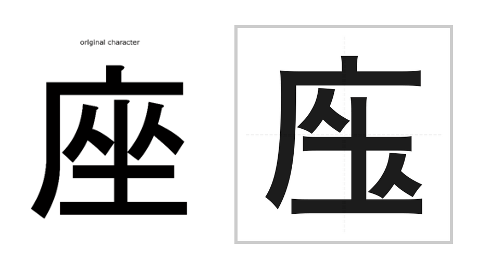
New words or phrases, such as covidiot and Zoom fatigue, cropped up in the English language in the past year as a creative response to the pandemic. Yet, the most Covid-complaint neologism may be found in a non-alphabetical language. The winner of the 11th round of the Sousaku Kanji Contest is a redesigned character that separates the two persons (人) in a seat (座) to make sure that they comply with social distancing measures in 2020.

old and new kanji

Download the entire post, which includes discussion of several other kanji, as a PDF.

CFP M/C Journal: Zoom (Australia)

“Publication Opportunities

Call for Papers: Special issue on “Zoom” for M/C Journal (A Journal of Media and Culture). Deadline: April 16, 2021.


On 9 March 2020, just two days before the World Health Organization would name the COVID-19 outbreak a global pandemic, Italy declared a nation-wide lockdown. Over the following weeks, cities, states, and nations around the world would do the same, dramatically changing the social landscape for millions of individuals. Overnight, it seemed, Zoom became the default modality for remote engagement, rapidly morphing from brand name to eponymous generic—a verb and a place and mode of being all at once. In an era of COVID-19, our relationships and experiences are deeply intertwined with our ability to “zoom.”

This issue of M/C Journal will explore the impacts and implications of Zoom and other teleconferencing platforms one year after the start of the COVID-19 pandemic. Editors seek a wide range of submissions that will explore how a simple, four letter word has come to encapsulate a distinct moment in human history. How do we Zoom, and why?