EPRIE 2017: Migration, Integration & Belonging (South Korea & Japan)

Applications are being accepted for participation in EPRIE 2017: ‘Migration, integration, and belonging’, to be held from June 21 to July 3 in East Asia (South Korea and Japan).

As an intercultural exchange program, EPRIE (Exchange Program for Regional Integration in East Asia and Europe) aims to contribute through enhanced dialog to improving cooperation among neighboring countries in East Asia and Europe, and to support the process of integration in each region. By strengthening transnational relations, EPRIE shall actively contribute toward promoting international understanding.

Participants will compare historical developments before and after the Second World War, examine the political and social dimensions of mutual relations, and analyze relevant regional cooperation and challenges. Each topic will be dealt with various perspectives and will be presented with the assistance of specialists from the field of politics, economics, academia and media.

In addition, key competencies in intercultural cooperation will be mediated. Through intensive collaborations at the seminar, a network will be created that shall seek to serve long-term cooperation.

Organizer is the Korea Verband e.V., a politically independent association based in Berlin.

Eligibility

Target groups are young people aged between 25 and 35 years from Europe (mainly France, Germany, Poland) and East Asia (mainly China, Japan, Korea). Program participants will include young professionals, and postgraduate students in Master and Research degrees from the field of Area Studies as well as from the disciplines of History, Social and Communication Sciences, among others.

Application deadline will be on Sunday, March 26, 2017

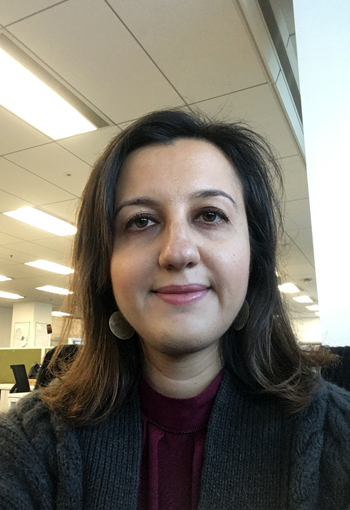
Gizem Arat Profile

ProfilesGizem Arat is Research Assistant Professor in the Department of Sociology and Social Policy at Lingnan University, Hong Kong.
Gizem Arat

She earned her PhD degree from the University of Hong Kong in Social Work and Social Administration. She has been a Post-doctoral fellow at the University of Hong Kong, working on the promotion of social inclusion of ethnic minority youth.

Prior to her Ph.D. journey, she obtained her MSW from the University of Pittsburgh, in the School of Social Work. After her MSW degree, she was passionate to expand her knowledge of Eastern settings to gain a dual perspective (East and West) on social work. Her current research areas include the promotion of social justice and social harmony, positive youth development, and resilience in ethnic minority youth in Asian and global contexts. She is interested in hiking, exploring new cultures and meeting new people with diverse backgrounds.

Recent Publications:

Arat, G., & Kerelian, N. (2019). The promotion of socially inclusive East Asian society: The Hong Kong caseJournal of Human Rights and Social Work. doi: 10.1007/s41134-019-00107-y

Arat, G., & Kerelian, N. (2019). Reshaping the social work education system towards cultural competency: The Hong Kong case. International Social Work, 62(1), 316-329. doi: 10.1177/0123456789123456

Arat, G., & Wong, P. W. C. (2019). Commentary on: How schools enhance the development of young people’s resilience, Ungar, Connelly, Liebenberg, and Theron, 2017. Social Indicators Research, 143(1), 319-324. doi: 10.1007/s11205-018-1971-7

Arat, G., & Wong, P. W. C. (2018). Integrating resilience and positive youth development for the promotion of positive health behaviours among ethnic minorities: A conceptual framework. Asia Pacific Journal of Social Work and Development, 28(4), 250-263.  doi:10.1080/02185385.2018.1502679

Arat, G., Hoang, A. P., Jordan, L. P., & Wong, P. W. (2016). A systematic review of studies on ethnic minority youth development in Hong Kong: An application of the ecological framework. China Journal of Social Work9(3), 218-237. doi: 10.1080/17525098.2017.1254716

Arat, G., Liu, L. L., & Wong, P. W. C. (2016). Culturally relevant protective and risk factors of youth risk behaviors among Pakistani and Indian students in Hong Kong: A focus group study. Journal of Transcultural Nursing. doi: 10.1177/1043659616668397


Work for CID:
Gizem Arat co-authored KC79: Social Cohesion.

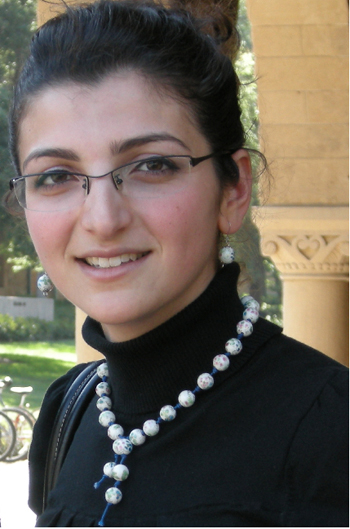
Narine Nora Kerelian Profile

ProfilesDr. Narine Nora Kerelian is a Lecturer with the Department of Asian and Policy Studies (APS) of the Faculty of Liberal Arts and Social Sciences (FLASS) at The Education University of Hong Kong (EdUHK).

Narine Kerelian

In addition to holding a PhD in Social Sciences from The University of Hong Kong, she is certified in intercultural theory and foundations. Dr. Kerelian obtained her MA in International Policy Studies from the Middlebury Institute of International Studies at Monterey, and her BA in Global Studies and French (Honors) from the University of California, Santa Barbara.

Dr. Kerelian’s research interests lie at the intersection of migration and social policy, with a focus on global cities in Asia. Her dissertation explores the sense of place of young transmigrant professionals in Hong Kong through transmigrant lived experience accounts, providing insights for talent mobility, migrant incorporation, and global city formation.

Dr. Kerelian has studied, worked and lived in the United States, Europe, and Asia. She has traveled to over 35 countries and enjoys seeing new places and trying new cuisines. She is fluent in Armenian, English and French.

Selected publications:

Arat, G., & Kerelian, N. N. (2019).The promotion of socially inclusive East Asian society: The Hong Kong case. Journal of Human Rights and Social Workhttps://doi.org/10.1007/s41134-019-00107-y.

Kerelian, N. N. & Jordan, L.P. (2018). Together separately? Young transmigrant professionals in ‘Asia’s World City’. Applied Mobilities, 1-20. Doi: 10.1080/23800127.2018.1426521.

Arat, G., & Kerelian, N. N. (2017). Reshaping the social work education system towards cultural competency: The Hong Kong case. International Social Work, 1-14. Doi: 10.177/0020872817725133.

Kerelian, N. N. (2016). Placing diversity: Graduate encounters with group work. Social Work with Groups, 1-6. doi:10.1080/01609513.2015.1065385

Kerelian, N. N., & Jordan, L. P. (2016). The highly-skilled in Hong Kong ‘Asia’s world city’ In Q. Xu & L. P. Jordan (Eds.), Migrant workers: Social identity, occupational challenges and health practices (pp. 191-212). New York: Nova.


Work for CID:
Narine Nora Kerelian co-authored KC79: Social Cohesion.

Royal Roads University & Cultural Identity 2016

I spent July, August and September 2016 teaching a graduate seminar at Royal Roads University, located in Victoria, BC, Canada, as part of their Master of Arts in International and Intercultural Communication (MAIIC) for the second time (the first time was described a year ago). The course was Contemporary Issues in Communication: Cultural Identity. The 39 students came from China, Nigeria, India, France, Senegal/France, Japan, Korea, Vietnam, Jordan, Brazil, the US, and Canada.

Near the end of the course, there was a banquet for students in the program, and many photos were taken, including one with those faculty, staff and administrators who were present. We took another the last day of class. None of these includes everyone.

This slideshow requires JavaScript.

Students worked on a major course project on the social construction of migration in the public sphere. Each one looked at a different part of the story – I hope to upload some of their results in later posts.

While at RRU, I arranged for an intern for CID, Min He. She started her work as Assistant to the Director on October 3, 2016.

I also was asked to supervise a doctoral dissertation in Interdisciplinary Studies, and have started working with Liton Furukawa on her project. An international student herself, she will examine the transition international students make after graduation (when Canada offers them a 3 year residency permit) to being international workers.

My thanks to Juana Du, program head of the MAIIC, for again inviting me to her beautiful campus to work with an incredible group of students!

Wendy Leeds-Hurwitz, Director
Center for Intercultural Dialogue
intercult.dialogue[at]gmail.com

CFP Refugees and Work

The ESPMI Network is pleased to announce a call for submissions for the third volume of the Refugee Review. The Refugee Review, a publication of the ESPMI Network, is an open access, peer-reviewed e-journal that features a range of submission styles as contributed by scholars, practitioners, activists, and those working and studying within the field of forced migration. The Refugee Review platform, based at no particular institution and tied to no particular location, offers a unique publishing opportunity for those in the early stages of their work and careers, as well as for established scholars that support this mission. Those who submit can expect dialogue with the ESPMI’s e-journal team throughout the publishing process, and are encouraged to work with ESPMI to strengthen and promote the e-journal in the spirit of open scholarship and collaboration. While we support the opinions and perspectives that all contributors may have, ESPMI has a commitment to equity, respect and honouring the dignity of all persons, and accordingly, we may reserve the right to refuse, or request amendment of, any submissions that we believe may degrade the dignity of a particular group.

Refugee Review: Refugees and Work
Deadline for Abstract Submissions: October 7, 2016

Submit to: refugeereview@gmail.com. Please send questions to the same address.
Please remember to state clearly in the subject line what kind of submission you are sending and include 5 – 10 key words. Submissions should be no longer than 400 words.

2016 Call for Submissions – Download the PDF here.

In the past year the issue of refugees and forced migration has taken centre stage in public discourse of many countries from extensive coverage of multiple ongoing humanitarian crises to a growing populist backlash that has taken several regions by storm. Despite the high level political and media interest in the topic, many aspects are left to be discussed and many academic stones remain unturned. We invite submissions of abstracts for three different categories: academic articles, opinion papers and practitioner reports, and multimedia submissions (please see below for a description of each type.) Regardless of the submission type, the topic should relate primarily to refugees and forced migration. We welcome new approaches, preliminary results from field research and multidisciplinary research pertaining to all aspects of refugee studies, including changing legal standards, gaps in protection, regional case studies, gender-related aspects, and policy responses.

Recent years have seen large influxes of refugee arrivals in many countries, eliciting substantial debate on rights and protection needs of refugees and asylum seekers. In some countries populist discourse positions refugees as a threat to economic security, while other countries put labour restrictions or requirements onto arriving refugees. To further this discussion from a more nuanced perspective, for this issue we are particularly interested in receiving submissions on the topic “Refugees and Work.” Examples of research themes: Are long-term labour restrictions for refugees and asylum seekers legal under international law? How do refugee movements relate to and create informal labour markets? How do refugees negotiate and/or integrate into the labour market of host societies? How may the right to work be positioned for rejected asylum seekers, or those seeking refuge in countries identified as transit nodes? How may one complicate the binary between ‘economic migrant’ and ‘refugee’? In what ways do media discourses on refugees pose them as threats to working class jobs? We encourage critical perspectives that take race, class, and gender into account.

Submission Categories:

We recognize and value the multidisciplinary nature of forced migration studies, and therefore encourage submissions from across various disciplines—including but not limited to political science, law, anthropology, ethics and philosophy, sociology, economics, public health, and media studies. You may submit to any submission category, regardless of where you locate your study or practice. Please identify which submission category your piece is being submitted under. We encourage you to consider the range of submission styles available in this Call for Submissions during the development of your piece and structure/develop your submission accordingly. We require all contributing authors to submit an abstract for review prior to submission of a complete piece. You will be informed of the acceptance of your abstract within two weeks, after which time you have six weeks to complete and submit your final piece.

Submissions will go through a peer review process and those selected will go through a peer editing process before publication. The editing team may, when deemed appropriate, move your piece to a different submission section (for example from the Academic Article section to the Opinion Piece section) if they feel it is better suited to another category.

Read Refugee Review Volume ll

IDEA CAMP 2017: Moving Communities

European Cultural Foundation (ECF)
IDEA CAMP 2017: Moving Communities

What’s the Idea Camp?
ECF’s Idea Camp is a three-day collaborative working platform organised within the framework of Connected Action for the Commons, a network and action research programme led by ECF together with six cultural organisations from across Europe.
• The Idea Camp 2014 took place in Marseille, France and focused on the topic “Connected Action for Public Space”.
• The Idea Camp 2015 took place in Botkyrka, Sweden under the theme “Build the City”, applying the principles and ethics of the commons.
• The Idea Camp 2017 will take place in Spain on 1-3 March 2017 and will focus on the theme “Moving Communities”.

ECF believes in bold alternatives provided by citizens through their local cultural initiatives. At this time of transition, ECF invests in these local initiatives to help them to become enduring solutions to the challenges facing our continent. Europe as a shifting ‘home’ of changing communities – where people can live together in solidarity, accepting their differences – is an urgent priority in ECF’s focus over the coming years.

Moving Communities
We are living and working in an increasingly complex environment. Across Europe and its neighbouring countries, more and more people are confronted with discrimination and exclusion on a daily basis – whether economically, politically or culturally. As a result, societies are becoming more and more fragmented, extremism is on the rise, and the divisions between people – and between individuals and institutions – are growing ever wider.

Migration, distrust towards traditional institutions and the widening gap between the idea of a democratic Europe and the reality of a divided continent are among the biggest challenges that we are facing at present. These challenges are not new, but they have reached a degree that directly affects existing systems and policies, both at national and European levels.

Entitled “Moving Communities”, ECF’s third Idea Camp will focus on the current positive, radical resistance movements that are daring to counteract anti-democratic practices.

Co-hosted by Platoniq, the Idea Camp will take place in Spain from 1 to 3 March 2017 and will bring together 50 participants whose emerging, groundbreaking ideas demonstrate a firm desire to contribute to fostering political imagination, building bridges and effectively contributing to the development of a society with a stronger sense of social justice. Based on the values of sharing, inclusion and openness, the Idea Camp offers Idea Makers a unique opportunity to meet peers from diverse backgrounds and with different visions from across Europe and its neighbouring countries.

Quick links
Idea Camp 2017 application guidelines
FAQ
• About Connected Action for the Commons
• A general introduction to the Idea Camp
• Previous editions: Idea Camp 2014 and 2015
• R&D grantees 2014 and 2015
Info pack to help ECF share this call

International Metropolis Conference 2016 (Japan)

On 7 November 2014, the Steering Committee of International Metropolis in Milan made the decision that the 21st International Metropolis Conference (IMC) be held in Aichi-Nagoya on October 24-28, 2016. On 7 September 2015,  Aichi-Nagoya was confirmed as the venue of the International Metropolis Conference after Mexico City.

In the meantime, migration and integration have become one of the most crucial issues in the international society as a result of refugee crisis in Europe and Middle East. Now we really need global discussions not only at the level  of  political summit, but on a broader basis including practitioners, policy makers and researchers. Furthermore, it is necessary to involve Asia when we discuss about such global agenda.

Therefore, it is of great  significance that  the International  Metropolis Conference takes  place for the first time in Asia. This is of great significance to the International Metropolis Project too, and we hope that our discussions in Aichi-Nagoya will enlighten and enliven the migration policy discussion in Asia and contribute to the global discussion.  We hope also to strengthen the Metropolis network throughout Asia and to motivate increased collaboration between migration scholars, policy makers and practitioners in the region and their counterparts in North America, Europe, and beyond.

Creating Trust through Wisdom on Migration and Integration 

Main Themes :
・Refugee protection: Our most pressing migration dilemma
・Managing global risk: migration in situations of crisis
・Creating Trust through Wisdom: Co-development and migration in East Asia
・Migration, trade, and diaspora: Engines for  economic integration
・Asia’s demographic precipice: Migration, technology, and greater workforce participation
・Inclusive development: a new perspective on immigrant integration
・When internal and international migration meet:best practices for cities
・Comprehensive migration policy-making for a   re-vitalized Japan

Workshop submission deadline
Proposals can be submitted starting February 15, 2016 through the website.
The deadline is midnight, July 30, 2016 (Japan time).

Save

PhD Studentship: Migration, Refugee & Global Curriculum (UK)

Migration, refugee and global curriculum in the 21st century: an interdisciplinary response at Key Stages 2 & 3
University of Sheffield – School of Education, Faculty of Social Sciences
Closes: 6th March 2016

The School of Education is advertising a funded ESRC PhD White Rose Collaborative Studentship based at the University of Sheffield and Development Education Centre South Yorkshire (DECSY) and seeks to attract high quality applicants. In 2014, the School was ranked first for research impact, and fourth overall in Education in the UK. Ninety-four percent of our research was ranked 3* and 4*, making us the leading School of Education in the UK. The successful applicant will join a collaborative research environment that supports world-leading and internationally excellent research.

The aims of the PhD are to: a) investigate ‘Promoting British Values’ (PBV) policy and the global school curriculum in Humanities subjects at Key Stages 2 and 3 amongst recently arrived and established migrant students, their parents and teachers and b) conduct participatory research with students, parents and teachers to co-construct curriculum units for anti-racist global curriculum.

With changing patterns of global migration, the ethnic diversity of schools increases and intercultural relations become a pressing issue for teachers. Eurocentric perspectives dominate the English school curriculum (Lambert and Morgan, 2011; Harris, 2013; Winter, 2015) and whilst Gillborn illuminates institutional racism in schools (2008, 2015), recent ‘Promoting British Values’ (PBV) policy raises concerns about inciting Islamophobia (Richardson, 2015). This studentship investigates curriculum policy discourses of nationhood, national and global identity (Anderson, 1991) and the emergence of new ‘cultural hybridities’ (Bhabha, 1994) through Geography, History and Religious Education (RE)/Citizenship curricula in case study multi-ethnic schools.

A questionnaire survey will be administered to parents of KS2 and 3 students in a sample of multi-ethnic schools in 3 English Local Authorities (LA). The questionnaire will focus on parents’ views about global learning; perspectives on PBV policy and topic suggestions for curriculum development. Semi-structured focus group interviews will be conducted with KS2 and 3 students in three case study primary and two secondary schools. Interviews will be held with Humanities teachers and in a sample of case study classes, students, parents, teachers and PhD student will develop the curriculum.

The main collaborator is DECSY, with inputs from the Geographical (GA) and Historical Associations (HA).

Supervisors:
Principal supervisor: Dr Christine Winter, School of Education, University of Sheffield
Co-Supervisors: Dr Louise Waite, School of Geography, University of Leeds and Mr Rob Unwin, DECSY, Sheffield.

Enquiries:
Interested candidates should, in the first instance, contact Dr Christine Winter.

Entry requirements and eligibility criteria:
• White Rose DTC ESRC awards are only available to nationals from the UK and EU and are not open to applicants who are liable to pay academic fees at the international fee rate.
• Applicants must hold at least a UK upper second class honours degree or equivalent
• Applicants should hold or be eligible for DBS approval
• This project is suitable for a candidate with an academic background in Education; Cultural Geography; Cultural/Postcolonial Studies; Geography, History, Religious Studies or Citizenship, Language and Literacy Education. The following experience would be an advantage: a) PGCE and teaching experience in English primary/secondary school classrooms b) teaching experience with NGO/INGO educational programmes c) school curriculum development experience d) community-based third sector educational experience.
• The successful candidate would need to travel regularly to participating schools.
• UK applicants will be eligible for a full award (paying fees and maintenance at standard Research Council rates). EU applicants are normally eligible for a fees only award, unless they have been resident in the UK for 3 years immediately preceding the date of the award.

How to apply.

Statelessness and Transcontinental Migration conference (Spain)

‘Statelessness and Transcontinental Migration’
UNU-GCM’s Second Conference

UNU-GCM is organizing its second conference on ‘Statelessness and Transcontinental Migration’, on 24th and 25th July 2014. It will include five sections addressing issues of: citizenship, human security, urban vulnerabilities, non-state actors in migration management and sub-Saharan migration to the Mediterranean. Alongside the academic discussions, non-academic events will address statelessness through artistic production and activities.

This conference focuses on a range of issues related to the wellbeing and recognition of people who traverse continents devoid of citizenship. Issues related to refugees remain crucially unanswered in debates and policies surrounding migration. In the wake of acknowledgement within the academy that it is not always possible to isolate refugees from migrants, this conference analyses a range of contexts where dignity and human rights are compromised through the absence of legal and political recognition. By focusing on situations of extreme vulnerability and on lives lived on the borderline, this conference seeks to articulate and address urgent needs with regard to the stateless migrants who have entered Europe.

Keynote speakers:
Professor Eduard Sagarra iTrias, ‘The Necessity of Immigration in the Globalized World’, President of the United Nations Associations of Spain (ANUE), Barcelona / University of Barcelona
Professor Khadija Elmadmad, ‘Statelessness and Migration: The Case of de facto and de jure
stateless children in Morocco’, Director of The UNESCO Centre, The Law and Migration (CUDM)

Mob-ility symposium (Italy)

Mob-ility Symposium
Wake Forest University
October 10, 2014
Casa Artom, Venice, Italy

Submissions due July 31, 2014

The story of Camillo Artom is one of mobility, the theme of the Mob-ility Symposium, to be held on October 10, 2014. The Symposium is an opportunity to reflect on the movement of persons, ideas, traditions, goods, and the political, social, and cultural ramifications of mobility, as they relate to the changing practices in travel, the environment, social-economic status, and technology.

These often include, but are not limited to, discussion of citizenship, immigration, diasporas, belonging, and place. Specifically, the Symposium invites a focus on the people who move (the ‘mob’ in mobility): migrants, travelers, tourists, temporary citizens, and asylum seekers, refugees, stateless people. Venice is a perfect site for the ‘Mob-ility Symposium’ as a historic trade city, a merchants’ harbor where people have always come and gone.

Keynote speaker: Dima Mohammed, a Palestinian argumentation scholar who is currently working at the Argumentation Lab of the Instituto de Filosofia da Nova at the Universidade Nova de Lisboa, Portugal. Her domain of specialization includes argumentation theory, philosophy of language, persuasion research and political philosophy.

Invited: papers, paper abstracts, discussion panels, and encourage creative submissions related to all aspects of mobility, including:
*Migration, immigration, emigration
*Diaspora, exile, refuge, asylum
*Citizenship rights, nationality, borders
*Socio-economic status
*Travel, transportation
*Technology, mobile modes of communication
*Environment, sustainability
*Security, surveillance

Papers must not exceed 25 pages and must include a title, the author’s/s’ affiliation, and contact information. Paper Abstracts must not exceed 2 pages and must include a title, the
author’s/s’ affiliation, and contact information. Discussion Panels or Performances/Creative Expressions must include a 250-word rationale, a 250-word abstract of each proposed paper or contribution, and a list of presenters with affiliation and contact information.

Submissions from faculty, students, artists, activists, practitioners, and community members are all encouraged. Thanks to the Provost’s Office for Global Affairs, the Symposium is free and open to the public. Space is limited.

Send/Email all submissions to:
Alessandra Von Burg
Department of Communication
Box 7347, Reynolda Station
Wake Forest University
Winston-Salem, NC 27109