Call For Papers
(Deadline for submissions: 31st December 2014)
International Conference on
Intercultural Competence in Communication and Education (ICCEd-2015)
8-9 April 2015
Presented by the Faculty of Modern Languages and Communication,
Universiti Putra Malaysia, Serdang, Selangor, Malaysia
In cooperation with the Department of Teacher Education, University of Helsinki, Finland and the Helsinki School of Interculturality
Plenary speakers:
*Adrian Holliday, Professor
University of Canterbury Christ Church, United Kingdom
*Fred Dervin, Professor
University of Helsinki, Finland
*Ingrid Piller, Professor
Macquarie University, Australia
*Ezhar Tamam, Professor
Universiti Putra Malaysia
About the Conference
Contradictorily the concept of intercultural competence is both polysemic and empty at the same time. Researchers, practitioners but also decision makers use it almost mechanically without always worrying about its meaning(s), the ideologies it represents, the impact(s) it has on those who are embedded in its discussions and the injustice it can (too easily) lead to such as neo-racism. A few ‘usual suspects’ – mostly derived from English-speaking researchers/practitioners who enjoy prestige thanks to the symbolic violence of English as a World Language and/or prestigious supranational support – whose work is systematically (and uncritically) mentioned have often managed volens nolens to keep mainstream global understandings of intercultural competence simplified, fuzzy, idealistic and/or unrealistic. For example the ‘faulty’ keywords of culture, tolerance and respect are still present in discussions of intercultural competence.
This call for papers is interested in new, critical and original discussions and approaches to intercultural competence that go beyond these problematic ‘macdonaldised’ models and ‘reinventing the wheel’ perspectives. The conference is interdisciplinary and covers the ‘broad’ fields of communication and education.
The organisers are looking for contributions which are questioning the most ‘influential’ models of intercultural competence and/or who have attempted (un)successfully to develop new understandings and models of intercultural competence. The organisers wish to promote the idea that failure is also inherent to intercultural competence. The question of assessment can be touched upon but the idea that intercultural competence can be summatively assessed should be abandoned. The organisers consider intercultural competence to be synonymous with multicultural competence, cross-cultural competence, global competence, etc. as these labels are also unstable and have many different meanings.
The organisers are especially interested in fresh perspectives from all parts of the world. Historical/diachronic papers ‘denouncing’ reinventing the wheel approaches as well as alternative methods and approaches are very welcome (e.g. use of bodily experiences).
The following themes (among others) can be dealt with:
– What’s wrong with current approaches? What mistakes have been made in the past and today – especially from researchers’ perspectives?
– What are the myths around the concept of intercultural competence?
– Is the idea of intercultural competence a thing of the past? How does it compare to intracultural competence (if such a thing exists)?
– Can the idea of intercultural competence be really useful for conflictual situations? How can we explain conflicts – which are necessary – beyond the usual suspect of cultural difference?
– What can we do with old and tired concepts such as identity, culture and community when we talk about intercultural competence?
– How is Intercultural competence understood/taken into consideration in the context of Arabic/English/French/Mandarin… as a lingua franca?
– How do students and e.g. mobile students understand intercultural competence? What seems to influence them?
– How is the ‘teaching’ of intercultural competence implemented in second/foreign language classrooms? Does it echo the teaching of intercultural competence in communication/ management and vice versa?
– (How) can we move from an individualistic approach to intercultural competence to interactive and co-constructivist ones?
– With increasing use of digital technologies, how does intercultural competence fare?
– Can neurosciences contribute to renewing the idea of intercultural competence? What about art, music, etc.?
Proposal submission
We invite scholars and professionals to submit proposals (in English) before 31st December 2014. Abstracts should be submitted by email. Please embed your abstract in the body of your message – no attachment!
Paper and colloquia proposals are invited.
1 Individual paper proposals (200-300 words; duration: 30 minutes including a twenty-minute presentation, with an additional ten minutes for discussion).
2 Colloquia proposals (200 words for the colloquium concept and 200-300 words on each paper, duration: 3h, max. 5 participants – conveners and discussant included)
Please note that only one paper per person can be submitted.
Abstracts will be reviewed by the scientific committee for originality, significance, clarity and academic rigour. Decisions about the submitted papers: 15 January 2015
International publications will report on the conference in 2016-2017 (information forthcoming).
Registrations fees:
Early bird (by 31 January 2015):
• Local presenters/participants: RM400
• Local students: RM250
• International presenters/ participants: US175
• International students: US145
Registration (1 February- 1 April 2015):
• Local presenters/ participants RM500
• Local Students: RM350
• International presenters/participants US220
• International students: US190
Partners:
• Faculty of Modern Languages and Communication, Universiti Putra Malaysia
• University of Helsinki, Finland
• Helsinki School of Interculturality, Finland
Scientific Chairs and Chairs of the Organizing Committee:
• Chairperson: Dr. Régis Machart, Universiti Putra Malaysia, Serdang, Selangor, Malaysia
• Deputy Chairperson, Head of the Scientific Committee: Prof. Fred Dervin, University of Helsinki, Finland
International Scientific Committee:
• Andreotti Vanessa, University of British Columbia, Canada
• Baker Will, University of Southampton, UK
• Barbot Marie-José, University of Lille, France
• Brunila Kristiina, University of Helsinki, Finland
• Byrd Clark Julie, University of Western, Canada
• C. K. Raju, Albukhari International University, Malaysia
• Du Xiangyun, University of Copenhagen, Denmark
• Holmes Prue, Durham University, UK
• Kaur Jagdish, University Malaya, Malaysia
• Kyeyune Robinah, Makerere University, Uganda
• Phipps Alison, University of Glasgow, UK
• Risager Karen, University of Roskilde, Denmark
• Skyrme Gillian, Massey University, New Zealand
• Trémion Virginie, Catholic University of Paris, France
• Tushar Chauduri, Hong Kong Baptist University, Hong Kong
• Wolf Alain, University of East Anglia, UK
• Zotzmann Karin, University of Southampton, U

 Ramin Hajianfard (Ph.D., International Islamic University of Malaysia) is senior lecturer in Art & Design at the University Pendidakan Sultan Idris, in Selangor, Malaysia.
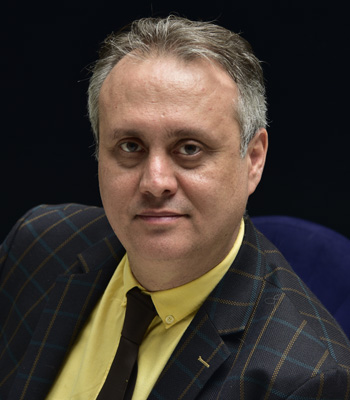 His main area of research is on Mughal miniature painting, with a secondary emphasis on interfaith dialogue during the Mughal Empire of India. His MA was on peace painting, resulting in the following article:
 Center for Intercultural Dialogue