University of Macau

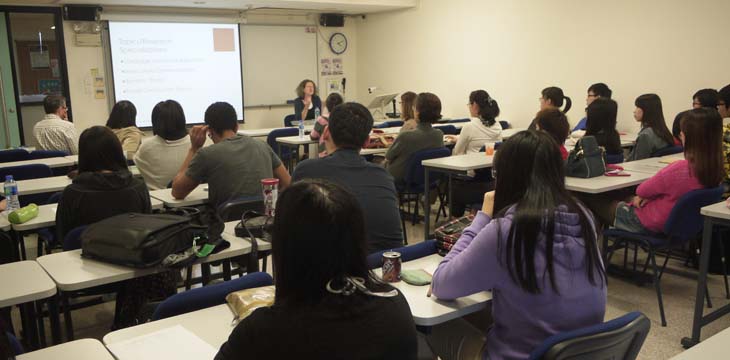
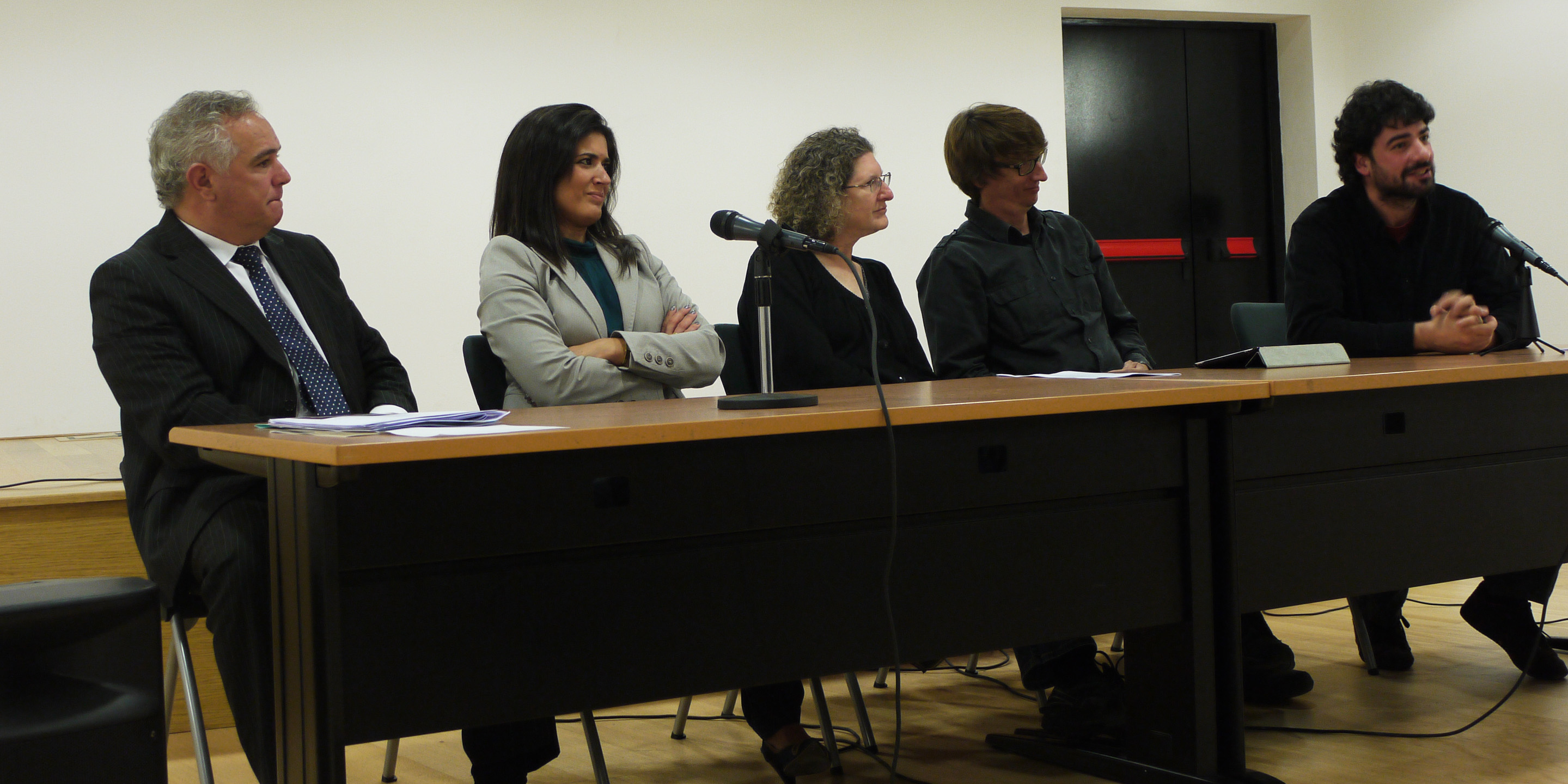
On April 15, 2013 I gave a talk entitled: “Asking cultural questions: Using ethnography to answer questions about cultural identity” for the Department of Communication at the University of Macau. The topic and case studies provided were related to my research.

UMacau-class

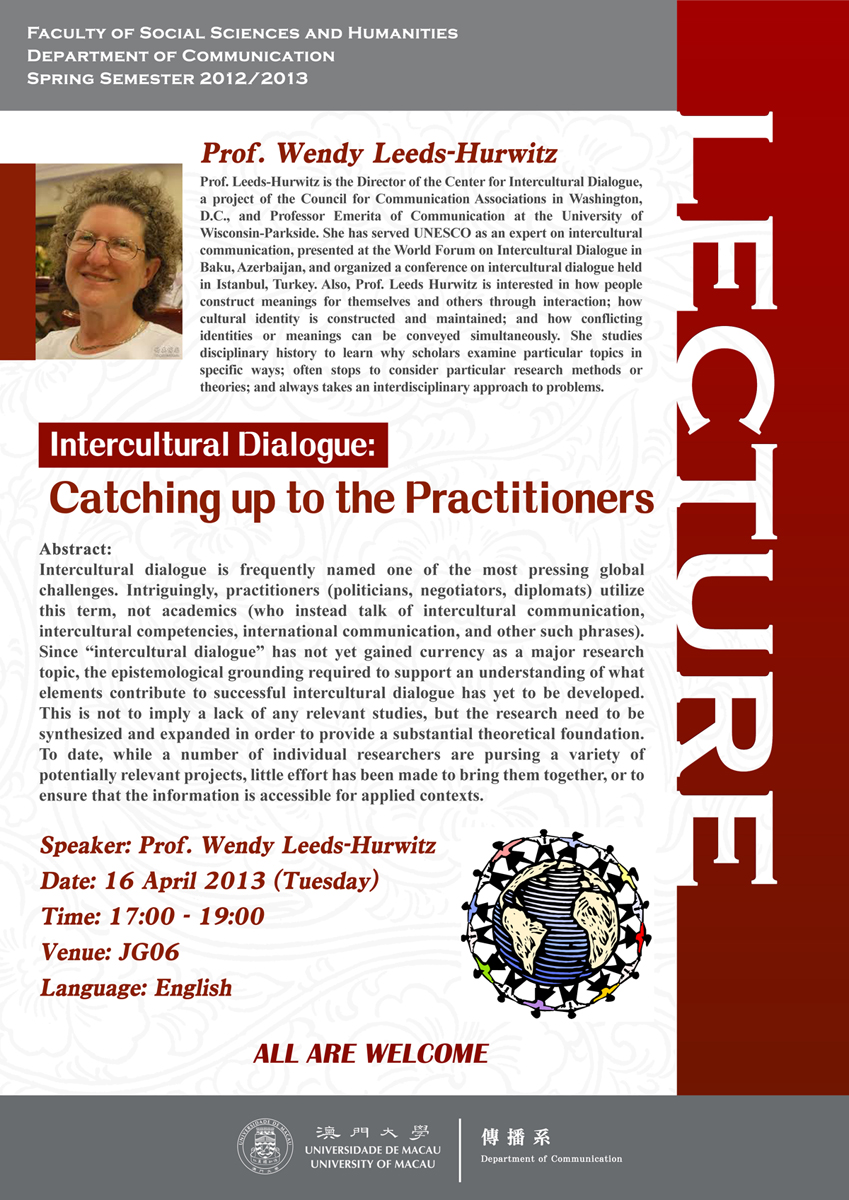
On April 16, 2013, I gave another talk in the Department, entitled “Intercultural dialogue: Catching up to the practitioners.” This talk was related to the Center for Intercultural Dialogue.

small-416 poster

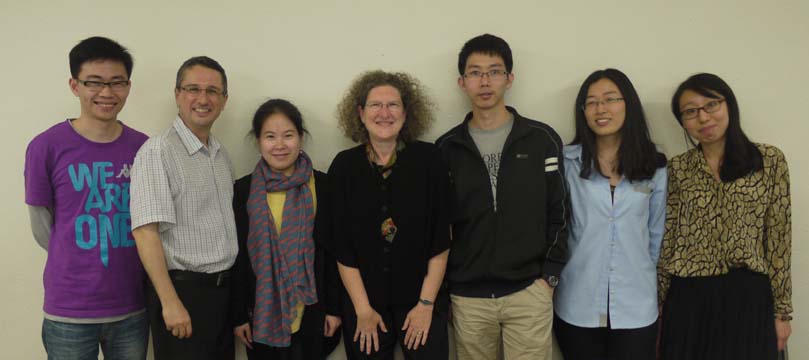
My thanks to Dr. Todd Sandel for organizing these events, and for all the time spent showing me around Macau, and to his students and colleagues for providing such a good audience, and asking provocative questions.

Sandel and graduate students with Leeds-Hurwitz

While at the University of Macau, I had the opportunity to connect with Dr. Martin Montgomery (Chair Professor and Head of Department), Dr. Timothy Simpson (Associate Dean, Faculty of Social Sciences and Humanities), Dr. TAN See Kam, Dr. Annie YANG, Dr. Ozge GIRIT, Dr. Mike Chinoy, and Dr. Andrew Moody. As Dr. Ingrid Piller (at Macquarie University in Australia) also happened to be present to give a talk of her own, I also was able to meet her. I am looking forward to continuing the conversations started on this trip.

Being in Macau was particularly interesting given the combination of Chinese and Portuguese influences on the city. Whether on campus or elsewhere, most signs provide information in Chinese and Portuguese, and often English as well, as documented below.

UMacaulogo

Wendy Leeds-Hurwitz, Director
Center for Intercultural Dialogue

KAICIID Fellows

KAICIID Fellows Programme

In 2013, King Abdullah Bin Abdulaziz Centre for Interreligious and Intercultural Dialogue, in Vienna, Austria, will launch an international fellowship project. The “KAICIID Fellows” will be people who are planning to become religious functionaries and educators. The programme will run 2-4 times a year, where a Jury, chosen from the Centre’s Advisory Forum, will select five “Fellows” among applicants from the five major world religions. Coming from different regions and different faiths, these students will spend one to four months working and studying together in Vienna to deepen their knowledge about each others’ religions and to strengthen their commitment to interreligious dialogue. As potential future leaders within their respective religious communities, it is hoped that they will become multipliers of KAICIID’s mission for interreligious dialogue once they are back home.

During their stay in Vienna, they will have the possibility to work on their own research project, but they will also be given the opportunity to learn about other religions, both within their own group and by visiting university classes.

The “Fellows” will also contribute to and actively participate in KAICIID‘s activities, thus enhancing their interreligious insight, organisational competence and future leadership presence and impact. Instead of a final report, each participant will be asked to write a book chapter about her or his personal interreligious learning at KAICIID.

Objectives
*Engage students from different faiths, cultures and regions in interreligious dialogue on neutral ground;
*Facilitate a deep, long-lasting dialogue encounter;
*Give future religious leaders the tools, experience, networks and knowledge to pursue interreligious dialogue in their profession;
*Provide KAICIID with young people from different religious backgrounds who will actively participate and contribute to the Centre’s activities and programmes.

KAICIID will also provide a platform for alumni activities for its former “Fellows” to enable them to stay in contact and to reach out to further potential candidates for the programme.

Peacebuilding & Intercultural Dialogue Academy

International Summer Academy on Peacebuilding & Intercultural Dialogue
1-11 September 2013, Vienna, Austria

Project Introduction

Institute for Peace and Dialogue is very glad to call interested participants for its first International Summer Academy in Peacebulding & Intercultural Dialogue, which is going to be held in the middle of Europe, Vienna. Its image as one of the most favourable places for travelling, has made it more interesting to offer an exited and comprehensive programme for our participants. We offer you a 11 day training, with a professional education from our excellent experts, who are professionals with many years of experience in peace and conflict studies.

Nowadays unfortunately several frozen or ongoing conflicts between or within states still exist. Conflicts are different and if we can look to the world mankind facing with many new challenges, but on the same time with new dangerous situations: terrorist acts, non-legal arming of conflict sides, redetermination of borders, establishing new countries in the world map, non-providing territorial integrity, trafficking of arm, drug and human; disputes on implementation of transnational energy projects, democratization and false elections, revolution and internal political conflicts, armed guerilla movements, violation and discrimination by nationalists, world economical crisis, climate change and unsafely biodiversity etc. Conflicts are related and integral part of human beings, as conflicts cause unrespect to human rights, violation and clash of rights.

Existing conflicts weaken every kind of cooperation between nations and states. Without mutual cooperation and understanding, the future prosperity of the region would remain only as a good dream. Taking into consideration of all the mentioned useful thoughts above, we can make a decision on the strict belief, that opportunities for solving conflicts are feasible. Because in every conflict situation and tension forms we consequently face with the below mentioned common situations:

1. Desperate situation and non-solving problems are not eternal;
2. It’s possible to make common decision which both sides;
3. We can find common values, traditions and similar situations among conflict parties;
4. Protracted conflicts on the same time endanger regional development and prosperity;
5. Any mediation and negotiation actions are better than nothing.

MAIN GOAL
The main goal of the summer academy is to support institutional academic peace education and strengthen peacebuilding skills and intercultural dialogue of international society.

Save

Who needs Intercultural Dialogues?

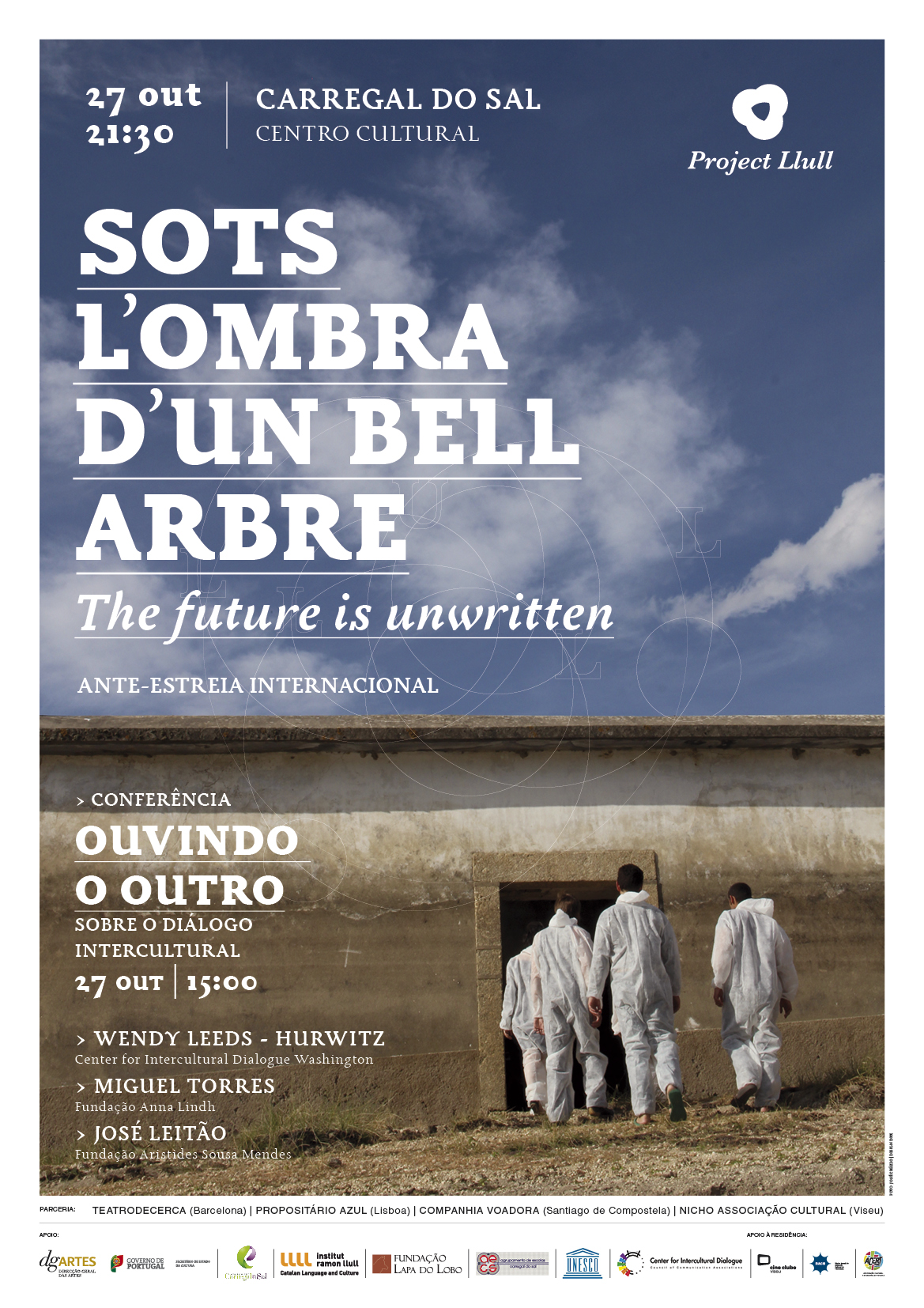
On October 27, 2012, I gave a talk entitled “Who needs intercultural dialogues?” as part of the Conferência Ouvindo o Outro: sobre o diálogo entre culturas [Conference on Listening to the Other: About Dialogue between Cultures], held prior to the avant premiere of the play Sots l’Ombra d’un Bell Arbre [Under the Shadow of a Leafy Tree]: The future is unwritten at the Centro Cultural Carregal do Sal, Portugal. This is a reinterpretation of Ramón Llull‘s play from the 13th century, The Book of the Gentile and the Three Wise Men staged by Project Llull.

Project Llull poster

This was a co-production of Teatro de Cerca (Barcelona), Propositário Azul (Lisbon), Companhia Voadora (Santiago de Compostela), and Nicho Associação Cultural (Viseu, Portugal). Helena Tornero is the Spanish playwright who wrote the theatrical adaptation, Graeme Pulleyn is the British director, and Cristóvão Cunha is the Portuguese executive producer and international coordinator who invited me to participate in this wonderful collaboration.

Project Llull conference

Wendy Leeds-Hurwitz, Director
Center for Intercultural Dialogue

Grant $ for international travel

Micro Grants for Intercultural Dialogue

The National Communication Association allocated $5000 to be distributed as micro grants for intercultural dialogue through the Center for Intercultural Dialogue.

These micro grants are intended to support either or both of the two types of activities described in the mission of the Center: study of intercultural dialogues by Communication scholars, and/or participation in intercultural dialogue through academic interactions between Communication scholars based in different countries, or different linguistic and cultural regions. These grants are sufficient to provide seed funding only: no more than $1000 maximum can be awarded to any one individual. The goal is to encourage international, intercultural, interlingual collaborative research by giving enough funding to offset the cost of airfare only, while providing opportunity (and cause) for matching grants from universities.

If you already have lots of international connections, this grant is not for you – obviously you don’t need it. But if you are at a small college, or if you are a new scholar, and have not yet established significant international connections related to research, you are the intended audience for this competition. If you have been reading publications by an international scholar on a topic of potential relevance to your own research, consider a short trip to discuss ways to collaborate on a future project. If you do not know who has been doing relevant work, check the sources you’ve been reading lately, ask your colleagues, and/or think about who you know from graduate school or who you met (or heard present) recently at a conference. Find someone with similar interests who takes a different stance by virtue of being based in a different cultural context.

The intention is to support the development of new intercultural, professional connections. Thus continuing collaborations are ineligible. Those based in the US are expected to propose travel outside the country. International scholars currently living outside their country of origin are asked to establish a new affiliation in a different region rather than proposing a return to their homeland. We recognize that much interesting work can be done within a country between cultural groups, however this grant program focuses on connecting researchers who are not yet connected, across cultural regions that are typically disconnected. This rationale of cross-cultural connection must be explicit in the project description.

Applicants will need to describe their project, provide a brief resume, a short note from their department chair documenting their current status, and one from the host scholar expressing interest in holding conversations related to research. The initial deadline for review of proposals is November 15, 2012. If funds remain after the initial set of grants are awarded, March 15, 2013 will be the second deadline.

CID Grant Application NCA2012

December 18, 2012 UPDATE: The micro grants for intercultural dialogue have now been awarded, and all funding is being distributed as a result of the first round of applications, so there will not be a second round. See here for the results.

CFP Dialogue Facilitator training

Interested in becoming an INGO Dialogue Facilitator?

“Tensions between humans, intolerance and racism have never been as strong whilst the social and political actors continue to develop devices that would bring together the communities. The Conference of INGOs has postulated that the appropriate valuation of different cultures, languages and especially the acceptance of others for them to accept us in turn had to be learned to be effective.

The Dialogue Toolkit, which is the fruit of experience, field observation and discussion, was born of this principle and enables a plausible dialogue strategy. It involves training Facilitators of Dialogue, who, in turn, will train as many relays able to facilitate dialogue between cultures.

This call to become a “facilitator” goes to civil society actors engaged in community life to enable intercultural dialogue. The training will provide the keys to the understanding and use of this Dialogue Toolkit. Participants of this course will then conduct such dialogues and will also share this approach with local NGOs.

If you are experienced and interested in this introduction workshop, please complete the on-line questionnaire (follow the link) and return it as soon as possible. After reviewing the record, subject to availability, if you are selected for this first training session, we will tell you the practical aspects.”

Original post from http://www.dialoguetoolkit.net/news/2012/08/interested-in-becoming-an-ingo-dialogue-facilitator/

Center Interreligious/Intercultural Dialogue job ad

The King Abdullah bin Abdulaziz International Center for Interreligious and Intercultural Dialogue is a new international organization being established in Vienna to promote dialogue between religions and cultures, thus fostering understanding and cooperation, promoting justice, peace and reconciliation, and counteracting the abuse of religion as a means to justify oppression, violence and conflict.

The Center is seeking to appoint the following key members of its Senior Management Team, to be based in Vienna:
*Director of Programs
*Director of Research
*Director of Communications & PR
*Director of Human Resources

Candidates will combine functional competence with relevant experience, preferably in the area of interreligious and intercultural dialogue. The right candidates will be strategic, collaborative, culturally sensitive, convincing communicators, hands-on and display a passion for the organization’s mission. Candidates will need to be fluent in English and preferably at least one other official UN language. Compensation for all positions will be equivalent to United Nations D-1 salary level.

Applications must be submitted no later than 15 September 2012 to:
C/o Dr. Markus Schwarz
markus.schwarz at ezi.net
Egon Zehnder
International Bauernmarkt 2
A-1010 Vienna, Austria

UNCAOC intercultural dialogue games

The United Nations Alliance of Civilizations Wants to Foster Innovation through Apps and Games Promoting Intercultural Dialogue

The UNAOC launches Create UNAOC 2012, a global competition organized with MIT Education Arcade and Learning Games Network; International Partners include Global Voices, Fundazione Mondo Digitale, Voice of America, ICT for Peace, John Lennon Educational Tour Bus, Doha Centre for Media Freedom, among others 

NEW YORK, New York, 26 July 2012 — the United Nations Alliance of Civilizations, the MIT Education Arcade, and Learning Games Network today launched Create UNAOC 2012, an international competition for app and game developers to produce apps and mobile games that enable new avenues for intercultural dialogue.

The aim of the project is to identify opportunities through innovative tools that promote intercultural dialogue, drawing on unique cultural resources and experiences of developers around the world. Five finalist apps and games will be selected by an international jury, awarded funds for producers to refine their creations and played by delegates of the 5th Annual UNAOC Forum in Vienna, Austria, 27-28 February 2013. The global competition will accept submissions through the end of November 2012.

“Successful intercultural dialogue is essential to help us navigate the unprecedented challenges of the 21st Century world,” said Marc Scheuer, Director of the United Nations Alliance of Civilizations.  “Apps and games afford powerful new tools and experiences to explore the dynamic and challenging processes that enable individuals and groups with different cultural backgrounds to engage in an open and respectful exchange of views, to share experiences and to develop a better understanding of each others’ aspirations and better practices of living together.  We are eager to see what young and new developers can contribute to the global conversation.”

The UNAOC and its organizing partners want to encourage developers to think of ways that new apps and games can be used to support such pursuits as gender equality, youth development, migrant integration, religious pluralism, better understanding among individuals of different cultural and religious backgrounds, biased media representation of cultures and religions, and education.
Apps and games submitted will be reviewed by an international jury and measured on whether: (1)  potential users would be given a novel experience to creatively and thoughtfully share perspectives on intercultural and global issues; (2)  how content and commentary relate to historical or current events, as well as (3) how the apps and games provide new perspectives that support intercultural dialogue.
Registration and Submission Requirements
Developers may register to participate in the competition between 27 July and 30 November 2012 at http://www.CreateUNAOC.org.  Developers may register as an individual or as a team with a maximum of eight (8) collaborators. Registrants must be 13 years of age or older.  A video walk-through (i.e., screen capture) or PowerPoint/Keynote presentation of a working app or game alpha or beta prototype built in HTML5 should be submitted for competition by 30 November 2012.  Note: Developers are not required to submit actual working apps/games on authorized development devices to the UNAOC.
Five (5) apps/games in HTML5 will be selected as finalists by 3 January 2013.  Developers will be notified and awarded $5,000 (US) per app to complete development of a fully functional app/game by 15 February 2013.  Apps/games will be played and rated by participants during the 2013 UNAOC Forum in Vienna, Austria (27-28 February 2013).  A Grand Prize will be awarded.  All apps/games submitted to the challenge competition will be featured on the website before and after the Forum in Vienna.
“We are excited by the global network of creative and technical professionals, scholars, NGOs, media companies, and others, who have come together to inform and promote the Create UNAOC Challenge,” said Jordi Torrent, UNAOC Media Literacy and Education Project Manager.  “As we explore new ways to engage citizens of the world in the UNAOC’s charter work, our jurors and partners help to expand our understanding of new media and reach young people and producers who are pursuing exciting new projects that can be used to effectively support intercultural dialogue.”
International Jury and Outreach Partners
Create UNAOC jurors include: Deborah Bergamini, Member, Council of Europe (Italy), Jan Keulen, General Director, Doha Centre for Media Freedom (Qatar), Sanjana Hattotuwa, Senior Researcher, Centre for Policy Alternatives (Sri Lanka), Eric Klopfer, Professor, MIT (United States), Solana Larsen, Managing Editor, Global Voices (Switzerland), Anthony Lilley, Chief Executive Officer, Magic Lantern (United Kingdom), Alfonso Molina, Fundazione Mondo Digitale (Italy), Savita Nair, Professor, Furman University (United States), Wu Heping, Dean, College of International Exchanges, Northwest Normal University (China).
Initial outreach partners include:
Global Voices (Netherlands), Fundazione Mondo Digitale (Italy), Voice of America (United States), ICT for Peace (Switzerland), John Lennon Educational Tour Bus (United States), Doha Centre for Media Freedom (Qatar).
Media Contact:
Learning Games Network
The United Nations Alliance of Civilizations (UNAOC) aims to improve understanding and cooperative relations among nations and peoples across cultures and religions. It also helps to counter the forces that fuel polarization and extremism. The UNAOC was established in 2005, at the initiative of the Governments of Spain and Turkey, under the auspices of the United Nations.  A High-level Group of experts was formed by former Secretary-General Kofi Annan to explore the roots of polarization between societies and cultures today, and to recommend a practical programme of action to address this issue. The Report of the High-level Group provided analysis and put forward practical recommendations that form the basis for the implementation plan of the United Nations Alliance of Civilizations.  On 26 April 2007, former President of Portugal, Jorge Sampaio, was appointed as the High Representative for the UNAOC by Secretary-General Ban Ki-moon to lead the implementation phase of the Alliance. The UNAOC Secretariat, which is based in New York, works with a global network of partners with States, international and regional organizations, civil society groups, foundations, and the private sector to improve cross-cultural relations between diverse nations and communities. It also works at the grassroots level, promoting innovative projects that build trust, reconciliation and mutual respect.  The Alliance works in four program areas to support such projects: youth, media, education, and migration. 
 
The MIT Education Arcade explores games that promote learning through authentic and engaging play. The program’s research and development projects focus both on the learning that naturally occurs in popular commercial games, and on the design of games that more vigorously address the educational needs of players. Our mission is to demonstrate the social, cultural, and educational potentials of videogames by initiating new game development projects, coordinating interdisciplinary research efforts, and informing public conversations about the broader and sometimes unexpected uses of this emerging art form in education. MIT Education Arcade projects have touched on mathematics, science, history, literacy, and language learning, and have been tailored to a wide range of ages. They have been designed for personal computers, handheld devices and on-line delivery.
 
Learning Games Network
The Learning Games Network, a non-profit spin-off of the MIT Education Arcade and the University of Wisconsin-Madison’s Games+Learning+Society Program with studios in Cambridge, MA and Madison, WI, bridges the gap between research and practice in game-based education and is committed to the development and distribution of games informed by research in the learning sciences, creative design, and technical innovation.  

Museums and Intercultural Dialogue

A very nice article by Eva Zimmerhof on museums as forums for intercultural dialogue has just been posted online by the Goethe Institute.

It begins: “In future the traditional national museums to be found in Europe are to open multidimensional perspectives on the history and culture of both the individual countries and on Europe as a whole. To implement this new approach the European Union has initiated a program called “Eurovision – Museums Exhibiting Europe” (EMEE). This is an interview with the project’s coordinator, Prof. Dr. Susanne Popp.”

Ethnography of Comm conference 2012

The “Ethnography of Communication: Ways Forward” conference was held June 10-14, 2012, at Creighton University, in Omaha, Nebraska. Dr. Jay Leighter was the conference organizer, together with Dr. Donal Carbaugh; the National Communication Association sponsored the event as one of its summer conferences (along with funding from several parts of Creighton University).

I presented a paper co-authored with Dr. Patricia Lambert, of the Institut Français de l’Éducation in Lyon, entitled “A Prophet Abroad? The Impact of Hymes’ Notion of Communicative Competence in France and French-speaking Switzerland.” In addition, I was invited to participate in two roundtable discussions, one on “Ethnography of Communication Theory and Methodology: Taking Stock and Ways Forward” and the other “Ways Forward: Institutes, Centers, and Affiliations.” In the latter, I was invited to present a description of this Center, which resulted in many new “likes” to the Center’s facebook page.

Many of those participating in the conference are included in the following photo (though certainly several critical people are missing, including Dr. Gerry Philipsen and Dr. Donal Carbaugh).

One of the pleasures of the conference for me was the presence of so many of those involved in the NCA Summer Conference on Intercultural Dialogue, held in Istanbul in 2009, which led to the creation of this Center. This included several from the organizing committee (Drs. Tamar Katriel, Donal Carbaugh, Kristine Fitch Muñoz, and Saskia Witteborn), one of the guest speakers (Lisa Rudnick) and several of the participants (Drs. Todd Sandel, Chuck Braithwaite, Evelyn Ho, Eric Morgan, and Tabitha Hart). Another was catching up with Dr. Susan Poulsen, who organized “Ways of Speaking, Ways of Knowing: Ethnography of Communication” in Portland in 1992, the predecessor conference to this one in terms of topic. Other joys of the week included having time to connect with people I had not seen in a long time, previously only had met through correspondence, or students of my colleagues who I did not know at all.

Wendy Leeds-Hurwitz, Director
Center for Intercultural Dialogue