Susan Opt – Fulbright

Susan Opt
James Madison University

Fulbright to Czech Republic

In fall 2009, I was a Fulbright scholar at Masaryk University in Brno, Czech Republic. I taught two graduate courses—Intercultural Communication and the Rhetoric of Social Intervention—and one undergraduate course in The History and Culture of US Media.

Unlike many Fulbrighters, I did not have any contacts in the Czech Republic or a letter of invitation. Instead, I spent time researching the “open” or “general” calls on the Fulbright web site and emailing some of the program officers to get information about opportunities in their region (although I did not email the program officer responsible for the Czech Republic!). In the end, I decided to apply to the Czech Republic for several reasons. First, the US institution where I was teaching at the time had been founded by immigrants from Moravia, a part of the Czech Republic. In my application, I connected my interest this historical piece with cultural insights that I might gain from working in the Czech Republic. Second, I had lived and worked in Germany and had visited the Czech Republic in its pre-revolution and immediate-post-revolutions days, so I had some familiarity with the culture. I thought my proficiency in German might come in handy in interactions with older Czechs. I also wanted to see how the culture had changed in the two decades after the revolution. Finally, I felt that the Czech Republic might be a less popular choice by other applicants and so that might increase my chances of getting an award!

After I decided to focus on the Czech Republic I spent time online researching institutions in the Czech Republic to see which ones might offer programs in my areas of interest. I applied for a teaching award because in the Czech Republic, at least, teaching awards are more numerous than research awards. I also looked for programs that offered instruction in English. In my application, I proposed classes and suggested institutions where my knowledge might be useful. In my statement, I focused on the benefits I could offer the host institution. I also emphasized what I could learn from this experience that would benefit my institution and students.

The application review involved several steps. First, the US Fulbright Commission reviewed the application and determined whether it would be forwarded to the Czech Republic. Then the Czech Fulbright Commission reviewed the application to determine whether it should be forwarded to an institution. In an “open” call, like my case, the Czech Fulbright program officers contacted Czech institutions to see if they would be willing to sponsor a Fulbrighter. After they approved the application, then it came back to the United States for final review.

If a Fulbright is granted, then there’s more work! Applicants have to pass a medical exam and, depending upon the country’s requirements, may have to go through a security check with the country’s police, get a visa, and get shots. In addition, “open” call applicants, like me, may have to spend time corresponding with the host institution to negotiate courses or research needs. At this point, one of the most helpful pieces of information acquired from either the in-country Fulbright program coordinator or from the US program officer for that country is copies of previous Fulbrighters’ final reports. Fulbrighters write a final report that summarizes their experiences and give advice for future Fulbrighters. In my case, the reports were extremely helpful in knowing what to expect in the Czech classroom and working ahead of time with the Czech institution to put enrollment limits on the courses. The reports as well as communication with the institution helped me know what technology was available and what kinds of materials I would need to bring with me. For example, Czech students cannot afford to buy textbooks. Fortunately, the Fulbright Commission provides teaching scholars a small stipend for books, so I was able to bring copies of used books for students.

Finally, the key to applying for and surviving a Fulbright is flexibility. You need to be flexible in terms of where you might be willing to go. And you need to be flexible and adaptable to the conditions that you find when you arrive. For example, you might end up teaching a course different than you had expected and prepared for. You might find that the students have different language abilities, backgrounds, and preparations than you imagined. You might find that how courses are taught and the length of courses differ from what you are used to. But these kinds of surprises teach us a lot about ourselves, our culture, and our educational system and help achieve William Fulbright’s vision of changing the world by changing how we think.
Richard Buttny – Fulbright

Richard Buttny
Syracuse University

Fulbright to Malaysia/Fulbright Senior Specialist to India

Having a Fulbright Fellowship has been a great experience, meeting and working along with colleagues at their universities.  I had a Fulbright to Malaysia at Universiti Teknologi MARA (UiTM) in Shah Alam for six months in 2008-09.  I ended up giving lectures to faculty on qualitative research methods and taught one graduate class on media and culture.  I was able to work with colleagues on on-going research projects and have been back to the region a couple more times.

My first Fulbright was made possible by a former graduate student who had become Chair of his Department and wrote a letter on my behalf.  This was a Fulbright Senior Specialist to lecture on intercultural communication at Punjabi University, India, 2003.  The Senior Specialist awards are only up to six weeks.  I wish I would have had a longer stay there.

Kristen Cvancara – Fulbright

Kristen Cvancara
Minnesota State University, Mankato

Fulbright Teaching/Research Scholar Grant in Finland

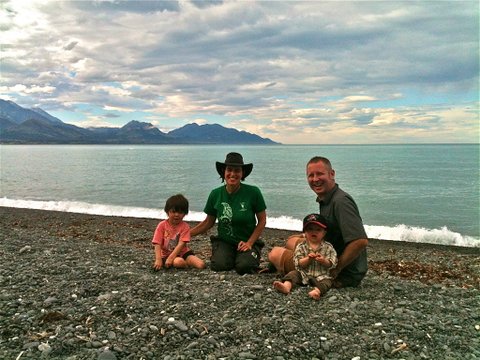
When planning ahead for my sabbatical, I realized that a Fulbright award was an excellent opportunity for me to achieve the goals of growing professionally and living abroad with my husband and our three children. I applied for a grant in Finland because I wanted to work with a colleague with whom I had been collaborating since 2002. I drafted a plan for a project that would blend our research interests and reviewed it with my Finnish colleague at the 2009 NCA conference in Chicago. With encouragement and support from her and her department (including a letter of invitation), I submitted my Fulbright application in the summer of 2010. In March of 2011, I was notified by letter of the acceptance of that application. My two goals were finally realized in January of 2012 as my family boarded a plane headed for Jyväskylä, Finland, where we would live for the coming 5 months.

While in Finland, I taught two courses and conducted research in the Department of Communication at the University of Jyväskylä. The teaching connected me with students from all over Europe, exposed me to different worldviews, and prompted me to adapt my teaching style in new and unique ways. The research project blossomed into a study involving five countries on four different continents. It was amazing to watch this kind of collaboration develop through conversations, emails, Skype calls, and joint meetings. I had the opportunity to build relationships with Finnish and European colleagues, fellow Fulbrighters, and members of the community where we lived for 5 months.  All of these experiences changed me, and my family as well. The challenges and obstacles we faced together forced us to re-evaluate beliefs that we took for granted, revise ineffective strategies, and review our motivations for living outside of our comfort zone. Even when reflecting on the most difficult days, I marvel at the amazing, wonderful experience the Fulbright grant provided us.

A Fulbright experience is worthy of the preparation devoted to crafting a solid application. Check out the following websites for more information on Fulbright grants, the Fulbright Center in Finland, and the Fulbright scholar list to view others from the discipline who have earned grants. I especially encourage individuals with children to apply. In keeping with Senator Fulbright’s initial goals, living abroad with children is a prime opportunity to strengthen their empathy for others and foster a worldview that integrates compassion and understanding.

Tema Milstein – Fulbright

Tema Milstein
University of New Mexico

Fulbright to New Zealand

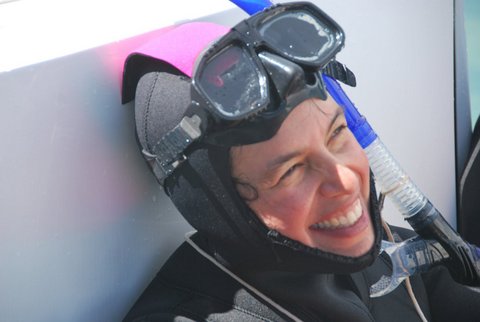
I was lucky to receive a Fulbright Scholar award for 2012 to the Auckland University of Technology in New Zealand. I’m here now, gazing beyond my computer screen across emerald green hills and listening to the melodious calls of tui birds. The experience of doing my research here, getting to know colleagues and friends, and introducing my family to a different way of life is unmatchable.

There are basics the application requires, such as having a host institution. I had met colleagues in New Zealand by attending an international conference several years earlier that focused on one of my study topics (marine tourism) and when I approached a couple of them later about their university acting as my host institution, they were supportive. Many universities, and many countries, don’t have communication emphases, but many are interested in the kind of work communication scholars do as it relates to their shared topic area, so expanding one’s paradigm beyond the confines of communication can broaden Fulbright destination possibilities.

There are also things you can do to help your application stand out and rise through the different steps of the selection process. One is to do your homework about your country of choice so you can accurately represent cultural and social issues and show how your work might matter or positively contribute. Another is to show how your former studies (the one I highlighted was an environmental communication study on North American ecotourism) might culturally compare to your proposed study (for me, ecotourism in New Zealand).

One thing to note is that each country has its own spin on the awards with different amounts of time and different purposes. New Zealand’s 5-month research award perfectly matched the time I had for leave in my pretenure research semester at the University of New Mexico.

Kevin Barnhurst – Fulbright

Kevin Barnhurst
University of Illinois at Chicago
Fulbright in Peru
Distinguished Fulbright Chair in Italy
I received a Fulbright Senior Scholar award to do research and teaching in Peru in 1989. I lectured at the University of Piura, the University of Cuzco, and the University of Lima, where I worked with a counterpart and spent most of my 4 months in the country. My research produced a series of articles on news design, information graphics, and related topics, published in Spanish and later collected in English as News as Art (Journalism Monographs no. 130). I also did research on political communication and published two articles on the Shining Path and political violence in Peru, one in the Journal of Communication and the other in an edited collection on terrorism and communication. Since returning, I’ve been in continual contact with colleagues from Peru, have co-authored and collaborated with them, and have encouraged others to apply for Fulbright awards. I’ve also hosted students and faculty on Fulbrights in my department at the University of Illinois at Chicago.
I became a Distinguished Fulbright Chair in 2006, doing research in Vercelli and Turin, Italy, and lecturing in Naples, Sassari (Sardinia), Padua, and visiting Rome, Genoa, Venice, and Milan and the lake country. I had visited Italy only once, in Florence, but for a scholar of visual studies, spending time in Italy is an important experience. I also learned about the educational system and political system, and  I learned the language, lectured in Italian, and published articles in the language. Since returning I have been collaborating on editorial projects with Italian colleagues, who have invited me to return and lecture in Milan, Perugia, Udine, and other cities. Now I have good friends and colleagues throughout the country. I consider a Fulbright award one of the highest honors a scholar can receive.

Stacey K. Sowards – Fulbright

Stacey K. Sowards
University of Texas at El Paso
Fulbright and Fulbright-Hayes to Indonesia
I was awarded a Fulbright for my doctoral dissertation research in 2000-2001, to conduct research on environmental organizations in Indonesia.  My interest in Indonesia started when my parents moved there in 1994, and I traveled to Indonesia several times to visit them until 1997 when they moved back to the US.  Even though I had been to Indonesia a few times, I had not established contacts at universities, which is a very important criterion for both students and faculty.  My initial sponsor was the Centre for Strategic and International Studies, in Jakarta.  I wrote a paper for a class about the economic crisis in Indonesia, which eventually was published in The Indonesian Quarterly, a journal of the CSIS.  My familiarity with CSIS and The Indonesian Quarterly led me to email the director to see if they would sponsor my research project in Indonesia for the Fulbright application, which they did.
My second Fulbright award was actually a Fulbright-Hays, which was for intensive language study in Indonesia.  During the first Fulbright award, I was able to make more university contacts and learn more about the Indonesian educational system as well as foreigners who were studying in Indonesia.  These contacts led to my application for the second award, which I received in 2005.

Jon Nussbaum-Fulbright

Jon Nussbaum
Penn State University

Fulbright to Wales

I was initially invited to attend a Fulbright International Colloquium entitled Communication, Health and the Elderly organized by Nikolas Coupland, Howard Giles and John Wiemann held at the University of Wales conference centre, Gregynog  Hall, Newtown, Mid Wales, UK in 1988.  While at the conference, I engaged the three organizers, each of whom had experience with international scholarship through the Fulbright Association, in the possibility of being awarded a Fulbright research award to study the interpersonal behavior of older adults living independently and well as dependently in the UK. I wrote my Fulbright application with the help of former Fulbrighters Robert Norton and John Wiemann. Nik Coupland, a Professor within the Centre for Applied English Language Studies (now the Center for Language and Communication Research) within Cardiff University, Wales, UK., “sponsored” my research application with the promise of an office, faculty residence, and various appointments at Cardiff University. The faculty within my home department at the University of Oklahoma and the administration within the College of Arts and Sciences supported my extended visit to Cardiff.

Don Ellis-Fulbright

Don Ellis
University of Hartford

Fulbright to Israel

I spent a year in Israel as a Fulbright at Tel Aviv University in 2004-2005. I taught a course but also was doing research for my book on communication and ethnopolitical conflict which was published in 2006. It was a terrific experience and I recommend it to anyone especially if you can go for a longer period of time.

A Fulbright definitely requires planning. You can probably only go while on sabbatical and the application is due about a year before your actual sabbatical. Pay attention to the deadlines and make sure you apply for the proper time. Fulbrights are usually for research, teaching or combination of both. It depends on what the host institution wants. Getting a letter of invitation, a statement from the host institution that they want you, is invaluable. If you just apply in the blind your odds become very small.

In my case, I had been working in my area of expertise for quite a while and knew people at the host institution. I contacted them and requested a letter of invitation. But if you do not know someone then assert yourself and make some phone calls to see if you can actually get an invitation. The people at the host institution might have heard of your work or will become familiar with it after you apply. I applied for both the combination of teaching and research and this was agreeable to the host institution because they wanted courses taught as well as providing me with an opportunity to complete the book I wrote at the time.

Fulbrights are terrific experiences and worth the application hassle. But finding a way to make yourself known to the host institution, making contact with people at that institution and having that result in a letter of invitation is crucial.

Joseph Zompetti-Fulbright

Joseph Zompetti
Professor of Communication
Illinois State University

Fulbright to Sri Lanka

My Fulbright was in 1993 to Sri Lanka. I emailed the department of political science at the University of Colombo to arrange collaboration for research on the legacies of colonialism on the civil strife occurring in Sri Lanka. Once I arrived in Sri Lanka, I met with members of the political science department who then helped me locate important libraries, book stores, and individuals to interview for my research. As I was there, the civil war intensified and communication with individuals ceased. Unfortunately, those contacts did not last, and many of the individuals with whom I worked are no longer at the University. Nevertheless, while I was in Sri Lanka, the individuals at the University of Colombo were extremely helpful and welcoming. I strongly encourage anyone interested in Sri Lanka to reach out to relevant departments and introduce themselves to Sri Lankan academics. My experience suggests that the Sri Lankan academics will be more than willing to help however they can.

UPDATE 4/2/16:
Zompetti was also the recipient of a Fulbright grant to travel to Brazil in summer 2015. Zompetti taught at the Universidade Federal de Minas Gerais (UFMG), located in Belo Horizonte. The Fulbright Specialist Program (FSP) allowed Zompetti to teach a graduate course in cultural studies, work in a research consortium and lecture at nearby universities. The experience lasted 35 days.

Todd Sandel – Fulbright

Todd Sandel
University of Macau

Fulbright to Taiwan

From 2007-2008 I had the privilege of being a Fulbright Scholar in the traditional, 10 month, program to Taiwan. I was hosted by my friend and former University of Illinois classmate, Dr. Chung-Hui Liang at the Center for General Education, National Chiao Tung University, Hsinchu. We collaborated on a study of a recent trend in international migration, namely the rise in the number of “foreign brides” from such places as Mainland China, Vietnam, Cambodia, and Indonesia, who through commercial brokers and/or personal connections, marry men in Taiwan. I continue to collaborate with Dr. Liang and work on this project.

Another wonderful benefit of the Fulbright Program is the financial support it provides for family members. (Be aware, however, that family member benefits are covered by the host country and vary.) My spouse and children joined me and we all had a wonderful time of cultural and language learning. Our youngest daughter became fluent in Mandarin Chinese at the primary school she attended, and my two older children, whose tuition at an American school in Taichung was paid by Fulbright, gained fluency in Chinese and learned a lot of up-to-date slang and popular culture that I was not aware of!

Finally, my Fulbright experience led me to my current position in the Department of Communication at the University of Macau. I attended a conference for all “Greater China” Fulbrighters held in Hong Kong. The last part of the conference included a visit to Macau and the University of Macau. Intrigued by Macau as a place of cultural dynamism and impressed with the university, I made a return visit a couple of months later to give lectures and a longer visit. One thing led to another and this year, 2012, I have a position in Macau. This has opened up opportunities for me to continue to do research in nearby Taiwan, Macau, and nearby provinces of China.

Fulbright can be a life changing experience for you just as it has been for me.