International discources about audiences

CALL FOR PROPOSALS

Discourses about Audiences: International Comparisons
Deadline:   May 1, 2011

We seek proposals from media scholars to study the representations of audiences in non-western societies and pre-modern Europe. We use “western” to indicate culture rather than geography. In that sense, the term contrasts to all societies not based upon Western traditions, including not only “eastern” societies but also societies south of the equator.

We plan to publish the studies in special issues of journals and as an edited book, in multiple languages. We also plan to organize an international conference where the authors will present and discuss their work.

In our books, The Citizen Audience and Audiences and Publics, we have explored representations of audiences and the categories used to characterize them. These explorations have been within the context of modern democracies in Western Europe and North America. In Western discourse, audiences have been variously considered crowds, publics, mass and consumers, active or passive, additive or selective, vulnerable and suggestible or critical and creative, educated or ignorant, high or low brow, and characterized differently on the basis of their presumed race, class, sex and age.

These debates and these categories sometimes have been adopted and applied to audiences in non-Western cultures. The conjoined terms “audiences and publics,” for example, have begun to be used by scholars across the globe. But there is no reason to assume that such Western categories and associations apply, or apply in the same way, in non-western societies. At a time when global and regional media (satellite, television/radio, recording, mobile phone, internet) saturate even remote populations and cultures, we have no comparative empirical studies to reveal what categories are indigenous to individual non-western cultures, and to record  how they differ and change.

Consequently our goal is to bring together research from across the globe, to investigate whether the terms associated with audiences in western Europe and North America actually fit the indigenous discourses on audiences in non-Western cultures. Each culture likely has a different and interesting history. We think that such a comparative study of discourse on media and audiences could bring new insights into global media as well as Western discourse and scholarship on media and audiences, and be of immense value to government policymakers and media practitioners as well. Moreover, it will be an opportunity for non-Western worlds to speak about themselves, unfiltered through Western concepts.

The project will explore specifically non-Western languages and cultures, and as a whole, will compare their discourses on audiences. In this globalized world this will sometimes be a marginal distinction, given the bleeding of Western ideas through borders and cultural boundaries. We would like applicants to go beyond non-Western incorporations of Western terms about audiences that accompanied their adoption of media technology and texts, to explore their discourses on indigenous practices and their audiences. With this foundation, then applicants would investigate how indigenous discourses represent media audiences as these media spread through these societies.

From all applicants, we will select 10-15 scholars to research discourses in their proposed culture and language, looking at these both before and since their contact with Western culture and the spread of twentieth and twenty-first century media. We expect to include:

1. Studies on discourses in major languages of the world, e.g. Chinese, Hindi, Bengali, Arabic, Urdu, etc.,

2. Studies on cultures and languages less integrated into globalization and more remote from Western influence, and

3. A study of a major medieval European culture and language before democracy and publics became associated with audiences.

Applicants should be fluent in the language and generally familiar with the media/audience history of the culture they propose to study. For their research, we wish contributors to study representations in that culture and language, examining its historical development, in whole or part, of discourses as media are introduced into that culture through the twentieth and twenty-first centuries, with special consideration to the lexicon used to characterize media audiences. Junior as well as senior scholars are welcome, as long as each demonstrates his/her capabilities for this research.

Proposals should be in English and include a preliminary research plan of no more than 3 single-spaced pages, specifying the cultural/linguistic context and describing the plan of research. as well as current vitae of the applicant(s). Send proposals as email attachments to both Butsch@rider.edu and S.Livingstone@lse.ac.uk, no later than May 1, 2011.

We look forward to reading your proposals.

Richard Butsch, Professor of Sociology, American Studies, and Film and Media Studies, Rider University, USA

Sonia Livingstone, Professor of Social Psychology, Department of Media and Communications, London School of Economics,  UK

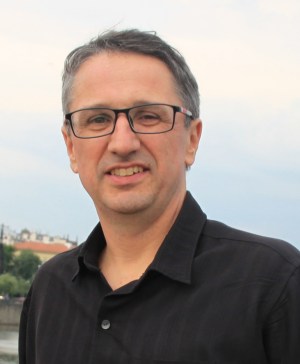
Todd L. Sandel Profile

ProfilesTodd Sandel (Ph.D., University of Illinois) is Professor in the Department of Communication at the University of Macau and Editor-in-Chief of the Journal of International and Intercultural Communication.

He was a Fulbright Scholar to Taiwan 2007-2008, and in 2015 authored the book, Brides on Sale: Taiwanese Cross Border Marriages in a Globalizing Asia, for which he received the “Outstanding Book Award” from the International & Intercultural Division of the National Communication Association (NCA). Sandel has served as Chair of the Language & Social Interaction Division of NCA, President of the Association for Chinese Communication Studies, and Secretary of the Language & Social Interaction (LSI) Division of the International Communication Association (ICA). The paper, “Unpacking and describing interaction on Chinese WeChat: A methodological approach,” co-authored with his students, was awarded the “Top Paper Award” from LSI of ICA in 2018.

His research interests include intercultural communication, Chinese social media, language and social interaction, identity formation, and the ethnography of communication. More recent work, involving the study of affordances of social media, especially in Chinese contexts, has been published in the Journal of Pragmatics, Chinese Journal of Communication, Journal of Intercultural Communication Research, Information Development, and China Media Research. He is also conducting research with students and colleagues in such countries as Indonesia, Japan, and Bhutan.

Select Publications

Sandel, T. L., Ju, B., Ou, C. Y., Wangchuk, D., & Duque, M. (2019). Unpacking and describing interaction on Chinese WeChat: A methodological approach. Journal of Pragmatics, 143, 228-241.

Sandel, T. L., Buttny, R., Varghese, M. (2019). Online interaction across three contexts: An analysis of culture and technological affordances. Journal of Intercultural Communication Research, 48(1), 52-71.

Sandel, T. L. & Ju, B. (forthcoming). Social media, culture, and communication. In J. Oetzel & J. Nussbaum (Eds.) The Oxford Research Encyclopedia of Communication. Oxford University Press.

Ju, B., Sandel, T. L., & Thinyane, H. (in press). WeChat use of Mainland Chinese dual migrants in daily border crossing. Chinese Journal of Communication.

Ju, B., Sandel, T. L., & Fitzgerald, R. (In press). Understanding Chinese internet and social media: The innovative and creative affordances of technology, language and culture. In Marcel Burger (Ed.) Se Mettre en Scène en Ligne’ (Presenting Oneself Online). Cahiers de l’Institut de linguistique et des sciences du langage, No. 58. Lausanne, Switzerland: University of Lausanne.


Work for CID:

Todd Sandel wrote KC59: Teng, and described his Fulbright experience. He was was one of the participants at the National Communication Association’s Summer Conference on Intercultural Dialogue in Istanbul, Turkey, which led to the creation of CID, and one of the organizers of the Roundtable on Intercultural Dialogue in Asia, co-sponsored by CID. He currently serves on the CID Advisory Board.

Postdoctoral fellow-University of Denver

Postdoctoral Lecturer, University of Denver

The Department of Communication Studies grants the B.A., M.A., and Ph.D. degrees. The graduate program is focused on three areas of inquiry: Culture and Communication, Interpersonal and Family Communication, and Rhetoric and Communication Ethics. The area of Culture and Communication investigates the communicative constitution and intersection of difference in its various codifications as culture, race, class, religion, ethnicity, nationality, gender and sexual orientation. Its vision is to promote an ethic of inclusivity, racial and social justice, reciprocity, and mutual transformation in the encounter of difference. Courses reflect this emphasis, focusing on the social and performative construction of identity, the politics of representation, performances of affect, identity, and community and vernacular and embodied rhetorics, all informed by, critical, feminist and queer perspectives on cultural communication.

Given faculty research and teaching foci we are particularly interested in applicants who have teaching and research interests in Communication, transnationalism, diaspora, and/or migration. Scholars with research and teaching foci in the areas of African diaspora studies, citizenship studies, and diaspora studies, and/or queer diaspora studies are particularly welcome. We seek to participate in the process of preparing recent Ph.D. recipients for tenure track positions and careers in academia. A central component of this position is mentoring; thus, a faculty mentor will be assigned to our new colleague. Eligible applicants are individuals who have received the Ph.D. in Communication no earlier than May 2008. The person hired will be expected to teach six courses over three quarters (two courses a quarter).

The Postdoctoral Fellow will contribute to the University’s Common Curriculum and the major of the department of Communication Studies. Given these needs, in consultation with the Dean’s Office, the following courses are likely possibilities.

Teaching Description:
* First Year Seminar  (1) : Special topic course and advising for first year students. (Title and content to be determined by the Fellow the Department, and the Dean’s Office.)
* Ways of Knowing Class (2 or 3): For undergraduates, for instance, COMN 2220, Race and Popular Culture and COMN 2210, Gender and Communication. (Title and content to be determined by the Fellow the Department, and the Dean’s Office.)
* Advanced Seminar (2 or 3 Classes): For advanced undergraduates, for instance ASEM 2509, Communication and the Production of Culture, or a new ASEM focused o the candidates specific interest. (Title and content to be determined by the Fellow the Department, and the Dean’s Office.)

Ph.D. in Communication no earlier than May 2008.
Experience teaching at a College or University level desired.

To be considered an applicant, you must submit your application, C.V., cover letter. list of references, and scholarly publications online. Please also send three letters of recommendation:

Bernadette Calafell
University of Denver
2000 E. Asbury Ave.
Sturm Hall, Suite 200
Denver, CO 80208

Review of applications will begin March 15th, 2011 and continue until the position is filled.

The University of Denver is committed to enhancing the diversity of its faculty and staff and encourages applications from women, minorities, people with disabilities and veterans. DU is an EEO/AA employer.

Please see our extensive benefit package at www.du.edu/hr/benefits

Job ad-Gonzaga University

Gonzaga University’s MA program in Communication and Leadership Studies seeks a tenure-track assistant professor to begin Fall of 2011. We seek candidates interested in communication theory and praxis with excellent teaching skills. In its sixth year, the Program has attracted more than 500 students who take courses either on campus or on-line. The program has a strong interest in global and ethical aspects of communication.

We seek candidates who have research interests and teaching ability in the area of community, communication, and social change. This area includes non-profits, collaborative decision-making, global and local movements, and multi-platform media in the service of community. The person will also teach the Theorizing Communication course, and the Communication Thesis or Project course. We seek a dynamic individual who can both understand the balance of the curriculum and help to guide its growth and quality. Responsibilities include teaching campus based and online MA classes in the Department, advising campus and online students, serving on Department and School committees as needed, and an active research agenda in the areas of the position. Open Date: Review of applications begins March 25th and is open until filled.

To apply or view the full position description, please visit our website at www.gonzaga.edu/employment .  Application review begins March 25, 2011. The required application materials include, a letter of interest, a curriculum vitae (CV), a statement of teaching philosophy, and three recommendation letters. References should email their letters of recommendation to cockerham@gonzaga.edu whereupon letters will be uploaded to your online
application. For online application assistance, call 509-313-5996. For questions regarding the position, contact Kathy Gustafson, Program Assistant, at gustafson@gonzaga.edu <gustafson@gonzaga.edu> .

Gonzaga University is a Jesuit, Catholic, humanistic institution and is therefore interested in candidates who will contribute to its distinctive mission. Gonzaga University is an AA/EEO employer committed to diversity. An offer of employment will be contingent on background verification of an earned doctorate in communication or a closely related discipline.

(Post-)Conflict Cinema CECC conference

CALL FOR PAPERS

(Post-)Conflict Cinema: Remembering Out-breaks and In-tensions
IV International CECC Conference on Culture and Conflict

December 5-6, 2011
School of Human Sciences – Catholic University of Portugal
Lisbon, Portugal

Deadline for submissions: July 30, 2011

The history of the 20th and 21st centuries merges with the history of cinema and its latest developments. On the one hand, the emergence of cinema is associated with the idea of a democratic art form. Never before had an artistic manifestation reached and affected so many people at the same time. On the other hand, besides constituting one of the privileged cultural products through which past and current conflicts are represented and thoroughly examined, cinema is a medial construction that serves as a ‘stage’ that interrogates the very act of representation, since it also reflects the problems and conflicts experienced in the context of filmic production. Cinema and conflict went hand in hand from the very beginning. Soon after the appearance of the cinematograph, a short film on the war in Cuba, a war that would lead to the island’s independence, was shown to the public in 1898. In 1915 Griffith famously portrayed a war-torn American society during the Civil War in Birth of a Nation, and raised a huge controversy on the issue of racism.

Keeping in mind the revolutionary aesthetic developments and the consolidation of cinema as a multidimensional art form in the 20th century and at the beginning of the new millennium, it is important to discuss how and to what extent new cinematographies inspired by the examination of issues of memory and oblivion experienced in the last century respond to the challenges imposed by 21st-century conflicts (terrorism, economic and social crises, Islamophobia, various forms of racism, civil wars, exploitation of natural resources, among others).

With a view to discussing the dynamic process of conflict and post-conflict situations, this international conference seeks to analyze how 20th and 21st-century (post-)conflict cinema addresses and (re)mediates the following issues:


  • Post-memory, Post-Conflict and New Cinema
  • Preserving/Rebuilding cultural heritage
  • Reimagining the landscape of the self after conflicts
  • Gender and reconstruction in post-conflict societies
  • Cultural identities in post-conflict contexts
  • Conciliation, punishment and the challenge of democracy
  • Human rights in war-torn societies
  • Ethics and discourses of legitimation in post-conflict situations
  • Film and the Pain of others
  • Globalization and post-conflict societies
  • Translating the other and the self in times of conflict
  • Post-Conflict Cinema in Post-Colonial Contexts
  •  

The Conference’s working languages are Portuguese and English.

Please send the Organizing Committee 300-words abstracts for 20-minute papers, as well as a brief biographical note (circa 100 words), to postconflictcinema@gmail.com by July 30, 2011. Proposals should list paper title, name, institutional affiliation, and contact details. Notification of acceptance will be given by September 15, 2011.

Confirmed Keynote Speakers:
Samuel Maoz (director of Lebanon)
João Canijo (director of Fantasia Lusitana)
Thomas Elsaesser (University of Amsterdam)
Isabel Capeloa Gil (Catholic University of Portugal)

Scientific Committee:
Isabel Capeloa Gil
Adriana Martins
Carlos Capucho
Alexandra Lopes

Organizing Committee:
Adriana Martins
Carlos Capucho
Alexandra Lopes
Mónica Dias
Fabíola Maurício
Daniela Agostinho

For more information please visit our website or contact us at postconflictcinema@gmail.com

Venice Academy of Human Rights

Venice Academy of Human Rights
11-16 July, 2011

The Academy in 2011 is dedicated to the topic “Human Rights and the Cosmopolitan Idea(L)”. The Academy offers interdisciplinary (Law, Philosophy, Sociology, Political Science, Religious Studies) thematic programmes open to academics, practitioners and Ph.D./J.S.D. students from all over the world. It will include lectures by, inter alia, Professors Abdullahi A. An-Na’im, David Held, Yasuaki Onuma, Boaventura de Sousa Santos and Mary Robinson (Former UN High Commissioner for Human Rights). Last year the Academy was honored by the key lecture of the Nobel Prize Laureate Amartya Sen.

The website supplies information on accommodation and other logistics.

Int’l Assoc for Dialogue Analysis

The International Association for Dialogue Analysis (IADA)’s 13th conference, Dialogue and Representation, will take place at the Université de Montréal (Quebec, Canada) from April 26 to April 30, 2011. With more than 100 presenters from about 30 countries, coming from a variety of disciplines such as literature, communication, philosophy, cinema, education, linguistics, or psychology, it will be an opportunity to address in various ways the link between the ideas of representation and of dialogue.

The conference will also feature keynote addresses from Éric Grillo (Université Sorbonne Nouvelle Paris 3), Cornelia Ilie (Malmö University), Alain Létourneau (Université de Sherbrooke), Wolfgang Teubert (University of Birmingham), Karen Tracy (University of Colorado at Boulder) et Edda Weigand (University of Münster).

The full list of presenters and the complete program can be downloaded on the conference website.

It is now possible to register simply by visiting our website. The early bird discount ends on March 15!

The organizers,
François Cooren & Alain Létourneau
Email: dialogue2011@com.umontreal.ca

Steering Committee
Mark Aakhus, Rutgers U., United States
Lawrence N. Berlin, Northeastern Illinois U., United States
Kenneth Cissna, U. of South Florida, United States
Robert T. Craig, U. of Colorado at Boulder, United States
Marcelo Dascal, Tel Aviv U., Israel
Anita Fetzer, U. of Würzburg, Germany
Luisa Granato, National U. of La Plata, Argentina
Cornelia Ilie, Malmö U., Sweden
Liliana Ruxãndoiu, U. of Bucharest, Romania
Robert E. Sanders, U. at Albany – SUNY, United States
Clara Ubaldina Lorda Mur, Pompeu Fabra U., Spain
Edda Weigand, U. of Münster, Germany
Elda Weizman, Bar-Ilan U., Israel

Scientific Committee
Chantal Benoit-Barné, U. de Montréal
François Cooren, U. de Montréal
Boris H. J. M. Brummans, U. de Montréal
Sylvie Grosjean, U. of Ottawa, Canada
Marty Laforest, U. du Québec à Trois-Rivières
Alain Létourneau, U. de Sherbrooke
Daniel Robichaud, U. de Montréal
Consuelo Vasquez, U. du Québec à Montréal

Organizers
François Cooren, U. de Montréal, Canada
Alain Létourneau, U. de Sherbrooke, Canada

Organizing Committee
Nicolas Bencherki, U. de Montréal, Canada
Émilie Pelletier, U. de Montréal, Canada

==============================

Le 13e colloque de l’International Association for Dialogue Analysis (IADA), intitulé Dialogue & représentation, aura lieu du 26 au 30 avril prochain à l’Université de Montréal (Québec, Canada). Réunissant plus de 100 présentateurs d’une trentaine de pays, provenant de disciplines aussi variées que la littérature, la communication, la philosophie, le cinéma, l’éducation, la linguistique ou la psychologie, il sera l’occasion d’aborder d’une foule de manières le lien entre les notions de représentation et de dialogue.

Le colloque sera également l’occasion d’assister aux conférences plénières d’Éric Grillo (Université Sorbonne Nouvelle Paris 3), Cornelia Ilie (Université de Malmö), Alain Létourneau (Université de Sherbrooke), Wolfgang Teubert (University of Birmingham), Karen Tracy (University of Colorado at Boulder) et Edda Weigand (Université de Münster).

La liste des présentateurs et le programme complet se trouvent sur le site du colloque.

Il est maintenant possible de s’y inscrire en se rendant simplement sur notre site web. Le rabais pour inscriptions rapides prend fin le 15 mars 2011!

Les organisateurs,
François Cooren & Alain Létourneau
Courriel : dialogue2011@com.umontreal.ca

Comité de direction
Mark Aakhus, Rutgers U., États-Unis
Lawrence N. Berlin, Northeastern Illinois U., États-Unis
Kenneth Cissna, U. of South Florida, États-Unis
Robert T. Craig, U. of Colorado at Boulder, États-Unis
Marcelo Dascal, U. de Tel Aviv, Israël
Anita Fetzer, U. de Würzburg, Allemagne
Luisa Granato, U. nationale de La Plata, Argentine
Cornelia Ilie, U. de Malmö, Suède
Liliana Ruxãndoiu, U. de Bucharest, Roumanie
Robert E. Sanders, U. at Albany – SUNY, États-Unis
Clara Ubaldina Lorda Mur, U. Pompeu Fabra, Espagne
Edda Weigand, U. de Münster, Allemagne
Elda Weizman, U. Bar-Ilan, Israël

Comité scientifique
Chantal Benoit-Barné, U. de Montréal
François Cooren, U. de Montréal
Boris H. J. M. Brummans, U. de Montréal
Sylvie Grosjean, U. d’Ottawa, Canada
Marty Laforest, U. du Québec à Trois-Rivières
Alain Létourneau, U. de Sherbrooke
Daniel Robichaud, U. de Montréal
Consuelo Vasquez, U. du Québec à Montréal

Organisateurs
François Cooren, U. de Montréal, Canada
Alain Létourneau, U. de Sherbrooke, Canada

Comité organisateur
Nicolas Bencherki, U. de Montréal, Canada
Émilie Pelletier, U. de Montréal, Canada

Benjamin Franklin Transatlantic Fellows

CALL FOR APPLICATIONS

2011 BENJAMIN FRANKLIN TRANSATLANTIC FELLOWS (BFTF) SUMMER INSTITUTE
July 2-July 29, 2011 – Ages 16-18
Wake Forest University
Winston-Salem, NC

Do you know a teenager (16-18) who is interested in meeting young people from Europe, Eastern Europe, and Eurasia? Do they have an interest in learning more about transatlantic relationships, democracy and civic engagement?

The Department of Communication at Wake Forest University is offering 10 Scholarships for American students to attend the 2011 Benjamin Franklin Transatlantic Fellows (BFTF) Summer Institute. These Scholarships include the following:

• $2,500 scholarship; Designation as Benjamin Franklin Transatlantic Fellow (covers tuition, activities, meals and lodging in WFU dorm, and partial travel funds to and from WFU)
• Participation in all Institute events, including classes on: Citizenship, Comparative Constitutionalism, Documentary Production and Theory, New Media, Public Advocacy, taught by Wake Forest and visiting faculty.
• Seven day educational trip to Washington, D.C. and Philadelphia, PA, including a visit to the State Department, The Washington Center and several sites including the Newseum in DC; Constitution Center in Philadelphia, etc.
• Civic engagement activities, local community service projects and workshops on public advocacy.
• Cultural activities including an International Dinner, visits to places of worship and other local sites.

The U.S. Fellows would join about 50 Fellows on the Wake Forest campus for a month-long Institute. The international Fellows are from over 30 countries ranging from Armenia to Iceland, Denmark to Kosovo, Malta to Lithuania. Participants will arrive at WFU on July 2 and depart on July 29, 2011.

Applicants must be U.S. Citizens and 16-18 years old. For more information and the application form, visit the website.

International adoption


CALL FOR PARTICIPATION

Topic: A Round Table Discussion Proposal– Communication Studies on International Adoption: Voices, Issues, and Impact
National Communication Association convention
November 17-20, 2011, New Orleans

Contact information: Joyce Chen, University of Northern Iowa, chen@uni.edu; Changfu Chang, Millersville University of Pennsylvania, changfu.chang@millersville.edu

International and interracial adoptions have been part of American family life since the 1980s. The adjustment of adopted children and their adoptive families became an important issue studied by academia, especially in the fields of clinical psychology and social work. The research topics range from the identity formation of adopted children, the search for, and reunion with, birth parents of adult adoptees, adoption parenting, to birth mother adjustments. These studies seem to focus on “the vulnerabilities and deficiencies of adoptees” (Zamostny, O‟Brien, Baden, & Wiley, 2003, p.667). As a matter of fact, the identity formation of adopted children and the adjustments of adoptive families reside in the process of cross-cultural and intercultural communication. However, there was very few communication study found on the international/interracial adoption. This proposal aims to let those voices be heard, to initiate the discussions on important issues, and to exchange research agenda. We have a series of documentary DVDs that would provide basic information for the discussion.

If you are interested in this proposal and are willing to participate in the round table discussion, please send us your topic and contact information. The topic is open to any international adoption experiences, opinions/perspectives, or research intention. Contact information:

Joyce Chen, Ph.D.
Associate Professor
Department of Communication Studies
University of Northern Iowa
chen@uni.edu

Changfu Chang, Ph.D.
Professor
Department of Communication and Theatre
Millersville University of Pennsylvania
Millersville, PA 17551
changfu.chang@millersville.edu

Intercultural Cities


Intercultural cities: governance and policies for diverse communities

Joint action of the Council of Europe and the European Commission

Intercultural Cities

The Intercultural cities programme emerged from the Council of Europe’s significant experience of projects that focus on issues concerned with the management of diversity. Considerable reflection has been undertaken in relation to the principles and practices of cultural diversity and intercultural dialogue.

Intercultural cities is a capacity-building and policy development field programme which has been implemented by the Council of Europe in partnership with the European Commission. It runs complementary to many other current projects and events (conferences, research, exchanges, and campaigns).  The programme’s long-term, comprehensive approach will contribute to the sustainability of the political impetus of one of the Council of Europe’s declared priorities concerning the practice of diversity in today’s world.


  • An intercultural city has people with different nationality, origin, language or religion / beliefs. Political leaders and most citizens regard diversity positively, as a resource.
  • The city actively combats discrimination and adapts its governance, institutions and services to the needs of a diverse population.
  • The city has a strategy and tools to deal with diversity and cultural conflict. It encourages greater mixing and interaction between diverse groups in the public spaces.
  •  

For further information, including comparison of different cities, see the original post.