Urban comm and health disparities award

Gary Gumpert Award: The State-of-the-Field of Urban Communication

The Gary Gumpert Award is given to the applicant whose proposal shows a clear understanding of the state of the field of urban communication with respect to a particular issue or question (as specified by the Urban Communication Foundation every year the award is given), along with a clear articulation of how “state of the field” paper will be developed.

Amount of Award: $2500

For 2013-14, the area of focus for the award is Urban Communication and Health Disparities.

The successful proposal should focus on pertinent communication concepts, theories and literature, not just on the area of focus. Proposals are not limited to a particular methodology and may extend to policy areas and applications.

The final paper must clearly summarize what is known about the targeted area of urban communication, identify gaps in the existing literature, and suggest directions for future research. In doing so, this paper should feature concepts and theories that have been applied in urban communication research and discuss findings of empirical studies, case studies, as well as critical essays and analyses. In a successful proposal (and paper), the link between communication and the urban context must be made clear.

Timeline
*       A 500 word (max) description of how you would approach this topic
*       A current vita
*       And a 150 word (max) bio must be submitted by February 1, 2104
Winner will be notified by March 1, 2014
Final paper must be submitted by June 1, 2014

Send inquiries and grant proposals to Peter Haratonik, Executive Coordinator, Urban Communication Foundation.

Save

Summer internship in Shanghai

2014 Summer Internship Program in Shanghai, China
hosted by the Department of Communication, Villanova University

This program is joined with the summer Internship program at Villanova School of Business (VSB) and the Chinese language summer program (introductory, intermediate, and advanced mandarin classes are all available). So non-COM majors or the students interested in any or all three areas are welcome to apply as well.

Here are some highlights:
1.     Time: 6/21-8/2, 2014
2.     Internship location: Shanghai, China.
3.     6-credit program: 3-credit Internship and 3 credit course Intercultural Communication in China.
a.     5-week internship
b.     No language requirement; English speaking environment
c.     Student specialization-tailored internships placed by a reputable agent that has worked with Villanova for over 10 years.
d.     Full cultural immersion through weekly field trips and 10-day cultural excursion.
e.      Chinese culture-specific and context-focused course design
4.     Joint program with Villanova School of Business and Chinese language program in the Institute of Global and Interdisciplinary Studies:
a.     Mix and match courses/ internships with Business/Economics, and Chinese Language programs
b.     Three faculty members; joint group activities; more fun together!
5.     Estimated cost: $6,950 (final cost will be confirmed by late December, 2013).
Cost includes tuition, shared double room in a hotel affiliated with Shanghai Academy of Social Sciences, Chinese breakfast each morning, orientation, city tour, cultural excursions, internet, student visa, and receptions. Students are required to have a cell phone in China. Some phone companies provide international service. We will assist you if needed. Cost excludes airfare, lunch & dinner, and local transportation.
An optional (highly recommended) group flight will be available for interested students. The program director will work with students to obtain the required Chinese Student Visa.
6.     Application deadline: 3/1/2014
7.   Application form

Please contact Dr. Qi Wang, the Program Director, for any questions or requests. Contact info:
Qi Wang, Ph.D.
Associate Professor, Department of Communication Page Legacy Scholar
2013/2014 President, Association for Chinese Communication Studies
16 Garey Hall, 800 E Lancaster Ave, Villanova, PA 19085

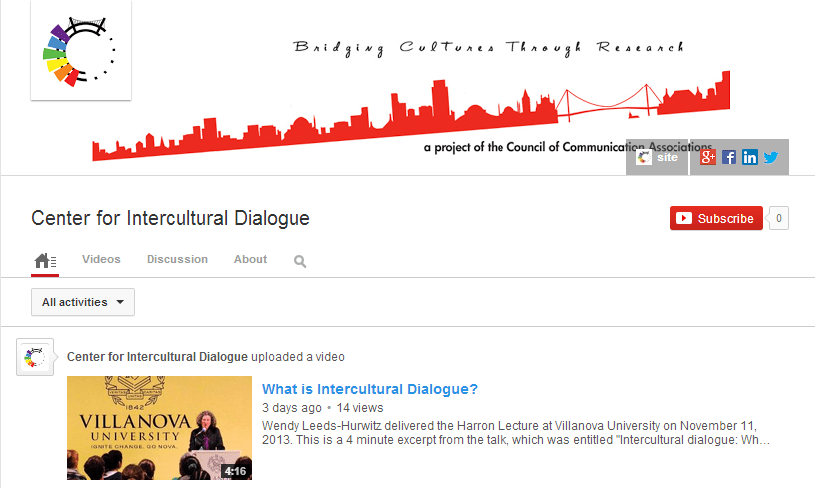
CID Starts a YouTube Channel

About CIDThe Center for Intercultural Dialogue has just started a YouTube channel. The channel is named after the Center. cid_youtube_channel

The first video is a clip entitled “What is Intercultural Dialogue?” This clip was extracted from the Harron Lecture at Villanova University on November 11, 2013, delivered as part of the responsibilities of the Harron Family Endowed Chair in Communication by Wendy Leeds-Hurwitz, CID Director. The talk was entitled “Intercultural Dialogue: Who Needs It? Who Promotes It? Who Studies It?”

Future videos of talks or activities will be posted as they seem relevant.

NOTE: If you have a video you would like considered, contact us. Videos specifically on intercultural dialogue will be most obviously relevant.

Marieke de Mooij Profile

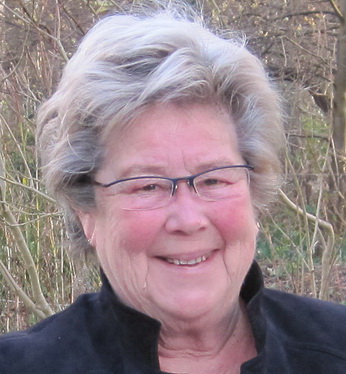
ProfilesMarieke de Mooij, Ph.D. (Netherlands), Doctor in Communications, is a retired profesora asociada at the University of Navarre (Spain), worked as a consultant in cross cultural communications, and has been visiting professor at various universities around the world.

Marieke de Mooij

Her research has been focused on the influence of culture on communication, media, advertising and consumer behavior in a broadest sense. Since the 1990s she has analyzed an enormous amount of data on communication and media behavior, including the new media. One of her main conclusions is that globalization does not lead to converging communication behavior. Instead, communication behavior across cultures is diverging instead of converging.

She is the author of several publications on the influence of culture on marketing and advertising and communications. Her books Global Marketing and Advertising, Understanding Cultural Paradoxes (fourth edition, 2014), Consumer Behavior and Culture. Consequences for Global Marketing and Advertising (second edition, 2011), both by Sage Publications (USA and UK) are used at universities worldwide.

A new book on communication theory around the world is published by Springer International (2014): Human and Mediated Communication around the World: A Comprehensive Review and Analysis. This book offers a comprehensive review and analysis of human communication and mediated communication around the world. It challenges the assumption that Western theories of human communication and mass communication have universal applicability. The book covers the influence of culture on interpersonal communication, all sorts of mediated communication and mass communication. It presents communication theories from around the world, incorporating a vast body of literature from north America, Europe, Asia, Africa and Latin America. It also offers an integrated approach to understanding the working of electronic means of communication that are hybrid media combining human and mediated communication.

For more information, and access to publications, see her website.

CID has a New Home Page

About CIDThe Center for Intercultural Dialogue has been updating the website over the last few months, and a new home page has just been introduced, thanks to the efforts of Minh Cao, Assistant to the Director.

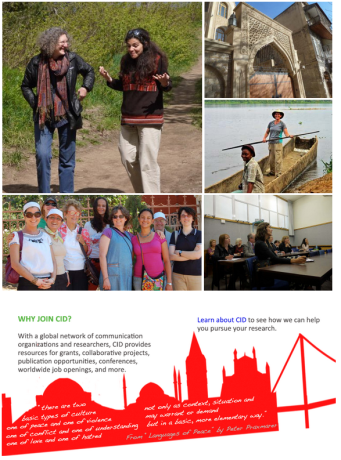
cid_homepage_snapshot

The photos on the home page were chosen to represent a variety of CID activities: talks, micro grants, contributions from readers. For more information about the people or locations mentioned, use the captions to help you find the relevant posts using the search bar. The gradual introduction over the past several months of visual material into the website has almost always been a result of Minh’s efforts: look for embedded videos, graphic designs,  word clouds, more photographs and logos. I am indebted to Minh for making the website user friendly.

Wendy Leeds-Hurwitz, Director
Center for Intercultural Dialogue

CFP ECREA’s European Communication conference

ECREA’s 5th European Communication Conference

The European Communication Research and Education Association (ECREA), in partnership with Lusofona University, will organise the 5th European Communication Conference (ECC). The Conference, due to take place in Lisbon from 12 to 15 November 2014, has chosen as its overarching theme, ‘Communication for Empowerment: Citizens, Markets, Innovations’. The organisers call for proposals in all fields of communication and media studies, but particularly invite conceptual, empirical, and methodological proposals on inter- and transcultural communication phenomena and/or on comparative research. that link the general conference theme, as developed below, to the fields pertinent to each ECREA section.

CFP: ‘Communication for Empowerment: Citizens, Markets, Innovations’

The ubiquitous presence of the media in contemporary society has led to the macro-institutions of society increasingly adapting themselves to (new) media logics , whereby there ceases to be a clear-cut separation between media and other social/cultural institutions. This situation begs for an analysis of how the fast-paced social and technological innovations of our media ecology alter various aspects of daily life, transforming national boundaries into transnational spaces, with resonance on markets and consumption. At the same time that the liberalization of content creation brought about by new media paves the way for innovations and the democratization of the creative economy through the production and distribution of user-generated content, we increasingly witness the prevalence of large economic groups in the design, control and filtering of information. Moreover, the interactive dimension of new technologies not only allows for the voluntary visibility of individuals and groups, but also acts as a means of disciplinary surveillance. As such, increasing cultural, economic and technological convergence implies the mastering of new literacies that allow for the use and critical understanding of both media form and media content. Reflection on the regulatory politics of the communication sector is thus paramount to facilitating both greater mobilization as well as political and cultural participation on the part of the common citizen in public space. Further, we should rethink the necessary balance between the public interest and the interests of the market, so as to ensure the promotion of citizenship, social capital and social inclusion.

Proposals for panels, individual papers and posters can be submitted to one of the 17 ECREA sections through the conference website from 1 December 2013 to 28 February 2014.

Abstracts should be written in English and contain a clear outline of the argument, the theoretical framework, and, where applicable, methodology and results. The preferred length of the individual abstracts is between 400 and 500 words (the maximum is 500 words).

Panel proposals, which should consist of five individual contributions, combine a panel abstract with five individual abstracts, each of which are between 400 and 500 words. Participants may submit more than one proposal, but only one paper or poster by the same first author will be accepted.

First authors can still be second (or third, etc.) author of other papers or posters, and can still act as chair or respondent of a panel.

All proposals should be submitted through the conference website from 1 December 2013 to 28 February 2014. Early submission is strongly encouraged. Please note that this submission deadline will not be extended.

Save

USC Annenberg Summer Inst on Diversity in Media

The USC Annenberg Summer Institute on Diversity in Media and Culture
June 16-20, 2013
Annenberg School for Communication and Journalism
University of Southern California

We welcome applicants for the inaugural USC Annenberg Summer Institute on Diversity in Media and Culture, June 16-20, 2014. The Institute will bring together exemplary doctoral students and faculty members from across the disciplines of Communication and Media Studies and around the nation to discuss issues of race, gender and difference in media, within the shifting conditions of technology, production, circulation and consumption as well as the shifting discourse of difference in the areas of politics, culture and globalization. Approximately 20 doctoral students will be chosen to participate based on submitted papers and recommendations from their advisors.

The Institute will be divided into workshop sessions that feature current work from Institute faculty (listed below) and research seminars in which all participants present and discuss their own work-in-progress. Speakers in the workshop sessions will examine race, gender, and difference in the media from a variety of interdisciplinary and methodological perspectives. The Institute welcomes participants who are involved in a range of disciplinary and interdisciplinary fields and who are interested in current critical debates in Communication and Media Studies.

Applications, including a statement of background and interests and a paper that fits within the Institute’s broad topical range, should be sent to: USC Annenberg Summer Institute, School of Communication, USC Annenberg School, 3502 Watt Way, Los Angeles, CA 90089. Applicants should have their faculty advisor send a supporting recommendation to the same address.

The Institute will cover participants’ travel to Los Angeles and housing in USC dormitory space.

Deadline for Applications: February 1, 2014
Notification of Participants: April 1, 2014

Institute Faculty:
Sarah Banet-Weiser, USC
Taj Frazier, USC
Nitin Govil, USC
Herman Gray, UC Santa Cruz
Larry Gross, USC
Sarah Gualtierri, USC
Josh Kun, USC
Stacy Smith, USC
Beretta Smith-Shumade, Tulane University S. Craig Watkins, UT Austin

Harron Chair talk: Intercultural Dialogue

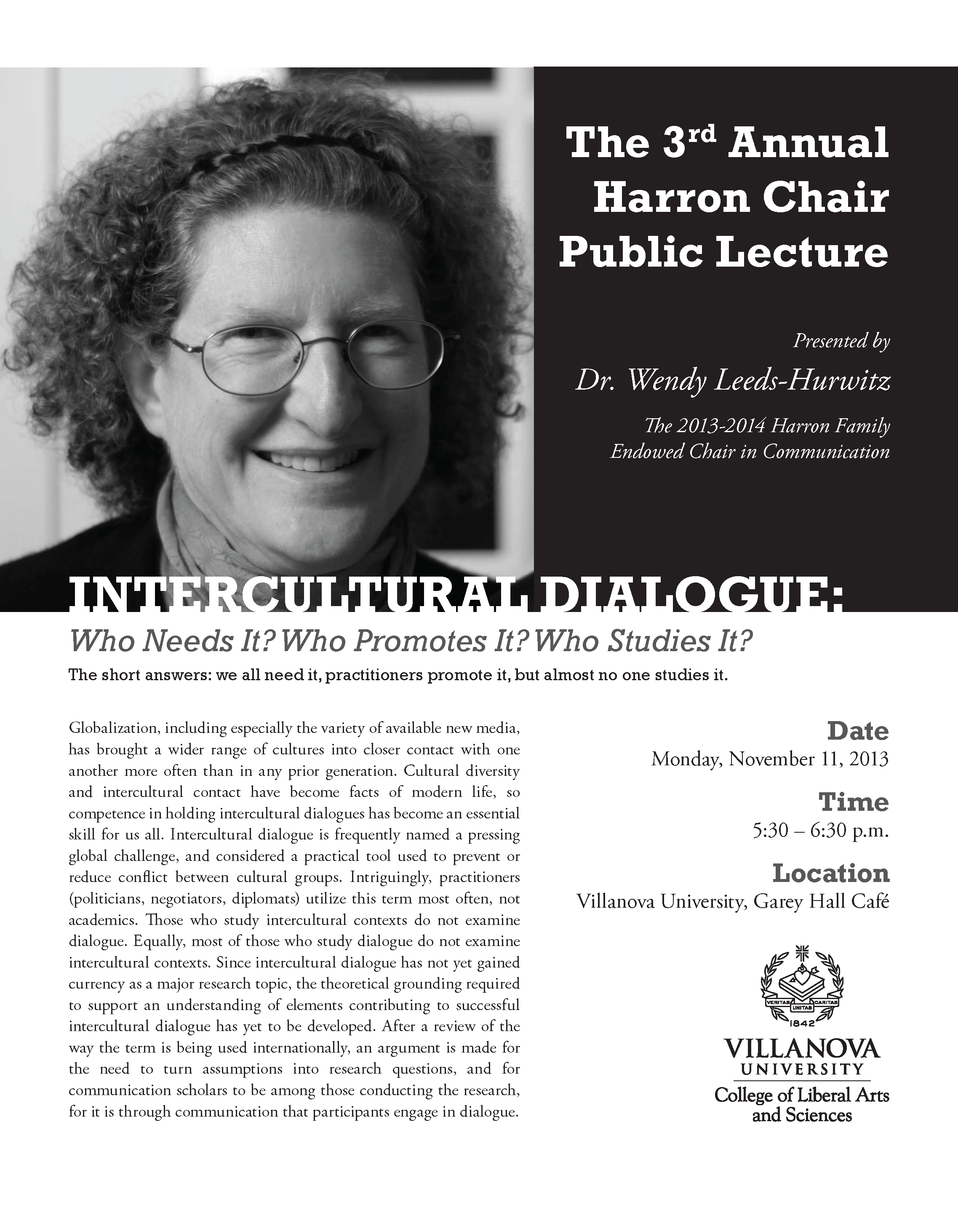
Harron Lecture flyerOn November 11, 2013, I presented the Harron Family Endowed Chair Lecture entitled “Intercultural Dialogue: Who Needs It? Who Promotes It? Who Studies It?” This is the one public lecture expected of the Harron Chair at Villanova University, and this semester I serve in that position. College of Liberal Arts and Sciences Dean Jean Ann Linney provided a brief history of the Harron Family Endowed Chair for the audience, and Dr. Maurice Hall, Communication Department Chair, introduced me. There was a large crowd (more than expected, about 75 – sorry about the lack of chairs for the last dozen to come!) and good questions from not only faculty members but also students. Thanks to Chad Fahs for videotaping, and Minh Cao who set up a new YouTube channel for the Center (more about that in a separate post), you can see an excerpt of the talk (above).

Wendy Leeds-Hurwitz, Director
Center for Intercultural Dialogue

Save

Conflict Conference U Texas Austin

The Conflict Conference (TCC) will hold its first annual conference at the University of Texas at Austin (UT-Austin) on April 10-11, 2014. TCC is a multidisciplinary annual conference promoting the study of conflict and conflict resolution. We invite papers on any relevant topic, such as apologies, advocacy, dispute resolution, peace, negotiation, reconciliation,  mediation,  restorative  justice, conflict management, and ethics.

The DEADLINE for submissions is 10 DECEMBER 2013. Notices of acceptance will be sent no later than 31 January 2014. Paper proposals must include the author’s name and institutional affiliation, the title of the paper, and an abstract of no more than 150 words for the program. In addition, proposals must include a 600 word extended abstract without personal information. (Be as specific as you can, even if your project is still gestating.) Documents must be attached to an email as a pdf or Word document. TCC welcomes submissions from students. Please indicate student status in all paper proposals. Please send all proposals to TCC.

Conference panels will be held on Thursday, April 10th, and Friday, April 11th  on the  UT-Austin campus.  Keynote speakers  will address the conference both Thursday and Friday. TCC will host a cocktail mixer the evening of Thursday, April 10th at a nearby off- campus location and host a closing party off campus Friday, April 11th. A detailed schedule will be sent to participants at a later date. A conference registration fee of USD $25.00 is required. Watch for updates on our webpage.

This conference is sponsored by the UT Project for Conflict Resolution.

Save