
 WE RISE video, prepared by Class 5B, Liceo Artistico Aldo Passoni [High School of Arts Aldo Passion], Torino, Italy.
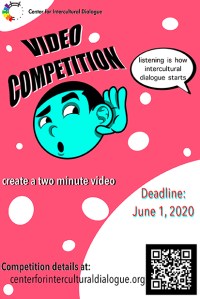
NOTE: A prior class of Paola’s won 2nd prize in the CID Video Competition in 2018, and then prepared a reflection on making that video to aid potential 2019 competitors. This video shows how a group might create a video for the 2020 competition, despite quarantine orders.
The idea came in the middle of the eye of the hurricane of COVID-19 in Italy. It was mid-March 2020 and, in the north of Italy where I live, the number of infected people was tripling every day, the hospital system was nearly collapsing, and the death toll was appalling.
I had been meeting my students online regularly. Before starting our lessons on English Literature and Visual Arts, we always had short conversations about how they were, how their family members were, and how they were coping with the situation. Looking at their faces through the screen, I saw their sense of bewilderment, but I also saw their resilience. Their young bodies and their youthful energies were confined, but their minds were not.
Therefore, I thought that maybe we could try together to get out of our physical confinement, and send a message of resilience, solidarity, and hope which could reach other people outside our homes. Yet, such a message was also directed inward to ourselves as an act of resistance and as the possibility to open our inner window on the future.
I proposed that my students make a video in which each of them would read some lines of a poem or a song. Participation was voluntary, yet the majority of them accepted immediately. I looked for some poems on a website which is very well done and which I often use for my lessons too: www.poetryfoundation.org. I chose some lines from four poems which I found particularly inspiring for the purpose we had in mind. I then proposed the poems to the participants: we read the poems together, I translated some parts for them, and then they decided which poem they preferred. Then, each participant read the whole poem that s/he had chosen, recording it on her/his mobile phone or computer. Meanwhile, I had asked a friend of mine, Luca Gasparini, a professional film editor, whether he could edit the different recordings. He accepted immediately and willingly. So, I collected all the different videos and uploaded them for him on a platform. He promptly edited them, and finished in only a few days.
I am so proud of my students! To spread such a message, they accepted to foreground the fragility and the vulnerability of speaking in English, which is not their native language. Even the students who have more difficulties in speaking English agreed to participate, showing that exposing one’s frailty can be a great act of courage. I think they all demonstrated great generosity, hope, and trust.
A final note on the title. The title was inspired by one of the poems, but it was important to convey plurality and solidarity by using use the inclusive pronoun ‘we’ – referring to ‘we’ in the video, but also to ‘we’ in not only our immediate communities, but also in the global community. Then, the verb ‘to rise’ which means ‘to stand up’ and indicates resilience and hope; but at the same time ‘to rise’ also references the rising sun. Therefore, our message also points out that after darkness comes a new dawn.
I hope you like the video!
Paola Giorgis


 Ovinuchi Prince Ejiohuo is a writer, filmmaker, photographer, and activist currently working as a Media and Communications Officer/Sustainable Development Goals Ambassador at Yiaga Africa in Nigeria. A 2018 Global Ambassador Fellow of the Better Tomorrow Movement, he is a member of the International Youth Media Summit (IYMS). He has photographed and filmed world leaders, including Nobel Prize winner Dr. Denis Mukwege, Kenyan Activist Boniface Mwangi, former Nigerian Electoral Chairman Prof. Atahiru Jega, Nigerian Speaker House of Representative Femi Gbajabiamila, EU and ECOWAS ambassador to Nigeria Ketil Karlsen, US ambassador Stuart Symington, and British High Commissioner Catriona Laing. His written work and photo and video images have featured in many reputable publications and research both nationally and internationally. He has worked on media projects for organizations such as the Centre for Democracy and Development, ActionAid Nigeria, International Republican Institute, Accountability Lab, European Centre for Electoral Support and the Independent National Electoral Commission. In 2018, he co-directed the silent short film Anything for us for an anti-corruption project sponsored by McArthur Foundation. In 2019 his documentary film displaced showcased in Nepal where he produced the film Rising for IYMS. His Democracy Summer Camp short film Below the Legal Line was nominated for the 2019 Pan African Film Festival. His work focuses on addressing issues around peace, gender equality, marginalisation, education, youth participation, environment, governance and development.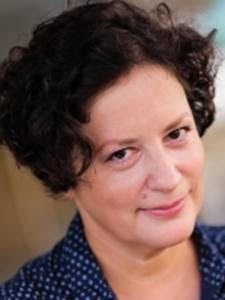
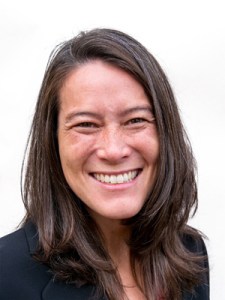 Elizabeth S. Parks is Assistant Professor of Communication Studies at Colorado State University. She has degrees in Communication, Deaf Studies, and Sign Language Interpreting. She uses her international fieldwork experience with diverse cultural communities to ground her scholarship in listening and dialogue, communication ethics, cultural studies, and disability studies. Her current research focuses on the ways in which cultural diversity and embodied difference impacts perceptions and practices of “good listening” that ultimately promote ethical dialogue across difference. Courtesy of her publisher, Lexington Books, copies of her new book, The Ethics of Listening: Creating Space for Sustainable Dialogue, will be given to the top three prize winners in this competition.

 Carolijn van Noort is a lecturer in politics and public policy at the University of the West of Scotland in London, UK. In 2018, she was awarded her PhD in Political Science and Media, Film and Communication from the University of Otago in New Zealand. Her research explores the strategic communication of rising powers on the issue of infrastructure vision and action plans. Her articles have appeared in Global Society, International Journal of Cultural Policy, Politics and Governance, and Women Talking Politics.




 Center for Intercultural Dialogue