

Shanoy Coombs Profile

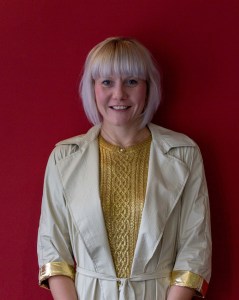
ProfilesShanoy Coombs is a decade rich Development Communications Specialist based in the Caribbean with local, regional and international expertise spanning several industries in the public, private and International NGO sectors.
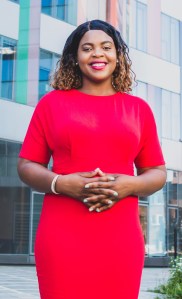
Shanoy CoombsHer MA research at the University of Sheffield, UK focuses on the role of Intercultural Communication in Multi Stakeholder platforms and will complement her prior work experience in multicultural and intercultural settings.

Shanoy has consulted with International organizations such as the United Nations’ Food and Agriculture Organization for Jamaica, The Bahamas and Belize as well as the European Union and has worked on projects funded by the Inter-American Development Bank (IDB), the Caribbean Development Bank and Grand Challenges Canada.

She has also served as Communications Chairperson for the United Nations Communications Group Caribbean cluster where she provided oversight for joint United Nations activities in the caribbean that require communications support as a part of the One UN Strategy.

Shanoy also teaches Public Speaking sessions via the University of Sheffield’s student union and has led communications training sessions on behalf of several clients.

For more about her visit her website.

Publications prepared on behalf of organizations while an employee:


Work for CID:

Shanoy Coombs won a prize in the 2020 CID Video Competition. She also wrote KC98: Essentialism.
Salma T. Shukri Profile

Profiles

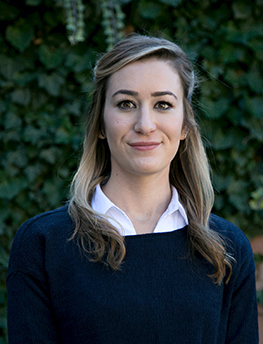
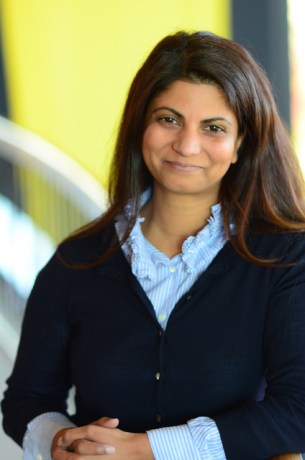
Salma T. Shukri (Ph.D., University of Denver) is an instructor of communication in the Leeds School of Business at the University of Colorado, Boulder.

Salma ShukriHer areas of interest include intercultural communication, interpersonal communication, and conflict management. Specifically, she explores how communication—specifically, how we communicate about difference—serves as both an instrument and a barrier to inclusion and belonging. Along with having taught several intercultural communication courses at various institutions, Salma has also held several non-academic, professional positions with local and international organizations in the field of conflict mediation and cross-cultural dialogue.
Additionally, Salma engages in methodological research, advancing qualitative research methods through her work. She has published this work in top-tier journals, including the Journal of International and Intercultural Communication and in Text and Performance Quarterly. 

Recent publications:

Shukri, S. & Willink, K. (in press). Interpretive discernment: Feeling our way toward a performative understanding of interviewing. Departures in Critical Qualitative Research, 9(3).

Shukri, S. (2019). Review of Muslim women and white femininity: Reenactment and resistance. Text & Performance Quarterly, 39(4), 414-416. doi: 10.1080/10462937.2019.1657935

Willink, K., & Shukri, S. (2018). Performative interviewing: Affective attunement and reflective affective analysis in interviewing. Text & Performance Quarterly, 38(4), 187-207. doi: 10.1080/10462937.2018.1526409

Willink, K., Gutierrez-Perez, R., Shukri, S., & Stein, L. (2014). Navigating with the stars: Critical qualitative methodological constellations for critical intercultural communication research. Journal of International and Intercultural Communication, 7 (4), 289-316. doi: 10.1080/17513057.2014.964150


Work for CID:
Salma Shukri translated KC22: Cultural Identity, KC33: Moral Conflict, KC35: Media Ecology, KC53: Conflict Management, and KC68: Social Justice  into Arabic. She also has served as a reviewer for Arabic translations.

Emilija Jovanovska Profile

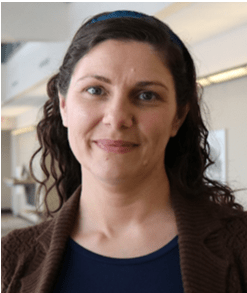
ProfilesEmilija Jovanovska is currently a Ph.D. student at the Department of Curriculum & Instruction at the University of Idaho, Moscow, Idaho. She is also an ESL and English Composition instructor at the Global Students Success Program and the English department at the University of Idaho.

Emilija Jovanovska

Additionally, she enjoys the privilege of contributing to World education by teaching English Composition at the University of the People to students from all over the world. Her research interests are in the fields of Intercultural Communication, Academic Socialization, Leadership Studies, EdTech, and Curriculum Design. Her project “Language Socialization of Balkan Graduate Students into the Universities of the Palouse” was given an award by the Palouse Culture and Language Symposium, held annually at the University of Idaho.

Since one of her passions is educating educators, she dedicates part of her time to creating professional development projects for university educators, such as Navigating Academic Culture at US Universities by International Students, a lecture that she collaboratively delivered to the faculty at the University of Idaho and published on the Navitas Teaching & Learning website.

For more information about her, please follow the link to her website.


Work for CID:

Emilija Jovanovska has translated KC2: CosmopolitanismKC3: Intercultural Competence, and KC5: Intercultural Communication into Macedonian, and participated in a CID/UNESCO focus group for the Futures of Education Initiative.

Daniel Mateo Ordóñez Profile

Profiles

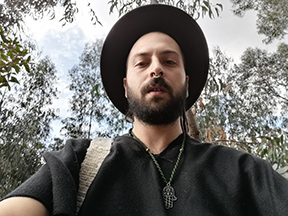
Daniel Mateo Ordóñez is a Sociologist from the National University of Colombia, Bogotá, Colombia.

The research areas in which he is interested are: Interculturality, Intercultural Dialogue, Hermeneutics, Hermeneutical Cultural Analysis, Phenomenology, Discrimination, Social Exclusion, Human Rights, and Culture.

He is an independent translator, investigator and author, as well as a volunteer collaborator with the UNESCO Chair in Intercultural Dialogue / Cátedra UNESCO – Diálogo Intercultural at the National University of Colombia, and a member of the “Observatorio de la Exclusión” project associated with the UNESCO Chair.

He is also the creator of the Autarkeia Project, an independent project of dissemination and promotion of knowledge, especially in the area of Human and Social Sciences.

See his profile on academia.edu.


Work for CID:

Daniel Mateo Ordóñez wrote KC101: Antisemitism, and translated it into Spanish; he also translated concepts originally written by others, specifically KC14: Dialogue, KC16: MigrationKC23: Afrocentricity, KC31: Indigenous, KC49: IntersectionalityKC89: Xenophobia, KC90: Islamophobia, and an essay on intercultural dialogue into Spanish. He also has served as a reviewer for Spanish.

Maria Faust Profile

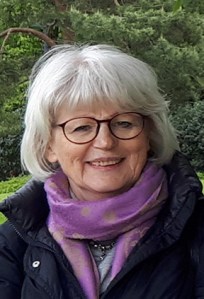
ProfilesDr. Maria Faust holds the position of a Research Associate at Chemnitz University of Technology, in Germany. She graduated from Leipzig University, Institute of Communication and Media Studies, Germany, with her thesis on “The Theoretical and Empirical Paradox of Temporal Change due to Digital Media in Germany and China” with highest distinction (summa cum laude). She was a Visiting Scholar at Renmin University, PRC, and the University of Bergen, Norway.

Maria FaustDr. Faust has worked for University of Leipzig, University of Technology Chemnitz, Stockholm University, University of Applied Sciences Mittweida, the Micro Census in Saxony, and the European Institute for Journalism and Communication Research.
In 2011 she presented her work at Oxford Internet Institute, in 2016 she won a Best Paper Award at IADIS Conference and presented at University of Sao Paulo, RANEPA, Sorbonne and Lomonosov University, amongst others. She served as CGCP Editor of Stanford Law School’s China Guiding Cases Project and held the position of an Associate Editor with the Postgraduate Journal Networking Knowledge of the British Media, Communication and Cultural Studies Association.

She has frequently published with China Media Research and guest-edited a special section on Visual Online Communication in BRICS countries with the same journal. In 2020 she edited a volume with Assoc. Prof. Thomas Herdin and Prof. Guo-Ming Chen on De-Westernization of Visual Communication and Cultures, embracing perspectives from the Global South with NOMOS publisher. Moreover, Dr. Faust’s articles have appeared in Kronoscope, East Asian Journal of Popular Culture, and Journal of Multicultural Discourses.

Since 2023, Dr. Faust has been investigating “The Epistemologies of Landscape in the Age of Deep Mediatization” from a transdisciplinary perspective in her postdoctoral project. First insights were presented at the Annual Conference of the Digital Geographies Research Group of the Royal Geographical Society, UK.


Work for CID:

Maria Faust translated KC28: Postcolonialism, Poster 1: Intercultural Communication / Competence / Dialogue, CID Poster 3: Intercultural Dialogue, CID Poster 4: Types of Intercultural Communication, and CID Poster 5: Kommunikation als Kulturdefinition into German, and has served as a reviewer of German translations.

Ilse Herath-Schugsties Profile

ProfilesIlse Herath-Schugsties is a Psychologist (Friedrich Alexander Universität, Erlangen, Germany) and Psychoanalytical Psychotherapist (Alfred Adler Institut, DGIP) who focuses on Children and Youth.

Ilse Herath-Schugsties

Herath-Schugsties spent her whole working life in Munich. After working in a Social Psychiatric Ambulance and ten years at a Children’s Home for Remedial Education as psychologist and manager, she moved to an institution of Educational Guidance and Counseling in a socially disadvantaged district where she cooperated with different educational institutions, e.g. crèches, kindergartens or schools for more than 25 years.

The rate of migrants is especially high in this part of the city. Very often they are refugees and their families, in part traumatised by war, with different residence status. Due to this it is not unusual to have children from up to thirty different nations in kindergartens and schools, and classes without native speaking Germans. Herath-Schugsties started a successful project in cooperation with some kindergartens to empower the migrant parents, e.g. by reflecting cultural differences in bringing up children and in family life.

Through individual psychological counselling and open courses for intercultural dialogue she spread information using handouts or visual material as the basis, encouraging confidence in intercultural learning and communication to help them adapt to a different way of living.
Media and communication have been important “ingredients” for this project as well as in the rest of her work. Although retired she still works as case supervisor or speaks at parents’ evenings for those multicultural crèches and kindergartens .


Work for CID:
Ilse Herath-Schugsties translated KC35: Media Ecology into German.

Uygar Doğan Profile

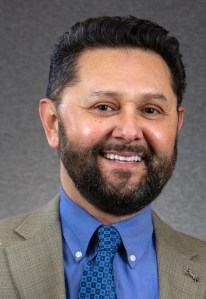
ProfilesUygar Doğan is an Agile Program Lead with Capital One Tech and a language enthusiast. She holds an MBA degree from State University of New York (SUNY) Albany.

Uygar DoganBorn in Turkey, she immigrated to the USA in 1998. She studied English and German as part of her school curriculum in Turkey, and she enjoys translating between the languages of Turkish, German and English. In her current job, she helps software engineers accomplish their goals via Agile methodologies. She currently lives in New York City and appreciates the immense diversity the city has to offer. Her other interests include traveling the world and discovering good Plant Based food wherever she goes. She is happy to be a part of CID’s research community and hopes that through such exchange, the world will learn to become one and appreciate our differences as well as our similarities.

Work for CID:
Uygar Doğan translated KC35: Media Ecology into Turkish.

Milton Machuca-Galvez Profile

Profiles

Milton Machuca-Galvez is International Collections Librarian at the University of Kansas, Lawrence, Kansas, USA.

Milton Machuca-Galvez

He holds a Licenciatura in Psychology from UCA in his native El Salvador and a Ph.D. in Anthropology from Temple University, Philadelphia. He is a freelance translator. He has a 25-year teaching-mentoring-advocacy interdisciplinary career in several U.S. higher education institutions. This experience was built upon his undergraduate studies and his work with indigenous communities in Central America; these experiences led to his anthropology Ph.D. and his work with Latino communities in the U.S. He also has administrative, collaborative and organizational development experience as Director of a study abroad program in Costa Rica and Coordinator of a Latin American and Latino Studies interdisciplinary program. He has served as Humanities Librarian and Visiting Scholar at the University of New Mexico, Visiting Instructor at Rutgers University, Visiting Assistant Professor of Latin American and Latino Studies at Swarthmore College, and he has also taught at Claremont Colleges, in California. For further information, see this excellent recent article about him and his work at Kansas.


Work for CID:
Milton Machuca-Galvez translated KC1: Intercultural Dialogue into Spanish, and has served as a reviewer for Spanish.

Chi-Hoon Kim Profile

Profiles

Chi-Hoon Kim holds a PhD in Anthropology (Indiana University) and an MA in Anthropology of Food (School of Oriental and African Studies).

Chi-Hoon Kim

Her research examines the global rise of gastro-national branding as a nation-building strategy to understand why nation-states use food to enhance their international reputation. She investigates the political process of promoting culinary practices through international heritage regimes and global media. Chi-Hoon has published on topics such as the inflight experience of national cuisines, the use of plastic food models as gastro-national tools, and the politics of kimchi as intangible cultural heritage.

Publications:

Kim, C.-H. (2017). Let them eat Royal Court Cuisine! Heritage politics of defining global hansik. Gastronomica: The Journal of Critical Food Studies, 17 (3), 4-14.

Kim, C.-H. (2016). Kimchi nation: Constructing kimjang as an intangible Korean heritage. In C. M. K. Lum & M. de Ferrière le Vayer (Eds.), Urban foodways and communication: Ethnographic studies in intangible cultural food heritage around the world (pp. 39-54). London, UK: Roman and Littlefield.

August, T., & Kim, C.-H. (2016). The turn to ‘bad Koreans’: Transforming televisual ethnicity. Television & New Media, 17 (4), 335-349.

Kim, C.-H. (2014). The power of fake food: Plastic food models as tastemakers in South Korea. M?C Journal: A Journal of Media and Culture, 17(1).

Kim, C.-H. (2014). Tasting the nation in the air: Branding the Korean nation through airline meals. In R. Bendix & M. Fenske (Eds.), Political meals (pp. 207-217). Berlin, Germany: LIT Verlag Publications.


Work for CID:
Chi-Hoon Kim translated KC35: Media Ecology into Korean.

Suman Mishra Profile

ProfilesSuman Mishra is an Associate professor and Graduate Program Director at Southern Illinois University Edwardsville.

Suman Mishra

She is an interdisciplinary teacher-scholar of media and communication. Her research focuses on globalization, consumer culture, transnational media, advertising/strategic communication, and visual communication. Her research explores issues related to race, class and gender. Geographically, she is interested in media and communication in developing countries.

At Southern Illinois University Edwardsville, she teaches undergraduate and graduate courses These include Research Methods in Mass Communication, Media Law and Policy, International Advertising, Transnational Media, Mass Media in Society, Mass Media & Health, Media Campaigns, and Freshman Seminar. Before joining SIUE, she has taught at Temple University, Philadelphia.

She has her PhD from Temple University, Philadelphia, PA and master’s degree from Michigan State University, East Lansing, MI. She has received teaching distinction award and phenomenal women award from Southern Illinois University Edwardsville.

She has served as the head of Cultural and Critical Studies at The Association for Education in Journalism and Mass Communication (AEJMC). She is currently a fellow at Institute of Diverse Leadership at AEJMC and Fellow at Kopenhaver Center at Florida International University.

Recent Publications:

Mishra, S. & Kern, R. (Eds.). (2019). Transnational media: Concepts and cases. Medford, MA: Wiley Blackwell.

Mishra, S. (2018). Assimilatory hybrid masculinity in Indian editions of global men’s lifestyle magazines: The production process. Journal of Media Business Studies, 15(2),147-168.
https://doi.org/10.1080/16522354.2018.1482040

Mishra, S. (2017). The importance of “consumer type” in the attribution of crisis responsibility: The case of the Maggi noodles crisis in India. International Journal of Strategic Communication, 11(3), 224-243. https://doi.org/10.1080/1553118X.2017.1307843

Mishra, S. (2017). Looking westwards: Men in transnational men’s magazine advertising in India. Global Media and Communication, 13(3), 249–266. https://doi.org/10.1177/1742766517734254


Work for CID:
Suman Mishra wrote KC95: Transnational Media.