CID’s first Student Voices competition is over. As a reminder, students (at any level) were invited to describe their own experiences with and/or ideas about intercultural dialogue.
The winner is Rohak Jain, a high school student at Interlake High School in Belleview, WA. You will want to read his essay, The Virtues of an Open Mind: Making Room for Flexibility in Intercultural Dialogue. In it, he describes a conversation held through Acquaint, a platform dedicated to fostering cross-cultural collaboration. He says:
Throughout this essay, I’ll unpack the many dimensions of intercultural dialogue, demonstrating that to resolve conflict through intercultural dialogue, it is important to listen, understand, and contribute. Maintaining constructive conversation is key.
My thanks to all the competitors who took the time to really think about intercultural dialogue, to their instructors who helped alert students to this competition, and to those who served as judges: Melita Garza, Summer Harlow, Nazan Haydari, Casey Lum, and Mary Schaffer. As a reminder, we are holding additional competitions for publications in this series across the rest of the academic year:
November 30, 2023
February 29, 2024
May 31, 2024
For further details about the competition, please see the first post describing it.
The Inter-American Dialogue is seeking a Program Associate to join the Office of the President team. The candidate will have initiative, excellent communication, organizational, and administrative skills, outstanding problem-solving skills, and the ability to communicate effectively in both English and Spanish. Candidate must have the capacity to work concurrently and efficiently on multiple projects in a fast-paced office environment. Experience in event planning and gender programming is preferred. This position is based in Washington, DC, and is eligible for a hybrid work schedule.
Other opportunities at Inter-American Dialogue can be found here.
The Inter-American Dialogue’s work spans the US, Canada, and 35 countries in Latin America and the Caribbean, and examines the region’s expanding global influence.
Outreach Officer, Anna Lindh Euro-Mediterranean Foundation, Alexandria, Egypt. Deadline: 20 September 2023.
The Anna Lindh Foundation (ALF) is seeking a creative and highly motivated individual to join the communication team as the role of Outreach Officer. The Outreach Officer will play a vital role in expanding the reach and impact of the Anna Lindh Foundation’s programmes and initiatives in line with the ALF Multiannual Work Programme 2022-2025, following the indications of the Communication Manager.
The Outreach Officer is responsible to develop and execute innovative outreach strategies, engaging with diverse stakeholders across the Euro Mediterranean to ensure the effective dissemination of ALF’s capacity building programmes, workshops, events, and networking opportunities using creative and impactful means. Additionally, this role will be responsible for ensuring that calls and programmes are reached out the right target audience.
Applicants must be nationals of one of the 42 (UfM) countries: Albania, Algeria, Austria, Belgium, Bosnia and Herzegovina, Bulgaria, Croatia, Cyprus, Czech Republic, Denmark, Egypt, Estonia, Finland, France, Germany, Greece, Hungary, Ireland, Israel, Italy, Jordan, Latvia, Lebanon, Lithuania, Luxembourg, Malta, Mauritania, Monaco, Montenegro, Morocco, Palestine, Poland, Portugal, Romania, Slovak Republic, Slovenia, Spain, Sweden, Syria, The Netherlands, Tunisia and Türkiye.
The Department of Communication Studies at Colorado State University seeks a tenure track assistant or associate professor who specializes in rhetoric and race in the United States. Successful candidates will study race through any of a number of rhetorical perspectives (theory, criticism, history, or any combination of these approaches) and will demonstrate race is a central and animating focus of their scholarship and teaching in their application. Possible areas of study include but are not limited to racial rhetorical criticism, antiracism rhetorics, postracism, race and space/place/borders, intersectionality, whiteness, decolonizing rhetorical scholarship, and Latina/o/x rhetorics, Asian/Pacific American rhetorics, Black and/or African American rhetorics, and Indigenous and/or Native rhetorics, among others. This faculty member will develop new coursework in rhetoric and race at the undergraduate, M.A., and Ph.D. levels and will rotate with other faculty members to teach the department’s existing courses in rhetoric. Candidates will employ humanistic and/or critical methods in their study of rhetoric and race.
The Young International Academics (YIA) Postdoctoral Programme is a career development programme hosted by the Institute for Advanced Studies Luxembourg (IAS) of the University of Luxembourg (UL) to nurture early-career postdoctoral researchers to gain momentum in interdisciplinary research. YIA candidates are international talents holding a recent doctoral degree and willing to propose and realise their own interdisciplinary research projects through a bottom-up approach. YIA will welcome 10 postdoctoral fellows with individual fellowships of 36 months each.
YIA is explicitly open to all disciplines and sectors, involving the entire university in the drive towards increased interdisciplinarity, which is considered strategic for UL, for the country and Europe. The University’s rationale is based on the consideration that the world’s challenges are so multifaceted and intricate that they can only be solved through interdisciplinary and intersectoral approaches.
A unique aspect of YIA is its integration into UL’s Institute for Advanced Studies created in 2020 to promote interdisciplinarity and currently hosting 15 Audacity projects and 10 Young Academics PhD projects.
Book Editors: Tegan Bratcher and Alexis Romero Walker.
The editors invite submissions of abstracts for chapters to be included in an edited volume of Diversifying the Space of Podcasting. The book proposal, currently under review (with enthusiasm), is tentatively scheduled for a Fall 2024 publication.
Podcast studies is a growing field both within academia and in practice. As the media platform continues to gain momentum and popularity every year, scholars have been road mapping and exploring the podcasting landscape from a variety of perspectives. As research on the medium continues to be published, it is necessary to illuminate the diverse spaces that podcasts embody and create.
A survey of the scholarly attention on podcasts nearly a decade ago exclaimed that the medium received little to no attention within media and communication studies (Bottomley, 2015); and while that has certainly changed in the last 8 years, the racial, cultural and identity-based perspectives from which we understand podcasts remain limited. Like many other concepts that tend to be studied, podcast studies have been entrenched in whiteness and heteronormativity utilizing case studies from mainstream media like The New York Times or NPR to express the significance of the space and estranging projects that center Blackness, queerness, feminist, LatinX and countless other identities to be considered subfields of the discipline.
The editors believe that a wide range of diverse voices is essential to amplify the diversity within podcasting, and it is essential to ensuring that many voices are being heard. Thus, they want to hear from people with a variety of backgrounds and interests: academics, researchers, activists, and/or creators. The goal is for the volume to be intersectional, and to discuss the ways in which podcasting has had an impact both on a variety of identities and within various fields. They are aiming for a total of 8-12 short chapters (5,000-8,000 words), each focusing on diverse topics within the field. This approach allows for a greater array of intersectional representation.
The deadline for submission of abstracts is October 1st, 2023. Authors of selected chapters will be notified by November 1st, 2023. If selected, a complete 5,000 – 8,000 word draft of the chapter will be due April 1st, 2024.
Potential contributors are welcome to contact the editors for more information or questions at: Tegan Bratcher, or Alexis Romero Walker.
UNESCO’s Social and Human Sciences Sector has launched the UNESCO Series of Regional Expert Consultations on Intercultural Competencies for Peacebuilding. Through these consultations, UNESCO aims to explore the potential of the development of intercultural and socio-emotional skills to serve as an enabler for peace in fragile, conflict-affected and post-conflict contexts.
The fifth of the six regional editions of online expert consultations will focus on Arab States and will be held on Thursday 21 September 2023, from 15:00 to 17:00 GMT+2 (via Zoom). The fifth edition will bring together experts and practitioners to discuss the main challenges to intercultural understanding in the region, the role of intercultural skills in building trust among different parties, and ways of improving intercultural competence to better promote peacebuilding efforts, paying particular attention to the role of women and youth.
To register for the online event, please click here.
The LUT School of Engineering Sciences, the academic discipline of global communication sciences at the Department of Social Sciences, is looking for a post-doctoral researcher in global communication sciences to strengthen its global communications, soft power and strategic narratives area and work on projects related to these themes.
The ideal candidate will have a track record of internationally excellent publications or a trajectory for achieving this. Specifically, we are looking for a curious mind who is interested in longer-term academic career and is passionate about constant learning and making the world a better place to live through science.
The ideal candidate must have a PhD degree in a relevant field (preferably communication studies, global communications, media and communications studies, news media and journalism studies or communications and AI). Alternatively, you may hold a degree in another social science field, such as sociology, political science, social psychology or international relations and wish to use that knowledge to contribute to communication sciences, particularly to global communication, soft power, disinformation and strategic narratives research. You might also hold two degrees, with the other one in computer or data science, and be interested in applying that to the field of communication sciences.
Culturally responsive teaching was one of the main themes in my second annual summer study abroad program on Intercultural Perspectives on Teaching and Learning at NYU London (July 3-17, 2023).
A defining measure of culturally responsive teaching is how, and the extent to which, teachers use “the cultural characteristics, experiences, and perspectives of ethnically diverse students as conduits for teaching them more effectively. It is based on the assumption that when academic knowledge and skills are situated within the lived experiences and frames of reference of students, they are more personally meaningful, have higher interest appeal, and are learned more easily and thoroughly” (Gay, 2002, p. 106).
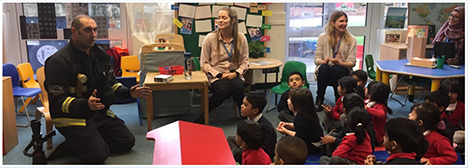
A class in session at Mayfair Primary School. (Photo credit: Mayfair Primary School)
This has been a useful concept to the graduate learners in my program this summer. Several of these learners are themselves in-service public-school teachers (from pre-K to middle school) in New York City with expertise in the like of music education, early childhood education, special education, etc. With from five to more than 25 years of teaching experiences among them, these learners have witnessed a steady influx of immigrant students from diverse national backgrounds and cultural heritages in their increasingly multicultural classrooms (e.g., Bardolf et al., 2023). While the diversity offers exciting possibilities for enhancing intercultural awareness among the students, it also presents a multitude of challenges in language teaching (e.g., ESL), intercultural adaptation, family support or engagement, professional development of the teaching staff, and so on. Hence, one of the course’s main learning objectives has been to identify the challenges facing their counterparts in London who teach in similarly multicultural settings, as well as how the latter address these challenges or take advantage of what these challenges may present.
In this regard, we visited two elementary schools and two secondary schools in London, Mayflower Primary School and St. Andrew’s (Barnsbury) CofE Primary School, as well as Parliament Hill School (an all-girls school) and William Ellis School (an all-boys school). These four public schools are in part defined by the multicultural and multilingual backgrounds of their respective student populations, while Mayflower Primary, located in the eastern borough of Tower Hamlets in London, has the distinction of enrolling about 90% of its students from multiple generations having Bangladeshi family heritage. While our field study did not uncover any one-size-fits-all curricular design or teaching method, we did discover that storytelling has been an effective culturally responsive pedagogy in these four schools.
Identifying itself as “a storytelling school,” for example, Mayflower Primary uses storytelling as a pedagogy throughout its curriculum, beginning with nursery school. Dependent upon the grade level, and with input from multiple sources (including teachers in the schools, students and their families, members from the school’s community, etc.), a number of stories are chosen to become an integral part of every class’s teaching and learning materials. Throughout the school year, teachers and their students engage in various reading, writing, discussion, interpretation, and re/telling of these stories, some of which are culturally relevant to the heritage backgrounds of the students. According to Heba Al-Jayoosi, Mayflower Primary’s Assistant Headteacher and Inclusion and Research Leader, storytelling has been an effective tool in helping students promote their skills in reading, writing, language development, communication, and so on.
Equally important is that storytelling can also promote students’ intercultural competence (Arasaratnam, 2014) which can, in turn, help facilitate intercultural dialogue (Leeds-Hurwitz, 2014) in the long run. In a special presentation on “Storytelling and the Early Years” to my students in the summer program, Alice Jones Bartoli of King’s College London spoke about how storytelling plays an important role in helping facilitate young children’s social and emotional development. Through dialogic reading, sustained shared attention, and re/telling of stories, especially those relevant to their heritage backgrounds, students come to develop their reading and writing or literacy skills, their self-confidence or self-image, as well as their creative expression abilities. Storytelling in such a teaching and learning context also enhances students’ exposure to stories with cultural or heritage elements that are at first unfamiliar to them, as they gain opportunities to listen to, reflect upon, and comprehend or understand cultural narratives other than their own.
All the learners in the program expressed in their individual final field research reports that they plan to utilize what they learned in London this summer either in furthering their graduate studies in social work or world language education or in acting as agents of change when they return to teach in their public schools in New York City. Of course, it is quite early to tell how and to what extent their experiences and the wonderful work of our professional colleagues in London can be applied to the New York context. But I hope to report on such impact in a future update.
Casey Man Kong Lum, Associate Director
Center for Intercultural Dialogue
YES Specialist, AFS-USA, New York, NY, USA, hybrid position. Deadline: posted 11 August 2023, open until filled.
AFS-USA is part of a worldwide network of AFS partner organizations that work together to advance global education and foster meaningful connections across cultures. As the network’s largest partner, AFS-USA works to increase the global competency of U.S. citizens by providing a variety of international and intercultural learning experiences to individuals, families, schools, and communities.
This position is within the Sponsored Programs Department at AFS-USA, which manages several programs of the Bureau of Educational and Cultural Affairs at the U.S. Department of State, providing scholarships for adolescents to participate in international exchange. Specialists focus on a specific portfolio of grant-funded program(s), which, depending on the size and scope of programs, may encompass more than one program or may mean working in tandem with other staff on some part of a larger program or project. The YES Abroad Specialist will work most closely with the Manager of Outbound Sponsored Programs, as well as other department and division staff.
This position will focus on sending American participants on the Kennedy-Lugar Youth Exchange and Study (YES) program, known as YES Abroad, including designing and implementing programmatic components. Core responsibilities of the role include carrying out program requirements, such as conducting orientations, managing projects, communicating with participants and domestic and international partners, communicating with volunteers, working on participant orientations and travel/logistics, carrying out program-focused projects, and reporting to the sponsor.

 CID’s first Student Voices competition is over. As a reminder, students (at any level) were invited to describe their own experiences with and/or ideas about intercultural dialogue.
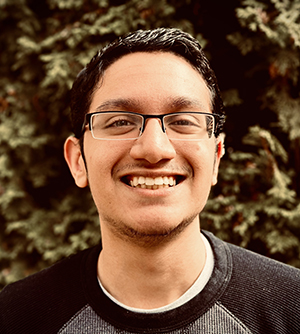 The winner is Rohak Jain, a high school student at Interlake High School in Belleview, WA. You will want to read his essay, The Virtues of an Open Mind: Making Room for Flexibility in Intercultural Dialogue. In it, he describes a conversation held through Acquaint, a platform dedicated to fostering cross-cultural collaboration. He says:
 Center for Intercultural Dialogue