
Key Concept #2: Cosmopolitanism Translated into Persian

Key Concepts in ICDContinuing translations of Key Concepts in Intercultural Dialogue, today I am posting KC2: Cosmopolitanism, which Miriam-Sobre-Denton wrote in English in 2014 as the first in the series, and which Ramin Hajianfard has now translated into Persian.

As always, all Key Concepts are available as free PDFs; just click on the thumbnail to download. Lists of Key Concepts organized chronologically by publication date and number, alphabetically by concept, and by languages into which they have been translated, are available, as is a page of acknowledgments with the names of all authors, translators, and reviewers, as is a page of acknowledgments with the names of all authors, translators, and reviewers.
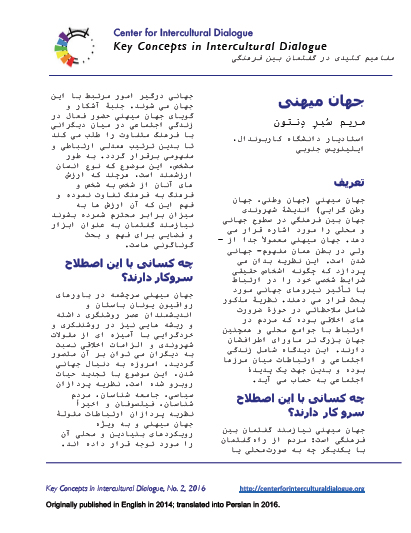
KC2 Cosmopolitanism_ PersianSobre-Denton, M. (2016). Cosmopolitanism [Persian]. (R. Hajianfard, Trans). Key Concepts in Intercultural Dialogue, 2. Available from:
https://centerforinterculturaldialogue.org/wp-content/uploads/2018/08/kc2-cosmopolitanism_persian-revised.pdf

If you are interested in translating one of the Key Concepts, please contact me for approval first because dozens are currently in process. As always, if there is a concept you think should be written up as one of the Key Concepts, whether in English or any other language, propose it. If you are new to CID, please provide a brief resume. This opportunity is open to masters students and above, on the assumption that some familiarity with academic conventions generally, and discussion of intercultural dialogue specifically, are useful.

Wendy Leeds-Hurwitz, Director
Center for Intercultural Dialogue
intercult.dialogue[at]gmail.com


Creative Commons License
This work is licensed under a Creative Commons Attribution-NonCommercial-NoDerivatives 4.0 International License.
Key Concept #31: Indigenous Translated into Tagalog

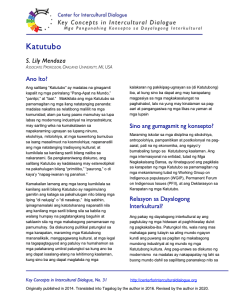
Key Concepts in ICDToday sees the addition of a new language to the translations of the Key Concepts in Intercultural Dialogue.  In 2014, Lily Mendoza wrote KC31: Indigenous in English , which she has now translated into Tagalog. [NOTE: this translation was updated in 2020, and the original 2016 version replaced.]

As always, all Key Concepts are available as free PDFs; just click on the thumbnail to download. Lists of Key Concepts organized chronologically by publication date and number, alphabetically by concept, and by languages into which they have been translated, are available, as is a page of acknowledgments with the names of all authors, translators, and reviewers, as is a page of acknowledgments with the names of all authors, translators, and reviewers.

KC31 Indigenous_TagalogMendoza, S. L. (2020). Katutubo. Key Concepts in Intercultural Dialogue, 31. Available from:
https://centerforinterculturaldialogue.org/wp-content/uploads/2020/10/kc31-indigenous_tagalog_v2.pdf

If you are interested in translating one of the Key Concepts, please contact me for approval first because dozens are currently in process. As always, if there is a concept you think should be written up as one of the Key Concepts, whether in English or any other language, propose it. If you are new to CID, please provide a brief resume. This opportunity is open to masters students and above, on the assumption that some familiarity with academic conventions generally, and discussion of intercultural dialogue specifically, are useful.

Wendy Leeds-Hurwitz, Director
Center for Intercultural Dialogue
intercult.dialogue[at]gmail.com


Creative Commons License
This work is licensed under a Creative Commons Attribution-NonCommercial-NoDerivatives 4.0 International License.
Key Concept #10: Cross-Cultural Dialogue Translated into Persian

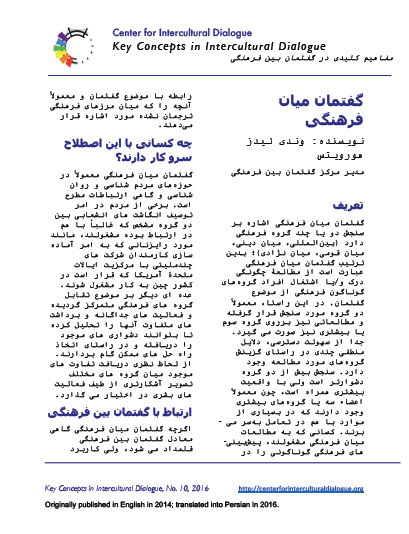
Key Concepts in ICDContinuing translations of Key Concepts in Intercultural Dialogue, today I am posting KC10: Cross-cultural dialogue, which I wrote in English in 2014, and which Ramin Hajianfard has now translated into Persian.

As always, all Key Concepts are available as free PDFs; just click on the thumbnail to download. Lists of Key Concepts organized chronologically by publication date and number, alphabetically by concept, and by languages into which they have been translated, are available, as is a page of acknowledgments with the names of all authors, translators, and reviewers.

KC10 Cross-Cultural Dialogue_PersianLeeds-Hurwitz, W. (2016). Cross-cultural dialogue [Persian]. (R. Hajianfard, Trans). Key Concepts in Intercultural Dialogue, 10. Available from:
https://centerforinterculturaldialogue.org/wp-content/uploads/2018/08/kc10-cross-cultural-dialogue_persian-revised.pdf

If you are interested in translating one of the Key Concepts, please contact me for approval first because dozens are currently in process. As always, if there is a concept you think should be written up as one of the Key Concepts, whether in English or any other language, propose it. If you are new to CID, please provide a brief resume. This opportunity is open to masters students and above, on the assumption that some familiarity with academic conventions generally, and discussion of intercultural dialogue specifically, are useful.

Wendy Leeds-Hurwitz, Director
Center for Intercultural Dialogue
intercult.dialogue[at]gmail.com


Creative Commons License
This work is licensed under a Creative Commons Attribution-NonCommercial-NoDerivatives 4.0 International License.
Key Concept #2: Cosmopolitanism Translated into German

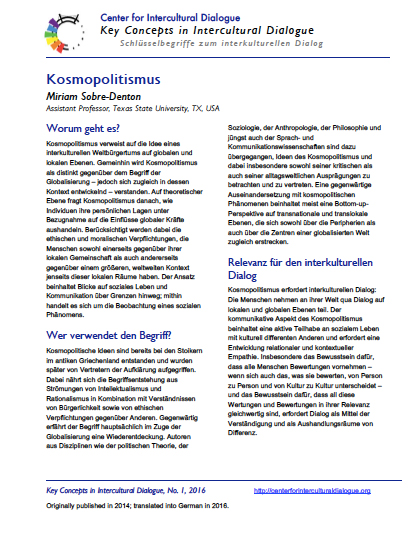
Key Concepts in ICDContinuing translations of Key Concepts in Intercultural Dialogue, today I am posting KC#2: Cosmopolitanism, which Miriam Sobre-Denton wrote in English in 2014, and which Dominic Busch has now translated into German.

As always, all Key Concepts are available as free PDFs; just click on the thumbnail to download. Lists of Key Concepts organized chronologically by publication date and number, alphabetically by concept, and by languages into which they have been translated, are available, as is a page of acknowledgments with the names of all authors, translators, and reviewers.

KC2 Cosmopolitanism_GermanSobre-Denton, M. (2016). Kosmopolitismus. (D. Busch, Trans). Key Concepts in Intercultural Dialogue, 2. Available from:
https://centerforinterculturaldialogue.org/wp-content/uploads/2016/10/kc2-cosmopolitanism_german.pdf

If you are interested in translating one of the Key Concepts, please contact me for approval first because dozens are currently in process. As always, if there is a concept you think should be written up as one of the Key Concepts, whether in English or any other language, propose it. If you are new to CID, please provide a brief resume. This opportunity is open to masters students and above, on the assumption that some familiarity with academic conventions generally, and discussion of intercultural dialogue specifically, are useful.

Wendy Leeds-Hurwitz, Director
Center for Intercultural Dialogue


Creative Commons License
This work is licensed under a Creative Commons Attribution-NonCommercial-NoDerivatives 4.0 International License.
Save

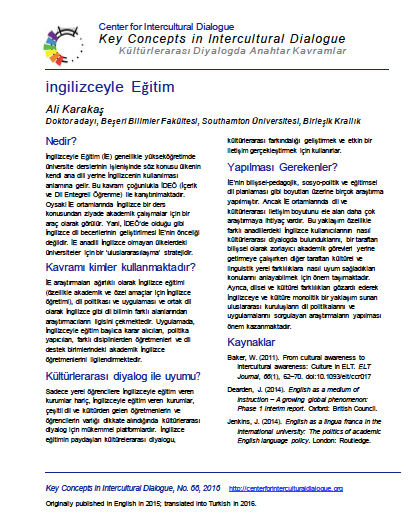
Key Concept #66: English Medium Instruction Translated into Turkish

Key Concepts in ICDContinuing translations of Key Concepts in Intercultural Dialogue, today I am posting the translation of KC66: English Medium Instruction. Ali Karakas wrote this in English in 2015, and has now translated it into Turkish.

As always, all Key Concepts are available as free PDFs; just click on the thumbnail of the translation to read it. Lists of Key Concepts organized chronologically by publication date and number, alphabetically by concept, and by languages into which they have been translated, are available, as is a page of acknowledgments with the names of all authors, translators, and reviewers.

KC66 EMI_TurkishKarakas, A. (2016). İngilizceyle Eğitim. Key Concepts in Intercultural Dialogue, 66. Available from: https://centerforinterculturaldialogue.org/wp-content/uploads/2016/09/kc66-emi_turkish.pdf

If you are interested in translating one of the Key Concepts, please contact me for approval first because dozens are currently in process. As always, if there is a concept you think should be written up as one of the Key Concepts, whether in English or any other language, propose it. If you are new to CID, please provide a brief resume. This opportunity is open to masters students and above, on the assumption that some familiarity with academic conventions generally, and discussion of intercultural dialogue specifically, are useful.

Wendy Leeds-Hurwitz, Director
Center for Intercultural Dialogue


Creative Commons License
This work is licensed under a Creative Commons Attribution-NonCommercial-NoDerivatives 4.0 International License.
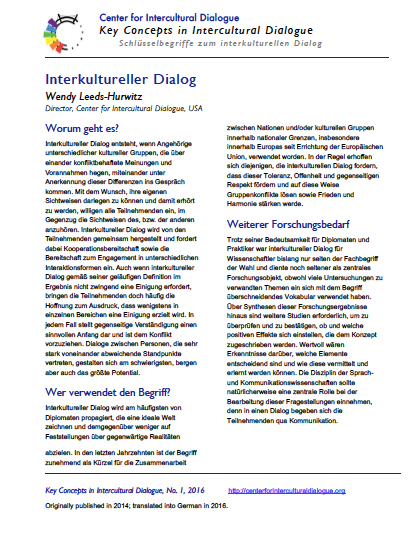
Key Concept #1: Intercultural Dialogue Translated into German

Key Concepts in ICDContinuing translations of Key Concepts in Intercultural Dialogue, today I am posting KC1: Intercultural Dialogue, which I published in English in 2014 as the first in the series, and which Dominic Busch has now translated into German.

As always, all Key Concepts are available as free PDFs; just click on the thumbnail to download. Lists of Key Concepts organized chronologically by publication date and number, alphabetically by concept, and by languages into which they have been translated, are available, as is a page of acknowledgments with the names of all authors, translators, and reviewers.

KC1 Interkultureller dialog_GermanLeeds-Hurwitz, W. (2016). Interkultureller dialog. (D. Busch, trans). Key Concepts in Intercultural Dialogue, 1. Available from:
https://centerforinterculturaldialogue.org/wp-content/uploads/2016/09/kc1-icd_german.pdf

If you are interested in translating one of the Key Concepts, please contact me for approval first because dozens are currently in process. As always, if there is a concept you think should be written up as one of the Key Concepts, whether in English or any other language, propose it. If you are new to CID, please provide a brief resume. This opportunity is open to masters students and above, on the assumption that some familiarity with academic conventions generally, and discussion of intercultural dialogue specifically, are useful.

Wendy Leeds-Hurwitz, Director
Center for Intercultural Dialogue


Creative Commons License
This work is licensed under a Creative Commons Attribution-NonCommercial-NoDerivatives 4.0 International License.
Key Concept #9: Communicative Competence Translated into Chinese

Key Concepts in ICDContinuing translations of Key Concepts in Intercultural Dialogue, today I am posting KC9: Communicative Competence, written by John Corbett and published in English in 2014, now translated into both traditional and simplified Chinese by Daisy Li.

As always, all Key Concepts are available as free PDFs. Click on the thumbnail of the translation you wish to read. Lists of Key Concepts organized chronologically by publication date and number, alphabetically by concept, and by languages into which they have been translated, are available, as is a page of acknowledgments with the names of all authors, translators, and reviewers.

KC9 Comm Competence_Chinese trad
Traditional Chinese
KC9 Comm Competence_Chinese sim
Simplified Chinese


Corbett, J. (2016). Communicative competence [Simplified Chinese]. (D. Li, Trans.). Key Concepts in Intercultural Dialogue, 9. Available from: https://centerforinterculturaldialogue.org/wp-content/uploads/2016/09/kc-9-communicative-competence_chinese-sim3.pdf

Corbett, J. (2016). Communicative competence [Traditional Chinese]. (D. Li, Trans.). Key Concepts in Intercultural Dialogue, 9. Available from: https://centerforinterculturaldialogue.org/wp-content/uploads/2016/09/kc-9-communicative-competence_chinese-trad.pdf

If you are interested in translating one of the Key Concepts, please contact me for approval first because dozens are currently in process. As always, if there is a concept you think should be written up as one of the Key Concepts, whether in English or any other language, propose it. If you are new to CID, please provide a brief resume. This opportunity is open to masters students and above, on the assumption that some familiarity with academic conventions generally, and discussion of intercultural dialogue specifically, are useful.

Wendy Leeds-Hurwitz, Director
Center for Intercultural Dialogue


Creative Commons License
This work is licensed under a Creative Commons Attribution-NonCommercial-NoDerivatives 4.0 International License.
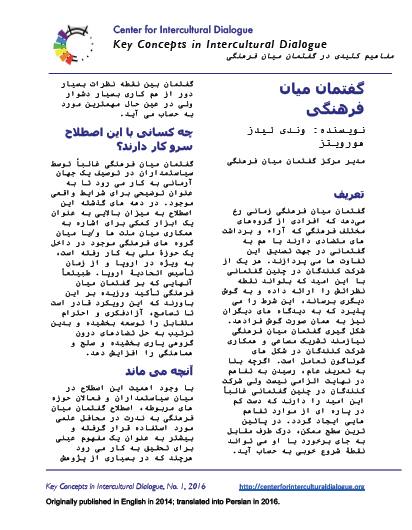
Key Concept #1: Intercultural Dialogue Translated into Persian

Key Concepts in ICDContinuing translations of Key Concepts in Intercultural Dialogue, today I am posting KC#1: Intercultural Dialogue, which I published in English in 2014 as the first in the series, and which Ramin Hajianfard has now translated into Persian.

As always, all Key Concepts are available as free PDFs; just click on the thumbnail to download. Lists of Key Concepts organized chronologically by publication date and number, alphabetically by concept, and by languages into which they have been translated, are available, as is a page of acknowledgments with the names of all authors, translators, and reviewers.

KC1 Intercultural Dialogue_PersianLeeds-Hurwitz, W. (2016). Intercultural dialogue [Persian]. (R. Hajianfard, trans). Key Concepts in Intercultural Dialogue, 1. Available from:
https://centerforinterculturaldialogue.org/wp-content/uploads/2018/08/kc1-intercultural-dialogue_persian.pdf

If you are interested in translating one of the Key Concepts, please contact me for approval first because dozens are currently in process. As always, if there is a concept you think should be written up as one of the Key Concepts, whether in English or any other language, propose it. If you are new to CID, please provide a brief resume. This opportunity is open to masters students and above, on the assumption that some familiarity with academic conventions generally, and discussion of intercultural dialogue specifically, are useful.

Wendy Leeds-Hurwitz, Director
Center for Intercultural Dialogue


Creative Commons License
This work is licensed under a Creative Commons Attribution-NonCommercial-NoDerivatives 4.0 International License.
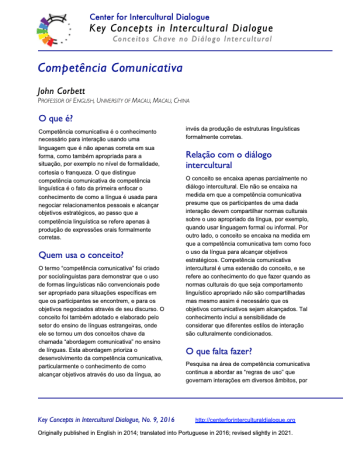
Key Concept #9 Communicative Competence Translated into Portuguese

Key Concepts in ICDContinuing translations of Key Concepts in Intercultural Dialogue, today I am posting KC9: Communicative Competence, written by John Corbett and published in English in 2014, now translated into Portuguese by Maria Augusta Rodrigues Alves.

As always, all Key Concepts are available as free PDFs; just click on the thumbnail to download. Lists of Key Concepts organized chronologically by publication date and number, alphabetically by concept, and by languages into which they have been translated, are available, as is a page of acknowledgments with the names of all authors, translators, and reviewers.

KC9 Communicative Competence_PortugueseCorbett, J. (2016). Competência comunicativa (M. A. Rodrigues Alves, Trans.). Key Concepts in Intercultural Dialogue, 9. Available from:
https://centerforinterculturaldialogue.org/wp-content/uploads/2021/05/kc9-communicative-competence_portuguese-v2.pdf

If you are interested in translating one of the Key Concepts, please contact me for approval first because dozens are currently in process. As always, if there is a concept you think should be written up as one of the Key Concepts, whether in English or any other language, propose it. If you are new to CID, please provide a brief resume. This opportunity is open to masters students and above, on the assumption that some familiarity with academic conventions generally, and discussion of intercultural dialogue specifically, are useful.

Wendy Leeds-Hurwitz, Director
Center for Intercultural Dialogue


Creative Commons License
This work is licensed under a Creative Commons Attribution-NonCommercial-NoDerivatives 4.0 International License.
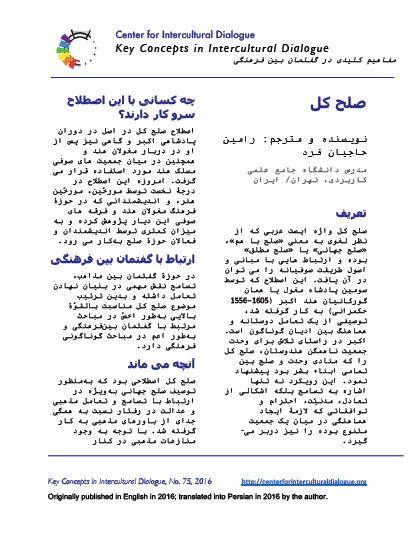
Key Concept #75: Sulh-i Kul Translated into Persian

Key Concepts in ICDContinuing translations of Key Concepts in Intercultural Dialogue, today I am posting KC#75: Sulh-i kul, written by Ramin Hajianfard and published in English earlier this year, which he has now translated into Persian.

As always, all Key Concepts are available as free PDFs; just click on the thumbnail to download. Lists of Key Concepts organized chronologically by publication date and number, alphabetically by concept, and by languages into which they have been translated, are available, as is a page of acknowledgments with the names of all authors, translators, and reviewers.

KC75 Sulh-i-Kul_PersianHajianfard, R. (2016). Sulh-i kul [Persian]. Key Concepts in Intercultural Dialogue, 75. Available from:
https://centerforinterculturaldialogue.org/wp-content/uploads/2018/08/kc75-sulh-i-kul_persian-revised.pdf

If you are interested in translating one of the Key Concepts, please contact me for approval first because dozens are currently in process. As always, if there is a concept you think should be written up as one of the Key Concepts, whether in English or any other language, propose it. If you are new to CID, please provide a brief resume. This opportunity is open to masters students and above, on the assumption that some familiarity with academic conventions generally, and discussion of intercultural dialogue specifically, are useful.

Wendy Leeds-Hurwitz, Director
Center for Intercultural Dialogue


Creative Commons License
This work is licensed under a Creative Commons Attribution-NonCommercial-NoDerivatives 4.0 International License.