Study Abroad in Italy with Gonzaga U

Graduate Study Abroad Program: The Cagli Project

One of the “best buys” in Graduate Study Abroad programs is our 17-day Award Winning Cagli Project, a multi-media cultural immersion project for graduating seniors and graduate students.  Begin in Renaissance Florence and then move into the Medieval market city of Cagli on the ancient Via Flaminia where you will get to know and understand the “real Italy.”  Enjoy life on the Piazza Matteoti with its quaint shops, gelateria, coffee bars and restaurants. Have classes in the Scuola d’Arte.  Many meals are shared group experiences.  Enjoy the precious opera house and the mountain springs.  Wake up to church bells, and enjoy the weekly festivals including Venerde and the Cagli beerfest.

Get to know Italians as you earn six credits learning conversational Italian, intercultural competence, photography, and profile writing. Earn the Emphasis in Intercultural and International Communication. Make friends for a lifetime in this truly transformational experience. There is still time for enrollment; see details.

Also, there are also two $300 scholarships made available by benefactors to the Gonzaga-in-Cagli Program.  The application for the scholarship is on the website.
Regular financial aid can be used for these classes.

For details contact Dr. Caputo.

CFP Open Spaces for Interaction & Learning Diversities

CFP
Open Spaces for Interaction and Learning Diversities
27-30 August 2014 – Padova, Italy

Special Interest Groups 10, 21, and the new SIG on Education Theory of the European Association for Research in Learning and Instruction (EARLI) are jointly sponsoring the Conference ‘Open Spaces for Interaction and Learning Diversities’.

What are the challenges that global movements and cross-cultural communication continue to pose to many areas of teaching, learning and education? SIG 10 and 21 have devoted their efforts to studying social and cultural interactions and cultural diversity in teaching and learning settings. With increasing dynamics and diversity in most societies (i.e., offline and online mobility, inter-institutional collaborations, migrations and intercultural encounters, individual transitions) this area of research becomes even more important in learning research. Over time, the changes in social, cultural and political contexts result into cultural diversity being ignored or rejected across many countries in Europe. It is the denial or hidden nature of diversity in educational settings and learning processes, reflected in the marginalisation of this topic, that we would like to address. Therefore, we would like to open up spaces to talk, promote and fight for the relevance of addressing learning diversities. This may include current and new directions for theoretical and methodological discussions. These may be spaces of interaction and diversity research across single or multiple moments, different contexts and various time scales.

The focus of this meeting is to examine the dynamics by which practices of learning and their associated institutions evolve. Learners and educators move through different social spaces, meet and interact; whilst bringing with them their languages, bodies of knowledge, values and cultural references. This theme provides ample space for discussion both for the separate SIGs – social interaction in learning and instruction, as well as cultural diversity – and for the SIGs jointly. In addition, special attention will be given to the educational realities and challenges in Italy today. The meeting is continuing the reflection started in Belgrade in 2012 at the Patchwork: Learning Diversities and in Utrecht 2010, at the Moving through cultures of learning meeting.

Save

A space of relationship for dialogue among cultures

Guest Posts

A lesson dedicated to the genocide in Burundi: An occasion of dialogue as a space of relationship among cultures
by Maria Flora Mangano.

I am happy to share with you what happened recently in my class, during a lesson dedicated to the genocide of Rwanda and Burundi. I am currently lecturing on dialogue among cultures at St. Peter’s Philosophical-Theological Institute in Viterbo, Italy.

One of the students comes from Burundi; his name is Jean. He introduced himself during the first lesson, describing his background and choice of life as a religious. One day outside of class, he mentioned the war in Burundi and the genocide of 1993. In that moment he shared with me and two Italian students what it was like to be a Tutsi. In 2 or 3 minutes he described a few images of the genocide, which he lived through when he was 12 years old; thanks to God, all his family survived. I was shocked by his words and I asked him if he would be able to share his experience with the class, proposing that the students would both listen to his story and see part of the film Hotel Rwanda together. We could organise this special and unforgettable lesson in a couple of hours.

Jean prepared a powerpoint and presented the story of his country and the story of his family and relatives during those three terrible days of the genocide. I proposed to the class not to see the entire movie (which is quite long, so we saw only the trailer) but rather to dedicate the majority of the time to Jean’s personal story. I introduced the technical vocabulary, including genocide and shoah, sharing what these terms have meant in the last century and what they mean now. The 16 students come from 9 countries; some of them did not know even where Burundi was. I asked the students to try to create a space of relationship in which they could speak without any fear of offending or to be offended.

Jean was extremely clear in explaining the historical background, presenting the political and social aspects underlying the genocide. Then he shared his story with us. I am still speechless, shocked and impressed. It was the first time that one of my students desired to share what the genocide was for him and he prepared everything in detail. One young person who survived the genocide decided to offer his experience as a gift, not in revenge. He was able to share his memories, even if these are still dramatic and negative.

Jean said that in African culture the tradition is oral, not written and for this reason it is not possible to ask to him (or others) to write about their experience. He prefers talking over writing about it, but he never did so before this, as he said that the open hurts rest open even after time and sharing.

At the end of his time, all the students were so impressed and touched they could not speak. I ask the students to take time and then to try to share with Jean their feelings, also to try to thank him in a real way. I hope it will yet happen.

I am happy to share this wonderful experience of dialogue and sharing in class. I hope to be able to publish about it in the future. As scholar, I felt that this should be our way of teaching, especially given the discipline of communication we try to teach (and learn). Let’s go ahead to try to do the best with our students and in research on this issue. I am still convinced that we may try to re-write history through dialogue.

I am sharing what happened because it is uncommon to talk about the genocide of Rwanda (and Burundi) for people who survived this. It is still too early, as Jean told me. I consider this moment an important effect of dialogue among cultures, as this student chose to share his life with the class and he prepared the lesson on his own, without any help from me. He chose what to say, also decided not to show any pictures of the genocide and he carefully chose the words to describe those days. He also chose to first present the political and historical conditions as a necessary introduction to the genocide.

Afterwards, Jean reported that he felt understood by the class, so probably he was ready to share this moment. In the days since, I have received mails from him and from the others who have expressed their appreciation for that moment. I have the feeling that we built the space for relationship as the basis of dialogue during the course, and that this moment significantly enriched this space.

Download the entire post as a PDF.

NOTE: See the response prompted by this post, by Robyn Penman.

CFP ABC discourse conference Italy 2014

ABC International Symposium on the Ins and Outs of Professional Discourse Research
March 6 – 7, 2014; Modena, Italy

ABC logo

Conference scope
Researching professional discourse is an exciting multi-faceted enterprise, from gaining access and collecting data  to feeding these results back in the form of recommendations to practitioners. This two-day symposium invites contributions which explore these two extreme ends of the scholarly process , investigating written, oral, non-verbal and digital communication in professional settings as both input and output or: the “ins and outs” of business discourse research.

Day  One –  6 March: THE INS (Dipartimento di Studi Linguistici e Culturali – Modena) focuses on issues of access and data collection: how can we convince practitioners to let us observe, record, interview, survey etc? And what counts as data? How much do we need ? In what shape and form? And how does our research interfere with what we study?

Day Two  – 7 March: THE OUTS (Dipartimento di Comunicazione ed Economia – Reggio Emilia) looks at how results can be fed back to the field in the form of recommendations: how can business discourse research be applied to help shape practice? How do we translate our methods and concepts for the communities that we investigate, including industry, government and non – profit organizations?

The symposium offers an all-plenary format, with ample time for discussion. On both days we welcome data- and case-based, empirical talks, presenting best practices, self-reflections or meta-analyses, drawing on a wide range of qualitative, quantitative and critical perspectives on  professional and business discourse, from ethnography, corpus studies and sociolinguistics to interaction analysis, genre studies and document design.

The symposium language is English.

Symposium contact:: abceuropesymposium AT unimore.it or glenmichael.alessi AT unimore.it

Registration
ABC Members and students: 75 Euros (Late registration: 100 Euros)
Non-members: 100 Euros (Late registration: 150 Euros)

EIUC programme director job ad

JOB OPPORTUNITY:
E.MA Programme Director for the academic year 2013/2014

The European Inter-University Centre for Human Rights and Democratisation (EIUC) is seeking a qualified individual for the position of E.MA [European Master’s Programme in Human Rights and Democratisation] Programme Director for the academic year 2013/2014.

The position, which is being posted at the level of university professor or senior researcher, involves a combination of teaching, organisation, and various academic and practical responsibilities connected with the E.MA programme.

Working under the instructions of the E.MA and EIUC governing bodies and in cooperation with the EIUC Secretary General, the candidate selected will assume primary responsibility for the academic coordination of the E.MA programme a.y. 2013/2014. He or she will furthermore be involved in the development of new academic and research-based activities in the context of the EIUC.

Functions and tasks
The E.MA Programme Director will work as member of the permanent EIUC staff, based in Venice-Lido. Tasks will include the following:
*To coordinate the advanced planning of the E.MA programme;
*To oversee in the daily management of the E.MA programme – including the first semester field trip, which in recent years has been going to Kosovo – with a view to maintaining the excellent standards and academic coherence of the first semester courses;
*To establish advance contact with academic responsibles, lecturers and experts, and assist the academic responsibles and other lecturers in carrying out the scientific and educational programme;
*To supervise and coordinate E.MA Fellows in the performance of their tasks;
*To organise and teach seminars introducing one of the core disciplines (law, political science, international relations) of the E.MA programme;
*To set up and lead working groups and workshops incorporated in the academic programme;
*To oversee the assessment of student assignments;
*To exercise a proactive role in identifying and rectifying problems of an academic nature;
*To take a proactive role in the development of additional academic activities in the context of the EIUC; this may include initiating and facilitating research collaboration, academic publication, and the organisation of training courses, seminars and conferences.

Qualifications:
Doctorate in a relevant discipline (e.g. law, political science, international relations), teaching experience, good publication record, team-working ability, administrative experience. Excellent knowledge of English; proficiency in French. The selected candidate will be expected to take up the position no later than beginning of September 2013. Salary negotiable, depending on qualifications.

Deadline: The deadline for sending applications is 20 August 2013.

Please send a cover letter and a curriculum vitae in English to Florence Benoit-Rohmer, EIUC Secretary General, Monastery of San Nicolò, Riviera San Nicolò 26, Venezia-Lido 30126, Italy, by fax at: 0039-041-272-0914, or by email: florence.benoit-rohmer AT eiuc.org

Please note: the filling of the above position is contingent upon approval of funding by the European Commission.

Save

Example of dialogue among cultures

Guest PostsAn interesting example of dialogue among cultures by Maria Flora Mangano.

I have just taught a course in a rather unique context. The course was Communication of Scientific Research, offered to students (MSc and PhD) at the Mediterranean Agronomic Institute, located in Bari (in Southern Italy). The Institute is part of the International Centre for Advanced Mediterranean Agronomic Studies, located in Paris.

This course was an extraordinary experience: five days, of 8 hours of lessons per day, supplemented by moments of dialogue during the meals and after dinner. All told, a very intense week, with more than 25 students from Masters and PhD courses in various agronomic disciplines. Among the group, only two were Italian, the other students coming from almost 15 countries in the Mediterranean area, from Kosovo to Morocco.

The course produced many challenges for me: first of all, the fear to propose content in a non-native language, especially topics related to dialogue as a space of relationship among, beyond and across our cultures and disciplines; then the proposal of building this space during all the week, in class and out, with students who came from countries where there are still conflicts.

We discussed in class the attack in Beirut last week, as one student had parents who lived in that zone; the same with the Egyptian students with whom we tried to talk about the 50 deaths in Cairo during the riots in the streets.

It was extremely intense to dialogue with students about the value of the other and otherness, starting from European philosophy, which risked appearing far from all their cultures. I tried to introduce the content starting from keywords, as I usually do in my teaching activities, also in Latin and ancient Greek languages, exploring the meaning of the various terms in all of their languages.

I proposed that every student introduce her or himself in 10 minutes by using whatever tools they wanted. We spent a lot of time in class analyzing their oral presentations, which were delivered by slide, oral speeches, or music (one student played some songs from his country with a guitar).

The issues around scientific research gave me the opportunity to introduce other topics related to the relationship with the other, which are different for every country. I also shared with them the notion of creating a “safe” space of dialogue.

One exercise used the short film, Twice upon a time (about bilingualism in Canada). The results were interesting: the students who came from countries close to the European tradition (if we can use this expression), like Turkey or the Balkans (in particular, Macedonia, Kosovo, and Bosnia), appreciated the movie and found it a fitting conclusion to the lesson. But the students from the Maghreb (Morocco, Tunisia, Algeria) and from the Middle East (Egypt, Palestine, Lebanon) did not enjoy it as much. In fact, they found it boring and a bit excessive, as they did not fully appreciate the issues depicted.

Ramadan started during the course, which provided another wonderful opportunity for sharing and dialogue. The majority of the students in this course were Muslim, but only about half were observant. Those who were needed to fast (not only avoiding food, but also even water), throughout the day, even though in Southern Italy the summer is hot. I proposed to the students that I would participate in their evening prayer, after dinner, for almost one hour, since it was the only one of the five times dedicated to daily prayer that we might share. They were very happy and surprised, as they told me that it was uncommon for a non-Muslim to join in prayer with them.

At the end of the sessions we had ice cream in the garden (the campus is really beautiful), after dinner and after prayer. It was another occasion for interaction among the group members, including some students who were not enrolled in this course.
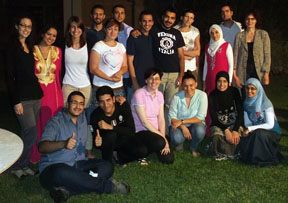
Course CSR_MAI 2013-rev

I asked students to send me their feedback and so I have been receiving beautiful notes. I have the feeling that we shared something new, beyond only disciplinary content, as many of them have now told me.

Download the entire post as a PDF.

Human Rights fellowship

Vacancy: E.MA Fellow 2012/2013
The European Inter-University Centre for Human Rights and Democratisation (EIUC) is looking to appoint a highly qualified individual specialised in International Human Rights Law as E.MA Fellow for the 2012/2013 academic year in Venice-Lido, Italy.

The position involves a combination of academic and administrative responsibilities connected with the E.MA Programme. This is an exciting opportunity for a committed young scholar willing to actively participate in a unique Master’s programme, to advice our postgraduate students, to liaise with a prestigious faculty and to support our dedication to human rights and democratisation.

The assignment is for an initial period of six months, from 27 August 2012 to 31 January 2013, with the possibility of renewal subject to performance and funding.

For details, please visit our E.MA Fellow 2012/2013 page.

Closing date for receipt of applications: 1 June 2012

Kevin Barnhurst – Fulbright

Kevin Barnhurst
University of Illinois at Chicago
Fulbright in Peru
Distinguished Fulbright Chair in Italy
I received a Fulbright Senior Scholar award to do research and teaching in Peru in 1989. I lectured at the University of Piura, the University of Cuzco, and the University of Lima, where I worked with a counterpart and spent most of my 4 months in the country. My research produced a series of articles on news design, information graphics, and related topics, published in Spanish and later collected in English as News as Art (Journalism Monographs no. 130). I also did research on political communication and published two articles on the Shining Path and political violence in Peru, one in the Journal of Communication and the other in an edited collection on terrorism and communication. Since returning, I’ve been in continual contact with colleagues from Peru, have co-authored and collaborated with them, and have encouraged others to apply for Fulbright awards. I’ve also hosted students and faculty on Fulbrights in my department at the University of Illinois at Chicago.
I became a Distinguished Fulbright Chair in 2006, doing research in Vercelli and Turin, Italy, and lecturing in Naples, Sassari (Sardinia), Padua, and visiting Rome, Genoa, Venice, and Milan and the lake country. I had visited Italy only once, in Florence, but for a scholar of visual studies, spending time in Italy is an important experience. I also learned about the educational system and political system, and  I learned the language, lectured in Italian, and published articles in the language. Since returning I have been collaborating on editorial projects with Italian colleagues, who have invited me to return and lecture in Milan, Perugia, Udine, and other cities. Now I have good friends and colleagues throughout the country. I consider a Fulbright award one of the highest honors a scholar can receive.

Study abroad-Italy, Turkey, France

Undergraduate and Graduate global communication opportunities this summer in Florence, Cagli and Urbino, Italy; Istanbul, Turkey; and Perpignan, France.

For the 10th year we will be taking students from around the country to Europe to participate in Backpack Journalism and Leadership courses.

Florence, Italy (Grad. students only):
Renaissance Rhetoric – May 27 – June 10
Renaissance Leadership – May 27 – June 10
Project Management Italy – June 10 – June 24

Cagli Project Italy – Grad. and Graduating Seniors only
Intercultural and Global story writing and Multimedia June 23 – July 9

Urbino, Italy:
Multimedia Journalism and Magazine Publishing June 9 – July 7

Perpignan, France:
Multimedia Journalism June 23 – July 23

Istanbul, Turkey:
Multimedia Journalism June 23 – July 21

For details of Graduate Communication and Leadership courses.
For the Gonzaga-in-Cagli Project.
For Graduate internship opportunities in each site.
For full program descriptions and undergraduate applications to Istanbul, Turkey; Urbino, Italy; or Perpignan, France.

Student participants come from many universities. The Department of Communication and Leadership Studies at Gonzaga is the host University for all graduate credits.

Email caputo@gonzaga.edu for more information.
John S. Caputo, Ph. D.
Professor of Communication and Leadership Studies
Distinguished Walter Ong, S.J. Scholar
Department of Communication and Leadership Studies
Gonzaga University
Spokane, WA. 99258-0001
Tel: 509-313-6656

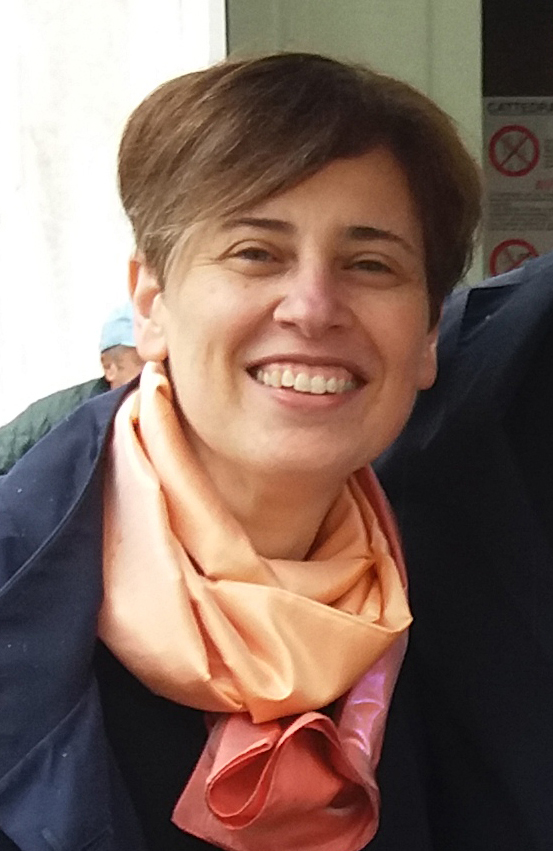
Maria Flora Mangano Profile

ProfilesMaria Flora Mangano, Italian scholar of intercultural and interdisciplinary dialogue, with a background in natural (Ph.D. in Biochemistry) and in social sciences (Ph.D. in Humanistic Intercultural Studies).

Maria Flora ManganoSince 2007, she has been teaching Dialogue between Cultures and Communication of Scientific Research to young scientists drawn from different fields of study within the natural, social and human sciences of some Italian faculties. She is interested in dialogue as a space of relationship between, across and beyond cultures and disciplines. Her approach to research and teaching is transcultural and transdisciplinary, and, in this perspective, the space of relationship is mediated by the philosophy of dialogue.

She participated in the National Communication Association Summer Conference on Intercultural Dialogue, and wrote a chapter in a volume resulting from that conference:

Mangano, M.F. (2015). Dialogue, as a common ground between, across and beyond cultures and disciplines – A case study of transcultural and transdisciplinary communication lectures for graduate and undergraduate students. In N. Haydari & P. Holmes (Eds.), Case studies in intercultural dialogue (pp. 73-86). Dubuque, IA: Kendall Hunt.

as well as a book on dialogue:

Mangano, M. F. (2018). Relationship as a space “in between”: A transcultural and transdisciplinary approach mediated by dialogue in academic teaching. Bergamo, Italy: University of Bergamo Press.


Work for CID:

Maria Flora Mangano wrote KC81: Dialogue as a Space of Relationship, and translated KC1: intercultural Dialogue, KC14: Dialogue, KC37: Dialogue Listening, KC81: Dialogue as a Space of Relationship, and CID Poster 1: Intercultural Communication / Competence / Dialogue into Italian. She also wrote case studies for Constructing Intercultural Dialogues: #2: Reconciliation, and #9: Dialogue as an Activity of Daily Living, and translated #2: Reconciliation into Italian. And she has written multiple guest posts: Example of dialogue among cultures; A space of relationship among dialogues and culturesSpace of relationship as a space of distance: A new proximity; Saturday morning (intercultural) school; Seeds of dialogue, Gratitude is my attitude, and Standing for peace without weapons. In addition, she wrote Occasional Paper #2: When the Letters Sing and the Numbers Jump: Education as a Space of Relationship.