Who Needs Intercultural Education? Deep Culture Podcast from Japan Intercultural Institute (Japan)

PodcastsWho Needs Intercultural Education? Japan Intercultural Institute, Tokyo, Japan.

Joseph Shaules and Ishita Ray argue that the deeper goal of intercultural education is to see that our minds are shaped by culture. They explore natural biases, such as ethnocentrism and stereotypes, and the psychological impact of foreign experiences, including Oz moments and cultural shock. Emre Seven tells of his discovery that not everyone sees the world as he does.

Deep Culture Podcast explores the psychological impact of intercultural experiences, informed by the sciences of brain, culture and mind. They look at the personal growth that can come from—travel, working and living abroad, immigrating, learning a foreign language—and the challenges of bridging different cultural worlds. Other episodes available here.


UCL: Lecturers in Intercultural Education (UK)

“JobLecturers in Intercultural Education, School of Education, UCL, London UK. Deadline: 17 December 2024.

The Department is looking to appoint two Lecturer (Teaching) in Intercultural Communication and Dissertation Supervisors at 0.15 FTE. The postholder will be supervising 10 MA dissertations in Intercultural Communications and related areas. This will include marking and providing feedback to students. In addition, the successful candidate will be supporting the running of the Dissertation module throughout the academic year and attending induction and standardisation meetings in the department.

The successful candidate must have a PhD in Intercultural Communication or closely relevant subject areas. The postholder will have experience of supervising students at MA programmes. You will have good understanding of the learning needs of a diverse body of students, particularly those who are multilingual users of English and/ or international students and/ or from widening participation backgrounds. In addition, you will have evidence of a good understanding of common approaches to research and research methodology, and have knowledge of the assessment criteria that are typically used at MA level in UK Higher Education

U Wroclaw: Intercultural Education (Poland)

“JobAssistant Professor of Intercultural Education, Department of Intercultural Education and Social Support Research, Institute of Pedagogy, University of Wroclaw, Poland. Deadline: 30 August 2023.

University of Wroclaw invites applications for the position of assistant professor in the Department of Intercultural Education and Social Support Research, Institute of Pedagogy at the Faculty of Historical and Pedagogical Sciences. Requirements include: Doctoral degree (Ph.D) awarded in a scientific field of social science, discipline of pedagogy; Polish and English proficiency allowing writing scientific publications, participating in conferences, and conducting classes with students.

2023 Study Abroad NYU London: Intercultural Perspectives on Teaching and Learning (UK)

Study Abroad

Summer 2023 Study Abroad: Intercultural Perspectives on Teaching and Learning, New York University in London, UK, 3-17 July 2023. Deadline: February 9, 2023 (priority); March 9, 2023 (or until all places filled).

Examine intercultural perspectives on teaching and learning across national borders. Explore the role that class, race, gender, economics, politics, religion, and cultural heritage play in the evolving dynamics in language policy, bilingual and world language education, and international education.

Participants in the Summer 2023 program in London will critically reflect upon the challenges and opportunities facing educators, school administrators, policy-makers, community organizers, students, etc., in language education, intercultural relations, and international education in the United Kingdom. Our studies will consider the impact of large-scale events across the UK and around the world, such as the anti-globalization forces behind Brexit, the COVID-19 pandemic on education and intergroup relations, the evolving Sino-British relationship over the political transformation in Hong Kong, cross-border infusion and adaptation of immigrants or refugees.

Through seminars and guided site visits in schools, community centers, NGOs, etc., we will share insights with scholars, teachers, policy-makers, writers, administrators, and immigrant community organizers in language, as well as international and intercultural education. Museum visits, theatrical performances, and day trips to important cultural sites are being planned to enrich our experience in intercultural learning positions.

For more info, such as scholarships, scheduled info session, etc., please visit this How to Apply page.

NOTE: This course will be taught by Professor Casey Lum, Associate Director of the Center for Intercultural Dialogue. See Associate Director’s Activities for posts from his program in 2022.


British Values in Intercultural Education in the UK

“Associate

What has come to be known as “British values” caught the attention of the participants in my recent summer study abroad program on Intercultural Perspectives on Teaching and Learning.

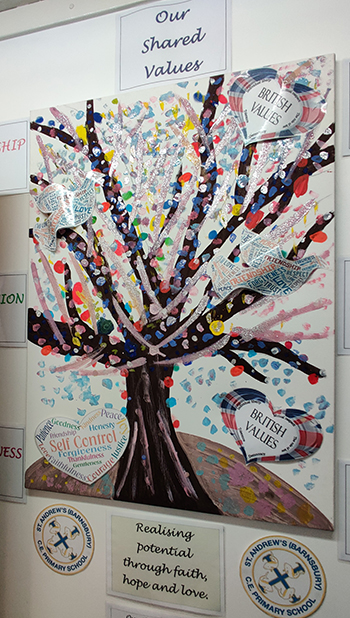
First published on November 27, 2014, by the UK’s Department of Education under the 2010 to 2015 Conservative and Liberal Democrat coalition government, the guidance “aims to help both independent and state-maintained schools understand their responsibilities in this area. All have a duty to ‘actively promote’ the fundamental British values of democracy, the rule of law, individual liberty, and mutual respect and tolerance of those with different faiths and beliefs” and to ensure young people leave school prepared for life in modern Britain (GOV.UK).

British values poster
A big poster display with a highlight on British values in St. Andrew’s (Barnsbury) CofE Primary School in London. (Photo credit: Casey Lum)

Indeed, a great deal of what we witnessed during our co-curricular field study visits of four state-funded primary and secondary schools in London attested to the schools’ curricular efforts for nurturing multicultural sensibilities among their students. However, the notion and the government-mandated promotion of “British values” has not gone without attracting diverging interpretations or reactions since the guidance’s initial announcement and implementation (see for example “The problem with teaching ‘British values’ in school“).

During a semi-formal interview, a high-ranking administrator at St. Andrew’s (Barnsbury) CofE [Church of England] Primary School (himself a veteran teacher) observed that many of his contemporaries were unsure what the concept really was when it was introduced; many others continue to be weary about it today. Given the country’s colonial history, for example, questions have been raised about whether these values were nationalistic in nature or not. But over the years, our host added, many educators in the UK have come to appreciate what those values entail and can do in promoting what we would call intercultural competence among the young. In fact, Mayflower Primary School in Towers Hamlets, another of the schools we visited, maintains a dedicated web page to showcase the school’s interpretation of and approach to promoting British values.

Casey Man Kong Lum, Associate Director
Center for Intercultural Dialogue

Social Service, Daily Routine, and Intercultural Adaptation

“Associate

In addition to state (or public) primary and secondary schools, with students in my study abroad program, which ended on July 18, 2022, I visited two NGOs during our second week of study, the London Chinese Community Centre (CCC) in London’s Chinatown and the Islington Centre for Migrants and Refugees in the Islington district just north of the City of London. Our goal was to have direct exposure to how community-based organizations help newcomers in their intercultural adaptation in the U.K., as well as some of their challenges and successes in this regard.

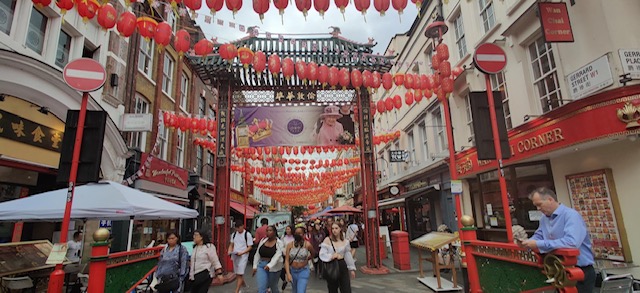
London’s Chinatown, a communal center for generations of immigrants of Chinese heritage in the U.K. (Photo credit: Casey Lum)

During the initial stage of adaptation, one of the most immediate needs of new migrants is the acquisition of services in helping them settle into their new daily routines. Such can prove to be a difficult task, especially for those who do not have a sufficient level of social or functional English. As such, community-based NGOs like the two we visited last week can play a vital role. For example, CCC routinely assists their immigrant members with legal aid for securing social services from the local government or otherwise offering a place for them to build a new social network with their compatriots.

On the other hand, the Islington Centre also regularly helps their clients, many of whom are refugees from conflict regions, with various kinds of legal aids referral services to help them address issues such as political asylum status application, as well as various other everyday life matters related to poverty or job seeking, health maintenance (some of their clients do not know how to fill their medical prescriptions), housing or homelessness, learning about their rights like all other citizens, learning their way around the city, and so on.

One of the challenges facing the staff at these organizations has to do with how, and the extent to which, they can maintain a balance between their professional obligation to their clients and their own personal emotional well-being. On the one hand, one needs to be compassionate about the lives of the newcomers – especially since many of the refugees come from conflict or war-torn regions or escape from political persecution – and many of these people are going through an extremely traumatic stage of their lives. One legal aid staff member of the Centre confided that their day rarely concludes at the end of the workday as their clients’ (at times desperate) needs do not end then.

But there also are moments of joy and great satisfaction. Many members at the Chinese Community Centre enjoy taking part in the various Chinese arts and culture events and workshops, as well as English-language classes. This has been a source of encouragement for the center’s staff and volunteers to continue with their work. An executive at the Islington Centre told us that at times they organize field trips for their clients, to visit museums or attend cultural events across London. During these field trip events and various other such social activities, they sense noticeable joy among their clients. As their clients see or learn something new, their cultural experiences allow them to begin to regain some sense of normalcy in their intercultural adaptation to an otherwise unfamiliar social landscape.

Casey Man Kong Lum, Associate Director
Center for Intercultural Dialogue

Bilingual Education and Storytelling in Intercultural Education

“Associate

The important role of bilingual education and storytelling in the social development of young students have been two recurring themes running throughout the first week of my summer study abroad program on United Kingdom: Intercultural Perspectives in Teaching and Learning at NYU London (July 4-18, 2022).

NYC London students visiting classroom
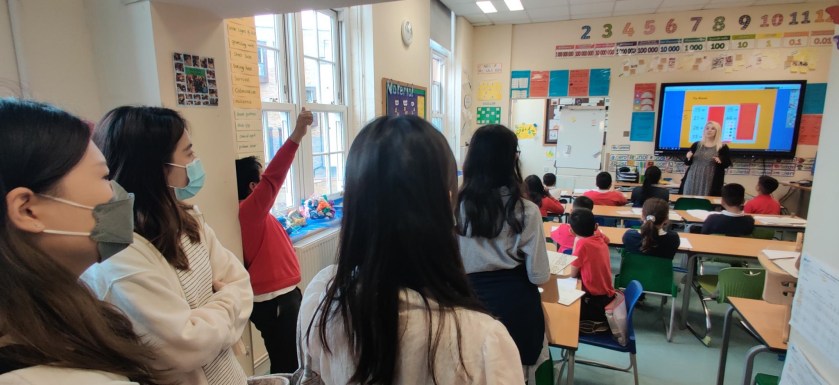
Summer study abroad students from NYU observing a class in session at Mayflower Primary School in London. (Photo credit: Casey Lum)

In her guest lecture to my students on “Rethinking Teaching Languages in European Schools (with a Focus on England): A Healthy Linguistic Diet Approach,” Dina Mehmedbegovic-Smith (July 5) emphasized the importance of bilingual education among the young in the United Kingdom nowadays. This topic was shared by Nicky Busch (July 6) in her special presentation on “The Intersectional Dynamics of Immigration, Intercultural Education, and Intergroup Relations in the United Kingdom,” in which she similarly acknowledged how acquiring English as a second or additional language can help immigrant students gain a voice of their own in their intercultural adaptation to life in the UK.

Our understanding of the above ideas – and many more others that this brief post simply cannot include – has been greatly enhanced by what my students and I witnessed “on the ground level” during our field visit at the Mayflower Primary School, a public school located in the eastern borough of Tower Hamlets in London. While the 2011 census in the UK reported that about one-third of the borough’s population came from Bangladesh, about 90% of the students at Mayflower Primary today are Bangladeshi. Many come from low-income families with a relatively low level of literacy, with parents who are not fluent in spoken English. These are some of the reasons why the school has adopted an approach that emphasizes developing their students’ competence in reading and storytelling in English. At the same time, the teachers encourage their students’ families to speak in their home language, in part to help promote bilingual fluency among the students.

From one practical (or pragmatic) perspective, the emphasis on reading is meant to help the students become savvy information seekers and users for personal and professional development purposes. On the other hand, it is believed that a high level of oracy – with a high degree of competence in taking in one’s experience of the world around them and then in being able to articulate or tell “stories” about their experience orally – can help the young build a solid foundation for acquiring writing skills.

But the above teaching and learning strategies do not and most likely will not automatically or by default lead to the development of students’ competency in intercultural communication, adaptation, or dialogue. For example, Heba Al-Jayoosi, the Assistant Head (Inclusion) at Mayflower Primary School, suggests that many of the parents have never been to London Bridge, which is not far from home. Hence, the school has embarked on a project to take the students and their families on a field trip to London Bridge. Such co-curricular activities are meant to help them gain more exposure to the larger social and cultural environment and help them better adapt. These field trips (similar to my current study abroad program in London) set the stage for follow-up discussion or storytelling among the participants afterward.

Casey Man Kong Lum, Associate Director
Center for Intercultural Dialogue

Intercultural Teaching and Learning in the UK

“Associate

I will be directing and teaching a short-term summer study abroad program for New York University’s Steinhardt School of Education, Culture, and Human Development. Entitled “United Kingdom: Intercultural Perspectives in Teaching and Learning,” the program will be based at NYU London (July 4-18, 2022).

I have invited four distinguished colleagues to share their insights with students from NYU’s main campus on Washington Square in New York City. They include Nicky Busch (NYU London) on The Intersectional Dynamics of Immigration, Intercultural Education, and Intergroup Relations in the UK; Myria Georgiou (London School of Economics and Political Science) on Remote Teaching and Learning during the COVID-19: Challenges and Opportunities; Dina Mehmedbegovic-Smith (University College London) on Language Education in the UK; and Maria Tsouroufli (Brunel University London) on Gender Inequality in Education in the UK.

In addition, a number of co-curricular activities such as guided field visits to various schools and community-based NGOs have also been arranged. These venues include London Chinese Community Centre, Mayflower Primary School, Islington Centre for Migrants and Refugees, Parliament Hill School, St. Andrew’s (Barnsbury) CofE Primary School, William Ellis School, etc. Our activities will center around learning about how these academic and community stakeholders in London address issues related to the role of (English and foreign) language education and multicultural program offerings in their constituencies’ intercultural education.

I will report in a number of forthcoming posts some of my intercultural teaching and learning experiences on this trip.

Casey Man Kong Lum, Associate Director
Center for Intercultural Dialogue


SIETAR Italia Call for Events Proposals 2021 (Italy)

Events

Call for Events Proposals for 2021, SIETAR Italia, Milan, Italy. Deadline: 15 November 2020.

Organizers at SIETAR Italia are currently working on the 2021 Programme of Events. Every year they ask members and non-members to deliver workshops, seminars, webinars or talks following their guidelines.

Are you interested in presenting an event in 2021?

The areas of greatest interest are:
•    Companies and organizational challenges
•    Intercultural and multicultural socio-political contexts
•    Development of competencies and training of intercultural professionals
•    Intercultural and interlinguistic communication
•    Intercultural education in the European context
•    Diversity, inclusion, equal opportunities and antiracism

If you have any interesting contribution to offer (in English or Italian) on one of these subjects, please complete the Form for Events Proposals – 2021 Calendar, and send it to SIETAR Italia by the 15th of November 2020. Notices about what has been accepted will be sent by 10th of December 2020.

It is very likely that the emergency context related to COVID-19 will somehow have an impact on the way the events take place also during 2021. Organizers ask, therefore, that you propose your events both for virtual mode and in person mode.

The 2021 Calendar of Events, as well as the one-off events, will be posted on the following channels: the SIETAR Italia website; the GLOBAL SIETAR calendar of events; Eventbrite, through the group’s Newsletter (a mailing list of 2500 contacts), the SIETAR Italia Facebook page, LinkedIn, Twitter, and Instagram, as well as through partners’ communication channels.

Organizers look forward to receiving your proposals with the aim of enhancing intercultural awareness in the business world, in politics, education and in our society as a whole.

CFP Intercultural Education in an Age of Information & Disinformation (Israel)

ConferencesCall for papers, IAIE 2020: Intercultural Education in an Age of Information and Disinformation Conference, The Kibbutzim College of Education & The MOFET Institute, Tel Aviv, Israel, June 27-30, 2021. Deadline: October 25, 2020. (Extended to November 1, 2020 due to technical difficulties)

The recent outbreak of the COVID-19 pandemic has brought new challenges and rapid changes, which have initiated extensive discussion on key social and educational concepts, such as, racism, equity, nationality, empathy, diversity, and technology. These concepts form a basis for discourse on their role in intercultural education.

In this conference, participants will discuss a variety of topics relevant to the new global situation, among other intercultural topics. The conference includes the following strands:
• Peace Education
• Cooperative and Collaborative Learning in Multicultural Settings
• Using Assistive Technology to Promote Universal Design for Learning in an Inclusive Learning Environment
• Language Awareness
• Educational Assessment Suitable for the Multicultural Era of the 21st Century
• History Education and Multiculturality
• Democracy and Mutual Life
• Technology to Promote Globalization & Intercultural Education
• Intercultural Competence: Policies and Innovative Practices
• Empathy & Gender
• Diverse Academia
• Ecohumanism and the Challenges of Cultural and Environmental Sustainability
• Religious Education, Immigration and Interreligious Education