American University of Armenia job ad: English & Communications

Full-time Faculty for BA in English and Communications Program
The American University of Armenia
Deadline: Open until filled

Position: American University of Armenia, College of Humanities and Social Sciences, BA in English and Communications Program, Full-time Faculty.

To meet its growing needs, the BA in English and Communications Program of the American University of Armenia (AUA) is seeking applicants for a full-time faculty position in English & Communications starting in August 2016, at the assistant or associate professor level.

The BA in English & Communications is one of three Bachelors degree programs launched at AUA in fall 2013.  Faculty positions at AUA typically involve teaching three courses per semester, engaging in program development and university service, and pursuing a research agenda in line with a definition of scholarship which allows AUA to tailor recognition of faculty activities and efforts to the unique qualities and strengths of the university.

Qualifications: The successful candidate likely will hold a PhD in Public Relations, Communications, Journalism, or related field and have relevant experience teaching such courses as Introduction to Communications, Intercultural Communication, Introduction to Journalism, Public Relations, Public Speaking, and Advertising.

Documented excellence in teaching is required; preference will be given to candidates with experience in conducting academic duties in an international setting or teaching non-native English speakers.   MFA or ABD with significant teaching experience may be considered.

Compensation: Compensation is commensurate with university-wide pay scale, qualifications and experience.

To apply: A letter of application, Curriculum Vitae with the names and contact information for three referees should be sent to jobs@aua.am, with the subject heading BA in English and Communications. Applications must be received by December 15 to be considered.  Shortlisted applicants will be notified by e-mail.

The American University of Armenia (AUA) is located in Yerevan, the capital of the Republic of Armenia, a city that enjoys one of the highest safety rankings around the world and a low cost of living.

AUA is accredited by the U.S.-based Western Association of Schools and Colleges (WASC) Senior College and University Commission and is affiliated with the University of California. It provides teaching and research programs that prepare students to address the needs of Armenia and its surrounding region for sustainable development.

University of New Mexico job ad

The Department of Communication & Journalism at the University of New Mexico invites applicants at the rank of a senior associate professor or professor with tenure to be appointed chair. The successful applicant must be a scholar able to lead an integrated department with graduate programs in communication and undergraduate programs in communication, journalism and mass communication.  The applicant should be able to demonstrate strong organizational skills and be dedicated to excellence in research, teaching and service.  The ideal candidate should be able to encourage collaboration and enhance learning opportunities with community organizations, professionals and public media outlets.

The chair position is typically a four-year, renewable term, contingent on favorable annual evaluations.  Duties include ensuring delivery of the curriculum, managing faculty and staff, as well as the budgets and program assessments and fostering faculty and graduate student research.  The chair represents the Department within the College and greater University and also facilitates collaboration with other university units. The date of appointment is August 2016, prior to the commencement of the fall semester.

The doctoral program specializes in culture with emphases in intercultural communication, health communication, and mass communication.  It enjoys a national/international reputation in intercultural communication. The MA program offers a general communication degree and the Department has over 800 undergraduate students majoring in communication, strategic communication and multimedia journalism.  The Department currently has 25 full-time faculty.

The Department of Communication & Journalism is housed in the College of Arts & Sciences. A&S is the largest and most diverse of UNM’s eleven colleges and schools.

The University of New Mexico (UNM) is a Carnegie Very High Research Activity Institution and a federally designated Hispanic Serving Institution, with nearly 35,000 students on the main and branch campuses. UNM offers benefits to same-sex and different sex domestic partners.

UNM is located in Albuquerque, the largest city in New Mexico. It is an ethnically diverse city in a metropolitan area of over 900,000 that has been listed as one of the best places to live in the United States. The city has rich cultural diversity and offers unparalleled opportunities for outdoor recreation and adventure. The University is located one hour south of Santa Fe and within minutes of the Sandia and Manzano Mountains, which feature excellent hiking, biking, rock climbing and skiing.

Minimum Qualifications:
1.      Doctorate in communication, journalism, mass communication or a related field.
2.      Achieved the rank of senior associate or full professor.
3.      Administrative/leadership experience at the department level or higher.

Preferred Qualifications:
1.      Record of excellence as a leading communication scholar.
2.      Demonstration of leadership experience at the university, department or community levels.
3.      Ability to address the needs of a department that integrates communication, journalism and mass communication.
4.      Demonstrated excellence in teaching graduate and undergraduate students.
5.      Ability or potential for obtaining external funding to support research and teaching.
6.      Record of active participation in academic and professional associations.
7.      A demonstrated commitment to diversity, equity, inclusion and student success, as well as working with broadly diverse communities.

Application Process:  A complete application consists of:  (1) letter of interest identifying scholarship, areas of administrative/leadership experience and teaching experience; (2) academic curriculum vita; and (3) three letters of references.  Reference letters should be emailed as PDF files from the letters’ authors directly to Dr. Phil Ganderton, Senior Associate Dean AND to Dr. Janet Shiver, Chair, Communication & Journalism.   References will be contacted for all semifinalists.

Submit application materials online.  For best consideration, applications should be submitted by December 15, 2015, and applications will continue to be reviewed until the position is filled. For more information, contact, Dr. Janet Shiver, Chair, Communication & Journalism. Applicants who are appointed to a UNM continuing faculty position are required to provide an official certification of successful completion of all degree requirements prior to their initial employment with UNM.

Arizona State University job ad

Assistant Professor (JOB #11384)
Arizona State University
Hugh Downs School of Human Communication

The Hugh Downs School of Human Communication (HDSHC) in College of Liberal Arts and Sciences at Arizona State University invites applications for a tenure-track Assistant Professor with a focus in Intercultural Communication. Anticipated start date is August 2016. Salary will be competitive based on qualifications.

The successful candidate will contribute to intercultural communication research and teaching that advances HDSHC’s mission to produce scholarship and pedagogy that responds to pressing issues in the world today, and advances ASU’s mission and vision for a New American University.

We seek a scholar whose work will contribute to the school’s core focus area of intercultural communication and whose interests intersect with one or more of the school’s research initiatives in transformative communication, strategic communication, health communication, and civil/creative/critical communication. The search is open in terms of methodology, theory, and/or practical application.
The successful candidate will be expected to establish and maintain a research agenda publishable in top-tier academic journals; seek external funding; teach and assist in the recruitment of graduate and undergraduate students; contribute to curriculum development; and engage in professional, university, and community service as appropriate.

The HDSHC includes 22 core faculty members and offers BA, BS, MIP (masters in passing), and Ph.D. degrees in communication. The School offers laboratory facilities, computer resources, project and grant development support, and a performance studio. For additional information, please visit https://humancommunication.clas.asu.edu/ . HDSHC is located on the Tempe campus in a progressive suburb of the Phoenix metro area. Our location offers the resources of a major metropolitan area (5+ million) in a state with spectacular natural scenery and recreational areas, sublime winters, and a culturally rich population.

Required Qualifications:
1. Ph.D. or equivalent in Communication or a closely related field at the time of appointment
2. Research focus in intercultural/international communication
3. Evidence of excellence in teaching at the post-secondary level
4. Potential to develop an internationally-recognized program of research

Desired Qualifications:
1. Ability to contribute to research and teaching in one or more of the School’s other core areas (organizational, interpersonal, health, rhetoric/public communication, performance studies)
2. Potential to secure external funding support
3. Experience working/researching in interdisciplinary or transdisciplinary teams

The application deadline is on or before 12 noon MST on Friday, December 11, 2015; if the position is not filled, then applications will be reviewed weekly thereafter, until the search is closed.

To apply, please submit a single PDF document of the materials listed below to HDSHCrecruitment@asu.edu.
1. A cover letter specifying interest in the position and how qualifications match the required and desired qualifications
2. Curriculum vitae
3. Evidence of excellence in teaching (e.g., syllabi, teaching evaluations)
4. Evidence of excellence in scholarship (e.g. reprints of no more than 3 essays)
5. Names, addresses, phone numbers, and email addresses of three professional references

Please write the job order #11384 in the SUBJECT area of the email. A background check is required for employment.

Arizona State University is a VEVRAA Federal Contractor and an Equal Opportunity/Affirmative Action Employer. All qualified applicants will be considered without regard to race, color, sex, religion, national origin, disability, protected veteran status, or any other basis protected by the law. This institution offers benefits to same-sex and different sex married couples. It does not offer benefits to unmarried domestic partners.

McDaniel College job ad

Visiting Professor: Intercultural Communication
McDANIEL COLLEGE
DEPARTMENT OF COMMUNICATION & CINEMA

McDaniel College, a selective, private liberal arts and sciences institution founded in 1867 as Western Maryland College and located near Baltimore, MD and Washington, DC, invites applications for a Visiting Professor (Ph.D. preferred) beginning Fall 2016. Applicants should be willing to take a broad approach to the study of Communication within the Liberal Arts context. We seek applicants committed to undergraduate teaching and integrative approaches to learning in a theory-oriented program. We seek an individual with a specialty in Intercultural Communication, with expertise in critical media theory. In addition to developing intermediate and upper level courses, the teaching responsibilities will include qualitative research procedures, the major’s capstone course, interdisciplinary courses and first-year seminars. Teaching load is 3/3. McDaniel College is an AA/EEO and an award winning ADA employer. Women and minorities are encouraged to apply.  Review of applications will begin November 2015 and will be accepted until position is filled.  Interested applicants should send letter, vita, three current letters of reference, and evidence of teaching effectiveness to:  Jonathan F. Slade, Search Committee Chair, Department of Communication & Cinema, McDaniel College, Westminster, MD 21157.

Cultural Identity at Royal Roads University

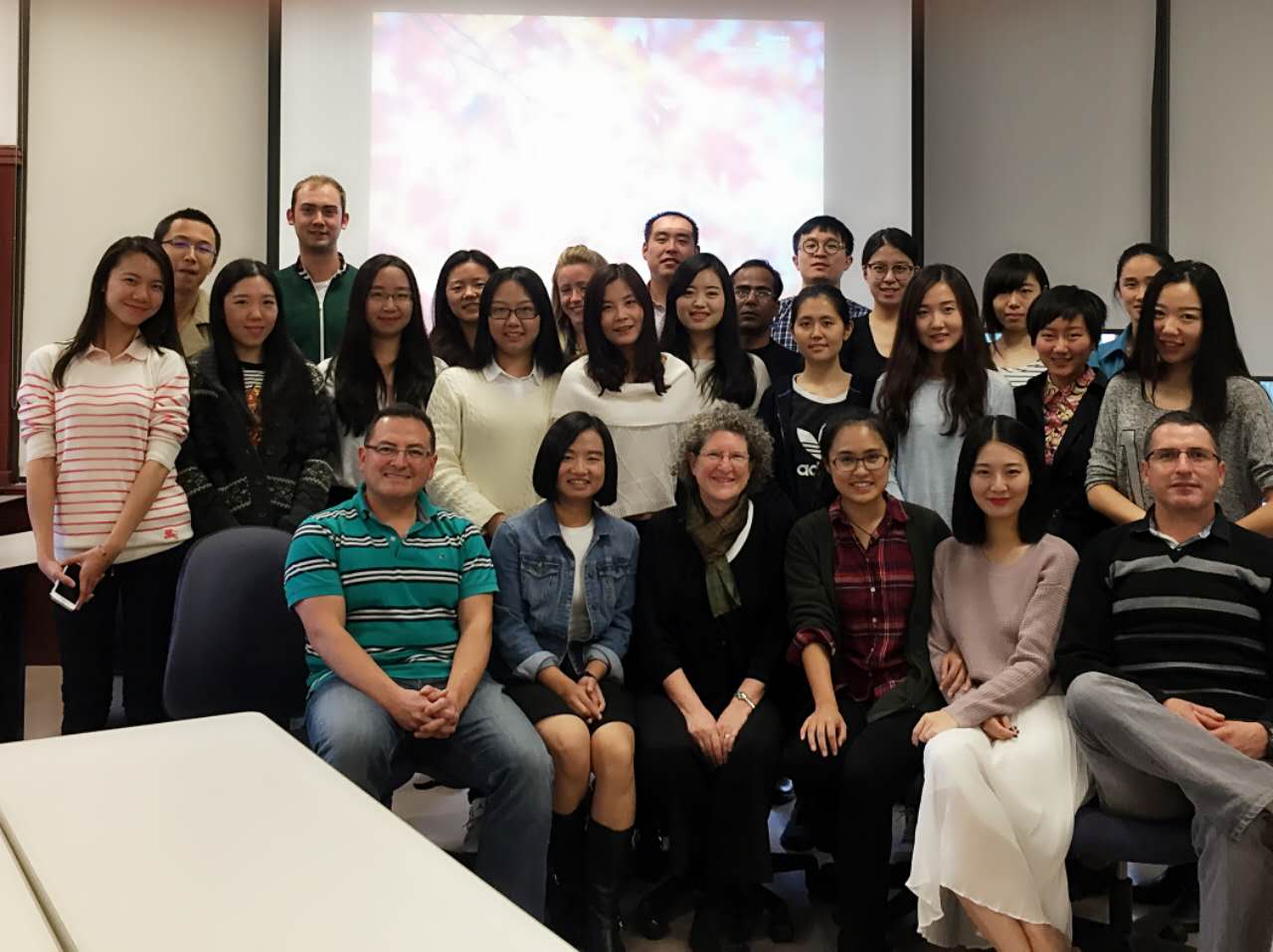
Across August, September, and October of 2015, I taught a graduate seminar at Royal Roads University, located in Victoria, BC, Canada, as part of their Master of Arts in International and Intercultural Communication (MAIIC). The course was Contemporary Issues in Communication: Cultural Identity. The 38 students enrolled were quite international, as they came from China, Ecuador, Bangladesh, Barbados, and Canada.

On the last day of class, several students asked for photos, so here’s one, although not everyone was present at the time. Imagine another dozen added to the group.

IICS 638 class photo 2015

Students prepared small papers on their own linguistic repertoires, examined the ways in which living rooms can display cultural identity, prepared group presentations on case studies about cultural identity. Their major assignments were either applied group projects, or individual papers. The group projects included:

• Hosting an intercultural competence workshop for students in the Pre-Masters Program at RRU
• Designing a brochure for Hainan Drive Travel Association to give to Chinese tourists to Victoria
• Preparing a videotape in collaboration with Indigenous Education & Student Services at RRU about the Lklungen (Songhees) Nation for their own use in public presentations
• Preparing a videotape documenting differences between Chinese dialects for use in teaching Chinese to English speakers
• Creating pre-departure orientation materials for the Office of Global Advancement to use in preparing students, staff and faculty for a trip to Ecuador.

While at RRU, I was asked to participate in a public conversation, Communication Matters: Immigration from an Intercultural Communication Perspective. Dr. Juana Du, program head of the on-campus version of the MAIIC, served as host. Other participants were Lisa Selvey and Jingya (Celine) Yang, two students from the course. Follow the link to get to the video, which is now available on YouTube.

One of the highlights of my time at RRU was being able to watch Tom LaFortune carve a totem pole for the campus, and then attending the unveiling ceremony.

I posted last year about the beautiful campus, but this time I lived on campus, with peacocks in the front yard and deer in the backyard, a Japanese garden, and 650 acres of trails available for exploration. A few new photos follow. My thanks to Professor Du for inviting me to her beautiful campus to work with a fascinating group of students!

Wendy Leeds-Hurwitz, Director
Center for Intercultural Dialogue

p.s. In November, Crossroads, the RRU internal publication, just posted a notice about one of the student projects in the course.

This slideshow requires JavaScript.

Eastern Michigan University job ad: Intercultura/Interracial Communication

Asst. Professor of Intercultural and Interracial Communication
Eastern Michigan University

The Department of Communication, Media, and Theatre Arts at Eastern Michigan University is seeking candidates for a tenure-track assistant professor specializing in intercultural and interracial communication.

The successful candidate will bring strong teaching and scholarly expertise in intercultural and interracial communication, and join a faculty committed to social justice through the scholarship and pedagogy of effective communication in a variety of social, personal, and professional settings.  In addition to teaching undergraduate intercultural and interracial communication courses, the appointment may also include teaching and developing undergraduate and graduate courses related to the candidate’s qualifications.

The successful candidate will also be expected to engage in relevant scholarly work as well as department, university, and other professional service.  Review of applications will begin December 1, 2015 and continue until the position is filled.

Complete applications should be submitted online and will include a letter of interest addressing qualifications and ability to fulfill the responsibilities, curriculum vitae, and contact information for three references.  Minimum qualifications: PhD in communication with concentration in intercultural/interracial communication and two years of teaching experience.

ABDs will be considered but candidates are required to complete their doctoral degree by the time of hire.

Questions about this posting may be directed to Dr. Donald Ritzenhein.

EMU is located in Ypsilanti, Michigan, seven miles east of Ann Arbor. Eastern Michigan University is nationally recognized for its diverse student body and serves many multicultural communities in southeast Michigan.  In addition, EMU is adjacent to several cultural museums including: Arab American National Museum, Charles H. Wright Museum of African American History, Holocaust Memorial Center, and the Polish Art Center.

Kansas State University job ad: Social Change

Assistant Professor in Communication Studies at Kansas State University

Continuing our growth, the Department of Communication Studies at Kansas State University invites applicants for a full-time, tenure track, nine-month appointment at the rank of Assistant Professor beginning
August 2016. We seek a researcher with expertise in the communicative processes and practices of social change, advocacy, or community organizing. This scholar’s work can address these processes and practices in a variety of contexts, such as organizational, intercultural, or political. Preference will be given to candidates who
approach their work from multiple methodologies, assume a critical perspective in their research, demonstrate a history or potential of securing external research funding, and/or pursue research that is
international in scope.

The successful candidate will contribute to K-State’s Vision 2025 goal of being a top-50 research university by 2025 (k-state.edu/2025) in a number of ways: by carrying out a vibrant program of engaged research; by contributing to the department’s reputation for teaching excellence in teaching both graduate and undergraduate courses; by advising graduate and undergraduate students; and by providing service to the department, university, and community. Candidates should have the Ph.D. in communication or a related field in hand by August 2016.

The Department of Communication Studies offers masters’ and bachelors’ degrees in communication and rhetorical studies. We offer four specialized tracks at the undergraduate level: Political Communication,
Organizational Communication, Legal Communication, and Relational Communication. The department makes a strong commitment to civic  engagement and public deliberation through the internationally recognized Institute for Civic Discourse and Democracy, as well as our graduate certificate in Dialogue, Deliberation, and Public Engagement. In addition to producing quality research and innovative teaching, we take pride in our students who compete on nationally competitive debate, orensics, and mock trial teams.

The department is located at Kansas State’s Manhattan campus, home to more than 24,000 students. In 2015, Kansas State University achieved record highs in fundraising and external grant awards while also
enhancing the diversity of its student body. Additionally, Kansas State is recognized for its commitment to engaged scholarship and has the Carnegie Foundation’s Elective Classification on Community Engagement.
A part of the scenic Flint Hills region some 100 miles west of Kansas City, Manhattan is the fastest growing city in Kansas, earning livability.com‘s top ranking for best college town in the U.S., Forbes’ ranking in 2011 as the best small city in the U.S. for business and careers, and glassdoor.com‘s ranking second in 2015 among top
universities for which to work.

Please apply by sending (1) a letter of application, (2) curriculum vita, (3) teaching evaluations, (4) evidence of scholarly activity and (5) names and contact information for three professional references to commstudies@k-state.edu or by mail to Cassie Hall, Department of Communication Studies, 129 Nichols Hall, 702 Mid-Camps Drive South, Kansas State University, Manhattan, KS 66506.

For questions about the position, please contact Dr. Greg Paul.

Kansas State University is an AA/EEO employer of individuals with disabilities and protected veterans and actively seeks diversity among its employees. A background check is required. Screening of applications will begin November 13, 2015, and continue until the position is filled.

This institution offers benefits to same-sex partners.

San Diego State University job ad: Intercultural Communication (CA)

Position Announcement
Assistant Professor of Intercultural Communication
San Diego State University

The School of Communication at San Diego State University invites applications for a tenure-track faculty position in Intercultural Communication at the rank of Assistant Professor, to begin in Fall 2016. The selected candidate will be primarily responsible for teaching courses in Intercultural Communication at the undergraduate and graduate level. The ability to teach additional courses within the general communication major, such as interpersonal communication, performance studies, organizational communication, or rhetoric is preferred. Applicants from all research methodologies are encouraged to apply. Candidates should possess a demonstrated commitment to excellence in teaching and research, including the scholar-teacher model. Evidence of, or the potential for, external funding is preferred but not required. A Ph.D. (or other doctoral degree) is required for appointment at the Assistant Professor level; a doctorate in Communication is preferred although related degrees or areas of study will be considered.  Salary is competitive and based on experience.

SDSU is a large, diverse, urban university and Hispanic-Serving Institution with a commitment to diversity, equity, and inclusive excellence. Our campus community is diverse in many ways, including race, religion, color, sex, age, disability, marital status, sexual orientation, gender identity and expression, national origin, pregnancy, medical condition, and covered veteran status. We strive to build and sustain a welcoming environment for all.  SDSU is seeking applicants with demonstrated experience in and/or commitment to teaching and working effectively with individuals from diverse backgrounds and members of underrepresented groups.

Interested candidates must apply via Interfolio. Screening of applications will begin October 15, 2015 and continue until the position is filled.

Requests for additional information should be directed to:
Dr. Kurt Lindemann, Search Chair
School of Communication
San Diego State University
5500 Campanile Drive
San Diego, CA 92182-4560

Dominic Busch Profile

ProfilesDominic Busch is a Professor of Intercultural Communication and Conflict Research at Universität der Bundeswehr München, Germany. He received his doctorate in 2005 at Europa-Universität Viadrina Frankfurt (Oder), Germany. From 2006 to 2011 he was a Junior Professor in Intercultural Communication at Europa-Universität Viadrina Frankfurt (Oder).
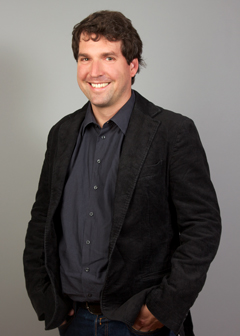
Dominic BuschIn his research on intercultural communication, he explores the epistemological, ontological, and axiological premises of how intercultural communication is approached from an academic angle. To this end, he takes the perspective of discourse analysis. While research on intercultural communication often has strong disagreements between different paradigms, the minimum common ground is that culture and intercultural communication are talked about in both academia and in Western societies’ everyday life. Culture and intercultural communication are thus objects of discourse, and thus first and foremost discursive constructions. Several characteristics of the field of intercultural communication can be observed on the basis of this assumption:

Both everyday discourses and academic discourses around intercultural communication constitute themselves in such a way that their object never ceases to be perpetuated and never disappears – even if this might actually represent a plausible goal of dealing with it. Discourses are shaped by power structures and hegemonies, and this is how core understandings of intercultural communication emerge. Their permanent self-preservation can also be described by the phenomenon of the dispositive after Michel Foucault, as Dominic Busch shows in his 2013 book. Discourse on intercultural communication fabricates problems for which, at the same time, it always provides only partial solutions. Even the strongest paradigm shift cannot overcome this, but will always only reinforce the dispositive.

At the same time, the discourse on intercultural communication is never void of interests, and research is never strictly heuristic: the study of intercultural communication is always based on societies’ aspirations of an ideal coexistence. The perceptions of problems are impossible without visions of how things should actually be better. Visions, however, traditionally do not have a seat in social science research; they are often regarded as unscientific. However, we cannot really understand how research questions are framed and how studies in this field are arranged if authors and readers would not share ideals about how to deal with interculturality, ideals that are only subtly expressed in the texts.

In his research, Dominic Busch aims to show how research on intercultural communication seeks to deal with this dilemma. To this end, it is first necessary to uncover and identify the normative ideas on how to deal with interculturality – which can also be referred to as visions. Based on a discourse analysis of academic texts on intercultural communication over a period of 50 years, Dominic Busch shows in his article “The Changing Discourse of Intercultural Ethics” how these orientations change over time. Instead of a linear development, these re-orientations have been rather circular. Only in recent times a parallel diversification of different orientations in intercultural writings can be observed – along with a new disorientation and open search in an increasingly complex world, questioning old paradigms more and more.

A comparison with overarching social science paradigms and epistemologies, however, reveals how dominant these ethical orientations are. Social research is debating the implementation of post-qualitative research methods with the aim of avoiding exerting epistemic violence through research. This should involve authors reflecting more on their own positionality and instead of researching their partners, they should give voice to these partners themselves. In their article “New Methodologies – New Interculturalities?” Dominic Busch and Emilian Franco explore how papers in the research field of intercultural communication manage these issues by using new methods such as participatory research, autoethnography, and arts-based research. From a critical point of view, Busch and Franco find that many studies often do not really meet the standards of such methodologies. However, Busch and Franco show that, seen as parts of an ethical discourse on interculturality, these new methods serve as a basis for authors’ ethical and visionary reflections on a desirable way of dealing with interculturality.

Intercultural mediation is a powerful example of this visionary orientation in discourses on intercultural communication. A great many different disciplines share some interest in intercultural mediation: These include, for example, cultural anthropology, translation research, foreign language didactics, and political science research on international relations, in addition to research on intercultural communication and conflict management. Upon closer examination, these disciplines often conceive of intercultural mediation in very different ways. However, there is one common vision that unites them: that constructive pathways to intercultural understanding will always exist. This is reason enough from an ethical point of view to further promote and develop such fields of research. The Routledge Handbook of Intercultural Mediation by Dominic Busch provides an insight into this interdisciplinary field and its potentials.

Discourse analysis should therefore not be seen only as criticism, but always as a constructive prospect for development. Even more, the insight into the constructivist character of notions of cultures may open the opportunity (and the responsibility) to encourage forms of intercultural dialogue on a local and on a global level to discuss and to define notions of how positive (intercultural) coexistence may be designed. In these respects, Dominic Busch explores the potential of concepts like intercultural sustainability as well as contributions from cosmopolitanism to intercultural dialogue.

For more detailed information as well as a list of German language publications please visit Dominic Busch’s website.

Selected publications in English:

Busch, D. (Ed.). (2023). The Routledge handbook of intercultural mediation. New York: Routledge.

Busch, D., & Franco, E. (2022). New methodologies—New interculturalities? The visionary discourse of post-qualitative research on the intercultural. Language and Intercultural Communication, 1–13. DOI: 10.1080/14708477.2022.2133136.

Busch, D. (2021). The changing discourse of intercultural ethics: A diachronic meta-analysis. Journal of Multicultural Discourses, 16(3), 189–202. DOI: 10.1080/17447143.2020.1803887.

Busch, D. (2019). Intercultural conflict mediation. In P. Moy (Ed.), Oxford bibliographies in communication. New York: Oxford University Press.

Busch, D., & Möller-Kiero, J. (2017). Sustainability and ethnic peace discourse: In search for synergies from bringing together discourses on intercultural communication and on global sustainability. ESSACHESS: Journal for Communication Studies, 10(1), 217-237.

Busch, D. (2016). Does conflict mediation research keep track with cultural theory? A theory-based qualitative content analysis on concepts of culture in conflict management research. European Journal of Applied Linguistics, 4(2), 181-207.

Busch, D., & Möller-Kiero, J. (2016). Rethinking interculturality will require moral confessions: Analysing the debate among convivialists, interculturalists, cosmopolitanists and intercultural communication scholars. Interculture Journal, 15(26), 43-57.

Busch, D. (2015). Conflict Management in Organizations. In A. D. Smith, X. Hou, J. Stone, R. Dennis, & P. Rizova (Eds.), The Wiley Blackwell encyclopedia of race, ethnicity, and nationalism (pp. 1–5). John Wiley & Sons. DOI: 10.1002/9781118663202.wberen340.

Busch, D. (2015). Culture is leaving conversation analysis, but is it really gone? The analysis of culturalist performances in conversationJournal of Intercultural Communication, 39, 1-17.

Busch, D. (2015). Mediation. In J. M. Bennett (Ed.), The Sage encyclopedia of intercultural competence (pp. 608–611). Sage. DOI: 10.4135/9781483346267.n199.

Busch, D. (2012). Cultural theory and conflict management in organizations: How does theory shape our understanding of culture in practice? International Journal of Cross Cultural Management, 12(1), 9–24. DOI: 10.1177/1470595811413106.

Busch, D. (2010). Shopping in hospitality: Situational constructions of customer–vendor relationships among shopping tourists at a bazaar on the German–Polish border. Language and Intercultural Communication, 10(1), 72–89. DOI: 10.1080/14708470903452614.

Busch, D. (2009). What kind of intercultural competence will contribute to students’ future job employability? Intercultural Education, 20(5), 429–438. DOI: 10.1080/14675980903371290.


Work for CID:

Dominic Busch has written a guest post, Some Observations on Internal Social Discourses on the Recent Increase of Refugee Immigration into Germany, as well as KC76: Intercultural Sustainability and KC106: Intercultural Medication. He has translated KC1: Intercultural DialogueKC2: CosmopolitanismKC76: Intercultural Sustainability, and KC106: Intercultural Mediation into German. He also frequently reviews translations into German.