U New South Wales job ad (Australia)

Associate Professor in International Studies

UNSW Australia is a progressive research-intensive university committed to academic excellence, social engagement and an international perspective. In 2013, both the Times Higher Education and Quacquarelli Symonds (QS) World University Rankings placed Social Sciences at UNSW in the top 40 in the world.

UNSW Arts & Social Sciences wishes to appoint an energetic and experienced scholar, at Associate Professor level, to provide academic leadership over the next five years for its prestigious Bachelor of International Studies program.  We welcome applications from scholars in disciplines such as Cultures and Languages; International Relations or International Politics; Transnational History; Comparative Literature; Area Studies, etc.  The person we are looking for will have an outstanding record in research and teaching, as well as experience of effective academic management.

The position is based in the School of Humanities and Languages, which is home to many internationally recognised scholars who are leaders in their fields. Humanities and Languages ranks as a national leader in a number of disciplines (Excellence in Research for Australia 2012), and in the top 150 internationally (QS World University Rankings 2014).

The UNSW Bachelor of International Studies program is a rigorous four year degree program which attracts bright and globally conscious students who, as graduates, go on to pursue exciting and unpredictable international careers.

The appointee will be expected to build academic staff capacity and rejuvenate the curriculum in the Bachelor of International Studies, and also to play an active role in the collegial life of the Humanities and Languages.

· The position is available on a continuing basis.
· The current salary range for an Associate Professor (Level D) is AUD$134,916 – $148,917 per annum.
· The position attracts up to 17% employer superannuation and leave loading.
· Base salary on appointment will be determined on the basis of previous experience and qualifications.
· The successful applicant is expected to commence in the role by January 2015.

Please direct enquiries about this post to Professor Vanessa Lemm, Head of School.

Robyn Penman Profile

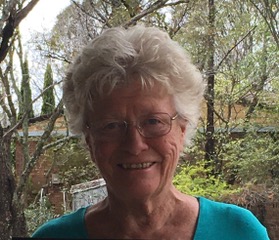
ProfilesRobyn Penman (PhD, University of Melbourne) is an independent communication scholar and consultant to government on communication and social policy matters.

Robyn PenmanShe was a Founding Director of the Communication Research Institute of Australia (1987-2000) and an Adjunct Professor in Communication at the University of Canberra (1999-2005). Robyn is a past President (1985-6) and Life Member of the Australian and New Zealand Communication Association, has served on the International Communication Association board (2002-3) and is a Visiting Senior Member, Linacre College, Oxford (1987). She was also the Associate Editor of the Australian Journal of Communication (1984-2003) and has served on the editorial boards of Communication Theory and Human Communication Research. She is currently a board member of the CMM Institute, Co-Director of the Cosmopolis2045 project, and General Editor of CMMi Press.

Robyn has devoted her scholarly career to the development of a practical-theoretic approach to understanding communicating as a relational practice. She has been equally as focused on asking questions about what makes for good communicating, especially in the public, civic sphere, and how this understanding can be used to make better social worlds. She is the author of five books—Communication Process and Relationships, Not the Marrying Kind (with Yvonne Stolk), Reconstructing Communicating: Looking to a Future, Making Better Social Worlds (with Arthur Jensen) and Justice in the Making: Relating, Participating, Communicating—along with many book chapters and journal articles.

Robyn welcomes contact via email.


Work for CID:

Robyn Penman has written KC4: Coordinated Management of Meaning (CMM), KC8: Public Dialogue, KC15: Cultural Pluralism, KC29: Dialogue Civility, and KC37: Dialogic Listening. She has also written two guest posts, Feeling Felt: The Heart of the Dialogic Moment? and Dialogue in the Interests of Justice. And she provided a book review of The coordinated management of meaning: A festschrift in honor of W. Barnett Pearce. Finally, she served as initial graphic design consultant for CID, establishing the format for Key Concepts in Intercultural Dialogue.

Postdoc in Media @ Macquarie U (Sydney)

Postdoctoral Fellow in Media
Macquarie University, Sydney

Macquarie University is seeking a postdoctoral fellow to be attached to Professor Bridget Griffen-Foley’s ARC Future Fellowship project, Switched-On Audiences: Australian Listeners and Viewers.

In this role you will be asked to:
Work on a research project about an aspect of Australian newspaper, magazine, radio or television reception history since 1930;
Play an active role in the Centre for Media History’s activities;
Produce excellent research in line with the research strengths of the Faculty and Department including publishing in peer reviewed journals and applying for research grants;
Engage with external stakeholders, the media and the public to disseminate your research.

Selection Criteria
To be considered for this position, applicants must address the selection criteria below and then upload the response as a separate document during the online application process.

Essential
A submitted PhD in media history, Australian history, communications and media, or a related field.
An excellent research and publication track record relative to opportunity.

Salary Package:
Academic Level A salary AUD $62,526 – $84,193 p.a. plus 17% employer’s superannuation and annual leave loading.

Appointment Type:
Full-time, 2-year fixed term contract position.

Specific Role Enquiries:
Specific enquiries related to this position should be directed to Professor Bridget Griffen-Foley.

Intending applicants are strongly encouraged to discuss the position with Professor Griffen-Foley before applying.

Applications Close:

Lily A. Arasaratnam-Smith Profile

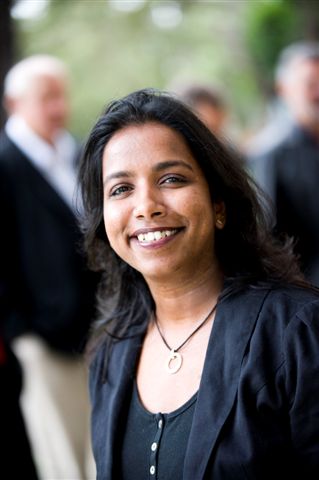
ProfilesLily A. Arasaratnam-Smith, PhD,  is Professor and Deputy Vice President Faculty at Alphacrucis College, Sydney, Australia. Her primary area of expertise is in intercultural communication competence, along with interests in multiculturalism, the role of social cognition in intercultural communication, and the relationship between sensation seeking and intercultural contact-seeking behavior.

Lily ArasaratnamIn addition to experience in teaching/training in a variety of institutions, such as Macquarie University (Australia), Alphacrucis College (Australia/New Zealand), Oregon State University (USA), Rutgers University (USA) and the Summer Institute for Intercultural Communication (USA), Lily also has personal experience living in different countries such as Sri Lanka, Maldives, the United States, and Australia.

A few of Lily’s publications are provided below for those who are interested:

Arasaratnam, L. A. (2011). Perception and Communication in Intercultural Spaces. Lanham, MD: University Press of America.

Arasaratnam, L. A. (2013). A review of articles on multiculturalism in 35 years of IJIR.  International Journal of Intercultural Relations, 676-685.

Arasaratnam, L. A. (2012). Intercultural Spaces and Communication within: An Explication. Australian Journal of Communication, 39(3), 135-141.

Arasaratnam, L. A., & Banerjee, S. C. (2011). Sensation seeking and intercultural communication competence: A model test. International Journal of Intercultural Relations, 35, 226-233.

Arasaratnam, L. A., Banerjee, S. C., & Dembek, K. (2010). The integrated model of intercultural communication competence (IMICC): Model test. Australian Journal of Communication, 37(3), 103-116.

Arasaratnam, L. A. (2006). Further testing of a new model of intercultural communication competence. Communication Research Reports, 23, 93 – 99.

Arasaratnam, L. A., & Doerfel, M. L. (2005). Intercultural communication competence: Identifying key components from multicultural perspectives. International Journal of Intercultural Relations, 29, 137-163.


Work for CID:
Lily Arasaratnam-Smith wrote KC3: Intercultural Competence.

Sydney 2014

On the way between the US and New Zealand, I was able to stop in Sydney, Australia for a week. Being there permitted me to connect with two people I’d never met but only talked to via email, and one I had not seen in over a decade. Between the three, there was a wide range of interests and career stages.

Lily A. Arasaratnam is Senior Lecturer in Intercultural Communication and Program Director for an MA program at Alphacrucis College in Parramatta, just outside Sydney. I “met” Lily when we both participated in an online dialogue about intercultural communication for the Journal of International and Intercultural Communication which will shortly be published. Her primary research specialization is intercultural communication competence. She is an intercultural expert both because of her PhD and her personal experience: born in Sri Lanka, raised in the Maldives, with US degrees, and now living in Australia, she lives many of the dualities others only try to understand.

Olga Kozar is currently completing her PhD in Applied Linguistics at Macquarie University in Sydney. Her research is on private one-on-one English as a second language lessons conducted via videoconferencing tools such as Skype, especially when learners and teachers have different cultural backgrounds. In her spare time she runs such a language school – with about 1000 students! She was quite helpful in providing technology-related ideas, given that she’s become such an expert. I was delighted to discover that she and Christine Develotte, a colleague from Lyon, France, who does similar work with teaching French online and who I introduced her to via email, have now met in person as well.

Penman, Leeds-Hurwitz
Robyn Penman, Wendy Leeds-Hurwitz

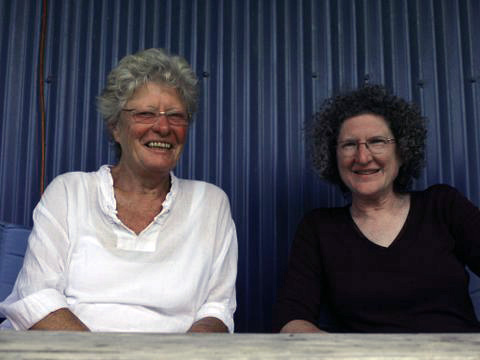
I was introduced to Robyn Penman by Barnett Pearce so long ago we don’t remember when it would have been; it was a pleasure to have a chance to catch up on the past decade. Currently active with the CMM Institute, formerly with the Communication Research Institute of Australia, Robyn is a pioneering communication scholar, widely respected both for her ability to state theory clearly (as in her early Communication Processes and Relationships, or the more recent Reconstructing Communication) and to apply that theory to practical communication problems (as in Designing Information for People, a co-edited volume). Robyn suggested that, given my current efforts to connect international scholars, my name should now be changed to Ariadne, for her association with webs and weaving.

I look forward to continuing the conversations with all these scholars.

Wendy Leeds-Hurwitz, Director
Center for Intercultural Dialogue

Save

U Queensland postdoc

The Centre for Critical and Cultural Studies (CCCS) at the University of Queensland (Brisbane, Australia) is seeking expressions of interest for applications for 3 year UQ Postdoctoral Research Fellowships for 2014-2016. The UQ postdoctoral scheme seeks to attract talented early career researchers with well-developed research programs and strong track records. The fellowships support full time research, although it is possible to organise some teaching experience if desired.

If successful the applicant will be based in the CCCS, a leading Australian research centre in the humanities that supports broad-ranging research in cultural and media studies. Current research emphases include the environmental humanities, surveillance studies, television studies, Australian cultural history, cinema studies, new materialities, celebrity, and media anthropology. The Centre provides a rigorous, supportive and collaborative research environment and has assisted many outstanding early career researchers to develop their research capacities and careers. It has also helped UQ earn top ERA rankings in cultural and media studies research.

Applicants for UQ Postdoctoral Fellowships must have no more than five years full time professional research experience or equivalent part time experience since the award of a Ph.D. An applicant who does not hold a doctoral degree at the time of application may be offered an appointment if evidence is subsequently provided that a doctoral thesis will be submitted by the end of 2013. Assessment criteria will include the excellence of the researcher and the quality of the research program to be undertaken. Applicants must have an outstanding track record relative to opportunity and a demonstrated capacity for undertaking original work. In addition, the selection process will consider the alignment of the proposed research with existing research strengths in the Centre. Typically, applicants have already published their work in top academic journals or have demonstrated similar research achievements.

The 2012 salary range for the award ranged from A$68,000 to $76,000 per annum based on experience. The fellowship also comes with maintenance funds (to be spent on research, travel, and equipment) totalling $20,000 over three years and relocation reimbursement. For more details about the UQ Postdoctoral Research Fellowships, including eligibility and assessment criteria, see here.

SUBMITTING EXPRESSIONS OF INTEREST
If you are interested in applying for a UQ Postdoctoral Fellowship through the CCCS, the first step is to contact Professor Gay Hawkins (Director) at admin.cccs AT uq.edu.au with an expression of interest. This should involve a copy of your CV and a one page outline of your proposed research project.

The deadline for receiving expressions of interest is 8 April. You will be notified as to the success of your EOI by 19 April.

If you are selected to proceed to the next stage and submit a formal application to the UQ Postdoctoral Research Fellowships through the CCCS you will have until the end of May to prepare your application. Final dates for submission are not yet available but this is the usual timeframe.

To learn more about the work of CCCS, potential applications are strongly advised to visit the CCCS website. A brief snapshot of current staff and their research projects are listed in the right column to give a preliminary overview.


Save

Olga Kozar Profile

ProfilesOlga Kozar is a Ph.D. researcher in Applied Linguistics. She is currently completing her candidature at Macquarie University (Sydney,  Australia).

Her main research interest is private one-on-one ESOL lessons conducted via videoconferencing tools (e.g., Skype) with learners and teachers from different cultural backgrounds. The questions that she addresses in her Ph.D. and a series of related publications are the following: Who teaches and who learns privately via videoconferencing tools? What expectations do private language learners have of their future instructors? What are the discourses and genres of private ESOL lessons conducted via Skype?

Her work can be found in both academic journals (for example, Distance Education, Research in Comparative and International Education) as well as practice-oriented publications such as Modern English Teacher and English-teaching Professional. Olga’s personal website is: www.olgakozar.com

Head, School of Journalism/Comm, U Queensland job ad

CALL FOR APPLICATIONS

Head, School of Journalism and Communication
University of Queensland, Australia

The School of Journalism and Communication offers the longest-standing Journalism program in Australia. It also has a distinctive program in Communication for Social Change, and Communication degrees at both undergraduate and postgraduate levels with growing higher research degree enrollments. The School is responsible for a number of undergraduate degrees (Bachelor of Journalism and Bachelor of Communication) and teaches majors in the Bachelor of Arts. It is also responsible for the Masters of Journalism and the Masters of Communication. It teaches a student load of 650 EFTSL with an academic staff of 31.

The School’s aggregated research measured through ERA has been assessed by the University at the rank of 4. The School’s strengths are reflected in its awards for teaching excellence, a research centre, and active engagement with industry and the professions. Details of the areas of interest of academic staff in the School may be accessed on the School’s web site. In addition to research conducted by staff the School includes a research centre – Centre for Communication and Social Change. The school is one of six schools within the Faculty of Social and Behavioural Sciences and is based at the St Lucia (Brisbane) campus.

The Role
The University now wishes to appoint a new Head of the School of Journalism and Communication. The new Head will provide a future vision that will give teaching and research programs in Journalism and Communication an outstanding international profile within higher education. The vision will be implemented by the Head providing academic, research, teaching and organisational leadership to expand research output, increase external funding support, build postgraduate culture, and broaden the undergraduate teaching base.

The Person
Applicants must possess a PhD in a relevant field of study. The successful appointee will have excellent leadership and management skills that will enable the School to develop and realise a vision that builds an excellent teaching and research culture. The new Head will be expected to have and to maintain an international reputation for excellence in research in journalism and/or communication.

Remuneration
This is a full-time, continuing appointment at Academic Level E. The remuneration package will be $151,735 per annum, plus employer superannuation contributions of up to 17% (total package will be $177,530 per annum).

Enquiries
To discuss this role please contact Bill Newton at HigherEd Appointments, the firm assisting the University, by phoning +61 (0)419 275 583 or email search@higheredappointments.com.au for initial enquiries or information on the role. Applications with full supporting documentation should be forwarded to the above email address by 23 March 2012.

Position description

Application closing date:
23 Mar 2012 11:55pm E. Australia Standard Time

University of Melbourne

Between talks in Dunedin and Brisbane, I had a chance to visit the University of Melbourne and meet a few faculty members there. On February 15, 2012, I met with Dr. Ingrid Volkmer, Director of the Media and Communication program at the School of Culture and Communication there. In addition, I met with Prof. Nikos Papastergiadis, Professor in the same school. Both are extremely active scholars, producing particularly interesting research (follow the links provided for details). We found potential future connections, and I look forward to following up on the conversations.

The buildings at the University of Melbourne are like those elsewhere in the city in that they are eclectic in design, often combining multiple elements in ways I have not seen previously. A pleasure to see!

Wendy Leeds-Hurwitz,Director
Center for Intercultural Dialogue

U of Melbourne job ad

UNIVERSITY OF MELBOURNE, AUSTRALIA
School of Culture & Communication, Faculty of Arts
Lecturer – Quantitative Media Research

Salary: AUD$81,925 – AUD$97,283 p.a. (pro rata) plus 17% superannuation

Media and Communications at the University of Melbourne was ranked by the Australian Research Council in 2011 as ‘world class’. Our courses reflect this international standing.
We train students for careers in the fast-changing professional areas of digital, broadcast, print and mobile communication. We equip students with an in-depth understanding of the changing nature of media industries and professional practices in the contemporary world and of how these industries inform diverse social, cultural and political processes at global to local levels.  Our program seeks to fill a 0.5 FTE Level B position for three years in the area of quantitative media research. An important outcome of the position is that of curriculum development.

In this role you will assist the Media and Communications program in developing subjects in both the undergraduate postgraduate levels. You will be expected to have expertise in the area of quantitative media research, including data collection, statistical analysis and evaluation procedures.  A background in social sciences is highly desirable.

Employment Type:
Part-time 0.5FTE (fixed-term) position available for three years Jan 2012 to Dec 2014

Enquiries only to:
A/Prof Ingrid Volkmer, Head, Media & Communications Program  Tel +61 3 8344 3500 Email ivolkmer@unimelb.edu.au

Close date:
18 December 2011

For position information and to apply online go to www.hr.unimelb.edu.au/careers, click on ‘Job Search’ and search under the job title or job number 0027852.