Annenberg-Oxford Media Policy Summer Institute 2014

The Center for Global Communication Studies at the Annenberg School for Communication, University of Pennsylvania and the Programme for Comparative Media Law and Policy at the University of Oxford (PCMLP) are pleased to invite applications to the 16th annual Annenberg-Oxford Media Policy Summer Institute, to be held from Monday, June 30 to Friday, July 11, 2014 at the University of Oxford.

For the past sixteen years, the Annenberg-Oxford Media Policy Summer Institute has brought together young scholars, media lawyers, practitioners, regulators, and activists for two weeks to discuss important recent trends in technology and international politics and the influence that these developments have on global media policy. The objective of the program is to help prepare, motivate, encourage and support students and practitioners who aspire to pursue a career in communications media, may it be in academia, business or in policy-related fields. Participants come from around the world; countries represented at previous summer institutes include Myanmar, Bosnia and Herzegovina, Iran, Kenya, China, Brazil, Egypt, Nigeria, Jordan, Italy, Iran, Colombia, El Salvador, among others.

Annenberg-Oxford alumni continue to engage in the program and collaborate through network ties that are furthered throughout the years. To learn more about past participants, speakers, and curricula, please click here.

Applications are welcomed from students and practitioners working in communications, media, law, policy, regulation, and technology. We are especially interested in applicants with specific research projects focusing on issues surrounding global internet policy and politics, media and peace-building, freedom of expression, and media development.

For questions, please email Laura Schwartz-Henderson. Limited funding is available for a select number of participants, although applicants are encouraged to seek alternative funding sources.

CFP Open Spaces for Interaction & Learning Diversities

CFP
Open Spaces for Interaction and Learning Diversities
27-30 August 2014 – Padova, Italy

Special Interest Groups 10, 21, and the new SIG on Education Theory of the European Association for Research in Learning and Instruction (EARLI) are jointly sponsoring the Conference ‘Open Spaces for Interaction and Learning Diversities’.

What are the challenges that global movements and cross-cultural communication continue to pose to many areas of teaching, learning and education? SIG 10 and 21 have devoted their efforts to studying social and cultural interactions and cultural diversity in teaching and learning settings. With increasing dynamics and diversity in most societies (i.e., offline and online mobility, inter-institutional collaborations, migrations and intercultural encounters, individual transitions) this area of research becomes even more important in learning research. Over time, the changes in social, cultural and political contexts result into cultural diversity being ignored or rejected across many countries in Europe. It is the denial or hidden nature of diversity in educational settings and learning processes, reflected in the marginalisation of this topic, that we would like to address. Therefore, we would like to open up spaces to talk, promote and fight for the relevance of addressing learning diversities. This may include current and new directions for theoretical and methodological discussions. These may be spaces of interaction and diversity research across single or multiple moments, different contexts and various time scales.

The focus of this meeting is to examine the dynamics by which practices of learning and their associated institutions evolve. Learners and educators move through different social spaces, meet and interact; whilst bringing with them their languages, bodies of knowledge, values and cultural references. This theme provides ample space for discussion both for the separate SIGs – social interaction in learning and instruction, as well as cultural diversity – and for the SIGs jointly. In addition, special attention will be given to the educational realities and challenges in Italy today. The meeting is continuing the reflection started in Belgrade in 2012 at the Patchwork: Learning Diversities and in Utrecht 2010, at the Moving through cultures of learning meeting.

Save

CFP CA series in public anthropology competition

INTERNATIONAL PUBLISHING COMPETITION CALIFORNIA SERIES IN PUBLIC ANTHROPOLOGY

The California Series in Public Anthropology encourages scholars in a range of disciplines to discuss major public issues in ways that help the broader public understand and address them. Two presidents (Mikhail Gorbachev and Bill Clinton) as well as three Nobel Laureates (Amartya Sen, Jody Williams, and Mikhail Gorbachev) have contributed to the Series either through books or forewords. Its list includes such prominent authors as Paul Farmer co-founder of Partners in Health, Kolokotrones University Professor at Harvard and United Nations Deputy Special Envoy to Haiti.

Each year the Series highlights a particular problem in its international competitive call for manuscripts. The focus this year will be on INEQUALITY IN AMERICA

We are particularly interested in authors who convey both the problems engendered by inequality as well as ways for addressing it. Prospective authors might ask themselves: How they can make their study “come alive” to a range of readers. They might, for example, focus on the lives of a few, select individuals tracing the problems they face and how, to the best of their abilities, they cope with them. Prospective authors might examine a specific institution and how, in various ways, it perpetuates inequality. Or authors might describe a particular group that seeks to address a particular facet of the problem. There is no restriction on how prospective authors address the topic of Inequality in America – only an insistence that it be presented in a way that attracts a range of readers into thinking thoughtfully about the issue (or issues) raised. The book’s primary intended audiences tend to be college students as well as the general public.

The University of California Press in association with the Center for a Public Anthropology will review proposals for publication independent of whether the manuscripts themselves have been completed. The proposals can describe work the author wishes to undertake in the near future or work that is currently underway. The proposals submitted to the competition should be 3-4,000 words long and describe both the overall work as well as a general summary of what is (or will be) in each chapter. We expect the completed, publishable manuscripts to be between 200-250 pages (or 60,000-80,000 words) excluding footnotes and references. Examples of the types of analyses we are looking for might be:

In Search of Respect: Selling Crack in El Barrio by Philippe Bourgois
Nickeled and Dimed: On (Not) Getting By in America by Barbara Ehrenreich,
Someplace Like America: Tales From the New Great Depression by Dale Maharidge
Fire in the Ashes: Twenty-Five Years Among the Poorest Children in America by Jonathan Kozol
There Are No Children Here: The Story of Two Boys Growing Up in the Other America by Alex Kotlowitz

We are interested in establishing committed, supportive relationships with authors that insures their books are not only published but are well publicized and recognized both within and beyond the academy. We are committed to insuring the success of winning proposals.

DEADLINE FOR SUBMISSIONS IS MARCH 17, 2014 Submissions should be emailed  with the relevant material enclosed as attachments. They can also be sent to: Book Series, 707 Kaha Street, Kailua, HI. Questions regarding the competitions should be directed to Dr. Rob Borofsky.

All entries will be judged by the Co-Editors of the California Series in Public Anthropology: Rob Borofsky (Center for a Public Anthropology & Hawaii Pacific University) and Naomi Schneider (University of California Press)

IICD NCA distinguished scholarship awards

Call For Nominations
International and Intercultural Communication Division
National Communication Association

Distinguished Scholarship Awards
Nominations are invited for the 2014 International and Intercultural Communication Division Distinguished Scholarship Annual Awards for work published/copyrighted in 2013.

Up to five awards will be given in the following categories:
*Best Book (single-authored or co-authored)
*Best Book (edited or co-edited)
*Best Article (or Book Chapter)
*Best Dissertation and/or Master’s Thesis

Unless otherwise specified, all nomination materials must be by electronic submission only to: sara.deturk@utsa.edu and must include the following:

(A) A nomination letter outlining justification for the award.

(B) For Article or Book Chapter submissions, send PDF copies only.

(C) For Book submissions, send three (3) copies of the complete work. (You may ask your publishers to send copies directly as part of their promo!)

(D) For Dissertation or Thesis submissions, mail three (3) CD-Rom copies of the complete work.

Mail hard copies (for C & D) to:
Dr. Sara DeTurk
Department of Communication
University of Texas at San Antonio
One UTSA Circle
San Antonio, TX 78249

Awards will be presented at the International and Intercultural Communication Division Business Meeting at the NCA 2014 Annual Convention this November in Chicago. Recipients of the awards will be notified by September 1, 2014 and are expected to be present for the award presentations. Self, peer, or advisor nominations accepted. The awards committee will not accept more than one submission of the same co-/author, whether they are nominated or self-nominated, regardless of category. Works must have been published and copyrighted during the 2013 calendar year.

Nomination packets must be received by April 25, 2014.

Save

Lily A. Arasaratnam-Smith Profile

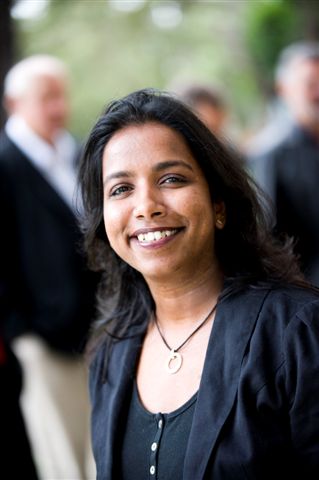
ProfilesLily A. Arasaratnam-Smith, PhD,  is Professor and Deputy Vice President Faculty at Alphacrucis College, Sydney, Australia. Her primary area of expertise is in intercultural communication competence, along with interests in multiculturalism, the role of social cognition in intercultural communication, and the relationship between sensation seeking and intercultural contact-seeking behavior.

Lily ArasaratnamIn addition to experience in teaching/training in a variety of institutions, such as Macquarie University (Australia), Alphacrucis College (Australia/New Zealand), Oregon State University (USA), Rutgers University (USA) and the Summer Institute for Intercultural Communication (USA), Lily also has personal experience living in different countries such as Sri Lanka, Maldives, the United States, and Australia.

A few of Lily’s publications are provided below for those who are interested:

Arasaratnam, L. A. (2011). Perception and Communication in Intercultural Spaces. Lanham, MD: University Press of America.

Arasaratnam, L. A. (2013). A review of articles on multiculturalism in 35 years of IJIR.  International Journal of Intercultural Relations, 676-685.

Arasaratnam, L. A. (2012). Intercultural Spaces and Communication within: An Explication. Australian Journal of Communication, 39(3), 135-141.

Arasaratnam, L. A., & Banerjee, S. C. (2011). Sensation seeking and intercultural communication competence: A model test. International Journal of Intercultural Relations, 35, 226-233.

Arasaratnam, L. A., Banerjee, S. C., & Dembek, K. (2010). The integrated model of intercultural communication competence (IMICC): Model test. Australian Journal of Communication, 37(3), 103-116.

Arasaratnam, L. A. (2006). Further testing of a new model of intercultural communication competence. Communication Research Reports, 23, 93 – 99.

Arasaratnam, L. A., & Doerfel, M. L. (2005). Intercultural communication competence: Identifying key components from multicultural perspectives. International Journal of Intercultural Relations, 29, 137-163.


Work for CID:
Lily Arasaratnam-Smith wrote KC3: Intercultural Competence.

Diversity Postdoc at University of San Diego

The College of Arts and Sciences at the University of San Diego announces three openings for the Diversity Postdoctoral Fellowship. We seek to support scholars who are committed to teaching and mentoring students from communities that have historically been underrepresented in higher education, and who show promise of a distinguished research career from any discipline from the Humanities, Sciences, Math and Social Sciences. We are especially invested in supporting the early development of scholars whose research, teaching, mentoring and/or service advances the perspectives of Gender, First Nations/Native Americans, African Americans, and/or Filipino Americans.

The positions will begin in September 2014 and will be housed in any three of the following academic departments:
•         Biology
•         Chemistry and Biochemistry
•         Communication Studies
•         Ethnic Studies
•         Languages and Literature
•         Marine Sciences and Environmental Studies
•         Physics
•         Political Science and International Relations
•         Theology and Religious Studies

The Diversity Fellowship is a two-year program that offers the possibility of a one-year renewal. Fellows will teach three courses per year, and will work closely with faculty mentors inside and outside of their discipline. USD faculty will mentor the fellows’ interdisciplinary engagement with liberal arts pedagogy, and provide institutional and intellectual support for the fellows’ active scholarly research agenda.

Job Requirements
Candidates must have completed their PhD or other terminal degree within three years of the closing date. Candidates who have not yet had a tenure-track faculty position will be given priority. Awards include competitive salary, benefits package, and travel funds for conference participation.

Background check:  Successful completion of a pre-employment background check.

Additional Details
The University of San Diego is committed to academic excellence, Catholic Intellectual and social traditions, and a superior liberal arts education for scholars of all faiths. Historically, Catholic Universities have assumed responsibility for welcoming diversity and creating a public space for underrepresented groups.

The University of San Diego is an Equal Opportunity Employer.

How To Apply
Deadline for receiving all materials is January 24, 2014 by 5:00 PM PST.

Please submit one copy to iRecruitment at www.sandiego.edu/jobs and look for job#12528 and click on “apply now”. In addition, please submit one copy to usdpostdoc@sandiego.edu.

Wenshan Jia Profile

ProfilesWenshan Jia is Ph.D. and Professor of Communication and China Studies, Department of Communication Studies, Chapman University, Orange County, California.  He is also Distinguished Adjunct Professor, School of Journalism & Communication, Research Associate, the National Academy of Development & Strategy, Renmin University, China.

Wenshan Jia

His areas of research are intercultural/global communication, ethnic relations in China and Chinese media. He has published “Ethnic conflicts in China” in Handbook of Ethnic Conflict: International Perspectives,  winner of the Gudykunst Award among others.   A winner of IAIR Early-Career Award, Wang-Fradkin Professorship award, and author of Choice “Outstanding Book” titles such as The Remaking of Chinese Character and Identity in the 21st Century: The Chinese Face Practices, he is editorial board member of International Journal for Intercultural Relations and Asian Journal of Communication and served as a content expert at the 4th World Cyberspace Cooperation Summit and a guest speaker of the Pacific Council on International Policy.

Selected Publications:

Jia, W. (Ed.). (2018). Intercultural communication: Adapting to emerging global realities (2nd ed.). San Diego, CA: Cognella.

Jia, W., Jiang H., & Zhao, L. (2017). Intercultural communication and dialogic civilization for the creation of a global community. Journal of Renmin University of China, 31(5), 100-111.

Jia, W. (June 6, 2017). Now, globalization with Chinese characteristics. YaleGlobal Online.

Jia, W., & Tian, D. (2016). Chinese conceptualizations of communication: Chinese terms for talk and practice. In D. Carbaugh (Ed.), The handbook of communication in cross-cultural perspective (pp. 244-253). New York: Routledge.

Jia, W., H. Liu, R. Wang, & X. Liu (2014). Contemporary Chinese communication scholarship: An alternative emerging paradigm. In R. Fortner & P. M. Fackler (Eds.), Handbook of media and mass communication theory. Malden, MA: Wiley.

Jia, Wenshan, Y. Lee, H. Zhang (2012). Ethnic conflicts in China. In D. Landis & R. A. Roberts (Eds.) Handbook of ethnic conflict: International perspectives (pp. 177-198). Springer.

Jia, W. (2011). On the discourse of cultural China. Journal of Asia Pacific Communication, 21(2), 165-176.

Jia, W., Tian, D. & Jia, X. (2010). Chimerica: US-China communication in the 21st century. In Larry. A. Samovar, Richard E. Porter, & Edward R. McDaniel (Eds.), Intercultural Communication: A Reader (13th ed., pp. 161-170). Belmont, CA: Wadsworth.

Jia, W. (2009). An intercultural communication model of international relations: The case of China. In Y. Hao & G. Wei (Eds.), Challenges to Chinese foreign policy: Diplomacy, globalization and the next world power (pp. 319-333). Louisville, KT: University Press of Kentucky.

Jia, W., et al. (2002). Chinese communication theory and research: Reflections, new frontiers, new directions.  CT:  Greenwood.

Jia, W. (2001). The Remaking of the Chinese character and identity in the 21st century: The Chinese face practices.  CT:  Greenwood.


Work for CID:
Wenshan Jia wrote the guest post, Intercultural Neologisms for a New Revolution.

ATYA Azerbaijan youth group looking for partners

Fakhrinur HUSEYNLI writes:

We have had a youth NGO in Azerbaijan since 2002 which is interested in joining international projects and activities. If you wish, we are ready to sign partnership agreements to organize joint projects in Azerbaijan or send our active young participants to your coming activities in 2014 under Erasmus+ and other foundation programs.

If there are any small participation fees for your programs, our participants are ready to pay that amount. They will be glad to be part of your coming academic programs, workcamps, summer camps, internship, volunteer and training activities.

Thanks for your cooperation in advance. We are looking forward to cooperating with you in 2014.

Further information about ATYA:
Azerbaijan Tafakkur Youth Association (ATYA) is a national NGO working towards building better civil society. The organization is located in Absheron region (between Baku and Sumgait cities). ATYA has been mainly active in disseminating information on Human Rights Education, Peace Promotion and Civil Society Building. We look forward to creating local-international partnerships with great pleasure for organize fruitful and interesting projects for the sake of peace building, youth empowerment and civil society development.

The main purpose of ATYA is enlightenment, especially youth, on the social, scientific-cultural, legal spheres, to development thinking and to strengthen their role in civil society building.

Main activities:

  • Art and cultural exchange, conflict solution, intercultural learning and peace building;
  • NGO/Civil society and community building/development;
  • Youth empowerment, capacity building, apprenticeship and business education;
  • Advocacy, active citizenship, youth exchange and voluntarism;
  • Human rights education and promotion;
  • Healthy life style (HIV/AIDS, Tuberculosis and Malaria);
  • Environment and biodiversity education.

For more information on Azerbaijan Tafakkur Youth Association, ATYA, see this video.

Those interested in potential collaborations should contact:
Fakhrinur HUSEYNLI
Director of Institute for Peace & Dialogue

Save

Sydney 2014

On the way between the US and New Zealand, I was able to stop in Sydney, Australia for a week. Being there permitted me to connect with two people I’d never met but only talked to via email, and one I had not seen in over a decade. Between the three, there was a wide range of interests and career stages.

Lily A. Arasaratnam is Senior Lecturer in Intercultural Communication and Program Director for an MA program at Alphacrucis College in Parramatta, just outside Sydney. I “met” Lily when we both participated in an online dialogue about intercultural communication for the Journal of International and Intercultural Communication which will shortly be published. Her primary research specialization is intercultural communication competence. She is an intercultural expert both because of her PhD and her personal experience: born in Sri Lanka, raised in the Maldives, with US degrees, and now living in Australia, she lives many of the dualities others only try to understand.

Olga Kozar is currently completing her PhD in Applied Linguistics at Macquarie University in Sydney. Her research is on private one-on-one English as a second language lessons conducted via videoconferencing tools such as Skype, especially when learners and teachers have different cultural backgrounds. In her spare time she runs such a language school – with about 1000 students! She was quite helpful in providing technology-related ideas, given that she’s become such an expert. I was delighted to discover that she and Christine Develotte, a colleague from Lyon, France, who does similar work with teaching French online and who I introduced her to via email, have now met in person as well.

Penman, Leeds-Hurwitz
Robyn Penman, Wendy Leeds-Hurwitz

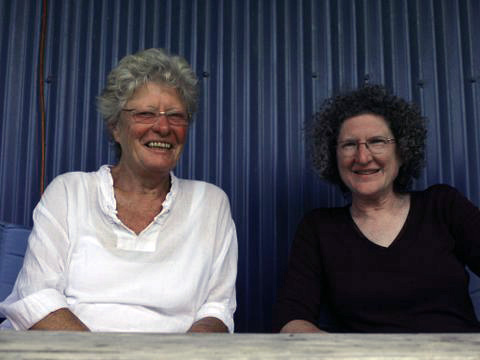
I was introduced to Robyn Penman by Barnett Pearce so long ago we don’t remember when it would have been; it was a pleasure to have a chance to catch up on the past decade. Currently active with the CMM Institute, formerly with the Communication Research Institute of Australia, Robyn is a pioneering communication scholar, widely respected both for her ability to state theory clearly (as in her early Communication Processes and Relationships, or the more recent Reconstructing Communication) and to apply that theory to practical communication problems (as in Designing Information for People, a co-edited volume). Robyn suggested that, given my current efforts to connect international scholars, my name should now be changed to Ariadne, for her association with webs and weaving.

I look forward to continuing the conversations with all these scholars.

Wendy Leeds-Hurwitz, Director
Center for Intercultural Dialogue

Save

A space of relationship for dialogue among cultures

Guest Posts

A lesson dedicated to the genocide in Burundi: An occasion of dialogue as a space of relationship among cultures
by Maria Flora Mangano.

I am happy to share with you what happened recently in my class, during a lesson dedicated to the genocide of Rwanda and Burundi. I am currently lecturing on dialogue among cultures at St. Peter’s Philosophical-Theological Institute in Viterbo, Italy.

One of the students comes from Burundi; his name is Jean. He introduced himself during the first lesson, describing his background and choice of life as a religious. One day outside of class, he mentioned the war in Burundi and the genocide of 1993. In that moment he shared with me and two Italian students what it was like to be a Tutsi. In 2 or 3 minutes he described a few images of the genocide, which he lived through when he was 12 years old; thanks to God, all his family survived. I was shocked by his words and I asked him if he would be able to share his experience with the class, proposing that the students would both listen to his story and see part of the film Hotel Rwanda together. We could organise this special and unforgettable lesson in a couple of hours.

Jean prepared a powerpoint and presented the story of his country and the story of his family and relatives during those three terrible days of the genocide. I proposed to the class not to see the entire movie (which is quite long, so we saw only the trailer) but rather to dedicate the majority of the time to Jean’s personal story. I introduced the technical vocabulary, including genocide and shoah, sharing what these terms have meant in the last century and what they mean now. The 16 students come from 9 countries; some of them did not know even where Burundi was. I asked the students to try to create a space of relationship in which they could speak without any fear of offending or to be offended.

Jean was extremely clear in explaining the historical background, presenting the political and social aspects underlying the genocide. Then he shared his story with us. I am still speechless, shocked and impressed. It was the first time that one of my students desired to share what the genocide was for him and he prepared everything in detail. One young person who survived the genocide decided to offer his experience as a gift, not in revenge. He was able to share his memories, even if these are still dramatic and negative.

Jean said that in African culture the tradition is oral, not written and for this reason it is not possible to ask to him (or others) to write about their experience. He prefers talking over writing about it, but he never did so before this, as he said that the open hurts rest open even after time and sharing.

At the end of his time, all the students were so impressed and touched they could not speak. I ask the students to take time and then to try to share with Jean their feelings, also to try to thank him in a real way. I hope it will yet happen.

I am happy to share this wonderful experience of dialogue and sharing in class. I hope to be able to publish about it in the future. As scholar, I felt that this should be our way of teaching, especially given the discipline of communication we try to teach (and learn). Let’s go ahead to try to do the best with our students and in research on this issue. I am still convinced that we may try to re-write history through dialogue.

I am sharing what happened because it is uncommon to talk about the genocide of Rwanda (and Burundi) for people who survived this. It is still too early, as Jean told me. I consider this moment an important effect of dialogue among cultures, as this student chose to share his life with the class and he prepared the lesson on his own, without any help from me. He chose what to say, also decided not to show any pictures of the genocide and he carefully chose the words to describe those days. He also chose to first present the political and historical conditions as a necessary introduction to the genocide.

Afterwards, Jean reported that he felt understood by the class, so probably he was ready to share this moment. In the days since, I have received mails from him and from the others who have expressed their appreciation for that moment. I have the feeling that we built the space for relationship as the basis of dialogue during the course, and that this moment significantly enriched this space.

Download the entire post as a PDF.

NOTE: See the response prompted by this post, by Robyn Penman.