CFP Memory-Nostalgia-Melancholy Workshop (Croatia)

CFP Memory-Nostalgia-Melancholy Workshop
Date: Sun 6 – Mon 7 September 2015
Venue: Hotel Lone, Rovinj, Croatia
Abstract submissions by: Fri 27 March 2015

The workshop, hosted by the School of Arts and Humanities at Nottingham Trent University, focuses on the intersections between memory, nostalgia and melancholy in contemporary culture, characterised by relentless mobility and radical displacement. Numerous critics of globalisation, transnationalism and cosmopolitanism have posited an overwhelming feeling of homelessness not only among people who have been displaced from their original home/lands, but also among those who feel estranged from their places of origin due to rapid social change or environmental decline. ‘Only the exiled have a land’, Baudrillard argued. ‘The others are nomads chasing their shadows in the deserts of culture’ (1990: 83). Arguably, homesickness is prevalent in today’s developed world, which can be—and sometimes indeed is—felt even for times and places unrelated to someone’s personal roots.

Home/land has no stable meaning and is always socially constructed, enacted and reproduced through everyday life practices and creative endeavour. This discursive homebuilding involves active memory work, and is typically associated with a nostalgic or melancholic mindset. Both linked to emotional disorders and often conflated in everyday parlance, the terms nostalgia and melancholy have distinct genealogies and have indeed been theorised as related, overlapping or semantically opposed to one another.

The following list of possible questions to be addressed is neither restrictive nor exhaustive:
– What are the interpretations of nostalgia and melancholy in different discursive and disciplinary fields?
– What is the relationship between longing and belonging?
– What is the poetics and politics of imaginative home-building?
– What is the interplay between nostalgia and melancholy?
– How are either or both of them represented, enacted and consumed in cultural texts across a variety of media and genres?
– Can either or both be mobilised to engender political and social change?
– Are either or both of them symptoms of, or cure for social problems related to globalisation and social change?
– Is the notion of a ‘forward-looking’ memory of home an oxymoron or a viable scenario?
– What are the spatio-temporal coordinates of nostalgic yearning?
– How does nostalgic yearning for ‘homeland’ relate to concrete ambitions to achieve territorial gain?

The language of the workshop is English. Contributions are invited, which build on original research, engage with relevant theories and contribute conceptual insights across a range of academic disciplines, including literary and cultural studies, anthropology, history, geography, heritage studies and memory studies.

A selection of papers will be solicited for publication in an edited monograph.

Please submit a paper title, an abstract of up to 300 words and a short biographical note to Dr Maja Mikula by Friday 27 March 2015.

Selected speakers will be notified via email by Friday 3 April and will be able to register for the workshop.

Registration is free of charge. Participants are responsible for their own travel and accommodation expenses. Pending room availability, participants will be offered a 10% discount on current online prices in any of Maistra’s hotels or resorts in Rovinj.

CFP Space, Place, and Landscape in the History of Communications (Oxford)

CFP: Space, place, and landscape in the history of communications
One-day symposium at the Weston Library, University of Oxford
Tuesday 16 June 2015

Space, place, and landscape have a significant impact on communications, on the systems of communications that succeed as well as those that fail and on the heritage of communications systems.  Recent scholarship in communications studies and the history of communications has focused on how modern electronic communications influence evolving concepts of time, space, and geography and the crucial role of communications in experiencing spatiality, temporality, spatiality and mobility.

At our one-day symposium, we wish to consider the inverse: the impact of space, place, and landscape upon communications systems and their heritage from 1700 to the present day.  We also wish to consider communications systems in transit, how changing locations impact upon the transfer of communications knowledge and technology.  We are especially interested in papers which take an interdisciplinary approach to the history of communications and use inventive methods for a broad exploration of history
of communications.

Our symposium will be convened by *Professor Robert Fox*, Emeritus Professor of the History of Science, University of Oxford and *Professor Graeme Gooday*, Head of School of Philosophy, Religion and History of
Science and Professor of History of Science and Technology, University of Leeds.

*Space, place, and landscape in history of communications * will take place at the Weston Library in central Oxford on Tuesday 16 June 2015 from 10am to 4pm.  Registration is free and we will have a small budget to cover speakers’ travel expenses within the UK but participants are asked to cover their own accommodation costs as well as travel outside of the UK.

Our conference will be of interest to historians of science and technology, historical geographers, academic historians, archivists, social scientists, students, academics in communication studies, and other more generally
interested in the history of communications and technology.  We invite proposals for thirty-minute papers on the subject of space and place in communications.

Proposals of no more than 250 words, together with the name, institutional affiliation and a brief one-page CV of the speaker should be sent to Elizabeth Bruton.  The closing date for submissions is *Friday 3 April 2015*.

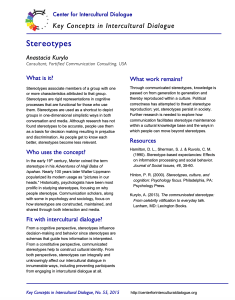
Key Concept #55: Stereotypes by Anastacia Kurylo

Key Concepts in ICDThe next issue of Key Concepts in intercultural Dialogue is now available. This is KC55: Stereotypes by Anastacia Kurylo. As always, all Key Concepts are available as free PDFs; just click on the thumbnail to download.

Key Concepts in Intercultural Dialogue 55: Stereotypes

Lists organized  chronologically by publication date and numberalphabetically by concept in English, and by languages into which they have been translated, are available, as is a page of acknowledgments with the names of all authors, translators, and reviewers.

Kurylo, A. (2015). Stereotypes. Key Concepts in Intercultural Dialogue, 55. Available from:
https://centerforinterculturaldialogue.org/wp-content/uploads/2018/11/kc55-stereotypes3.pdf

The Center for Intercultural Dialogue publishes a series of short briefs describing Key Concepts in Intercultural Dialogue. Different people, working in different countries and disciplines, use different vocabulary to describe their interests, yet these terms overlap. Our goal is to provide some of the assumptions and history attached to each concept for those unfamiliar with it. As there are other concepts you would like to see included, send an email to the series editor, Wendy Leeds-Hurwitz. If there are concepts you would like to prepare, provide a brief explanation of why you think the concept is central to the study of intercultural dialogue, and why you are the obvious person to write up that concept.


Creative Commons License
This work is licensed under a Creative Commons Attribution-NonCommercial-NoDerivatives 4.0 International License.

Venice Academy of Human Rights: (Dis)Integration through Human Rights

The Venice Academy of Human Rights will take place from 6-15 July 2015. The theme of this year’s academy is ‘(Dis)Integration through Human Rights: Citizens, Courts, Communities’.
Online applications are accepted until 3 May 2015.
The Academy offers an “early bird” registration with a reduced participation fee until 15 March 2015.

Faculty of the Venice Academy 2015
Distinguished Opening Lecture: Albie Sachs, Former Judge of the Constitutional Court of South Africa
General Course: Will Kymlicka, Canada Research Chair in Political Philosophy, Queen’s University
Faculty:
Armin v. Bogdandy, Director of the Max Planck Institute for Comparative Public Law and International Law, Heidelberg
Andreas Føllesdal, Professor of Political Philosophy at the Norwegian Centre for Human Rights and Director of the Norwegian Centre of Excellence PluriCourts for the Study of the Legitimate Roles of the Judiciary in the Global Order, University of Oslo
Marc Weller, Professor of International Law and International Constitutional Studies and Director of the Lauterpacht Centre for International Law, University of Cambridge
Marlene Wind, EURECO Professor and Director of the Centre for European Politics, University of Copenhagen

You can view the detailed programme here.

Key Facts
Participants: Academics, practitioners, PhD/JSD and master students
Type of courses: Lectures, seminars, workshops and discussion sessions
Number of hours: up to 35 hours of courses
Location: Monastery of San Nicolò, Venice – Lido, Italy
Fees: 500 EUR (early bird registration until 15 March), 600 EUR (16 March – 3 May 2015)

Venice Academy of Human Rights
The Venice Academy of Human Rights is an international programme of excellence for human rights education, research and debate. It forms part of the European Inter-University Centre for Human Rights and Democratisation (EIUC). The Academy offers interdisciplinary thematic programmes open to academics, practitioners, doctoral and master students with an advanced knowledge of human rights. Participants attend morning lectures, participate in discussion sessions and workshops and can exchange views, ideas and arguments with leading international scholars and experts. This includes the opportunity for a number of participants to present and discuss their own “work in progress” such as drafts of articles, chapters of books or doctoral theses and receive comments from faculty members and peers. At the end of the programme, participants receive a Certificate of Attendance issued by the Venice Academy of Human Rights.

Photo Contest for Best Faces of integration

Photo ContestThe digital photography contest ‘Scatti d’integrazione’ (‘Shots of integration’), launched by Modavi (non-profit organization) as part of the project ‘I LIKE ITALIA: i volti dell’integrazione’ (‘I LIKE ITALY: the faces of integration’).

Designed to raise awareness among Italian high school students on the phenomenon of social integration, it is open to all young people, both natives and immigrants of first and second generation, and will award the best pictures that portray moments of inclusion and intercultural issues. Participation closes April 24, 2015.

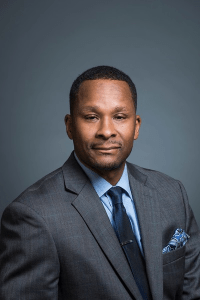
Mark C. Hopson Profile

ProfilesMark C. Hopson, Ph.D. (2005, Ohio University) is associate professor of intercultural communication at George Mason University, and director of African and African-American studies.

He teaches undergraduate and graduate classes in African American Studies, Intercultural Communication, the Rhetoric of Social Movements, Rhetorical Traditions, and Organizational Communication. His research and publications include critical intercultural communication, rhetoric, diversity, and the communication of violence prevention.

Dr. Hopson served as Chair of the International and Intercultural Division of the National Communication Association (2017). Additionally, he is a committee member for Research on Black Male Achievers, National Guide Right Program (since 2015). Most recently he served as Director of the PhD Program in the Department of Communication (2014 – 2017).

Previous assignments include Chair of the African American Communication and Culture Division/NCA (2008); Communication Specialist for GMU’s international collaboration to reduce gang violence in Trinidad and Tobago (2009); Committee member for the Police-Community Relations Project at GMU (2013); and Co-director of Campus Climate Committee at GMU (2014).

Dr. Hopson facilitates Changing Lives Through Literature (CLTL) for Fairfax County Public Libraries. CLTL is a nationally recognized alternative sentencing program for juvenile offenders. Additional workshops and facilitations include relationship abuse, sexual assault and violence prevention provided to more than 6,000 learners.

Recent awards include the 2018 Community Service Award from the Dulles-Leesburg (VA) Alumni Chapter of Kappa Alpha Psi Fraternity; the 2011 Spirit of Martin Luther King Award, George Mason University, Fairfax, VA; and contributor to R. L. Jackson’s (Ed.) Encyclopedia of identity (Sage) awarded 2011 Outstanding Resource at the Winter Conference of the American Library Association.

Link between Climate Change and Conflict in Syria

“There is evidence that the 2007−2010 drought contributed to the conflict in Syria. It was the worst drought in the instrumental record, causing widespread crop failure and a mass migration of farming families to urban centers. Century-long observed trends in precipitation, temperature, and sea-level pressure, supported by climate model results, strongly suggest that anthropogenic forcing has increased the probability of severe and persistent droughts in this region, and made the occurrence of a 3-year drought as severe as that of 2007−2010 2 to 3 times more likely than by natural variability alone. We conclude that human influences on the climate system are implicated in the current Syrian conflict.”

Source:
Colin P. Kelley, Shahrzad Mohtadi, Mark A. Cane, Richard Seager and Yochanan Kushnir.  2015. Climate change in the Fertile Crescent and implications of the recent Syrian drought. Proceedings of the National Academy of Sciences, published ahead of print March 2, 2015, doi:10.1073/pnas.1421533112.

A month of tolerance in Belgian schools

Belgium’s response to intolerance is one example of applied intercultural dialogue:

“After the attacks in Paris and in Copenhagen, Belgium launches “the month of tolerance”, the Francophone Education Minister Joelle Milquet said. She announced that during the month of March there will be an intensification of the initiatives aiming to promote intercultural dialogue in the schools of Wallonia and Brussels. External partners, including journalists, along with lawyers and the Movement against Racism, Anti-Semitism and Xenophobia, will support teachers in activities aimed at promoting dialogue of young students on democracy, terrorism, freedom of expression and intolerance. An initiative that through videos, documentaries, theater and more will try to inform students on the  current events by spreading the values of intercultural and interreligious dialogue.”

Original publication: Battista, Paola. (24 February 2015). A month of tolerance in Belgian schools.

Critical Studies on Food in Italy (Summer 2015)

Gustolab Institute Center for Food and Culture is offering:
CRITICAL STUDIES ON FOOD IN ITALY
in cooperation with the University of Massachusetts-Amherst
DURATION 5-WEEK Full Immersion Summer Program
WHEN 18 MAY 2015 – 20 JUNE 2015
WHERE Rome Italy
The program is open to all majors, and all students, degree-seeking or not.

https://vimeo.com/gustolabinstitute

COURSES OFFERED
Critical Studies on Food Culture (3 credits)
Food media, communication and trends (3 credits)
Food, Nutrition and Culture in Italy (3 credits)
Elementary Italian Language UMASS ITAL 110 (3 credits)
Italian Lexicon for Food Studies (3 credits)

If you have any questions or to request an application, please write to info@gustolab.com

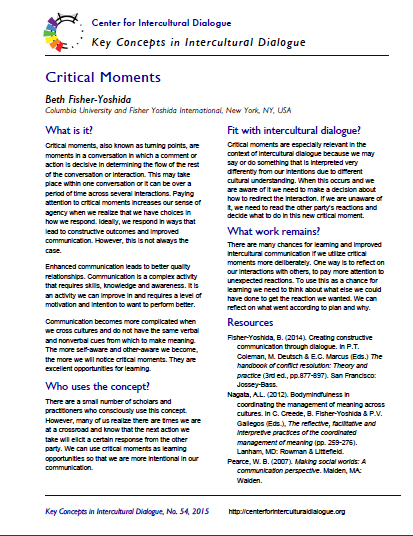
Key Concept #54: Critical Moments by Beth Fisher-Yoshida

Key Concepts in ICDThe next issue of Key Concepts in intercultural Dialogue is now available. This is KC54: Critical Moments by Beth Fisher-Yoshida. As always, all Key Concepts are available as free PDFs; just click on the thumbnail to download. Lists organized  chronologically by publication date and numberalphabetically by concept in English, and by languages into which they have been translated, are available, as is a page of acknowledgments with the names of all authors, translators, and reviewers.

Key Concept #54: Critical moments by Beth Fisher-Yoshida

Fisher-Yoshida, B. (2015). Critical moments. Key Concepts in Intercultural Dialogue, 54. Available from: https://centerforinterculturaldialogue.org/wp-content/uploads/2015/03/key-concept-critical-moments.pdf

The Center for Intercultural Dialogue publishes a series of short briefs describing Key Concepts in Intercultural Dialogue. Different people, working in different countries and disciplines, use different vocabulary to describe their interests, yet these terms overlap. Our goal is to provide some of the assumptions and history attached to each concept for those unfamiliar with it. As there are other concepts you would like to see included, send an email to the series editor, Wendy Leeds-Hurwitz. If there are concepts you would like to prepare, provide a brief explanation of why you think the concept is central to the study of intercultural dialogue, and why you are the obvious person to write up that concept.


Creative Commons License
This work is licensed under a Creative Commons Attribution-NonCommercial-NoDerivatives 4.0 International License.