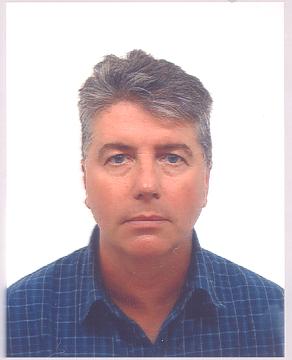
Khanh Bui Profile

ProfilesKhanh Bui is currently a PhD student in Department of Language and Literacy Education at the University of Georgia, Athens, Georgia, majoring in TESOL and World Language Education. He is also a teacher educator working with K-12 pre-service teachers in a course entitled “Language and Culture in the classroom”.
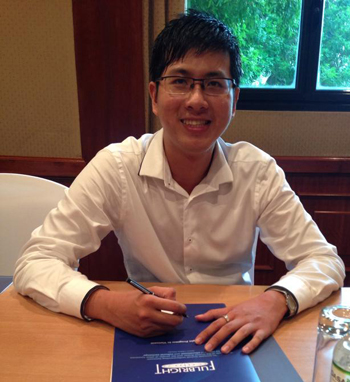
Khanh Bui

He was granted a Fulbright Foreign Student Exchange Scholarship to get his Master of Education in TESOL at the University of Georgia in 2014 and graduated in 2016. His research interests are content-based language teaching, Systemic Functional Linguistics, and multimodalities in teaching mathematics.

Selected Publications:

Bui, K. (2015). Teachers’ concerns and solutions towards the implementation of digital storytelling in teaching English in ESL classroom in Asian countries. Journal of Journalism and Mass Communication, 5(9), 454-462.

Bui, K. (2014). Review of The book with no pictures. Journal of Language and Literacy Education, 11(1).

Bui, K., Dinh, T., & Kabilan, M. K. (2012). The implementation of ICT training among academic in Vietnamese universities. In M. K. Kabilan, W. K. Too & H. P. Widodo (Eds.), ICT & ELT: Research & Perspectives in South East Asia (pp. 214-228). Malaysia: Penerbit Universiti Sains Malaysia.

Conferences:

Bui, K. (2015). An investigation of pragmatics development during telecollaborative dialoguing between Vietnamese and American students. Paper presented at Language Education and Diversity Conference 2015, Auckland, New Zealand.

Bui, K. (2015). An examination of intercultural development during telecollaborative dialoguing between Vietnamese and American students. Paper presented at ALAA/ALANZ/ALTAANZ Conference, Adeleide, Australia.

Bui, K. (2015). My Fulbright journey. Paper presented at 2nd Fulbright Academic Symposium, Columbia, South Carolina, USA.

Bui, K. (2014). The implementation of project-based learning-An investigation and a case study in Lawrence S. Ting School, Ho Chi Minh City, Vietnam. Paper presented at 6th Engaging with Vietnam Conference, Eugene, Oregon, USA.

Bui, K (2013). An investigation of using Skype in teaching English to Vietnamese students. Paper presented at English Department Conference 2013, Ho Chi Minh City, Vietnam.

Bui, K. (2012). The utilization of ICT among academics in the universities in Vietnam. Paper presented at 4th Engaging with Vietnam Conference, Honolulu, Hawaii, USA.

Bui, K. (2012). Re-designing Speaking Activities in Textbooks for Vietnamese Highschool Students. Paper presented at CamTESOL (Cambodia Teachers of English as a Second Language) Conference, Phnom Penh, Cambodia.

Bui, K (2012). Ứng dụng hình thức dạy tình huống trong giảng dạy (The implementation of task-based language teaching in teaching English to highschool students). Paper presented at Youth Conference 2015, Ho Chi Minh City, Vietnam.

Bui, K. (2011). The implementation of task-based language teaching in teaching speaking for students in Vietnamese high schools. Paper presented at MELTA – Malaysian English Language Teaching Association Conference, Terengganu, Malaysia.


Work for CID:
Khanh Bui translated KC62: Diaspora into Vietnamese, and has served as a reviewer for Vietnamese.

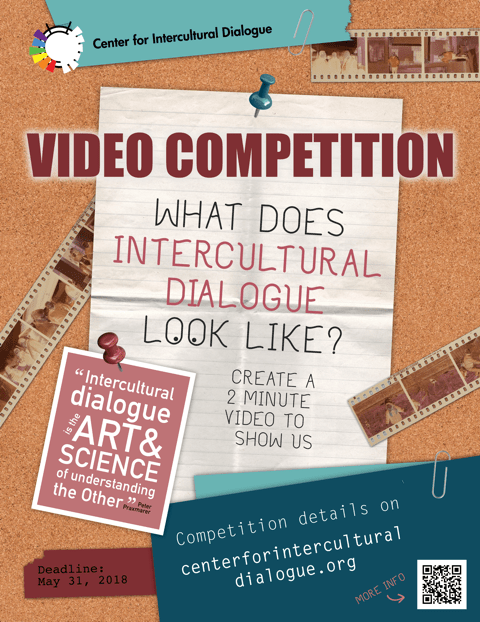
CID Video Competition: What does Intercultural Dialogue Look Like?

CID Video CompetitionCID has organized its first ever video competition, open to students enrolled in any college or university during the 2017-2018 academic year.

WARNING: Please read the entry rules carefully! Several submissions have not met the requirements, and cannot be considered for a prize until they are revised. Make sure you submit a video file (not audio), that is between 30 seconds and 2 minutes (not 30 minutes!), with the last line “Intercultural dialogue looks like…” and upload it to the server provided (not to YouTube directly). Final deadline is May 31, 2018, at midnight (east coast US time).

NEW Clarification: When someone asks “Intercultural dialogue looks like…” in English, the “…” (read out loud as dot-dot-dot) means your job is to complete the sentence and include your answer as the last shot in the video. (So, “intercultural dialogue looks like a tiger, an ice cream cone, a braid, etc.” – choose whatever image makes sense given your video.) Please do NOT include the literal phrase “Intercultural dialogue looks like…” as the last shot in your video!

CID Video Competition

To enter, participants must submit a video no longer than 2 minutes that highlights the importance of intercultural dialogue, responding to the question: “What does intercultural dialogue look like?”

Entries will be accepted April 15-May 31, 2018.

One winner will receive a $200 prize. The top entries will be posted to the CID YouTube channel, and be highlighted on the CID website, along with posts describing the creators and highlighting each of their videos, throughout the rest of 2018.

Submissions will be evaluated based on originality, clarity, cultural message, effective use of technology, and overall impact. Feel free to work independently or in groups. Get creative, show off your skills and, most importantly, have fun!

To submit an entry, click here.

Video Competition FAQ

Competition Rules

Continue reading “CID Video Competition: What does Intercultural Dialogue Look Like?”

Nanyang Technological U Job: Organizational Comm (Singapore)

Job adsAssistant Professor:  Organisational Communication, Wee Kim Wee School of Communication and Information, NANYANG TECHNOLOGICAL UNIVERSITY, SINGAPORE

We are seeking a scholar in the area of  Organisational  Communication. The successful candidate must have a strong publication and teaching record in  organisational communication. This can include examination of  organisational  communication across various social, cultural and institutional contexts including communication between, among and within not-for-profit and global   organisations. It also includes communication among stakeholders, for example, employees, owners, governmental authorities, and consumers. This area is one of the most sought-after specialisations  among  students. Thus, the successful candidate must have a strong track record of teaching at both the Bachelor’s and the Master’s level.

Deadline: November 30, 2017

U Wales Doctoral Scholarships: Interfaith Studies (UK)

FellowshipsHarmony Doctoral Scholarships in Interfaith StudiesUniversity of Wales, Trinity Saint David – Faculty of Humanities and Performing Arts. Deadline: November 17, 2017.

Eight Full Scholarships available. Each scholarship offers full funding for 3 years. Each scholarship includes tuition fees and living expenses.

The University of Wales Trinity Saint David, in collaboration with the International Federation of Inter-Faith and Intercultural Dialogue and the Chin Kung Multi-cultural Education Foundation, are pleased to invite applications for one of up to 8 fully-funded Harmony Doctoral Scholarships starting at the end of February 2018. Each scholarship lasts for three years.

Applications are invited from high quality students in the area of theology and religious studies, and from all religions and faith traditions. Working through their own particular faith tradition or theological / religious specialism, students will research aspects of inter-faith and inter-cultural dialogue through an investigation of the similarities and differences between the beliefs, ethics and precepts of various religions and faith-based traditions. Successful candidates will join a vibrant Research College where they will work and study within a collaborative context and will undertake during the first year a structured programme of doctoral training in textual analysis, research methodologies, and inter-faith study and dialogue, to support their individual research over the remaining two years.

LCC International U Job: Chair of Communication (Lithuania)

Job adsChairperson, Department of Communication at LCC International University, Lithuania

LCC International University invites applications for the position of Chair of the Department of Communication, to begin Fall 2018. The position involves chair’s duties, teaching courses in the department, advising, and participating in the active intellectual life of the campus. The position offers unique opportunities such as travel and teaching/research in the Baltics, Scandinavia, Western and Eastern Europe.

The University: LCC International University is a fully accredited Christian liberal arts university located in the port city of Klaipeda, Lithuania. All instruction is in English and our 550 students come from 30+ countries.

The Communication Department offers a BA degree in Communication. In the three years since its inception, the Communication major has become the second largest undergraduate major at LCC, with an increasing popularity among prospective students, and over 90 current students. Current faculty areas of specialization include: Rhetoric, Political Communication, Hermeneutic Phenomenology, Communication Ethics, Organizational Communication, and Public Relations. The new Chair may reinforce or expand these areas of department identity and expertise.

The review of applications will begin immediately and will continue until the position is filled, with a preferred start date of August 2018.

Continue reading “LCC International U Job: Chair of Communication (Lithuania)”

CFP Language Policy Forum 2018 (UK)

ConferencesCall for papers: Language Policy Forum 2018, 31 May – 1 June 2018, at Sheffield Hallam University, UK. Deadline extended to 15 January 2018.

The Language Policy Forum 2018 invites scholars, practitioners and other stakeholders to take stock of what language policy means in times of growing diversity. We are especially interested in presentations that discuss dilemmas (language-related problems in the world) and hopes (possible solutions, perhaps as a result of applying research findings).

Language policy permeates all domains of life, from the workplace, to the home and family, to schools, government, and other institutional settings. It materialises as something that enables some people to participate in these domains of life, and constrains others. The BAAL Language Policy group exists to enable dialogue on all areas of language policy research. We therefore encourage theoretical, methodological, and empirical contributions from fields such as (but by no means limited to): sociolinguistics, applied linguistics, political philosophy, economics, education, globalisation, and migration. As well as examining diversity within human populations, we encourage discussions of our own diversity of research practices: topics and data, methodologies, and practical applications. We also encourage pedagogical submissions, exploring innovative approaches to the teaching of language policy in higher education.

KC74 Face Translated into Nepali

Key Concepts in ICDContinuing translations of Key Concepts in Intercultural Dialogue, today I am posting KC#74: Face, which Beth Bonniwell Haslett published in English in 2015, and which Shanta Dahal has now translated into Nepali.

As always, all Key Concepts are available as free PDFs; just click on the thumbnail to download. Lists of Key Concepts organized chronologically by publication date and number, alphabetically by concept, and by languages into which they have been translated, are available, as is a page of acknowledgments with the names of all authors, translators, and reviewers.

KC74 Face_NepaliHaslett, B. B. (2017). Face [Nepali]. (S. Dahal, trans). Key Concepts in Intercultural Dialogue, 74. Available from:
https://centerforinterculturaldialogue.org/wp-content/uploads/2017/11/kc74-face_nepli.pdf

If you are interested in translating one of the Key Concepts, please contact me for approval first because dozens are currently in process. As always, if there is a concept you think should be written up as one of the Key Concepts, whether in English or any other language, propose it. If you are new to CID, please provide a brief resume. This opportunity is open to masters students and above, on the assumption that some familiarity with academic conventions generally, and discussion of intercultural dialogue specifically, are useful.

Wendy Leeds-Hurwitz, Director
Center for Intercultural Dialogue


Creative Commons License
This work is licensed under a Creative Commons Attribution-NonCommercial-NoDerivatives 4.0 International License.

CFP Kult-ur: Youth, participation and experiences in the city

Publication OpportunitiesCFP Kult-ur, Revista Interdisciplinaria sobre la Cultura de la Ciudad, Special Issue: Youth, participation and experiences in the city

Deadline for submission of original manuscripts for all sections:
December 1, 2017
Publication date: second quarter 2018

Guest Editors: David Poveda, Universidad Autonoma de Madrid (Spain) and Lígia Ferro, Universidade do Porto (Portugal)

This special edition explores research into how young people experience and act in the urban spaces in which they live, and how they recreate them to build today’s contemporary cities. We are particularly interested in papers using participatory methodologies and new ways of documenting and investigating with and about young people and adolescents in the city. Such methodologies include participatory action research projects, visual, multimodal and sense-based methodologies and/or the use of digital resources. Qualitative and/or ethnographic studies examining the experiences and voices of young people and adolescents in urban contexts are also welcomed.

Continue reading “CFP Kult-ur: Youth, participation and experiences in the city”

Frank Fitzpatrick Profile

ProfilesDr Frank Fitzpatrick is an independent consultant in intercultural learning and development based in the UK.

Frank Fitzpatrick

He has a PhD in Cross-cultural Communication from Newcastle University, UK, a Masters in Business Administration from the University of Leicester, UK, and a Masters in Linguistics from the University of Surrey, UK, and is an experienced and qualified training professional. He has over 20 years of international experience in intercultural relations across Europe, Latin America and the Middle East and has worked in many different locations, including the UK, Spain, Italy, Portugal, the Balkans, Peru, Cuba, and Qatar, working with a wide range of governmental, educational and civil institutions. He also has extensive experience of successfully managing large and diverse groups of people from different cultural backgrounds. He has published in the field of language teacher education and on subjects of interest in cross-cultural business management, examining and redefining, in particular, the concept of “culture shock” in international relocation.

Selected publications:

Fitzpatrick, F. (2017). Taking the ‘culture’ out of ‘culture shock.’ Critical Perspectives on International Business, 13(4), 278-296.

Fitzpatrick, F. (2016). Voices from Cuba: Redefining culture shock. Saarbrucken: Lambert Academic Publishing.


Work for CID:
Frank Fitzpatrick wrote KC87: Culture Shock.

KC86: Educación Intercultural Bilingüe (EIB)

Key Concepts in ICDThe next issue of Key Concepts in intercultural Dialogue is now available. This is KC#86: Educación Intercultural Bilingüe (EIB, or Intercultural Bilingual Education), by Luis Javier Pentón Herrera. Click on the thumbnail to download the PDF. Lists organized chronologically by publication date and numberalphabetically by concept in English, and by languages into which they have been translated, are available, as is a page of acknowledgments with the names of all authors, translators, and reviewers.

KC86 EIBPentón Herrera, L. J. (2017). Educación Intercultural Bilingüe. Key Concepts in Intercultural Dialogue, 86. Available from:
https://centerforinterculturaldialogue.org/wp-content/uploads/2017/10/kc86-eib.pdf

The Center for Intercultural Dialogue publishes a series of short briefs describing Key Concepts in Intercultural Dialogue. Different people, working in different countries and disciplines, use different vocabulary to describe their interests, yet these terms overlap. Our goal is to provide some of the assumptions and history attached to each concept for those unfamiliar with it. As there are other concepts you would like to see included, send an email to the series editor, Wendy Leeds-Hurwitz. If there are concepts you would like to prepare, provide a brief explanation of why you think the concept is central to the study of intercultural dialogue, and why you are the obvious person to write up that concept.


Creative Commons License
This work is licensed under a Creative Commons Attribution-NonCommercial-NoDerivatives 4.0 International License.