
 The CID Video Competition deadline ended a few days ago, and the judges have begun reviewing the videos. My thanks to all of them for taking the time to watch and critique all the student submissions. It’s clear the greatest reward for all those who entered the competition is getting their videos seen by these accomplished professionals!
 Lillian E. Benson’s professional body of work as a television, video and feature film editor spans almost forty years. In 1990 the native New Yorker was nominated for an Emmy for her work on the acclaimed civil rights series Eyes On the Prize II. She contributed to films that have garnered five Emmy nominations, four Peabody Awards, and numerous other honors. This fall she is returning to NBC’s medical drama Chicago Med for her fourth season. In 2004 Benson made her directorial debut with All Our Sons-Fallen Heroes of 9/11, a half-hour documentary about the firefighters of color who died at the World Trade Center, broadcast nationally on PBS. She just completed AMEN- The Life and Music of Jester Hairston, an educational film about the internationally-known choral arranger. Benson is a member of American Cinema Editors, an honorary editing society, and serves on their board of directors. She is also a member of the the Academy of Motion Picture Arts and Sciences and the Television Academy.

Jim D’Addario has been an award winning producer for the Walt Disney Company since 1995. He started his career with Disney Interactive as a Production Supervisor on multiple edutainment projects, including the best sellers Lion King Activity Center and Toy Story Activity Center. Jim was then recruited by Walt Disney Imagineering to produce sound tracks and interactive projects for Walt Disney World, Tokyo DisneySea and Walt Disney Studios Park in Paris. Jim was instrumental in the design of The Buzz Lightyear ride at Disneyland park and The Winnie the Pooh Ride at Walt Disney World. His most memorable moment came when he worked with the iconic Sherman Brothers (of Mary Poppins fame) to produce the new soundtrack for the ride. Jim has recorded with some of the most recognizable talent in the industry including Mickey Mouse, Donald Duck, Rafiki, and Tigger! Jim then jumped ship to work in the online space with Disney Cruise Line, Disneyworld.com, and Disneyland.com creating the first immersive sites for those properties. Jim’s current position is with Walt Disney Parks and Resorts, Global Broadcast, as a Senior Producer of television and radio commercials, trailers, First-Look programming, in-room videos, online videos, and airport interactive displays.
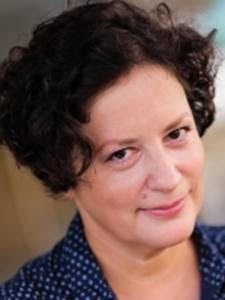
Zsuzsanna Gellér-Varga is a documentary filmmaker and video storyteller living in Budapest, Hungary. Her Screw Your Courage documentary won awards at several US film festivals and was broadcast on public TV. She worked for the New York Times Television as a video-journalist and later directed documentaries, including Once They Were Neighbours, Synagogue for Sale, Mr. Mom, and Angel Business, which were screened internationally and broadcast on public TV. She works as cinematographer, story editor and media consultant, and taught documentary ethics at the international Masters program, DocNomads. She has master degrees from ELTE University Budapest, Graduate School of Journalism UC Berkeley (as a Fulbright scholar), and a DLA from the University of Theater and Film Arts Budapest.

Astrid Kuhn is an award winning Canadian Filipino broadcaster, producer, director, anchor, reporter and host. For almost 20 years she has told stories for CBC, Global TV, City TV, Shaw Media, Corus Entertainment and Telus Optik. With a passion for visual storytelling she has also served as Vice President of Women In Film and Television – Alberta (WIFTA). Right now, Astrid grows empathetic and creative minds to help solve human problems at Mount Royal University (MRU) with the Bissett School of Business and Broadcast Media Studies. Astrid is in the midst of producing a documentary for her doctorate at Royal Roads University on Filipino Canadian entrepreneurs and leadership.

Micheline Maynard is an author, journalist and professor. She has been a correspondent and bureau chief for the New York Times, where she is a contributor, and senior editor at the NPR news magazine Here & Now. She writes for Forbes.com, Medium, Skift, ABC Australia, and teaches at the University of Michigan. Her six books include The End of Detroit, which predicted the bankruptcies at the Detroit companies and the rise of Japanese auto companies, and she is at work on her next books.

Ruben Daniel Mazzei is a university EFL and literature teacher and a sworn translator (Universidad Nacional de La Plata). He teaches at primary, secondary, tertiary and university levels, and is a researcher for University of Buenos Aires. He has delivered and produced CPD courses and materials since 2005 for Dirección de Formación Continua -Province of Buenos Aires – and has coordinated the team of CPD teachers for the Ministry of Education for nine years. He has participated in several of the British Council activities such as developing material, facilitating reading groups and coordinating the Connecting Classrooms programme for Argentina. He has facilitated workshops for the British Council on Global Citizenship and Global Education accredited by the University of London and workshops for the British Council Core Skills Programme both in Argentina and abroad.
 Mandi Muñoz is a Script Supervisor at Lucasfilm Animation, currently working on The Clone Wars and Star Wars Resistance. She previously worked at Dreamworks Animation on features including Kung Fu Panda 3 and Trolls. In her spare time, Mandi enjoys reading in the company of her feline accomplice, and creating and developing her own universes in which to tell her stories.

Nancy Robinson is Director, Education Programs for the Television Academy Foundation. In this capacity, she oversees the Foundation’s highly rated summer Student Internship Program, the annual Faculty Seminar, the Mister Rogers Memorial Scholarship Program, the Visiting Professionals speaker program, and Alumni engagement. Nancy is also responsible for educational outreach and creating alliances with colleges/universities nationwide. Prior to joining the Foundation’s Education department in 1999, Nancy was Convention Services Manager for a large trade association, planning and executing their annual convention and numerous small meetings across the country. She was also an Awards Consultant with a firm specializing in managing submissions for such companies as the Disney Channel, HBO, and FOX. She began her career as the Primetime and Daytime Emmy Awards assistant for the Television Academy. Nancy is a graduate of the University of California, San Diego with a Bachelor’s degree in Visual Arts/Media Production and a minor in Sociology.

Mary C. Schaffer is a digital media consultant. She was an Associate Professor of New Media at California State University, Northridge (CSUN) for 14 years. Prior to CSUN, she spent 12 years as a New Media Executive (Disney, Viacom, Geocities) and 18 years as a journalist (NPR, CBS and NBC). She is a member of the Producers Guild of America, the Academy of Television Arts & Sciences, the International Documentary Association and Broadcast Education Association.
 Lakshmi N. Tirumala is an Assistant Professor in the Department of Communication Studies at SUNY Plattsburgh. He predominantly teaches courses that focus on aspects of Digital Video/Film Production, and graphic and web designing. Lakshmi frequently works on creative production projects and does media research. He focuses mainly in the areas of media effects, media accessibility, and learning. He has been actively involved in producing numerous video projects that are either educational and/or fictional. A number of short films he executive produced were well-received and won awards at various film festivals. Additionally, Lakshmi has presented at various national and regional conferences and conventions on the aspects of digital media accessibility
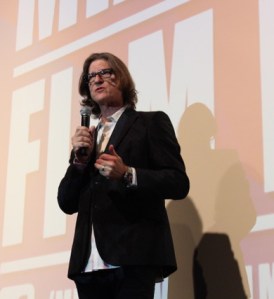
Richard Trank is an Academy Award-winning documentary filmmaker (producer, writer, and director), known for The Long Way Home (1997), Beautiful Music (2005), I Have Never Forgotten You: The Life & Legacy of Simon Wiesenthal (2007), Against the Tide (2009), Winston Churchill: Walking with Destiny (2010), It is no Dream: The life of Theodore Herzl (2012); The Prime Ministers: The Pioneers (2013); and The Prime Ministers: Soldiers and Peacemakers (2015). His latest film was Never Stop Dreaming: The Life and Legacy of Shimon Peres, released in late 2018.
 Carolijn van Noort is a lecturer in politics and public policy at the University of the West of Scotland in London, UK. In 2018, she was awarded her PhD in Political Science and Media, Film and Communication from the University of Otago in New Zealand. Her research explores the strategic communication of rising powers on the issue of infrastructure vision and action plans. Her articles have appeared in Global Society, International Journal of Cultural Policy, Politics and Governance, and Women Talking Politics.







 Center for Intercultural Dialogue