Catalan-American Cultural Heritage Exchange 2020

FellowshipsCatalan-American Cultural Heritage Exchange 2020. Smithsonian Center for Folklife and Cultural Heritage, Washington, DC, USA. Deadline: at least 6 weeks prior to an individual’s start date.

The Smithsonian Center for Folklife and Cultural Heritage is pleased to invite applications from cultural heritage students and professionals in Catalonia to join this unique program. The program will provide new opportunities for three participants to explore and expand their careers in museums, cultural heritage, the arts, and arts management over a twelve-week period in 2020. We anticipate supporting two interns who are still developing their careers and one fellow who already has an established career path. The Center will welcome interns and fellows from Catalonia into a robust cohort from Washington, D.C., across the United States and around the world. They will study museology, cultural heritage, the arts, anthropology, folklore, ethnomusicology, and archival science. The program will also create a pipeline for graduate education in American universities; interns will receive support in applying to American graduate programs, including some that offer funding to complete a two-year master’s degree.

NOTE: Over 100 Smithsonian Institution internships are available annually, as well as a wide variety of fellowships at various levels: predoctoral, postdoctoral, and senior postdoctoral scholars, involved in cultural heritage, ethnomusicology, museum studies, and more. Fellows work directly with staff in the office in Washington, D.C., with access to Smithsonian archives, collections, and other resources. Applicants are welcome from the United States and around the world.
International Center for the Rapprochement of Cultures (Kazakhstan)

Resources in ICD“ width=International Center for the Rapprochement of Cultures established as a cooperation between UNESCO and Kazakhstan.

According to The Times of Central Asia, “an agreement between the Government of Kazakhstan and the United Nations Educational, Scientific and Cultural Organization on the establishment of the International Center for the Rapprochement of Cultures under the auspices of UNESCO was signed on June 25 in Paris. The agreement was signed by UNESCO Director General Audrey Azoulay and Deputy Prime Minister of Kazakhstan Gulshara Abdykalikova. . .

The proposed structure is planned to be created under the auspices of UNESCO on the basis of the Center for the Rapprochement of Cultures under the Ministry of Culture and Sports of Kazakhstan. . .The objectives of the Center will be the promotion of research, the preparation of publications, the organization of conferences and educational activities on the history and practice of intercultural interaction in Central Asia and beyond.”

The International Decade for the Rapprochement of Cultures (2013-2022) is a UNESCO initiative. 

2nd Prize in CID Video Competition: Francesca Kroeger

CID Video CompetitionCID’s second video competition is now over, and the judges have reviewed all the videos. As a reminder, the instructions were to answer the question How do social media influence intercultural dialogue? in 90-120 seconds, on video.

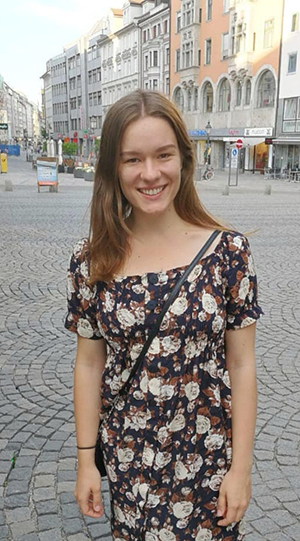
2nd prize goes to Francesca Kroeger, Master’s student in Cognitive Semiotics at Aarhus University in Denmark. As she travels, she maintains a website, The Life Created.

Title: The Paradox of Social

Description: I am inspired by everyone I meet. They say you are the average of the five people closest to you. If that is the case, then I am the combined effort of close to thirty nationalities. I have been traveling continuously since the age of 15. I studied international communication and with every place I went, my curiosity only grew stronger. My dream is to inspire others, to go out and see the world. I hope to help people from different backgrounds connect, as I understand that not everybody is able to travel as freely as I am. This is the reason that I have been writing about my experiences, and more recently I started to document my journey also through the use of video. The footage in the Paradox of Social is all free stock footage, the edit and voice are mine. I want to show that you do not necessarily need fancy camera equipment or a passport to create bridges between cultures.

Music: I Wanna Live by Novalight

There were first, second and third place winners. Each of these is being highlighted in a separate post, as they warrant our attention. My thanks to the judges of the competition, professionals who made time to review student videos. Thanks also to all the competitors, who took the time to really think about the question of how social media influence intercultural dialogue.

Wendy Leeds-Hurwitz, Director
Center for Intercultural Dialogue

Nottingham Trent U: Intercultural Communication (UK)

“Job
Lecturer in Intercultural Communication, School of Arts and Humanities, Nottingham Trent University, Nottingham, UK. Deadline: 21 July 2019.

Nottingham Trent University is looking to recruit an ambitious and enthusiastic Lecturer with the specialist knowledge to teach and engage in scholarly activity in Intercultural Communication with particular expertise in two or more of the following areas: Dialectical approaches to the study of intercultural communication; Intersectionality, social construction and social representation; Discourse, identity and intercultural communication; Intercultural communication and ELT pedagogy; Conflict and conflict resolution; Ideology, Power and Globalisation.

Boston U: International Student Advisor (USA)

“JobInternational Student Advisor, International Students and Scholars Office, Boston University. Deadline: July 23, 2019.

The International Student Advisor counsels and advises a complicated caseload of approximately 1,200 nonimmigrant international students and their dependent family members in relation to obtaining and maintaining valid immigration status, benefits of certain immigration classifications and other regulatory requirements. Directly reporting to the Associate Director for Student Services, the International Student Advisor serves as liaison to assigned schools and colleges and provides advanced immigration related advice and assistance to faculty and administrators regarding international student regulations.

Yo-Yo Ma: The Culture of Us

Applied ICDYo-Yo Ma, Music Video: The Culture of Us.

Yo-Yo Ma, world famous cello player, is playing Bach’s solo cello suites in 36 locations around the world. And in each place he and his team partner with local organizers to “demonstrate culture’s power to create positive change… The Bach project explores and celebrates all the ways that culture makes us stronger as individuals, as communities, as a society, and as a planet.”

“The shared understanding that culture generates in these divisive times can bind us together as one world, and guide us to political and economic decisions that benefit the entire species. We are all cultural beings – let’s explore how culture connects us and can help to shape a better future.”
Yo-Yo Ma

IMéRA Fellowships 2020-21 (France)

FellowshipsFellowships, IMéRA Institute for Advanced Study at Aix-Marseille University, France. Deadline: September 26, 2019.

IMéRA and its partners are issuing 4 calls, one per programme. Each programme is associated with a “white” (or general) call and a set of specific residencies jointly managed by local, national or international partners. These specific residencies include chairs reserved for experienced researchers. Interested scientists, writers or artists may apply for one programme only. Please indicate the type of residency you are requesting in your application (general program and/or specific residency):

CBC Radio on Indigenous Identity (Canada)

Resources in ICD“ width=Unreserved is the radio space for Indigenous community, culture, and conversation on CBC Radio (Canada). Host Rosanna Deerchild takes you straight into Indigenous Canada, from Halifax to Haida Gwaii, from Shamattawa to Ottawa, introducing listeners to the storytellers, culture makers and community shakers from across the country.

Episodes include:

Exploring the Complicated world of Cultural Identity looks at cultural identity and how Indigenous people see themselves in a world that wants to paint them all with one brush. Identity, of course, is a complicated and touchy issue in a lot of communities in Canada, as elsewhere.

A full list of podcasts is here.

It’s not part of Unreserved, but a brief video by CBC Radio is also interesting: What’s in a Name? From “Redskin” to Indigenous takes a look at what Indigenous Peoples have been called and what they call themselves.


CFP Compromised Identities: The Role of Social Media in Dismantling Ethnic & National Borders

“PublicationCall for chapter proposals: Compromised Identities: The Role of Social Media in dismantling ethnic and national borders, a book to be edited by Emmanuel K. Ngwainmbi, University of North Carolina, Charlotte. Proposal Submission Deadline: October 31, 2019.

Identity is tied to modus operandi and space, meaning that our thought process, the things we do, those we associate with and where all these take place define us. Identity has value; it fosters a sense of belonging. This is why each individual is associated with an ethnic group, nation, race, religion, or a particular belief. The locus for such association is that society treats us based on how we manage our understanding of, and relationship with others within our ethnic group, race, or country, or how well or poorly we deal with our beliefs.

This book will provide relevant theoretical frameworks and the latest empirical research findings in the area. It will include analyses of social media experiences in indigenous and urban communities around the world. It will be written for scholars and researchers who want to improve their understanding of how ethnic and national identities (the sense of being part of a country) have been compromised through social media networking and by network groups. The book will focus on social media participation in agrarian and urban communities across the seven continents.

1st Prize in CID Video Competition: Juanma Marín Cubero & Rafa Muñoz Hernandez

CID Video CompetitionCID’s second video competition is now over, and the judges have reviewed all the videos. As a reminder, the instructions were to answer the question How do social media influence intercultural dialogue? in 90-120 seconds, on video.

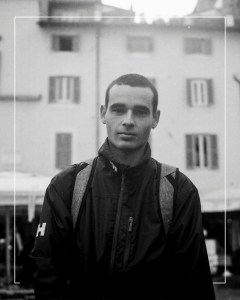
Juanma Marín Cubero
Juanma Marín Cubero

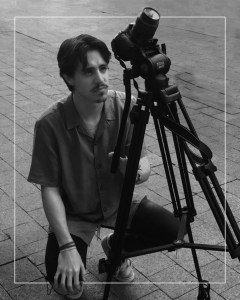
1st prize goes to Juanma Marín Cubero (in Advertising and Public Relations) & Rafa Muñoz Hernandez (in Audiovisual Communication), both undergraduates at the University of Murcia, in Spain.

Title: Break the Borders

Description: “Our inspiration came directly from the question: How do social media influence intercultural dialogue? The answer that came to us was that they bring people together regardless of where

Rafa Muñoz Hernandez

they are. Social media facilitate dialogue, so we wanted to capture how people from different countries could communicate and in some way break geographic boundaries, since social media have made this possible. We also wanted to transmit the values ​​that intercultural dialogue has, which are respect, union, empathy, freedom, etc. We had a great challenge when it came to translating our ideas onto video. But with imagination and effort we got the result we wanted. For its creation we have used everything from flour, to the Adobe Premiere editing program. In summary, it has been hard work as well as satisfactory for us, and we hope that we have managed to appropriately convey our idea.”

There were first, second and third place winners. Each of these is being highlighted in a separate post, as they warrant our attention. My thanks to the judges of the competition, professionals who made time to review student videos. Thanks also to all the competitors, who took the time to really think about the question of how social media influence intercultural dialogue.

Wendy Leeds-Hurwitz, Director
Center for Intercultural Dialogue