
 Call for papers: Communication history of international organisations and NGOs: Questions, research perspectives, topics, Zentrum für Medien-, Kommunikations- und Informationsforschung (ZeMKI [Centre for Media, Communication and Information Research]), University of Bremen, Bremen, Germany, April 22-23, 2021. Deadline: September 1, 2020.
The International ZeMKI Conference 2021 will focus on a topic that has thus far received little attention from historians of communication and media: the communication history of international organizations. Since the second half of the 19th century, for numerous and diverse areas of social life, globally active international organizations of varying degrees of institutionalization and scope, both non-governmental and intergovernmental, have been founded and have dedicated themselves to the global challenges of the first modern age. The most famous of these is certainly the League of Nations, which was established in 1919 as the predecessor institution of the UN.
From a communication and media-historical perspective, international organizations played a highly visible role in the transnational intertwining and consolidation processes of journalism, culture, media, politics, technology and the public sphere in the 19th and 20th centuries. Topics include:
- The communication and communication management of international organizations
- International organizations, media and journalism
- International organizations in the public sphere and public debates
- Theories, methods, sources


 An award of excellence goes to Vanessa Milqueya Ventura Alvarez, who is from the Dominican Republic, studying Business Management at Hostos Community College, part of the City University of New York in the USA, for her Associate’s degree.





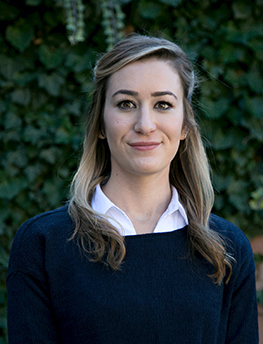 Her areas of interest include intercultural communication, interpersonal communication, and conflict management. Specifically, she explores how communication—specifically, how we communicate about difference—serves as both an instrument and a barrier to inclusion and belonging. Along with having taught several intercultural communication courses at various institutions, Salma has also held several non-academic, professional positions with local and international organizations in the field of conflict mediation and cross-cultural dialogue.
 3rd prize goes to Veronica Gutierrez, who was born in Monterrey, Mexico, and has been living in the United States since age 10, and who is studying Global Public Health at Concordia University Texas, in the USA, for her Bachelor’s degree.
 Center for Intercultural Dialogue