Hughes & Bartesaghi Guest Post: Disability as Intercultural Dialogue

Guest Posts
Disability as Intercultural Dialogue. Guest post by Jessica M. F. Hughes & Mariaelena Bartesaghi.

Ethnomethodologist Carolyn Baker argues that culture is not a pre-made context for action to unfold, but rather an ongoing moral order of categories and categorization, where locally produced categories become “locked into place” (2000, p. 99). This is how we understand—and are able to talk about—disability in terms of culture, as an assemblage of voices, bodies and actions within a contingent and shifting social order(ing). Just as Bakhtin (1986) tells us that there is no first speaker, but rather language as coordination over time and amidst utterances in relation, disability can only mean in terms of what we are able to (co)produce it as meaning. In our book, Disability in dialogue (Hughes & Bartesaghi) contributors set out on empirical projects designed to trouble the categories of disability within several cultural frames: geographical settings, diagnostic accounts, political action, crisis events, and everyday occurrences.

Inasmuch as disability is a culture, an ordering of relations and identity projects, of what is and might be possible, of what is historically entrenched and institutionally regulated, then disability is also an intercultural doing. This is the case not merely in the exchanges between a culture of able bodiedness to which disability owes its constitution, but between the multiple and diverse identity positions of those who are incumbent within the culture of disability. These exchanges are dialogic through and through, for they always mirror, borrow, and often oppose each other. In Shotter’s words (2015), these dialogues are occasions for attunement (p. 8) and intercultural betweenness.

Analyzing disability discourses means appreciating dialogic tensions, the centripetal and centrifugal forces at work, the constant interplay between dialogue and monologue. And it means listening to the diverse voices that, as Bakhtin remarked, are everywhere and always in relation.

Download the entire guest post as a PDF.
Knappitsch Guest Post: The Global Case Study Challenge

Guest Posts
The Global Case Study Challenge: Competencies for the Future of Work in Virtual Environments.
Guest post by Eithne Knappitsch.

The Global Case Study Challenge (GCSC) began as a Collaborative Online International Learning (COIL)/Virtual Exchange program, offering students an authentic and immersive intercultural learning opportunity. As the importance of New Work and remote work contexts grew following COVID, it became clear that students and professionals needed to develop more effective competencies to excel virtual and hybrid work environments. Initial iterations of the GCSC revealed that while students possessed strong digital skills, they frequently lacked essential digital collaboration competencies – the attitude, knowledge, and skills to become high performing teams in diverse, interdisciplinary, and international contexts. Recognizing this gap in competencies needed for future New Work environments and those acquired at higher educational institutions, the need for the GCSC to further develop into a transformative, career-oriented global teaching and learning program became obvious. At the same time, the GCSC management team – a virtual female-led team – became inspired by the potential for virtual exchange to contribute to a paradigm shift in higher educational settings as responsible and sustainable forms of education (and internationalization). The GCSC, over the five consequent iterations from 2018 onward evolved into a transformative program, resulting in the development of the GLOW model. This CID guest post explores how the GCSC GLObal Work (GLOW) model addresses these pressing needs and empowers students and educators with the competencies required to excel in virtual and intercultural work settings.

Download the entire guest post as a PDF.

Sommier, Roiha & Lahti: Implementing Critical Approaches to Interculturality in Higher Education

Guest Posts
Implementing Critical Approaches to Interculturality in Higher Education.
Guest post by Mélodine Sommier, Anssi Roiha & Malgorzata Lahti.

Critical approaches to interculturality have gained visibility over the years, both within and outside of academia. And yet, the increasing drive across European hHigher eEducation institutions to implement internationalization strategies is often articulated around assuming traditional notions of culture, diversity, and intercultural communication. This gap between critical research in interculturality and concrete implementation of intercultural education is what drove us to ask colleagues how they put critical approaches to interculturality into practice.

Indeed, inviting critical interculturality into classrooms is a holistic process that takes time since it asks teachers to familiarize themselves with that approach as well as to depart from the limitations of traditional pedagogical frameworks.

Download the entire guest post as a PDF.

Maria Flora Mangano: Saturday Morning (Intercultural) School

Guest PostsSaturday Morning (Intercultural) School. Guest post by Maria Flora Mangano.

NOTE: Maria Flora Mangano has previously written about dialogue as a space of relationship (2020, 2018, 20172014) as long-term followers of this site will remember. 

Since the end of 2021, I have been involved in an after-school activity for 4 to 12-year-olds. This volunteer work supports pupils doing their homework once a week, on Saturday mornings. This activity was created by a teacher at the beginning of the current school term, in October 2021, and it takes place in a parish of the city center of my town, Viterbo, near Rome. The initial aim was to reach non-Italian children from the city center, which is mostly inhabited by non-native families. In a short time, additional children arrived from different zones of the town and the surroundings.

What the children experience at home, with relatives and friends of their parents’ culture, often coexists, interacts, and enriches – we may say “is in dialogue” – with what they experience at school, as well as in this after-school activity. At the same time, their daily sharing with Italian and non-Italian people (peers, teachers, or neighbors, for instance) feeds their knowledge, and it frequently provides precious input to their families. Some, in fact, help their parents in improving their understanding of the Italian language, in talking, reading, or writing; others assist Italian people (even us) to better understand their parents’ and family’s needs.

Download the entire post as a PDF.

Sabrina Sharma: Dialogue of Reflective Thought

Guest Posts

Dialogue of Reflective Thought. Guest post by Sabrina Sharma.

The “Dialogue of Reflective Thought” (DORT) approach is a type of dialogue allowing parties to engage without a mutual resolve or change per se.

DORT is a process whereby two or more parties engage in dialogue, each without the intention to transform the other’s thought process or to expect that the other party would be placed in a position of mandatory consideration of the other to birth a ‘perception changing’ view. Although a shift may ensue from the dialogue itself, the goal is rather to share experiences and thoughts. If a transition occurs, it appears in the natural course of the dialogue itself.

Download the complete essay as a PDF.

Jinhyun Cho: Intercultural Communication in Interpreting

Guest Posts

Intercultural communication in interpreting: Power and choices. Guest post by Jinhyun Cho.

…by definition interpreter-mediated communication always involves speakers from diverse cultural and linguistic backgrounds in dialogue

What is intercultural communication? For many years, scholars have attempted to address this broad topic, yet little has been explored in the realm of interpreting. This is surprising, considering the fact that interpreting is intercultural communication in itself, for by definition interpreter-mediated communication always involves speakers from diverse cultural and linguistic backgrounds in dialogue. In my recent book, Intercultural communication in interpreting: power and choices (Routledge, 2021), I tried to address the gap by exploring interpersonal dimensions of intercultural communication in a variety of key interpreting contexts – business, education, law and healthcare – based on the unique perspectives of professional interpreters.

Download the complete essay as a PDF.

Vivian Hsueh Hua Chen: A Video Game for Fostering Positive Intercultural Relationships

Guest PostsA video game for fostering positive intercultural relationships. Guest post by Vivian Hsueh Hua Chen.

On an overall level, playing the game resulted in significant attitude change towards outgroup members.

In a culturally and racially diverse world, it is important for people to be able to live together harmoniously. Being respectful of cultural differences and fostering a genuine curiosity to better understand how and why other people are different from ourselves is one way to bridge the gap between self and others. This was the underlying motivation to create the prosocial game, Icebreaker. Icebreaker is a short role-playing game where players take on the role of the protagonist, an ice gatekeeper whose family has been tasked with protecting the village from an annual disaster known as ‘The Freezing.’ The goal of the game is for players to discover the true cause for this annual occurrence and to stop the event for good. The game design is primarily driven by narrative design integrated with interactive play. Certain tasks in the game require the player to work together with a banished villager, whose race has been blamed for being the cause of the disaster.

Download the complete essay as a PDF.

Fatemeh Kamali-Chirani: Cultural Diplomacy & ICD

Guest PostsCultural Diplomacy, Intercultural Dialogue, and Sustainable Development: A View of the Cultural Diplomacy Potential of the City of Islamabad. Guest post by Fatemeh Hippler (birth name: Kamali-Chirani).

Cultural diplomacy based on intercultural dialogue creates trust by assuring the equality of all partners engaging in communication.

After concluding my PhD on intercultural dialogue between Muslim and Western countries (with a focus on the foreign cultural policies of Iran and Germany), I experienced one of the most attractive career opportunities of my life. Specifically, I started to work as a researcher (at the Sustainable Development Policy Institute) and a teacher (at the School of Politics and International Relations, Qauid-i-Azam University) in the fields of development and international relations in Pakistan.

Development as a discipline brought new light to my understanding about culture. I learned about the significance of “sustainable” development and its 17 goals (SDGs). In terms of a definition, I learned that it means development that “meets the needs of the present without compromising the ability of future generations to meet their own needs” (World Commission on Environment and Development, 1987, often called the Brundtland Report). Sustainable development thus requires change through culture. That piqued my curiosity as to why despite all attempts of the UN state members and international organizations like the World Bank still culture, which must be taken as a driving engine of integration of nations to serious change, is neglected and has not yet gotten the attention it deserves. Culture, even rhetorically, is just not a part of the SDGs’ list. Yet it needs to be.

Download the complete essay as a PDF.

Janny Leung: COVID-Sensitive Kanji

Guest Posts

COVID-Sensitive Kanji. Guest post by Janny H. C. Leung.


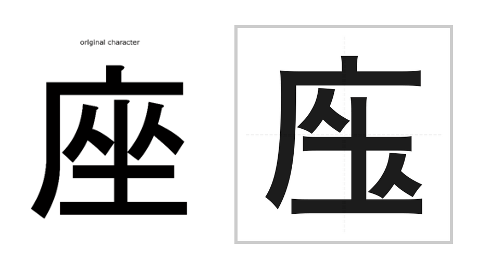
New words or phrases, such as covidiot and Zoom fatigue, cropped up in the English language in the past year as a creative response to the pandemic. Yet, the most Covid-complaint neologism may be found in a non-alphabetical language. The winner of the 11th round of the Sousaku Kanji Contest is a redesigned character that separates the two persons (人) in a seat (座) to make sure that they comply with social distancing measures in 2020.

old and new kanji

Download the entire post, which includes discussion of several other kanji, as a PDF.

Maria Flora Mangano: Space of Relationship as a Space of Distance

Guest PostsSpace of relationship as a space of distance: A new proximity. Guest post by Maria Flora Mangano.

NOTE: Maria Flora Mangano has previously written about dialogue as a space of relationship (2018, 20172014) as long-term followers of this site will remember. She suggested this might be a good time to think about what is now being called “Social distancing” and how it relates to the space of relationship that is required for intercultural dialogue to occur.  

Among the measures for controlling the infection of Coronavirus disease 2019 (COVID-19) is the need to avoid interaction among human beings, and, when that is not possible, to fix a distance of at least one meter, according to the World Health Organisation. In addition to the medical masks, in almost every part of the world, this measure implies a prohibition on shaking hands, or hugging and kissing. The warnings stress the need to interact with others without having any contact, especially of hands and face, the parts of the human body which, more than others, may transmit the infection. These two also are the parts of the body which, more than others, transmit the message, thus play a central role in communication.

During these last few days, the global news media have reported several alternatives to greetings and physical contacts created by many people around the world, involving touching elbows, or feet. Also, people have rediscovered the use of non-touching hand gestures, as with namaste, the Buddhist greeting, where hands are put together, or even blinking, as ways to respect a safe distance, yet still acknowledge another person.

The COVID-19 infection is introducing a new space of relationship among individuals, related to our interpersonal communication. This is affecting everyday life at the moment and will probably have effects in the future on human communication. A “new distance” is arising, which may be added to the original four proposed by the anthropologist Edward Hall in 1966 in The Hidden Dimension. He distinguished four levels of distance in spatial interrelationships among humans, which vary by such factors as culture, education, gender, and status. We might now add what has been popularized as “social distancing”) to the intimate, the personal, the social, and the public spaces proposed by Hall.

Despite Hall’s emphasis on cultural differences, as the new distance is required for global safety reasons, this relationship of distance between individuals is the same all over the world. Therefore, it cannot, and it is not supposed to be, different depending such factors as culture, age, education, gender, or status. What may change is the resilient capacity of human beings to find alternatives, to adapt themselves to (almost) every condition, and to try to find an answer, even when it seems hard, as during this time.

The challenge to us all will be to consider this necessary distance imposed on individuals as an opportunity to rethink the space of relationship as a space of proximity to the Other. Distance, as well as proximity, are terms generally related to a physical space of relationship among humans. What happens when this space is dramatically and unexpectedly avoided or altered, as it imposes another dimension, even a fixed measure of separation among individuals?

The opportunity which this social distancing offers is to consider distance, and consequently proximity, unbound from a physical space of relationship. Distance may become another term for proximity, if we will be able to look at the face of the Other even through a medical mask, and from one meter. We may still be touched by the Other’s call, even without touching her/him with our hands.

If we will be able to overcome a physical space of relationship – in the sense of going beyond it, rather than over it – we might also discover a new sense for proximity. It may sound like a paradox, and probably it is, as the challenges required to the human behaviour which affect our daily life. If we will be able to accept the paradox of distance and proximity as one, we may discover that the safe distance established by social distancing can be overcome, in a way, not because we violate the prohibitions, but as we are able to go beyond ourselves towards the Other.

The Latin term alter literally refers to “the other than two”; social distancing is offering us all the chance to alter our perspective of the Other, every Other than us: close or distant, with a medical mask or without, by touching her/him or without using our hands. This implies the opportunity to modify the distance at which we stand from the Other, in terms of prejudices rather than medical or safety prescriptions. It might be surprising to realise, when the COVID-19 epidemic will eventually end, that we have reduced our mental and heart distance from the Other, in addition to again being able to reduce our physical distance.

In these new and solitary days, in our creative country [Italy], a spontaneous proposal was born. It was soon shared among the people and became viral (in every sense!): find a way to encourage the others, with messages posted on the windows and the balconies. The sentence proposed was: “Andrà tutto bene,” or “Everything is going to be fine.” The idea was to write on white sheets, drawing the rainbow. It was soon made by children and families. I thought to draw it on paper and I posted the design on my window facing the road.

Download the entire post as a PDF.