Univ Waterloo Asst Prof

The Department of Drama and Speech Communication at the University of Waterloo invites applications for an Assistant Professor position in Speech Communication. Based in a liberal arts faculty that aspires to high national and international standards, the Speech Communication program currently serves approximately 140 majors and offers eight different degree programs, including three and four year regular and honours programs, an Arts and Business degree option, and a minor and option. The program has concentrations in four areas: Intercultural Communication; Interpersonal/Organizational Communication; Performance Studies; and Public and Digital Communication. The formal relationships between Speech Communication and other programs (especially Digital Arts Communication and Drama) provide regular opportunities for interdisciplinary collaborations in teaching, research, and creative work.

The successful candidate will have demonstrated teaching experience as well as a strong research profile, and will have PhD in hand or ABD with dissertation near completion. Strong candidates will specialize in interpersonal and/or organizational communication in teaching and research. Additional areas of specialization may include cultural/critical studies, ethics, public communication, intercultural communication, and performance studies. A demonstrated pedagogical commitment to theoretically-informed practice, student-centered learning, and engagement of broad public concerns is desirable. Expertise in qualitative and/or creative work is welcome. Duties include research, teaching, and academic service. Salary will be commensurate with qualifications and experience.

All qualified candidates are encouraged to apply; however, Canadians and Permanent Residents of Canada will be given priority. The University of Waterloo encourages applications from all qualified individuals, including women, members of visible minorities, native peoples, and persons with disabilities. This appointment will remain open until a suitable candidate has been hired. Send letters of application, complete CV, and three letters of recommendation to: Dr. Jennifer S. Simpson, Interim Chair, Department of Drama and Speech Communication, University of Waterloo, 200 University Avenue West, Waterloo, Ontario N2L 3G1. Appointment begins August 1, 2011. Application deadline: Review of applications will begin May 10, 2011.

Communication & Media Commentaries

“Do you have a scholarly position on a topic of current concern in communication or media studies? I have agreed to stay on as the commentaries editor for the journal Communication, Culture & Critique under the new editor John Downing. My job is to round up short, thoughtful, even provocative pieces that take an informed position on issues related to communication and media. The journal reaches an international scholarly audience. Commentaries — which should be 2,000 words or less — are peer reviewed, just like full-length manuscripts. You should cite sources, of course, and include a reference list. I hope you will consider sharing your work with the journal, which is International Communication Association’s youngest publication. It was the outcome of many years’ lobbying by critical, international and feminist scholars for a “space of our own.” Please help to build its reputation with your work. You can learn more about the journal and how to prepare your manuscript at this site. When you submit your manuscript, be sure to indicate it’s for the “Commentaries, Crits & Notes” section.”

I can answer questions you might have.
Dr. Carolyn Byerly, professor
Howard University
cbyerly@earthlink.net

Univ Central Missouri job ad

The University of Central Missouri’s Department of Communication invites applications for a full-time, tenure track position at the assistant professor level to teach courses in film studies and related areas with an appointment date effective for the 2011-2012 academic year. Along with teaching responsibilities, academic advising, departmental committee assignments, research/creative activities, and professionally-related service are required. Successful candidates will have expertise in film studies, film history, production, and at least one of the following areas: media industries in an international context, cultural studies, screenwriting, or digital media. Experience in digital film production a plus, as is evidence of quality teaching.

Qualifications: ABD considered, Ph.D. in Film Studies or a related field is preferred and necessary for tenure. The standard teaching load is 12 hours per semester, and teaching responsibilities would include Film Appreciation, History of American Film, Single Camera Dramatic Production, and Screenplay Writing, plus other possible courses in Multimedia or Video Production (production classes use digital video with editing facilities in both Avid and Final Cut Pro). There may be chances to contribute new courses to the curriculum in areas of the candidate’s specialty, and possible summer employment opportunities exist.

Priority consideration will be to applications received by May 1, 2011, but applications will be accepted until the position is filled. To apply: complete an on-line faculty profile at jobs.ucmo.edu and apply for position #998430. Attach to the faculty profile a letter of application addressing the candidates qualifications for the position, a vita, teaching philosophy, teaching evaluations, and contact information for at least 3 references. For information about the on-line application process contact Human Resources at jobs@ucmo.edu or (600) 543-4255. For more information about the position contact Dr. Barbara L. Baker at bbaker@ucmo.edu or (660) 543-8625.

The University of Central Missouri is an equal opportunity employer committed to building a culturally diverse community and strongly encourages applications from women and historically underrepresented groups. UCM’s 1,561-acre campus is located in Warrensburg, a town of nearly 17,000 residents located 50 miles southeast of Kansas City. Classes also are offered at the UCM Summit Center located in Lee’s Summit. Some 2,183 graduate and 9,168 undergraduate students from 40 states and 56 nations attend classes on the UCM campus. UCM offers 150 programs of study leading to an associate’s degree, certificate, bachelor’s degree, master’s degree, education specialist degree, or cooperative doctorate

University of Haifa

On April 12, 2011, I presented a talk entitled “Social Order, Social Constraints: Applying Goffman to Complex Constructions of Identity” for the Communication Department at the University of Haifa.

Prof Yael Maschler, Prof Wendy Leeds-Hurwitz

My thanks to Yael Maschler for organizing the event, to Rivka Ribak for joining us at lunch, and to Tamar Katriel and her husband Jacob for the tour of various local history sites described in her various publications.

Prof Tamar Katriel
Prof Tamar Katriel

Wendy Leeds-Hurwitz
Director, Center for Intercultural Dialogue

C. R. Anderson Research Awards

CALL FOR APPLICATIONS

The Association for Business Communication is currently accepting applications to its C.R. Anderson Research Foundation (CRARF), which financially supports innovative research projects in the field of business communication. The support offered is in the form of micro-grants of US $1,000 to US $3,500 to be spent on equipment, hard- and software, travel and accommodation expenses, and/or research support-staff compensation within the course of a research project of up to 12 months.

To provide grants to support ABC members’ research activities in the interdisciplinary field of business communication. In particular, the CRARF aims to encourage and support innovative, academic research in such areas as business communication, management communication, business writing, consulting, marketing, English, speech communication, intercultural communication, linguistics, rhetoric, and information systems.

Eligibility criteria: Who can apply?
All graduate students and faculty who are members of ABC are welcome to apply.

What can be applied for?
Minimum $ 1,000 and maximum $ 3,500 to be spent on equipment, hard- and software, project-related travel and accommodation expenses, research support staff compensation (e.g. the costs of coding data, interview transcription, designing and running statistical analysis), etc. within the course of a research project of max. 1 year. The money should not be spent on dissemination (e.g. conferences) but on the execution of the project.

When are applications due?
Applications will be evaluated on a continuous basis. Selection Guidelines:
Eligibility of the applicant
Originality and innovative nature of the project
Feasibility of the project
Scholarly contribution to the field of business communication
Appropriateness of research methodology
Necessity of the budgeted resources

Selection Procedure:
The applications are presented to the ABC Research Foundation Committee, who assess the merits of the applications and  who report their recommendations to the CR Anderson Board. The allocation is made by the CR Anderson Board. Members of the ABC Research Foundation Committee and of the CR Anderson Board are not allowed to apply for a grant.

Selection Follow-up:
Grant recipients’ attendance (and presentation) is mandatory at an ABC convention (Annual Convention or regional conference) in one of the first two years following the allocation of the funds. Recipients should acknowledge the financial support of the ABC Research Foundation in all conference presentations and publications (both print and online) reporting research conducted with the Research Foundation’s money. Recipients  should submit a 1,000-word research report to the ABC Research Foundation Committee within 6 months after the close of the project.

How to apply:
Please send your application in pdf-format to the chair of the ABC Research Foundation Committee, Dr. Geert Jacobs, at geert.jacobs@ugent.be, including a description of the project (max. 1,000 words), a statement of its academic and practical relevance to the field of business communication (max. 500 words) , a list of expected output and deliverables (publications, conference presentations, etc.), and the applicants’ CVs, as well as a detailed budget.

World Forum on Intercultural Dialogue – Report

On April 7-9, 2011, the World Forum on Intercultural Dialogue was held in Baku, Azerbaijan. I gave a presentation entitled: “Dialogue about Dialogue: Taking a (Meta)Communication Perspective on the Role of Women in Intercultural Dialogue.” All presentations will be posted to the Forum site in the near future, and published in a proceedings volume.

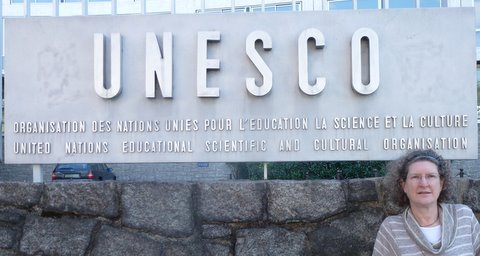
The World Forum was supported by the UN Alliance of Civilizations, UNESCO, Council of Europe, North-South Center of the Council of Europe, ISESCO and Euronews. Building on several prior events, the Forum highlighted intercultural dialogue as one of the most pressing challenges that the global community faces today. The forum addressed conceptual, governmental, policy and practical aspects of intercultural dialogue, providing an opportunity for sharing good practices and making new connections. In addition, since the event was hosted by the President of Azerbaijan, we were all treated as guests of the state, and went everywhere with a security escort. Highlights were the formal entertainment and elaborate banquets on both Thursday and Friday evenings. Upon our arrival, we were given not only the usual conference program, small notebook and briefcase labeled with the conference information, but also dozens of brochures and a guidebook about Azerbaijan. When we returned from closing ceremonies, a gift package was waiting, with a small handmade carpet and hand-painted silk scarf (local craft specialties), a mug and local tea, as well as a bronze plaque noting our participation. In fact, there were so many presents that I mailed them back to the US rather than carry them around with me for the next several months.

The Forum was opened by the President of the Republic of Azerbaijan, His Excellency Mr. IIham Aliyev. The plenary panel on which I participated was “Women as Key Agents of Intercultural Dialogue.” This panel was co-chaired by Dr. Katérina Stenou (Director, Cultural Policy and Intercultural Dialogue, UNESCO, and member of this Center’s Advisory Board) and the First Lady of Azerbaijan, Ms. Mehriban Aliyeva (she is also President of the Heydar Aliyev Foundation, and UNESCO Goodwill Ambassador). Rapporteur for the panel was Ms. Pramila Patten (CEDAW expert). The other panelists were: Ms. Hijran Huseynova (Chairperson of the State Committee on Family, Women and Children Affairs, Azerbaijan); Ms. S.Y.Orlova (Deputy chair of Council of Parliament of Russian Federation), Ms. Rachida Dati (Mayor of the 7th arrondissement of Paris), Ms. Concepcion Olavarrieta (Chair of the Mexican Node of  the Millennium Project), Ms. Mbarka Bouaida (Member of Parliament, Morocco), and Mr. Alexander Ageev, (General Director of Institute of Economic Strategies, Department of Humanitarian Sciences, Russian Academy of Sciences, Russian Federation). Respondents to the panel included several ministers of culture, as well as Dr. Ruth Halperin-Kaddari (Director, The Ruth and Emanuel Rackman Center for the Advancement of Women’s Status, Bar-Ilan University, Israel), Dr. Bibi Bakare-Yusuf (publisher of Casava Republic Press, based in Abuja, Nigeria), and Ms. Natalia Molebatsi (performance poet and storyteller, based in South Africa).

The majority of the Forum’s participants were ministers of culture or other politicians (and I did meet a few, including Ms. Irina Cajal-Marin, Under Secretary of State for the Ministry of Culture in Romania, and Mr. Ali Elamin, Director of the Minister’s Office for Sudan). Others were CEOs of NGOs or non-profits (and among those I met were Ms. Wajiha Haris, President of Scheherazade, in Bucharest, Romania, Dr. Catherine Fieschi, Director of Counterpoint, just separated from the British Council, in London, Ms. Lila de Chaves, President of Heritage & Museums, in Athens, and Mr. Peter Gorgievski, CEO of Global Dialogue Foundation in Moonee Ponds, Australia). There were also a number of people connected to one of the international organizations co-sponsoring the event (I met several, including Mr. Hans d’Orville, Assistant Director-General for Strategic Planning of UNESCO in Paris, Dr. Liubava Moreva, Program Specialist for Culture in UNESCO’s Moscow office, and Ms. Neslihan Demirkol Sonmez, representing the Turkish National Commission for UNESCO; as well as Dr. Mir Asghar Husain, of the North-South Centre Think Tank for the Council of Europe). There were even a few other faculty present (I met Dr. Darla K. Deardorff, Executive Director of the Association  of International Education Administrators, based at Duke University in the US). And these are only some of those with whom I exchanged business cards – I am looking forward to continuing conversations with dozens of people as a result of the event.

Two other events occurred simultaneously with the Forum, an academic conference (“Traditions and prospects for intercultural dialogue in CIS countries: culture, education and communication”), as well as the first convention of the Global Youth Movement for the Alliance of Civilizations, and so I met some individuals from each of those events. For example, Ms. Emilia Katosang (Deputy Permanent Representative, Permanent Mission of Palau to the UN) and Ivaylo Stoimenov (a Bulgarian journalist) were both part of the GYM meeting; Prof. Samir Sleiman (cultural anthropologist in Lebanon, and Editor in Chief of Le Debat) presented at the academic conference. I also met several of the many international journalists covering the event, including Mr. Mohammad Malick, of The News, in Pakistan, and Mr. Ghassan Ali Osman, covering the event for Sudan. And, like most of the presenters, I was interviewed for Azerbaijani television. The audience was so large (600-1000, depending on whether participants of the 3 events overlapped at the same event or not), that two screens were used to ensure everyone could view the speakers. Look for images of Katérina Stenou on screen, and then being interviewed in the gallery included below.

Ms. Samaya Mammodova and Ms. Chinara Shakarova, two English majors studying in Baku, were assigned to help the dozen participants from the USA. Since I had a few hours free Saturday morning, after the conference concluded but before leaving for the airport, they took me on a personal tour of Icheri Shekhar (the old city in Baku). A few photos are below, for those who have not yet been to Baku themselves, along with photos of the conference.

My thanks to Katérina Stenou for my invitation to participate in this fascinating event. And thanks to Neslihan Demirkol Sonmez for 2 of the photos included below (the one of the dinner celebration, and 4 of us talking).

Euronews video coverage of the event is now available online. (I’m included, but as part of a conversational grouping, so look carefully!)

Wendy Leeds-Hurwitz
Director, Center for Intercultural Dialogue

This slideshow requires JavaScript.


International College at Beijing-Instructor job ad

The University of Colorado Denver (UCD) Department of Communication invites applications for a full-time, non-tenure track Instructor at the International College at Beijing (ICB). The job will commence in September, 2011. This is a one-year, at will appointment, but multi-year renewals are possible. Located in the Haidian District of Beijing (China’s silicon alley), ICB is an international partnership between the China Agricultural University (CAU) and the University of Colorado Denver that offers complete undergraduate programs in Economics and Communication. All courses are administered and taught in English by UCD faculty. Some students receive a degree from UCD alone, while some students receive degrees from both UCD and CAU. The teaching load is 4 courses each semester. The courses to be taught will be determined, as much as possible, by the expertise of the individual hired and could include Fundamentals of Mass Communication, Mass Communication and Society, Interpersonal Communication, Television Production, Persuasion, Communication and Diversity, and others.

Base pay is $45,000 for the year. Instructors also receive round-trip airfare, international health insurance, and on-campus housing. Semesters are 14 weeks long; the fall semester begins in mid-September, and the spring semester begins in mid-February. The successful applicant will possess a Ph.D. in Communication, extensive experience teaching in an international setting, and a personal and scholarly interest in diverse cultures. Interested applicants must apply through http://www.jobsatcu.com using posting number 813268, or at: http://www.jobsatcu.com/applicants/Central?quickFind=64533. Submit a vita, cover letter, sample syllabi for courses taught in the past, and a list of at least three references. Review of applications will begin May 1, 2011, and will continue until the position is filled. For more information, please contact either Dr. Stephen Hartnett (Stephen.Hartnett@ucdenver.edu) or Dr. Sonja Foss (Sonja.Foss@ucdenver.edu).

International College at Beijing – Assoc Chair

The University of Colorado Denver (UCD) Department of Communication invites applications for a full-time, non-tenure track Instructor and Associate Chair position at the International College at Beijing (ICB). The job will commence in September, 2011. This is a one-year, at will appointment, but multi-year renewals are possible.

Located in the Haidian District of Beijing (China’s silicon alley), ICB is an international partnership between the China Agricultural University (CAU) and the University of Colorado Denver that offers complete undergraduate programs in Economics and Communication. All courses are administered and taught in English by UCD faculty. Some students receive a degree from UCD alone, while some students receive degrees from both UCD and CAU.

The teaching load is 3-4 courses each semester. The courses to be taught will be determined, as much as possible, by the expertise of the individual hired and could include Fundamentals of Mass Communication, Mass Communication and Society, Interpersonal Communication, Television Production, Persuasion, Communication and Diversity, and others. The Program Chair will also be responsible for administering the Communication program in Beijing, including course scheduling, student relations, serving as liaison with our CAU partners and our Denver campus, making an annual newsletter, and other daily management duties.

Base pay is $53,000 for the year. Instructors also receive one or two round-trips a year between China and the United States, international health insurance, and subsidized housing.

The fall semester begins in mid-September, and the spring semester begins in mid-February.

The successful applicant will possess a Ph.D. in Communication, experience teaching in an international setting, and a personal and scholarly interest in diverse cultures. Fluency in Mandarin is required. Managerial experience will be an important asset for the successful candidate.

Interested applicants must apply through www.jobsatcu.com using posting number 813269 or at: www.jobsatcu.com/applicants/Central?quickFind=64534. Submit a vita, cover letter, sample syllabi for courses taught in the past, and a list of at least three references. The successful candidate’s cover letter will include programmatic plans for leading the Communication Department’s efforts at ICB. Review of applications will begin May 1, 2011, and will continue until the position is filled.

For more information, please contact either Dr. Stephen Hartnett (Stephen.Hartnett@ucdenver.edu

) or Dr. Sonja Foss (Sonja.Foss@ucdenver.edu).

Social media: Summer school

Making Sense of Social Media: Empirical Research and Future Directions
Swabian Alb, August 1 – 4, 2011
1st joint Summer School of the Leibniz Graduate School for Knowledge Media Research and the ScienceCampus Tübingen

The Leibniz Graduate School for Knowledge Media Research and the ScienceCampus Tübingen are pleased to announce their first joint Summer School for talented junior researchers. The Summer School addresses empirically oriented psychologists and social scientists dealing with questions in the field of Web 2.0 and social media. It presents a unique opportunity for young researchers to meet fellow researchers and learn from outstanding scientific leaders by developing new research ideas. Across three parallel workshop tracks (about 10 participants each), the Summer School »Making sense of social media« provides the framework to discuss recent developments from a scientific point of view, share ideas and gain insights into how we as a research community can make sense of social media.

Keynote Speakers:
Robert Kraut, Carnegie Mellon University, Pittsburgh, PA
Judith Donath, Harvard University, Cambridge, MA

Track Leaders:
Sonja Utz, VU University, Amsterdam, NL
Track I: Learning about Others – Interpersonal Relationships
Dan Cosley, Cornell University, Ithaca, NY
Track II: Learning from Others – Social Navigation
Jan Van Aalst, The University of Hong Kong, RC
Track III: Learning with Others – Knowledge Building

Track I
Learning about Others – Interpersonal Relationships
Social networking sites have become the most popular form of social media. They offer potentials to maintain, extend and manage interpersonal relationships both in private and professional life. Social networks and communities rely on users’ willingness to learn about the activities and interests of others, and by keeping others informed about one’s own offline and online life. The management of interpersonal relationships touches issues such as social identity, strong and weak social ties, and mutual trust. This workshop investigates processes that foster or inhibit the management of interpersonal relationships in social networks. The aim of the workshop is to build the ground for theory-driven development of design principles for online communities.


Track II
Learning from Others – Social Navigation
Users can be easily overwhelmed by the amount of available information in the Web. Therefore, some forms of social media are geared at helping users in finding their way. Social navigation is a principle to address this issue, and it rests on collaborative principles: many users leave information signposts (e.g. via ratings, profiles, and behavioral data), thereby collectively making other users aware of valuable pieces of information. Typical applications that harness the power of the collective through social navigation are recommender systems, awareness tools, and voting systems. They have an impact both on information selection as well as processing of information. This workshop addresses psychological and technological principles that make social navigation click.

Track III
Learning with Others – Knowledge Building
The concept of social media is currently spreading in the areas of learning and education. In accordance to constructivist learning principles, Web 2.0 users now actively build rather than just acquire knowledge and information. Knowledge building constitutes a form of collaborative learning, and it becomes increasingly pervasive in schools, organizations, and everyday life. In this workshop it will be investigated how knowledge building can best be supported in social media contexts. It aims at getting an understanding of the principles that underlie collaborative learning and knowledge building.

Program
August 1, 2011 Arrival and keynote presentations in plenary session
August 2, 2011 I Workshop sessions I Working on theoretical issues and research questions
August 3, 2011 I Workshop sessions II Discussing research designs and application fields
August 4, 2011 Presentation of results in plenary session


Participants
The Summer School is designed for PhD students and post-doctoral researchers within two years after completion of their thesis in psychology or social sciences.

Application
Please submit an extended abstract of your research (500-1000 words), a short statement about your motivation to take part in an interdisciplinary workshop, including a preference of which track you want to join, and a curriculum vitae, including your subject and degree. Please send your application to Susann Pfeiffer: s.pfeiffer(aτ)iwm-kmrc.de.
The deadline for application is May 1, 2011.

Organizational details
Program, accommodation and lodging costs will be covered for all participants. The Summer School will be hosted in a hotel at the Swabian Alb. A shuttle bus will be provided from Tübingen for arrival and departure. Additional funding for travel costs can be provided for a limited number of participants. All Information you find in the flyer.

Contact
Susann Pfeiffer
Managing Director
ScienceCampus Tübingen
c/o Knowledge Media Research Center Konrad-Adenauer-Str. 40, D-72072 Tübingen
e-mail: s.pfeiffer(aτ)iwm-kmrc.de


Presented by
Knowledge Media Research Center
Leibniz Graduate School for Knowledge Media Research
ScienceCampus Tübingen

Theorizing Co-Cultural Communication

CALL FOR MANUSCRIPTS

The Howard Journal of Communications
2012 Special Issue: Theorizing Co-Cultural Communication Mark P. Orbe, Guest Editor Submission Deadline: October 1, 2011

For years, The Howard Journal of Communications (a Taylor & Francis Group publication) has been recognized as a leading journal of scholarship that explores the inextricable relationship between culture and communication. More specifically, it has consistently featured cutting-edge research that brings the communicative experiences of underrepresented group members from the margins to the center of scholarly inquiry. The Howard Journal of Communications continues its commitment to this mission with a 2012 Special Issue dedicated to Theorizing Co-Cultural Communication.

Co-cultural communication refers to the diverse ways that traditionally underrepresented group members negotiate their cultural locations/standpoints in societies where dominant group experiences benefit from societal privilege and institutional power.  By definition, co-cultural communication research works diligently to increase understanding by exploring communication processes from the perspectives of underrepresented group members themselves. This special issue is interested in projects that work to advance the theorizing of co-cultural communication processes.

Authors are invited to submit manuscripts that explore co-cultural communication processes (based on race/ethnicity, nationality, socio-economic status, gender, disability, spirituality, sexual orientation, and the like) in diverse settings (interpersonal, organizational, small group, intercultural, and mass media). Manuscripts focusing on all forms of co-cultural communication and methodological frameworks are acceptable; however, preference will given to those authors whose work demonstrates how co-cultural understanding transcends the experiences of a single cultural group within a particular setting. Ultimately, the special issue seeks to produce a volume where communication scholars can draw from a variety of conceptual, theoretical and methodological approaches to advance existing knowledge of co-cultural communicative experiences.

The guest editor for the special issue is Mark P. Orbe, Western Michigan University, School of Communication, Western Michigan University, Kalamazoo, MI  49009; (269) 387-3132.  All manuscripts must be prepared in accordance to the 6th edition of the Publication Manual of the American Psychological Association and should contain no more than 7500 total words (including tables, references, endnotes, and appendices). An electronic file of the manuscript (including 200-word abstract), prepared for blind review as a WORD document, and a separate file with title of the manuscript, author contact information, brief author bio, key terms, and manuscript history (if applicable) should be submitted to orbe@wmich.edu AND hjcomm@gmail.com no later than October 1, 2011. Authors are strongly encouraged to review the “Information for Authors” at http://tandf.msgfocus.com/c/15HCwfFS6aghFb2Xbc prior to submitting manuscripts.