Photo Contest for Best Faces of integration

Photo ContestThe digital photography contest ‘Scatti d’integrazione’ (‘Shots of integration’), launched by Modavi (non-profit organization) as part of the project ‘I LIKE ITALIA: i volti dell’integrazione’ (‘I LIKE ITALY: the faces of integration’).

Designed to raise awareness among Italian high school students on the phenomenon of social integration, it is open to all young people, both natives and immigrants of first and second generation, and will award the best pictures that portray moments of inclusion and intercultural issues. Participation closes April 24, 2015.

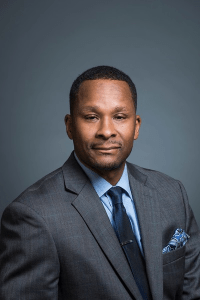
Mark C. Hopson Profile

ProfilesMark C. Hopson, Ph.D. (2005, Ohio University) is associate professor of intercultural communication at George Mason University, and director of African and African-American studies.

He teaches undergraduate and graduate classes in African American Studies, Intercultural Communication, the Rhetoric of Social Movements, Rhetorical Traditions, and Organizational Communication. His research and publications include critical intercultural communication, rhetoric, diversity, and the communication of violence prevention.

Dr. Hopson served as Chair of the International and Intercultural Division of the National Communication Association (2017). Additionally, he is a committee member for Research on Black Male Achievers, National Guide Right Program (since 2015). Most recently he served as Director of the PhD Program in the Department of Communication (2014 – 2017).

Previous assignments include Chair of the African American Communication and Culture Division/NCA (2008); Communication Specialist for GMU’s international collaboration to reduce gang violence in Trinidad and Tobago (2009); Committee member for the Police-Community Relations Project at GMU (2013); and Co-director of Campus Climate Committee at GMU (2014).

Dr. Hopson facilitates Changing Lives Through Literature (CLTL) for Fairfax County Public Libraries. CLTL is a nationally recognized alternative sentencing program for juvenile offenders. Additional workshops and facilitations include relationship abuse, sexual assault and violence prevention provided to more than 6,000 learners.

Recent awards include the 2018 Community Service Award from the Dulles-Leesburg (VA) Alumni Chapter of Kappa Alpha Psi Fraternity; the 2011 Spirit of Martin Luther King Award, George Mason University, Fairfax, VA; and contributor to R. L. Jackson’s (Ed.) Encyclopedia of identity (Sage) awarded 2011 Outstanding Resource at the Winter Conference of the American Library Association.

Link between Climate Change and Conflict in Syria

“There is evidence that the 2007−2010 drought contributed to the conflict in Syria. It was the worst drought in the instrumental record, causing widespread crop failure and a mass migration of farming families to urban centers. Century-long observed trends in precipitation, temperature, and sea-level pressure, supported by climate model results, strongly suggest that anthropogenic forcing has increased the probability of severe and persistent droughts in this region, and made the occurrence of a 3-year drought as severe as that of 2007−2010 2 to 3 times more likely than by natural variability alone. We conclude that human influences on the climate system are implicated in the current Syrian conflict.”

Source:
Colin P. Kelley, Shahrzad Mohtadi, Mark A. Cane, Richard Seager and Yochanan Kushnir.  2015. Climate change in the Fertile Crescent and implications of the recent Syrian drought. Proceedings of the National Academy of Sciences, published ahead of print March 2, 2015, doi:10.1073/pnas.1421533112.

A month of tolerance in Belgian schools

Belgium’s response to intolerance is one example of applied intercultural dialogue:

“After the attacks in Paris and in Copenhagen, Belgium launches “the month of tolerance”, the Francophone Education Minister Joelle Milquet said. She announced that during the month of March there will be an intensification of the initiatives aiming to promote intercultural dialogue in the schools of Wallonia and Brussels. External partners, including journalists, along with lawyers and the Movement against Racism, Anti-Semitism and Xenophobia, will support teachers in activities aimed at promoting dialogue of young students on democracy, terrorism, freedom of expression and intolerance. An initiative that through videos, documentaries, theater and more will try to inform students on the  current events by spreading the values of intercultural and interreligious dialogue.”

Original publication: Battista, Paola. (24 February 2015). A month of tolerance in Belgian schools.

Critical Studies on Food in Italy (Summer 2015)

Gustolab Institute Center for Food and Culture is offering:
CRITICAL STUDIES ON FOOD IN ITALY
in cooperation with the University of Massachusetts-Amherst
DURATION 5-WEEK Full Immersion Summer Program
WHEN 18 MAY 2015 – 20 JUNE 2015
WHERE Rome Italy
The program is open to all majors, and all students, degree-seeking or not.

https://vimeo.com/gustolabinstitute

COURSES OFFERED
Critical Studies on Food Culture (3 credits)
Food media, communication and trends (3 credits)
Food, Nutrition and Culture in Italy (3 credits)
Elementary Italian Language UMASS ITAL 110 (3 credits)
Italian Lexicon for Food Studies (3 credits)

If you have any questions or to request an application, please write to info@gustolab.com

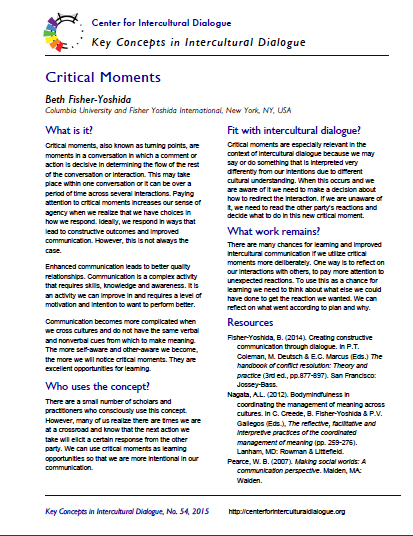
Key Concept #54: Critical Moments by Beth Fisher-Yoshida

Key Concepts in ICDThe next issue of Key Concepts in intercultural Dialogue is now available. This is KC54: Critical Moments by Beth Fisher-Yoshida. As always, all Key Concepts are available as free PDFs; just click on the thumbnail to download. Lists organized  chronologically by publication date and numberalphabetically by concept in English, and by languages into which they have been translated, are available, as is a page of acknowledgments with the names of all authors, translators, and reviewers.

Key Concept #54: Critical moments by Beth Fisher-Yoshida

Fisher-Yoshida, B. (2015). Critical moments. Key Concepts in Intercultural Dialogue, 54. Available from: https://centerforinterculturaldialogue.org/wp-content/uploads/2015/03/key-concept-critical-moments.pdf

The Center for Intercultural Dialogue publishes a series of short briefs describing Key Concepts in Intercultural Dialogue. Different people, working in different countries and disciplines, use different vocabulary to describe their interests, yet these terms overlap. Our goal is to provide some of the assumptions and history attached to each concept for those unfamiliar with it. As there are other concepts you would like to see included, send an email to the series editor, Wendy Leeds-Hurwitz. If there are concepts you would like to prepare, provide a brief explanation of why you think the concept is central to the study of intercultural dialogue, and why you are the obvious person to write up that concept.


Creative Commons License
This work is licensed under a Creative Commons Attribution-NonCommercial-NoDerivatives 4.0 International License.

ICA Regional Conference: Responsible Communication and Governance (Denmark)

Deadline to apply: 15 April 2015
The 2015 ICA Regional Conference is organized by the Copenhagen Business School’s (CBS) Department of Intercultural Communication and Management (ICM), in agreement with the International Communication Association, and co-sponsored by different institutions and associations. The theme reflects the communication field’s and the department’s expanding research expertise in areas such as corporate social responsibility, sustainability, governance, and communication.

General theme: Responsible Communication and Governance
The goal of the ICA Regional Conference is to stimulate reflection on and discussion about how responsibility is organized and communicated across a variety of contexts and settings, including social, political, intercultural, corporate, health, and interpersonal communication, amongst other contexts. In particular, the conference focuses on how responsibility emerges in communication, how it shapes and is shaped by social and organizational practices, and how it develops as a social and political ideal at the intersection between governance, talk, and action.

The theme reflects the communication field’s ongoing commitment to examine, critique and shape the shifting roles and responsibilities that we face in regional and global contexts. We welcome extended abstracts for paper and panel submissions that discuss how responsibility is informed and shaped by communication and governance practices either within a particular context or setting (e.g., an organization, the media, a country, a political party) or as it plays out in various processes such as:

  • Meaning and sense making
  • Talk and action
  • Policy making
  • Materiality
  • Transnational movements
  • Sustainability and Corporate Social Responsibility
  • Internet policies and infrastructures
  • Crowdsourcing and open access to information
  • Grassroots organizing
  • Environmental sustainability
  • Engaged scholarship

Keynote speakers:
Professor Linda Putnam, University of California, Santa Barbara
Professor Lilie Chouliaraki, London School of Economics
Professor Mette Morsing, Copenhagen Business School.

Eligibility:
You do not need to be an ICA member to submit an abstract for the conference.

Extended Abstract Submission:
Abstracts will be subject to masked competitive review. Authors’ names and affiliations should be submitted in a separate document with full contact information. Extended Abstracts should not exceed 1,200 words, excluding references, tables, figures, and/or appendices.

Panel Submissions:
We will also consider proposals for full panel sessions- in this case please include a brief panel description along with three paper abstracts. Authors’ names and full contact information should be included in the panel submission. Panel proposals should not exceed 1,200 words, excluding title page with contact information, references, tables, figures, and/or appendices.

“RESEARCH ESCALATOR” Papers:
Research Escalator Papers are in an extended panel session, which provides an opportunity for less experienced researchers to discuss and get feedback from more veteran scholars about a paper-in-progress (with the goal of making the paper ready for submission to a conference or journal). Those interested in the Research Escalator session should submit an extended abstract (2-3 double-spaced pages, plus references); if accepted, participants are expected to send the full paper to the scholar(s) assigned to their paper no later than 6 weeks before the convention. Anyone can submit an abstract for the Research Escalator session;  however, we especially encourage graduate students and/or people inexperienced with the journal publishing process to submit. On the first page of the extended abstract, please make a note: CONSIDER FOR RESEARCH ESCALATOR SESSION. Please contact Sanne Frandsen for additional information.

Submission:
Please email abstracts attached as a .doc, .docx, of pdf file.

Abstract Decision Notifications:
Decision notification will occur by 15 May 2015. If your paper is accepted for presentation at the 2015 ICA Regional Conference in Copenhagen, you will be notified and must then register for the conference and pay the conference fee. Payment of the conference fee confirms your intent to participate in this ICA Regional Conference. Submission of your abstract does not enroll you as an ICA member, or automatically register you for the conference itself.

Conference Language and Equipment for Presentations:
Conference presentations will be in English. Audiovisual equipment for presentations will be provided.

Location:
Copenhagen Business School campus. All events, with the exception of one dinner will occur on campus. Hotel, transportation, and local attraction information is available on the website.

Schedule:
The conference will begin Sunday, October 11 at 15:00 and end with lunch on Tuesday, October 13. A more detailed schedule will be posted on the website as soon as the submissions are finalized.

Registration Costs:
Registration: DKK 2,500.- (approx. EUR 330.-)
Onsite registration: DKK 3,500.- (approx. EUR 464.-)
Student registration: DKK 1,500.- (approx. EUR 200.-)
Student onsite registration: DKK 2,500.- (approx. EUR 330.-)

The registration fees include all breakfasts, lunches, receptions, and special dinner at Carlsberg including beer menu with other beverages available.

Save

CFP ESTIDIA: Dialogue as Global Action conference (Romania)

Call for Papers
ESTIDIA (European Society for Transcultural and Interdisciplinary Dialogue)
Dialogue as Global Action: Interacting Voices and Visions across Cultures
25-26 September 2015
Department of Modern Languages for Specific Purposes and Communication Sciences
‘Ovidius’ University, Constanţa, Romania
in partnership with: University of Cyprus, Nicosia; Zayed University, UAE; University of Bucharest, Romania (Faculty of Journalism and Communication Sciences); ISA (International Sociological Association); AISLF (Association Internationale des Sociologue de Langue Française)

Ovidius University (Constanţa, Romania), a modern and vibrant research university on the Black Sea coast, welcomes dialogue-oriented researchers and practitioners to the 3rd ESTIDIA conference, to be held on 25-26 September, 2015. The conference serves as a discussion forum for researchers and practitioners to showcase their dialogue-oriented work on current societal and community-related issues, and on methodological approaches to dialogue analysis. The aim is to bring together senior and junior scholars and practitioners from a wide range of disciplines and professional orientations to critically explore, through dialogue, different perspectives on human thinking, communication strategies, interpersonal relations, socio-cultural traditions, political processes and business interactions by means of theory-based and practice-driven investigations.

Conference Theme
Due to its engaging, emulating and exploratory nature, dialogue is an essential form of human communication, action and interaction. According to Vygotsky (1978), any true understanding is dialogic in nature. As social human beings, we participate in a wide range of dialogues in various contexts and at different levels, in a shared search for increased understanding of issues and phenomena, for questioning ideas and actions, for joint problem-solving. These multi-layered dialogues have dramatically increased with the widespread use of social media, which now enable members of any social, gender, ethnic, racial or cultural group to raise and make their voices heard while articulating current concerns and addressing critical issues of inequality, discrimination, socio-political underrepresentation and misrepresentation. The aim of this conference is to take the local and global dialogue to a higher level by extending its scope and empowering role as a springboard for critical reflection and self-reflection, for in-depth issue problematisation, for multi-voiced interpersonal resonance, for constructive polyphony of intersecting, contradictory and complementary voices. In the Bakhtinian (1981) theoretical tradition, these social voices not only represent the world, they also convey societal norms and moral values. In other words, multiple voices express not only how people see the world, but also how they feel about it.

For a better understanding of how meaning is created through the mechanisms and strategies of dialogue, it is important to investigate how voices are woven in discourse, how themes and voices intermingle in a polyphonic way. One way of understanding the shifting qualities of individual voices as multiple agencies or roles is provided by Goffman’s (1981) concept of participation framework (based on the distinction between author, animator and principal). At the same time, as has been pointed out by Couldry (2010), having a voice is not enough: we need to know that our voice matters, i.e. it has legitimacy. Hence, following Wertsch (1991), we need to realize that in internalizing forms of social interaction, the individual takes on and interrelates with the voices of others, which accounts for the complexity of ‘multivoiced’ dialogues. While joining in a dialogic polyphony of voices, each voice shares a particular experience, viewpoint, or sets of attitudes to reality, all of which are instrumental in shaping actions, interactions and relationships. As a result, dialogue is the locus where different beliefs, commitments, ideologies come into contact and confront each other through the intermediary of intersecting voices.

Authors are invited to present papers on a broad spectrum of research topics (both discipline-specific and multi-disciplinary) that include, but are not restricted to the following:
– Glocal voices in inclusive or exclusive dialogues
– Multiple voices crisscrossing in online dialogue
– Voicing viewpoints in multimodal communication
– Dialogue genres in multi-party interactions (debates, disputes, controversies)
– Voices in dialogue across time and space
– Converging vs. diverging voices in dialogue
– Gendering voices in public and/or private dialogue
– Voices shaping inter-ethnic dialogue
– Voices interacting in cross-cultural dialogue
– Voices that clash, dialogues that break down
– Voices in institutional and non-institutional dialogue
– Inclusive vs. non-inclusive dialogue across cultures and continents
– Public and private voices in sustained dialogue
– Face-to-face and/or virtual trust-building dialogues
– Speaker roles vs. listener roles in dialogic interactions
– Competing and collaborative voices in dialogue
– Legitimizing and delegitimizing voices in dialogue
– Polyphony of voices in harmonious or disharmonious dialogue
– Intertextuality in multi-voiced dialogue

We welcome contributions from diverse fields of enquiry, including linguistics, media studies, journalism, cultural studies, psychology, rhetoric, political science, sociology, pedagogy, philosophy and anthropology.

Keynote speakers
-Prof. Cornelia Ilie, Zayed University, UAE
-Prof. Jonathan Clifton, Université de Valenciennes, France

Thematic Workshops
One thematic workshop has already been set up:
Workshop on “Multiple Visuals, Multiple Visions: Dialogue of signs and sign systems; Multimodality” (presentations in both English and French)
Chair: Prof. Daniela Rovenţa-Frumușani (University of Bucharest, Romania)

Abstract Submission
We invite submissions of abstracts for paper presentations (20 minutes for presentation, to be followed by 10 minutes for questions) to be scheduled in parallel sessions. The abstract should include the name, institutional affiliation and email address of the author(s), the paper title, and four-five keywords. The abstract should be approximately 500 words in length. All abstracts will be peer-reviewed by the conference scientific committee according to the following criteria: originality and/or importance of topic; clarity of research question and purpose; data sources; theoretical approach; analytical focus; relevance of findings if already available.

Workshop Proposal Submissions
In addition to paper presentations, thematic workshops are being planned within the framework of the ESTIDIA 2015 conference. Proposals for workshops are invited. They should cover a topic of relevance to the theme of the conference. Proposals should contain relevant information to enable evaluation on the basis of importance, quality, and expected output. Each workshop should have one or more designated organizers. Proposals should be 1-2 pages long and include at least the following information:
– The workshop topic and goals, their significance, and their appropriateness for ESTIDIA 2015
– The intended audience, including the research areas from which participants may come, the likely number of participants (with some of their names, if known)
– Organizers’ details: a description of the main organizers’ research and publication background in the proposed topic; and complete addresses including webpages of the organizers

Important Dates
– Submission of abstracts      March 29, 2015
– Submission of workshop proposals    April 10, 2015
– Notification of acceptance     April 26, 2015
– Registration (early bird)    July 31, 2015

Email submission to:
Ana Maria Munteanu
Olivia Chirobocea

Registration fee
The early bird registration fee (by 31 July 2015) is 70 EUR, late registration fee (after 31 July 2015) is 80 EUR. The ESTIDIA membership fee (10 EUR) will be paid at the conference venue. The conference fee includes the book of abstracts, the published conference proceedings, a conference bag, a welcome cocktail, refreshments/coffee breaks and a guided sightseeing tour of Constanţa.

Account holder: ‘Ovidius’ University of Constanța
Bank: BCR Sucursala CONSTANȚA, Train, 68, Constanţa, Romania
SWIFT Code: RNCBROBU
IBAN Code:
RO28RNCB0114032053160001/ EUR
RO71RNCB0114032053160003/ USD

Publication procedure
All accepted papers (following editorial review) will be included in the conference proceedings published in International Journal of Cross-cultural Studies and Environmental Communication (ISSN 2285 – 3324). Authors of selected high quality papers will be invited to submit their papers for publication in Special Issues and regular issues of relevant high-impact international academic journals.


Fulbright Award Opportunities in Communication

The Fulbright Scholar competition for academic year 2016-2017 is now open. Specific opportunities in Communication are available this year in Ghana, Finland, Swaziland, Bulgaria, and Ukraine, but there are another 400 opportunities for which Communication scholars can potentially compete, since many leave the specialization open. The current competition will close on August 3, 2015. A description of the activities of some of those who have completed Fulbrights in Communication has previously been posted to this site. (If you have completed a Fulbright in Communication and would like to have your name and description added, contact CID.)

CFP Cultural Mapping: Debating Cultural Spaces and Places (Malta)

Call for Papers & Posters
Cultural Mapping: Debating Cultural Spaces and Places conference
22nd-23rd October 2015
Malta

Abstracts due Friday, March 27, 2015

The Valletta 2018 Foundation, responsible for implementing the European Capital of Culture (ECoC) project in Valletta and Malta in 2018, will be holding the Second International Conference on Cultural Relations in Europe and the Mediterranean. The conference is titled ‘Cultural Mapping: Debating Spaces and Places’ and will bring together academics and practitioners to exchange experiences and debate cultural mapping practices, as well as to explore practical and conceptual approaches to cultural mapping within a global context (with a particular emphasis on the Euro-Mediterranean context). The conference will seek to develop a better understanding of how various mapping practices are developing over time. The Valletta 2018 Foundation will be collaborating with the Centre for Social Studies, University of Coimbra.

Academics, researchers, artists and PhD students are invited to present papers or posters discussing their work within this field or addressing the conference themes, during the conference. Abstracts (400 words) are to be submitted via email by no later than Friday 27th March 2015. Conference proceedings will be published in due course.