King’s College London: Postdoc in Relational Harm – Conflict Studies (UK)

Postdocs

Postdoctoral Research Associate: Relational Harm – Conflict Studies, Social Science and Public Policy, King’s College London, UK. Deadline: 11 July 2025.

King’s College London welcomes applications for a Postdoctoral Research Associate (PDRA) in Conflict Studies to work on the project Relational Harm: Targeting the Family in War and Oppression. The PI is Dr Rebekka Friedman, and the project is an ERC-funded Consolidator Grant. The PDRA position is for a 30-month duration starting in January 2026 and will be based in the Department of War Studies.

The PDRA in conflict studies will contribute to the project’s conceptual pillars and to its field research. The PDRA in Conflict Studies will have qualitative and quantitative skills. The PDRA in Conflict Studies will work on mapping relational harm. This will involve looking at when and where family separation occurs in war and counterinsurgency and when youth are targeted or removed from their families and communities. This will include examining existing databases on violence and conflict.

Each PDRA will also oversee and conduct field research in one of the project’s contemporary case studies. PDRAs will use qualitative methods to conduct fieldwork, and to analyse and write up research outputs.

The project examines ‘relational harm’, defined in the project as harm that individuals and communities experience through the targeting and control of their intimate relationships. The project will focus on the forced separation of families as a significant form of relational harm, particularly in the context of state enforced disappearances. It will examine the impact of forced separation on families and communities and will assess why states carry out forced separation during war and counterinsurgency. The project will focus on lived experiences and the wider ongoing political, social, economic, and psychological legacies of relational harm and ambiguous loss. It will look at gendered and intergenerational dimensions and will examine family and family life as fundamental to the waging and experience of war.

The project is interdisciplinary and will utilize mixed methods. The project will have three contemporary case studies: Sri Lanka, Peru, and the Rohingya community (in Bangladesh). The project will also involve archival research into family separation and reunification in the World War Two period.

CFP (Up)Rooted: Autoethnographies of Belonging and Place

“Publication

Call for chapter proposals: (Up)Rooted: Autoethnographies of Belonging and Place. Deadline: chapter proposal and biography by 16 June 2025.

Editors: Curtis Ladrillo Chamblee, Robin M. Boylorn, & Emma Frances Bloomfield

The edited volume, (Up)Rooted: Autoethnographies of Belonging and Place, seeks to explore the lived experiences of belonging, uprootedness, boundaries, and borders through autoethnographic storytelling. Editors invite contributions that reflect on how individuals wrestle with identity, justification for occupying space, and the fluidity of place within political, cultural, and environmental climates. To feel (up)rooted manifests as physical (such as immigration, relocation, or occupation of certain spaces), financial (such as job loss, insecurity, or economic stress), and/or psychological (such as trauma, discrimination, social injustices, and upheaval of social norms).

In particular, they are interested in how built, natural, and cultural environments shape our sense of self and community. This volume will serve as a reflection on this critical moment, inviting scholars to examine how uprootedness, migration, institutional belonging, and the forces of exclusion and inclusion define our realities. This volume asks: How do we define belonging when everything feels at stake? How do place, space, and identity intersect in ways that root us—or uproot us—within institutions, communities, families, and geographies?

CFP: eLearning Forum Asia 2025: Digitalization of Learning Toward Diversity, Equity & Inclusion (Thailand)

ConferencesCall for proposals: eLearning Forum Asia 2025: Digitalization of Learning Toward Diversity, Equity & Inclusion, 14-15 August, 2025, Bangkok, Thailand. Deadline: 5 June 2025.

Sub-themes:
* Digital instructional & assessment strategies
– Global perspectives in virtual classrooms
– Adaptive learning
– AI enhanced learning experiences
* Nurturing employability & essential skills in digital age
* Lifelong learning in digital age
– Faculty development for digital age
-Professional development (upskill, reskill, new skill) in digital age
* Democratizing/Open education for equity

Elizabeth Root Profile

Profiles

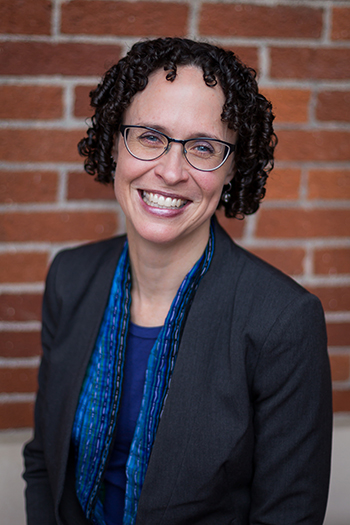
Elizabeth Root is an associate professor of intercultural communication in the School of Communication at Oregon State University, and holds a PhD from the University of New Mexico.

Elizabeth RootShe began her career as an English as a second/foreign language teacher. Besides teaching refugees, immigrants, and international students in Minnesota, she also taught conversational English classes in both China and South Korea for seven years. Her experience working with international students prompted her to return to graduate school to study intercultural communication. Research during her PhD program took her back to South Korea to collect narrative data exploring the intercultural relationships between native-English-speaking teachers and Korean students in a classroom setting. This branch of her research explores how the hegemony of English has impacted foreign language classrooms. Ideological beliefs attached to English influence how cross-cultural adaptation occurs in complex and uneven ways. She has also examined perceptions of agency of English speakers within the context of English hegemony. Another branch of Elizabeth’s research is focused on intercultural communication pedagogy. She employs qualitative research to study teacher identity and students’ descriptions of intercultural learning. Deeper intercultural learning occurs through acknowledgement of dialectical tensions as students navigate cultural differences and similarities.

Research publications on English hegemony:

Root, E. (2022). “English is my knight”: Descriptions of perceived agency within the hegemony of English. Intercultural Communication, 31(2), 57-72.

Root, E. (2018). “English Fever” in South Korea: Examining English as the language of globalization through the lens of intercultural praxis. In W. Jia (Ed.), Intercultural communication: Adapting to emerging global realities (2nd ed., pp. 261-278). Cognella.

Root, E. (2016). Cultural adjustment from the other side: Korean students’ experiences with their sojourner-teachers. China Media Research, 12(1), 35-45.

Root, E. (2012). Participation in and opposition to the ideology of English in South Korea: Insights from personal narratives. Asian EFL Journal, 14(3), 178-213.

Root, E. (2009). “I’m just a foreign teacher doing my job”: Ways in which discursive constructions mask an ideology of English in South Korea. NIDA Journal of Language and Communication, 14(14), 57-80.

Research publications on intercultural communication pedagogy:

Root, E. (2018). Staging scenes of co-cultural communication: Acting out aspects of marginalized and dominant identities. Communication Teacher, 32(1), 13-18. DOI: 10.1080/17404622.2017.1372617

Root, E. (2014). Definitions of an intercultural encounter: Insights into “Internationalization at Home” efforts. The Northwest Journal of Communication, 42(1), 35-60.

Root, E. (2013). Insights into the differences—similarities dialectic in intercultural communication from university students’ narratives. Intercultural Communication Studies, 22(3), 61-79.

Root, E., Hargrove, T. D., Ngampornchai, A., & Petrunia, M. D. (2013). Identity dialectics of the intercultural communication instructor: Insights from collaborative autoethnography. Intercultural Communication Studies, 22(2), 1-18.

Root, E., & Ngampornchai, A. (2012). “I came back as a new human being”: Student descriptions of intercultural competence acquired through education abroad experiences. Journal of Studies in International Education. doi:10.1177/1028315312468008


Work for CID:

Elizabeth Root wrote ICD Exercise 8: Exploring Layers of Identity Through Interviews.

U Cambridge: Senior Research Associate for Cambridge Positive Peace Education Hub (UK)

“Job
Senior Research Associate, Cambridge Positive Peace Education (CPPE) Hub, University of Cambridge, UK. Deadline: 1 June 2025.

The University of Cambridge Faculty of Education is seeking a highly motivated and experienced Senior Research Associate (SRA) to lead key aspects of the new Cambridge Positive Peace Education (CPPE) Hub. At a time of rising global conflict, the CPPE Hub aims to make a significant contribution to knowledge and practice in the field of peace education. It will do so by building upon Professor Hilary Cremin’s Positive Peace Education Learning Objectives and two recent positive peace education projects in Kazakhstan and the UK. The CPPE Hub will enhance and scale-up this work by conducting a global peace education needs assessment, implementing case studies in two countries, and developing peace educator and education leader networks.

The findings from this research will be used to create a Positive Peace Education Framework and Curriculum, including a suite of resources to support peace education integration into classrooms, school districts, and national curricula. The collective work of the project will be shared on an interactive digital platform, the CPPE Digital Hub, that will serve as a lasting legacy of the project and help maximise its global reach.

In alignment with the UN’s Sustainable Development Goals (SDGs) and UNESCO’s recent call to prioritise peace in education, this project will conduct needed research, bring key global peace education actors into dialogue and collaboration with one another, and make impactful peace education resources more accessible ¿ leading to an array of positive impacts for learners, their communities, countries, and the planet.

U of Leeds: Head of International Business Department (UK)

“JobHead of the International Business Department, Leeds University Business School, University of Leeds, Leeds, UK. Deadline: 6 June 2025.

Leeds University Business School is looking for an experienced academic, highly respected in the field of International Business, who can provide the vision and leadership necessary to manage a programme of strategic development in the International Business Department. As the Head of Department, you will create a culture in which people are inspired, motivated and developed to achieve their full potential. You will lead the International Business Department to deliver world-leading research and an exceptional student experience in an international and interdisciplinary context.

As an active member of the University’s Leadership Forum and the Faculty Executive Group, you will promote a coordinated approach to delivering innovative strategic academic development. You will be taking on a significant and complex leadership role in the Faculty. You must be able to work collaboratively and lead with a clear vision, engaging others across the Department, Faculty and University.

You will have an inspirational and inclusive leadership style with demonstrable change management skills, ambition and creativity to drive and embed a positive culture supporting our values and taking forward the development and delivery of the School’s academic strategy and objectives. You will thrive on working collaboratively in a busy and dynamic environment to enhance the reputation of the School with a focus on quality and excellence.

Academic credibility is essential. You will have a sustained track record of excellence in research and student education, combined with exceptional leadership and management capabilities alongside an international reputation as an authority in a relevant field. You will be able to demonstrate commitment to nurturing an inclusive environment for students and staff, alongside a personal commitment to our values of collaboration, compassion, inclusivity and integrity.


Marjorie Boulton Fellowships 2025 (USA)

FellowshipsMarjorie Boulton Fellowships, Esperantic Studies Foundation, Washington, DC. Deadline: 1 June 2025.

The Esperantic Studies Foundation (ESF) announces its 2025 competition for research fellowships in all fields of the humanities and social sciences, particularly as they relate to interlinguistics, linguistic justice, intercultural communication, Esperanto, and related phenomena. Interdisciplinary work is welcome, and primary disciplines might include, but are not limited to, linguistics, sociology, history, anthropology, communication, or media studies. Open to candidates worldwide, with a preference for candidates in North America and the global south, the fellowships may be held concurrently with other awards or fellowships and are non-renewable.

Awards of $10,000 USD may be given in each of two categories: Doctoral and Post-doctoral research. See below for eligibility requirements.

Category 1. Doctoral Research for students engaged in or about to begin their doctoral dissertations. Eligibility: Applicants must be admitted to candidacy for a research doctoral degree at an accredited university, in good standing in their programs, and considering or embarked on an original research project that will make a significant contribution to the field.

Category 2. Post-doctoral Research for scholars who have recently completed their dissertations, to support related research and publication. Eligibility: Applicants must be no more than five years beyond receiving the Ph.D and propose an original, significant research project; it can be either an extension of the dissertation or a new program of research.

Stellenbosch U: Webinar on African Perspectives on Intercultural Competence (South Africa but online)

EventsAfrican Perspectives on Intercultural Competence. UNESCO Chair on Intercultural Competences, Stellenbosch University, South Africa.

The UNESCO Chair on Intercultural Competences hosted by Stellenbosch University is pleased to announce a monthly webinar series on “African Perspectives on Intercultural Competence.”

The May monthly webinar will be held on 22 May 2025, 15:00 Central African Time (CAT): “Fostering Intercultural Competencies Through Culture and Arts Education in Africa” presented by Chief Moomen (Ghana), Poet, playwright and creative producer; and Jill Pribyl (Uganda), UNESCO Chair of Dance for Global Citizenship Education. Moderated by Cristina Cusenza of UNESCO. Open to all interested colleagues. Register here.

The July webinar will be held 24 July 2025: “Intercultural Competences for Peacebuilding in Africa: Road to Global Peace,” presented by Dr. George Mutalema, founding director of the Africa Peace and Development Network. Register here.

CFP: FMSH: Bibliothèque allemande (France)

“Publication

Call for proposals: Collection Bibliothèque allemande, Fondation Maison des Sciences de l’Homme, Paris, France. Deadline: 31 May 2025.

To foster intellectual exchange between France and German-speaking countries, the Fondation Maison des Sciences de l’Homme, supported by the Goethe-Institut Paris, the German Academic Exchange Service, and the Centre Georg Simmel – Franco-German Research in the Social Sciences, in collaboration with the École des hautes études en sciences sociales in Paris, promotes the translation of significant German-language contributions in the humanities and social sciences into French.

The « Bibliothèque allemande » collection, published by the Éditions de la MSH rcompiles key texts from the humanities and social sciences that have made fundamental contributions to academic discourse in their respective fields. The translation program aims to make important scholarly works from German-speaking countries accessible to a French-speaking audience.

The program seeks monographs (up to 800,000 characters) that have had a significant impact on intellectual thought and academic debate in German-speaking countries in recent years or offer innovative and original responses to current issues. The works should appeal to a broad, intellectually curious readership; purely qualification-based works (such as PhD theses) are excluded.

CFP: Globalisation in Languages, Education, Culture & Communication (UK)

ConferencesCall for proposals: Globalisation in Languages, Education, Culture, and Communication, 30-31 July 2025, Manchester, UK. Deadline: 18 May 2025.

The first International Conference on Globalisation/Deglobalisation in Languages, Education, Culture and Communication (GLECC2025) is going to be held 30-31 July, 2025, Manchester, UK., with pre-conference workshops on 29th July and post-conference cultural visits on 1st August.

The past two decades have witnessed remarkable advancements in the studies into Education, Second and Foreign Languages, Translation and Interpreting, Cultural Studies, and Communication. This growth, evident in both the number of active researchers and the volume of scholarly throughput and outcomes, can be largely attributed to the forces of globalisation. Consequently, adopting the globalisation perspective is timely and provides a natural framework for connecting these diverse yet interlinked disciplines.

GLECC2025 aims to bring together researchers, educators, practitioners, and policymakers from the realms of education, foreign and second languages, cultural studies, translation, interpreting, and communication to disseminate research outcomes, share insights, discuss findings, exchange visions, and identify challenges and trends in an interactive and immersive multidisciplinary environment.