U Pennsylvania: Mellon Postdoc in Humanities (USA)

PostdocsAndrew W. Mellon Postdoctoral Fellowship in the Humanities, Wolf Humanities Center, University of Pennsylvania, Philadelphia, PA. Deadline: October 15, 2019.

The Wolf Humanities Center awards five (5) one-year Andrew W. Mellon Postdoctoral Fellowships each academic year to junior scholars in the humanities who are no more than five years out of their doctorate. Preference will be given to candidates not yet in tenure track positions, whose proposals are interdisciplinary, who have not previously enjoyed use of the resources of the University of Pennsylvania, and who would particularly benefit from and contribute to Penn’s intellectual life.

The programs of the Wolf Humanities Center are conceived through yearly topics that invite broad interdisciplinary collaboration. For the 2020-2021 academic year, the topic will be CHOICE.

The Fellowship carries a stipend of $57,900 plus a $3000 research fund and single-coverage health insurance (fellows are responsible for coverage for any dependents). Fellows teach one undergraduate course in addition to conducting their research.

Tasha Souza Profile

ProfilesTasha Souza is the Associate Director for the Center for Teaching and Learning and Professor of Communication at Boise State University.
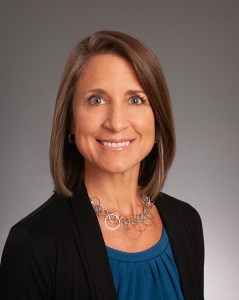
Tasha Souza

Most recently, she was the Faculty Associate for Inclusive Excellence for Humboldt State University and a Fulbright scholar at the University of the West Indies in Barbados. Previously, she was the founding Faculty Development Coordinator for HSU’s Center for Excellence in Learning and Teaching (CELT) and also served as an Instructional Consultant at the Center for Instructional Development and Research (CIDR) at the University of Washington. She has published in the areas of difficult dialogues in the classroom, addressing microaggressions with microresistance, service-learning pedagogy, discussion-based teaching, multicultural education, instructional communication, and intercultural conflict. Her current research is on difficult dialogues, participation, and stereotype threat in the college classroom.

Dr. Souza teaches and consults. She has taught a variety of courses in communication, women’s studies, and business and has taught in 5 different countries. She is a consultant on communication and pedagogy broadly and has provided workshops and/or consultation services at over 20 institutions of higher education in the U.S. and abroad. She has also consulted outside of higher education with organizations such as the Yurok Tribe, Johnson Wax, Girls Inc., M & M/Mars, First 5, Clorox, Promotions Unlimited, Seattle Department of Public Health, San Jose Recreation and Leisure Department and United Indian Health Services.

Key publications:

Barnes, E., & Souza, T. J. (2019, January 30). Intercultural dialogue partners: Creating space for difference and dialogue. Faculty Focus.

Souza, T.J., & Exah, A. (2018). Preparing program directors for managing student conflict and microaggressions abroad. Diversity Abroad’s Faculty Development Short Course.

Souza, T. J. (2018, April 30). Responding to microaggressions in the classroom: Taking ACTION. Faculty Focus.

Ganote, C. M., Cheung, F., & Souza, T.J. (2016). Responding to microaggressions with microresistance: A framework for consideration. In A. T. Harrell (Ed)., POD Diversity Committee White Paper at the 41st Annual POD Conference (pp. 3-7).

Souza, T.J. (2016). Managing hot moments in the classroom: Concrete strategies for cooling down tension. In Faculty Focus special report: Diversity and inclusion in the college classroom.

Souza, T., Vizenor, N., Sherlip, D., & Raser, L. (2016). Transforming conflict in the classroom: Best practices for facilitating difficult dialogues and creating an inclusive communication climate. In P. M. Kellett & T. G. Matyok (Eds.), Transforming conflict through communication: Personal to working relationships. (pp. 373-395). Lanham, MD: Lexington Books.

Souza, T.J. (2007).  Creating social justice in the classroom:  Preparing students for diversity through service-learning. In J. Calderon (Ed.), Race, poverty, and social justice: Multidisciplinary perspectives on enduring societal issues, (pp. 187-206).  Sterling, VA:  Stylus Publishing.

Souza, T.J. (2003).  Framing equity: Approaches to diversity in the classroom. In S.E. Lucas (Ed.), Selections from the Speech Communication Teacher. Boston, MA: McGraw Hill.

Souza, T.J.  (1996).  Intercultural conflict management. Multicultural Education Journal, 4(2), 4-10.


Work for CID:
Tasha Souza wrote Constructing Intercultural Dialogues #11: Creating Connection Through ICD Partners.

CFP: Indigenous Theorizing

“PublicationCall for Papers: Indigenous Theorizing: Voices and Representation, PRism. Deadline: August 12, 2019.

PRism is an open access peer-reviewed public relations and communication research journal (ISSN 1448-4404).  PRism is devoted to promoting the highest standards of peer review and engages established and emerging scholars globally.

Call for Papers: Special issue: “Indigenous theorizing: Voices and representation.” In this special issue, PRism welcomes rigorous and original contributions that explore Indigenous voice as a space for theorizing communication. They welcome submissions that examine Indigenous/First Nations as participants in the generation of transformative knowledge claims. This can include but is not limited to:

– Indigenous/First Nations communication practices (including traditional forms e.g. storytelling)
– Indigenous/First Nations activism for social justice
– Indigenous/First Nations struggles for voice and sovereignty
– The role of Indigenous/First Nations media for public communication
– Indigenous/First Nations organizational communication with publics/stakeholders
– The use of social media by Indigenous/First Nations for public communication
– The presentation of images, news and/or other information by Indigenous/First Nations
– Media representation of Indigenous/First Nations in public communication

PRism welcomes original research, case studies, theoretical, conceptual and methodological papers relating to the topic, and encourages contributions from Indigenous/First Nations scholars.

KC94 Cross-Cultural Kids

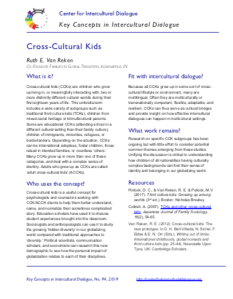
Key Concepts in ICDThe next issue of Key Concepts in intercultural Dialogue is now available. This is KC#94: Cross-Cultural Kids, by Ruth E. Van Reken. Click on the thumbnail to download the PDF. Lists organized chronologically by publication date and numberalphabetically by concept in English, and by languages into which they have been translated, are available, as is a page of acknowledgments with the names of all authors, translators, and reviewers.

KC94 CCKsVan Reken, R. E. (2019). Cross-cultural kids. Key Concepts in Intercultural Dialogue, 94. Available from:
https://centerforinterculturaldialogue.org/wp-content/uploads/2019/06/kc94-ccks.pdf

The Center for Intercultural Dialogue publishes a series of short briefs describing Key Concepts in Intercultural Dialogue. Different people, working in different countries and disciplines, use different vocabulary to describe their interests, yet these terms overlap. Our goal is to provide some of the assumptions and history attached to each concept for those unfamiliar with it. As there are other concepts you would like to see included, send an email to the series editor, Wendy Leeds-Hurwitz. If there are concepts you would like to prepare, provide a brief explanation of why you think the concept is central to the study of intercultural dialogue, and why you are the obvious person to write up that concept.


Creative Commons License
This work is licensed under a Creative Commons Attribution-NonCommercial-NoDerivatives 4.0 International License.

UC Berkeley: Program Coordinator of International House (USA)

“JobProgram Coordinator of International House, University of California, Berkeley, Berkeley, California, USA. Open until filled; posted June 10, 2019; first review June 22, 2019.

International House is a 501 (c) 3 non-profit, self-supporting residential and community-oriented program center located in the southeast foothills of the Berkeley Campus. Since its founding in 1930 with a gift from John D. Rockefeller, Jr., it has housed more than 90,000 residents including two Governors of California and eight Nobel Prize laureates. Its mission is to foster intercultural respect and understanding among people throughout the world across cultural, economic, and ethnic lines. I-House provides nearly 1,100 students and scholars from the United States and around the world with an opportunity to live and learn together during a typical 12 month cycle. I-House’s rich array of programs serves the residents, the campus and local community.

Search is for an energetic and creative student centered professional to support the Resident Engagement Manager in the student affairs arena who has strong and demonstrable leadership skills to join the International House community in a highly team oriented environment. Under the direction of the Resident Engagement Manager, the incumbent will co-supervise, train, and coach student staff and other resident leaders when applicable. Create, organize and maintain the student employee handbook and database with relevant policies, resources and guidelines. Support the design and co-facilitation of the Resident Leadership Retreats and other trainings as needed. Assist the Resident Engagement Manager to identify and implement opportunities for enhancing student leadership development at I-House and the integration of Center for Intercultural Leadership’s professional development and training models in cultural, social, and educational programming.


Cambridge U: Research Associate in Cultural Literacy (UK)

“JobResearch Associate, Faculty of Education, University of Cambridge, UK. Deadline: 1 July 2019. Fixed-term position: 1 September 2019-30 April 2021.

The Faculty of Education at the University of Cambridge wishes to appoint a part-time Research Associate (0.6 FTE) to work on a large-scale EC Horizon 2020 project with ten partners, led by Dr Fiona Maine. The project works in schools across Europe to support the development of young people’s cultural literacy, which is defined as a set of competences and dispositions moving beyond knowledge of European culture into an awareness of one’s own cultural identities and those of others. It will work with teachers from primary and secondary schools to develop a programme of cultural literacy learning, focusing on the development of dialogue and argumentation as children read and respond to visual narratives of European origin.

The successful candidate will be able to demonstrate experience of working with children and young people in schools, recording and analysing classroom discussions, particularly focusing on dialogue. In collaboration with the Project Co-ordinator, they will lead on the collection of data in schools for the Cultural Literacy Learning Programme and work with European colleagues to develop consistent coding approaches for the analysis of classroom dialogue and engage in qualitative and quantitative data analysis activities.

NOTE: There is also a related position for Research Assistant through the same project, which is full-time from September 2019 to August 2020, same deadline for applications.

Carter Center: Senior Associate Directors (USA)

“JobTwo positions currently available, The Carter Center, Atlanta, GA, USA. Deadline: Positions remain posted until they are filled, so check links to see if they are still listed before applying.

Senior Associate Director, Conflict Resolution Program, Carter Center, Atlanta, GA.

Serving as a deputy to the Conflict Resolution Program Director, the Senior Associate Director oversees the implementation of Conflict Resolution program activities.  The Senior Associate Director’s primary responsibilities include: all aspects of project management (design, implementation, and evaluation), fundraising, budget and grant management, staff supervision, and liaising with both Carter Center program and departmental personnel and external stakeholders.  The Senior Associate Director supports the Program Director in setting overall strategy and assures that projects align with the program mission. The Senior Associate Director primarily manages activities for MENA (Middle East and North Africa) region, including track-2 and 1.5 activities, data collection and analysis, conferences, field missions, networking and negotiation/facilitation and other activities. S/He will manage and provide leadership to Atlanta staff and field-based staff and provide direction on short-term missions to countries of potential programmatic interest.  S/He will supervise staff, interns, and volunteers.

Senior Associate Director, Global Access to Information Program, Carter Center, Atlanta, GA.

Serving as the deputy to the Director, the Senior Associate Director oversees the implementation of the Global Access to Information Program’s country programming portfolio. The Senior Associate Director’s primary responsibilities include: all aspects of project management (design, implementation, and evaluation), fundraising, budget and grant management, staff supervision, and liaising with both Carter Center program and department personnel and external stakeholders. The Senior Associate Director supports the Program Director in setting overall strategy and assures that projects align with the program mission.

The Carter Center is a 501(c)(3), not-for-profit, nongovernmental organization founded in 1982 in Atlanta, GA, by former U.S. President Jimmy Carter and his wife, Rosalynn, in partnership with Emory University. The Center has helped to improve millions of lives in more than 80 countries by waging peace, fighting disease, and building hope. The Carter Center is guided by a fundamental commitment to human rights and the alleviation of human suffering. It seeks to prevent and resolve conflicts, enhance freedom and democracy, and improve health.

Calling US Expats Working for MNCs in Brazil

Job adsLeila Valoura has requested a call go out for those who are US expats working for MNCs in Brazil. If that fits your profile, please help her if you can.

“Hello. This is a call for participation in my doctoral research in Education (Organizational Leadership Studies concentration) approved by the IRB at Northeastern University (IRB# CPS19-04-01). The purpose of this study is to explore cross-cultural learning experienced by U.S. expatriates on assignments for multinational corporations (MNC) in Brazil. This study will focus on how participants make meaning of their international assignment experience to develop cross-cultural learning. If you are a U.S. expatriate who has worked or is still working in Brazil and became interested in possibly participating in this research, please contact me for more details about the research. Participation will be online, which means that it can happen regardless of where participants are located. Thank you very much, Leila Valoura.”

MOOC: Gender-Based Violence in the Context of Migration 2019

“MOOCs”The Global Campus of Human Rights (GC) has launched the second edition of its most successful Massive Open Online Course on Gender-Based Violence in the Context of Migration. This MOOC provides participants with knowledge, multiple perspectives and examples of practices that can help them develop and reinforce their critical understanding and effective action in a field that is at the crossroads of gender, migration and human rights studies.

The online course is led by a team of Global Campus Professors from the EMA and APMA Regional Masters in Human Rights and Democratisation. They are joined in the teaching by an international faculty of academics, experts and practitioners, including: Pablo Ceriani Cernadas, former Vice-Chairperson of the United Nations Committee on the Rights of Migrant Workers and Their Families (CMW); François Crépeau, former United Nations Special Rapporteur on the Human Rights of Migrants; Ryszard Cholewinski, Senior Migration Specialist in ILO’s Regional Office for Arab States in Beirut.

The MOOC opens on 10 June 2019. Enrolment is free and available on gchumanrights.org/mooc-gbv until 30 June.

Māori and Chinese, Māori and Pākehā

Applied ICD
This is a story about the formal welcome of an immigrant group (Chinese) into a new homeland (Australia). It ends with a question about broader applications.

On April 27, 2013, the Maori formally welcomed the Chinese community to Auckland at the Taniwha [a mythical being similar to a dragon] and Dragon Festival held on to Ōrākei marae [their ancestral home] to formalise a relationship between the two cultures. There was a pōhiri [formal welcoming ceremony] and festival.

“During the pōhiri, the kaikōrero [speakers] on both sides recounted the long-standing ties between Māori and Chinese families through market gardening, for instance, and sometimes the shared experience of racism. The festival afterwards highlighted common aspects of Māori and Chinese cultures — the significance of tīpuna [ancestors] and traditions, of taniwha [water spirits] and dragons, community dance, kite-flying. And, of course, food.”

After months of careful planning, thousands of people turned up, and the event was a success, with much learning on both sides. Which made Andrew Robb wonder, might it be appropriate and feasible to organize a comparable event for the Pākehā [White New Zealanders of European descent], many of whom have lived in New Zealand for generations, and now recognize the significance of Māori culture, yet never actually came in “through the front gate,” acknowledging the presence of a pre-existing culture.

And that leads to an even broader question: could new ceremonies be created to welcome various groups of immigrants to their new homelands (even if belatedly)? and if so, would they help smooth the integration process, on both sides?

Robb, A. (March 25, 2017). Are Pākehā up for the challenge? E-Tangata.