Cultural Snapshot contest 2014

CULTURAL SNAPSHOT landscape observatory

AWARD CEREMONY 10-13 NOVEMBER 2014:
– First Prize 500€
– Second Prize 300€
– Third Prize 200

“A journey into the world of knowledge of our cultural heritage and traditions with the support of the photograph. A «book on the world» to establish an intercultural dialogue where each photographer/author becomes narrator of his daily life scrutinized, analyzed and described in all its many historical and evolutionary aspects. The pictures tell what we were and what we are: historic monuments, people, art, landscape, music, entertainment and local traditions. Through the photographs will be possible to strengthen the dialogue between peoples, all supported by a unique form of language: the emotion. So the images become the universal language of the «book on the world». All this will be part of baggage in the long path of life that every individual will always bring with him and that will fill each day with new and interesting emotions.” –Olimpia Niglio, Professor of Architectural Conservation, Kyoto University

On the occasion of the 18th General Assembly  ICOMOS 2014 (International Council on Monuments and Sites) to be held in Florence in November 2014, the Life Beyond Tourism® portal is promoting the photo contest:  “Cultural Snapshot!” Through the portal , the Fondazione Romualdo Del Bianco® wants to gather images from all over the world that represent and compare different points of view on heritage and traditional knowledge. We want you to share your world through images. Feel free to use any camera that best represents you and your point of view (phone, digital camera, analog …).

The photo competition will close August 31, 2014 and the public will be able to vote until September 10,  2014. The results will be announced by September 30, 2014. The selected material should be sent for printing by  October 10, 2014.

For further information, go to the CULTURAL SNAPSHOT landscape observatory website.

Paola Giorgis Profile

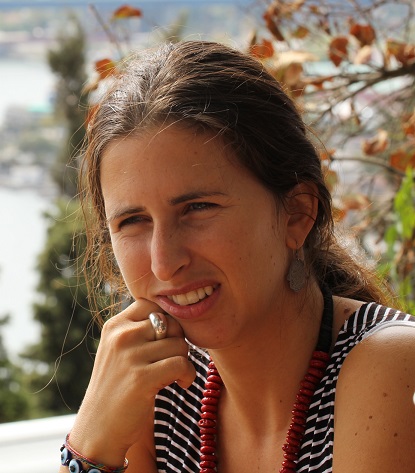
ProfilesPaola Giorgis teaches English Language, Literature and Visual Arts in Italian high schools and holds a PhD in Anthropology of Education and Intercultural Education.
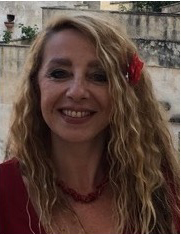
Paola Giorgis

She is co-founder and member of wom.an.ed – women’s studies in anthropology and education. Her main interest interest regards a critical and intercultural approach to Foreign Language Education, that is, how Foreign Language Education can be used to develop an awareness of different languages, representations and cultural conceptualizations able to favor intercultural communication. All through her teaching years, she has observed many episodes which confirm the capability of (foreign) language(s) to foreground many aspects connected both to personal and collective identities, dynamics and representations, displaying how learning and using a non-mother tongue can question, challenge and problematize meanings, assumptions and representations taken-for-granted, thus remoduling the perception and the representation of the self and others. Therefore, she believes that Foreign Language Education should undergo further several radical shifts, definitively abandoning an essentialist view of the target language/culture to foster a more nuanced, and critical, view of the relation between language and culture.

In her PhD research, she investigated cross-linguistic interactions among adolescents in multicultural and plurilinguistic contexts from the perspective of Linguistic Anthropology, Intercultural Education, and Critical Linguistics and Pedagogies. Her findings show that cross-linguistic interactions reshape personal and collective identities, constantly moving and recombining the (narrated) borders of language, identity and ethnicity: bottom-up language practices can facilitate intercultural encounters and create spaces in-between for trans-cultural affiliations, and are also able to reveal aspects linked to language creativity and to the personal agency of speakers as social agents.

She also focuses on the issue of power connected to languages, and on how Critical Pedagogies can address them, examining in particular the challenges and the opportunities advanced by the English language(s). At the intersection of global phenomena and local appropriations, of norms and variations, of homogenization and subversion, English has triggered fierce debates on the linguistic, sociocultural, political, ideological and pedagogical implications of its widespread, but also on the potentially creative and critical appropriations from below that it can elicit. She assumes that, precisely for its multifaceted quality and the controversies it arises, English language(s) can represent the ideal site to observe how individual and collective representations of culture and identity move through language affiliations and appropriations. She is also interested in what could be called ‘Applied Literary Criticism in L2’, as she examines the experience of the literary text in L2, and in particular of Poetry in L2, as an open space for a renewed imagination able to disclose one’s emotions and empathize with others’, in a way less conditioned by memories and (self-appointed or given) roles connected to one’s linguacultural background.

She is affiliated with ALTE (Association of Language Testers in Europe), ESTIDIA (European Society for Transcultural and Interdisciplinary Dialogue), IAIE (International Association for Intercultural Education), I-LanD (Identity, Language and Diversity), lend (linguistica e nuova didattica), Researching Multilingually at the Border, and VAC (Visual Arts Circle). She is referee for Rhetoric and Communications E-Journal, an online journal on Applied Linguistics, and a referee and book reviewer for Intercultural Education, a journal published by Routledge, Taylor & Francis

She has published the monograph Diversi da sé, simili agli altri. L2, letteratura e immaginazione come pratiche di pedagogia interculturale (Different from One’s Self, Similar to Others: L2, Literature & Imagination as Practices of Intercultural Education), Roma: CISU (2013), as well as chapters in collective volumes, articles in international journals, and participated at several international conferences. She has published a book as well:

Giorgis, P. (2018). Meeting foreignness: Foreign languages and foreign language education as critical and intercultural experiences. Lanham, MD: Rowman & Littlefield.

More recent publications:

Giorgis, P. (2025). Otherness/Othering. In • P. Moy (Ed.), Oxford bibliographies in communication. New York, NY: Oxford University Press.

Giorgis, P. (2023). Critical Cultural Linguistics (CCL): Challenging the cultural (re)production of Otherness. In F. Polzehagen & M. Reif (Eds.), Cultural linguistics, ideologies and Critical Discourse Studies. Amsterdam: John Benjamins.

Giorgis, P., & Valente, A. C. (2023). Intercultural Education, Otherness, and Collaborative Literacy. In Other Words Dictionary: A Case Study. In N. Palaiologou (Ed.), Rethinking intercultural education in times of migration and displacement. Newcastle-upon-Tyne: Cambridge Scholars Publishing.

and she co-edited a special issue on Rhetoric of Otherness for Rhetoric and Communications Journal, 50 (2022).

Paola Giorgis may be contacted via email.


Work for CID:

Paola Giorgis is author of KC51: Critical Discourse Analysis, and KC88: Critical Cultural Linguistics, and translator of KC1: Intercultural Dialogue, and KC51: Critical Discourse Analysis into Italian, as well as co-translator for KC14: Dialogue, KC37: Dialogue Listening, KC39: Otherness and The Other(s), and KC81: Dialogue as a Space of Relationship. She also serves as a frequent reviewer for Italian translations.

She has written 3 guest posts: On translation as an intercultural practiceIntercultural communication or post-cultural communication? Reflecting on mistakes in intercultural encounters; and Teaching EFL with a hidden agenda: Introducing intercultural awareness through a grammar lesson.

She was interviewed about critical discourse analysis, translation as an intercultural practice, and intercultural dialogue.

Her students won 2nd place in the 2018 CID Video Competition, and prepared a video about the process, “The Making of…”: A Path between Cultures to help competitors in the 2019 competition. In 2020, a different cohort of students prepared the video We Rise, in response to COVID-19.

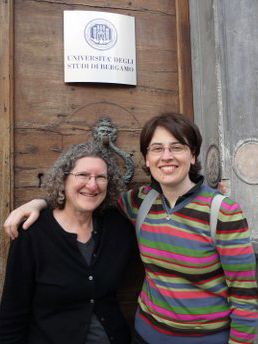
Bergamo (Italy) visit 2014

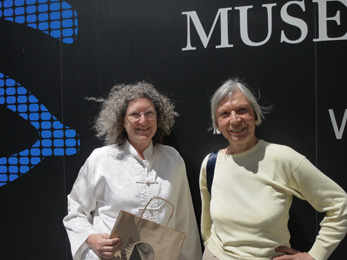
WLH_ManganoOn May 26, 2014, I was able to re-connect with Maria Flora Mangano, one of the participants in the NCA Summer Conference on Intercultural Dialogue, held in Istanbul, in 2009. We have kept in touch, as she has kept in touch with others from that event, but this is the first time we have had the opportunity to meet in person again. It took a bit of travel (I was coming in from Lugano, Switzerland, and she was coming from her home near Rome), but the conversation was worth the effort. Her work will be familiar to regular visitors to this website, as described in her post on A lesson dedicated to the genocide in Burundi: An occasion of dialogue as a space of relationship among cultures.” A chapter of hers is included in Case Studies in Intercultural Dialogue, currently in press with Kendall Hunt, and one of the results of the Istanbul conference.

Although Maria Flora already holds a PhD and has been teaching for many years now, she is currently pursuing further studies at the University of Bergamo, which is why we met there. Much of the University is located in the old city, Bergamo Alta, dating to Roman times, and many of the faculty are housed in historic buildings. This part of the city  is especially impressive, from the funicular ride up the hill on which it rests, to the grand views once you arrive. Many of Maria Flora’s classes are held in a former monastery in the lower city, with a stunning courtyard, also impressive.

Wendy Leeds-Hurwitz, Director
Center for Intercultural Dialogue

Federica Setti Profile

Profiles

Federica Setti holds a PhD in Anthropology and Education at the University of Turin.

Federica Setti


As part of her PhD she has carried out an ethnographic study of education and relationships between Roma and non-Roma among a Sinti family network and in a middle school attended by their teenager children in Trento. She was visiting scholar at the University of Edinburgh, based at STEP (Scottish Traveller Education Programme). She carried out ethnographic research among a Dassikané Roma family network and in a primary school attended by their children in Turin as part of her MA in Cultural Anthropology and Ethnology.

Her research interests include Romani studies; Cultural and Medical Anthropology; Migration studies and Anthropology of Death. She carried out ethnographic research into Moroccan peoples’ migration experiences between Italy and Morocco and an ethnography of mourning processes, related to relatives of patients attended by a palliative care centre in Trento, for her BA degree in Cultural Anthropology and Ethnology. The latter is published in the The Italian Journal of Palliative Care under the title “Processes of Mourning: Ethnography and Life histories in Trentino.” She also concentrated on the history of relationships between majority societies and minorities, particularly through an archival research on the special classes ‘Lacio Drom’ activated in Italy only for those called ‘Gypsies’, with an exonym, published in the article “‘You, Gadže, see school in one way. We, Sinti, see it in another way’: An ethnography of education and school pathways of Sinti and non-Sinti in Trento,” in Trentino’s Archive Journal.

The monograph about her PhD research, titled “In A Matter of Perspectives: Ethnography of Education and of Relationships between Roma and non-Roma” is in publication, in Italian, with the publisher CISU (Rome). Furthermore, the journal articles she wrote related to her PhD ethnography are forthcoming, including “The implications of ‘naming’ on Roma and Sinti right to education and social inclusion: an ethnography of education among a Sinti family network,” prepared for the Special Issue “On the education of Roma, Travelers and ‘occupational nomads’. Research findings and questions that interrogate researchers and educators,” to be published in Intercultural Education Journal.

She was Teaching Fellow, Lecturer and Exam committee member in Anthropology of Education, Intercultural Education and Educational Processes in Multicultural Societies (chair: Professor Francesca Gobbo) at the University of Turin, for four years. She is in the Teachers of Italian as Foreign language’s Province of Trento’s register and taught for three years Italian as foreign language to migrant and Roma students in middle schools. She is a member of the European Academic Network on Romani Studies, the Gypsy Lore Society and the URBA-ROM Network. She is also co-founder and member of wom.an.ed – women’s studies in anthropology and/of education. She is reachable via email.

University of Turin 2014

WLH_GobboFrom May 14-17, 2014, I stopped in Turin, Italy to meet Professor Francesca Gobbo, recently retired from the University of Turin. In addition to talking about common interests in intercultural dialogue and classroom ethnography, I was able to connect with a number of her doctoral students. In fact, one of them, Federica Setti had just been awarded her PhD, and was gracious enough to include me and my husband in her celebration party (thanks again, Federica!). Another, Paola Giorgis, was in the process of preparing a post-doctoral fellowship application to EURIAS, and I was able to provide some advice, having served as one of their reviewers in the past. Rebecca Sansoé and Giorgia Peano were also in attendance that evening. Prof. Gobbo was particularly generous with her time, and we were able to fit in quite a bit of sightseeing around Turin during my visit, including their famous Egyptian museum.

Over the next few weeks, I will be posting researcher profiles as Prof. Gobbo and her doctoral students have time to send me information.

Wendy Leeds-Hurwitz, Director
Center for Intercultural Dialogue

EIUC (Italy) 2 job ads

EIUC jobs
The European Inter-University Centre for Human Rights and Democratisation (EIUC) is advertising two job opportunities:
1) E.MA Fellow in International Relations for the academic year 2014/2015
2) Event Manager for the research project “FRAME” – 2014

1) E.MA Fellow in International Relations for the academic year 2014/2015

The European Inter-University Centre for Human Rights and Democratisation (EIUC) is looking to appoint a highly qualified individual as E.MA Fellow in International Relations for the academic year 2014/2015 in Venice-Lido, Italy.

The E.MA Fellow in International Relations will work as a member of the academic and administrative unit of the E.MA Programme in cooperation with the E.MA Fellow in International Human Rights Law and under the supervision of the E.MA Programme Director. The position involves a combination of academic and administrative responsibilities connected with the E.MA Programme.

The closing date for receipt of applications is Saturday 3 May 2014 at 6 pm (CET).

Read full vacancy here.

2) Event Manager for the research project “FRAME” – 2014

With reference to its research activities, European Inter-University Centre for Human Rights and Democratisation (EIUC) is looking to appoint a highly qualified individual to participate in the unique large scale FP7 research project “FRAME” involving 20 universities in the EU and worldwide on the topic of human rights in EU external relations and internal policies.

The FRAME Event Manager will work as a member of the academic and administrative unit dedicated by EIUC to the FRAME project. He/she will work under the direction and supervision of the EIUC Secretary General, and coordinate its work with the Leuven Centre for Global Governance Studies (coordinator of the project) as well as with other key partners.

The closing date for receipt of applications is Friday 9 May 2014 at 6 pm (CET).

Read full vacancy here.

E. MA. Human Rights & Democratisation (Italy)

Call for E.MA 2014/2015
Due to demand, the deadline for applications for E.MA 2014/2015 has been extended to 15 April 2014. Check the admission requirements to apply for this leading European Master’s Programme in Human Rights and Democratisation to enhance your knowledge, gain practical skills, develop competences and boost your career in these fields.

E.MA offers a unique learning and human experience through this intensive one-year Master’s programme articulated in two semesters: a First Semester from September to January in Venice (Italy) and a Second Semester from February to July in one of the 41 E.MA universities in the EU.

The historic and peaceful location of the Monastery of San Nicolò in Venice Lido will be the setting where you will meet, learn, study and debate with our international network of academics, field practitioners and experts in human rights, development and institution building.

Join the community of more than 1300 human rights professionals and defenders holding the E.MA Joint Degree and now working in national, international, governmental, inter- and non-governmental organisations, as well as academic institutions, dealing with human rights and democratisation.

St. John’s study abroad in Rome 2014

Study abroad in Rome
May-June 2014

St. John’s University in New York is currently accepting applications from undergraduate students (including those who attend other universities) for a two-week communication course on our Rome, Italy campus, to be held on May 19-June 1, 2014. The course, entitled “Mass Communication in Rome,” teaches students how to design international communications campaigns in order to “convert” audiences and/or achieve policy change on some of the most important and challenging global issues of our time – including poverty and climate change. As part of a class project developing a communications campaign for the Italian tourism ministry, we will conduct site visits to key attractions around the city. The course also takes advantage of our location in the Eternal City to include guest speakers from the United Nations and civil society groups in Rome who are working on issues related to hunger and poverty.

Students will gain deep knowledge of current policy and political challenges in order to communicate appropriately and effectively in a global context. They will learn and apply the full array of traditional and emerging communications tactics in developing their own global communications campaigns on key international issues. Students will learn how to identify and capitalize on local advantages while tailoring their communications messages and strategies to diverse cultures.

The course is taught by Kara Alaimo, an Assistant Professor at St. John’s University who previously served as Head of Communications for a United Nations initiative and as a spokesperson in President Obama’s administration. Students book their own flights (and the course ends on June 1, leaving time to stay longer in Europe if they’d like!) The St. John’s University code for this three-credit, elective course is COM8002; students who do not attend St. John’s University should confirm with their home institutions that they will grant credit for the class. The cost of the class is $1,990 plus tuition. This fee includes room, board, and local activities.

For more information on the class, click here and choose the third tab (Italy: Communications).
Applications are being accepted on the Global Studies website.

Please contact the professor, Kara Alaimo, with any questions.

CFP Sociolinguistics of Immigration (Italy)

First International Conference on the Sociolinguistics of Immigration
25th -26th September 2014
Villa Queirolo, Rapallo (Genova), Italy

The First International Conference on the Sociolinguistics of Immigration is a two-day international conference which aims at bringing together scholars working on both the empirical and theoretical challenges posed to sociolinguistics by recent global migratory phenomena. The sociolinguistics of immigration is a relevant multidisciplinary field of language investigation. The focus of attention is, on the one hand, on how immigration can contribute to phenomena of language spread and/or diaspora, language contact, language variation and change, and on the other hand the development of mixed, hybrid patterns of language use and identities.The topics above will be mainly (though not exclusively) examined from the following perspectives of analysis: contact linguistics, bilingualism/ multilingualism, language variation and change and language/ dialect development. The conference is organized by the Department of Foreign Languages and Literatures and Modern Cultures of the University of Turin (Italy), and it will take place in Rapallo (Genoa) from 25th to 26th September 2014.The languages of the conference are: English, French and Italian. We are delighted to announce that the plenary speakers will be: Christian Mair (University of Freiburg), Marinette Matthey (University of Grenoble3) and Hans Van de Velde (University of Utrecht).

Abstract deadline: March 10, 2014

Venice Academy of Human Rights 2014

Venice Academy of Human Rights 2014 – “Judicial Legitimacy and the Rule of Law”
7-16 July 2014

Online applications are accepted until 4 May 2014. The Academy offers an “early bird” registration with a reduced participation fee until 15 March 2014.

Key Facts
Participants: Academics, practitioners, PhD/JSD and master students
Type of courses: Lectures, seminars, workshops and discussion sessions
Number of hours: up to 35 hours of courses
Location: Monastery of San Nicolò, Venice – Lido, Italy
Fees: 500 EUR (early bird until 15 March), 600 EUR (16 March – 4 May 2014)

Venice Academy of Human Rights
The Venice Academy of Human Rights is an international programme of excellence for human rights education, research and debate. It forms part of the European Inter-University Centre for Human Rights and Democratisation (EIUC). The Academy offers interdisciplinary thematic programmes open to academics, practitioners, doctoral and master students with an advanced knowledge of human rights. Participants attend morning lectures, participate in discussion sessions and workshops and can exchange views, ideas and arguments with leading international scholars and experts. This includes the opportunity for a number of participants to present and discuss their own “work in progress” such as drafts of articles, chapters of books or doctoral theses and receive comments from faculty members (including P. Alston, A. Føllesdal, G. Ulfstein and J. Waldron) and peers. At the end of the programme, participants receive a Certificate of Attendance issued by the Venice Academy of Human Rights.