

Mark C. Hopson Profile

ProfilesMark C. Hopson, Ph.D. (2005, Ohio University) is associate professor of intercultural communication at George Mason University, and director of African and African-American studies.
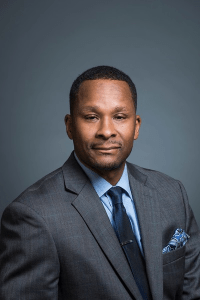
He teaches undergraduate and graduate classes in African American Studies, Intercultural Communication, the Rhetoric of Social Movements, Rhetorical Traditions, and Organizational Communication. His research and publications include critical intercultural communication, rhetoric, diversity, and the communication of violence prevention.

Dr. Hopson served as Chair of the International and Intercultural Division of the National Communication Association (2017). Additionally, he is a committee member for Research on Black Male Achievers, National Guide Right Program (since 2015). Most recently he served as Director of the PhD Program in the Department of Communication (2014 – 2017).

Previous assignments include Chair of the African American Communication and Culture Division/NCA (2008); Communication Specialist for GMU’s international collaboration to reduce gang violence in Trinidad and Tobago (2009); Committee member for the Police-Community Relations Project at GMU (2013); and Co-director of Campus Climate Committee at GMU (2014).

Dr. Hopson facilitates Changing Lives Through Literature (CLTL) for Fairfax County Public Libraries. CLTL is a nationally recognized alternative sentencing program for juvenile offenders. Additional workshops and facilitations include relationship abuse, sexual assault and violence prevention provided to more than 6,000 learners.

Recent awards include the 2018 Community Service Award from the Dulles-Leesburg (VA) Alumni Chapter of Kappa Alpha Psi Fraternity; the 2011 Spirit of Martin Luther King Award, George Mason University, Fairfax, VA; and contributor to R. L. Jackson’s (Ed.) Encyclopedia of identity (Sage) awarded 2011 Outstanding Resource at the Winter Conference of the American Library Association.
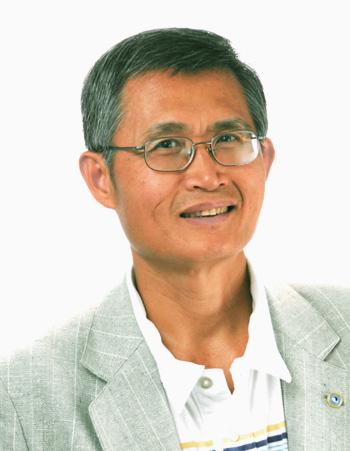

Applied ICD: 3-D Printers and Prosthetic Hands from the US to South Africa

Sometimes the most extraordinary intercultural collaborations result from contacts made through social media. The following story started through a connection made through YouTube, between an artist in the US and a carpenter in South Africa, using the latest technology (3-D printers) to create a prosthetic hand.

“A former school supplies salesmen and special effects artist, Ivan Owen in December 2011 shared a video on YouTube of a giant puppet hand that he had made. That video was seen by Richard Van As, a carpenter in South Africa who had cut off some of his fingers with a table saw. He asked Mr. Owen to help devise a prosthesis, and over two years, the pair came up with a workable design. A 3-D printer, they figured, would make the prosthesis cheap and easy to produce. When Mr. Van As learned of a boy in South Africa who also needed a prosthetic hand, they made one for him, too. The idea caught on.”

Mroz, Jacqueline. (February 16, 2015). Hand of a superhero. New York Times.

State of the art prosthetics cost a lot, and children grow so quickly that often people decide they just aren’t feasible. e-Nable has changed that by matching technology and volunteers to over 1000 recipients, many children, in dozens of countries to date.

Intercultural Communication Course in London (2015)

Intercultural Communication Course in London

An intercultural communication course will be taught for the tenth time this summer in London from June 25 to July 29. Students earn 6 hours of undergraduate or graduate credit.  Field trips to observe social interaction, public discourse, and language variations have taken students to Parliament, the criminal courts, ethnic communities, Speakers’ Corner, the British Museum, the British Library, the Museum of Welsh Folk Life, art museums, outdoor markets, public parks and plazas, a senior citizen daycare facility, and a comedy club. During past years students have also visited universities in Oxford, Cambridge, Portsmouth, Norwich, Bath, Bristol, and Cardiff. Similar activities are being planned for 2015, along with an extended excursion to Edinburgh, Scotland.  Students stay in a conveniently located central London residence hall and have ample opportunity for recreation, sightseeing and travel. Application deadline is February 27, 2015.

For information about the course, contact Dr. Charles H. Tardy.

Guo-Ming Chen Profile

Profiles

Guo-Ming Chen is Professor of Communication Studies at the University of Rhode Island.

Guo-Ming ChenHe was the recipient of the 1987 outstanding dissertation award presented by the NCA International and Intercultural Communication Division. Chen is the founding president of the Association for Chinese Communication Studies. He served as Chair of the ECA Intercultural Communication Interest Group and at-large member of the SCA Legislative Council, and currently he is the President of the International Association for Intercultural Communication Studies. He is also the co-editor of Intercultural Communication Studies, China Media Research, and International and Intercultural Communication Annual, and serves on the editorial board of different professional journals.

Chen’s primary research interests are in intercultural/organizational/global communication. In addition to receiving various awards and honors, Chen has published over 150 papers, book chapters, and essays in Communication Yearbook, Journal of Cross-Cultural Psychology, China Media Research, Human Communication, Communication Research Reports, Intercultural Communication Studies, The Howard Journal of Communications, Journal of Psychology, etc.

Chen has (co)authored and (co)edited 35 books and journal special issues, including Foundations of Intercultural Communication, Communication and Global Society, A Study of Intercultural Communication Competence, Dialogue Among Diversities, Study of Chinese Communication Behaviors, Chinese Conflict Management and Resolution, Introduction to Intercultural Communication, Theories and Principles of Chinese Communication, Asian Perspective of Culture and communication, Communication Research Methods, Communication Theories, and others.

Chen continues to be active in teaching, scholarship and in professional, university, and community services.


Work for CID:
Guo-Ming Chen wrote KC52: Harmony.

Distinguished Scholarship Awards – IICD of NCA

Call For Nominations
Distinguished Scholarship Awards
International and Intercultural Communication Division
National Communication Association

Nominations are invited for the 2015 International and Intercultural Communication Division Distinguished Scholarship Awards for work copyrighted in 2014. Up to five awards will be given in the following categories:
·       Best Book (single-authored or co-authored)
·       Best Book (edited or co-edited)
·       Best Article (or Book Chapter)
·       Best Dissertation and/or Master’s Thesis

All nomination materials via electronic submission to Mark Hopson and must include the following:
(A) A nomination letter outlining justification for the award
(B)  For Article or Book Chapter submissions, send PDF copies only
(C)  For Book submissions, send three (3) copies of the complete work. (You may ask your publishers to send copies directly as part of their promo)
(D) For Dissertation or Thesis submissions, mail three (3) CD-Rom copies of the complete work

Mail hard copies (for C & D) to the following address:
Dr. Mark C. Hopson
Department of Communication
George Mason University
Robinson A #319
4400 University Dr.
Fairfax, VA, 22030

Awards will be presented at the International and Intercultural Communication Division Business Meeting in Las Vegas at the 2015 NCA Convention. Recipients of the awards will be notified by September 1, 2015 and are expected to be present for the award presentations. Self, peer, or advisor nominations are welcomed. The awards committee will not accept more than one submission of the same co-/author, whether they are nominated or self-nominated, regardless of category. Works must have been copyrighted during the 2014 calendar year.

Nomination packets must be received by April 25, 2015.

University of Hawaii at Hilo job ad

Assistant, Associate or Full Professor of Communication, position #82900, University of Hawai’i at Hilo, College of Arts and Sciences, general funds, permanent, nine-month, tenure track, full-time position, to begin approximately August 2015, pending position clearance and availability of funding.

Duties and Responsibilities:
Assistant Professor:  Develop social media/digital culture courses, teach COM 270 Introduction to Theories of Human Communication, contribute to the department’s curriculum in the areas of health, intercultural, interpersonal, media, and organizational communication. Teach three courses (service, GE, and major courses) each semester in face-to-face and on-line contexts, on campus and around the Big Island of Hawai‘i as needed and assigned. Serve as an academic advisor, maintain scholarly productivity, and participate in university and community service.

Associate Professor:  Same as Assistant Professor

Professor:  Same as Assistant Professor

Minimum Qualifications:
Assistant Professor:  Doctorate in Communication or related field from an accredited college or university with specialization in social media/digital culture (ABD candidates expected to receive doctorate by August 1, 2015 may apply); able to teach courses in social media/digital culture, communication theory, and other courses in the department’s existing areas; interest in Asian and/or the Pacific cultures; teaching experience in multicultural settings.

Associate Professor:  In addition to the Assistant Professor as stated above; minimum of five (5) years of full-time college or university teaching at the rank of Assistant Professor; documentation of high quality teaching performance, high quality scholarly and/or creative contributions and service to the academic life of a college.

Professor:  In addition to the Associate Professor as stated above; minimum of five (5) years of full-time college or university teaching at the rank of Associate Professor or higher.

Desirable Qualifications:  Interest in cross-disciplinary education and/or grant writing skills.

Pay range:  Commensurate with qualifications and experience.

To Apply:  Submit a resume, letter of application, evidence of teaching effectiveness, transcript(s) showing degrees and course work appropriate to the position (copies are acceptable, however original official transcripts will be required prior to employment), and three (3) letters of recommendation.  All requested documents/information become the property of the University of Hawaii at Hilo. Failure to submit all required documents shall deem an application to be incomplete. Incomplete applications will not be considered.

Application address:  Dr. Jing Yin, Search Committee Chair, Department of Communication, Humanities Division, College of Arts and Sciences, University of Hawai‘i at Hilo, 200 West Kāwili Street, Hilo, HI 96720-4091

Inquiries:  Dr. Jing Yin

Closing date:  Continuous recruitment, application review begins February 16, 2015 and will continue until the position is filled.

UH Hilo is an EEO/AA Employer M/W/Disability/Veterans

The ‘Problem’ of Intercultural Weddings

On October 21, 2014, I presented “Ambiguity as the Solution to the “Problem” of Intercultural Weddings,” at Royal Roads University, located in Victoria, BC, Canada, as one of two talks during a fall trip there to meet with students and faculty in their Master of Arts in International and Intercultural Communication (MAIIC). (Further information about that visit has already been posted to this site.) A videotape of excerpts from that talk is now available on the Center for Intercultural Dialogue’s YouTube channel. My thanks to the faculty for the invitation to visit, and to the technology department for videotaping the event.

Wendy Leeds-Hurwitz, Director
Center for Intercultural Dialogue

Hui-Ching Chang Profile

ProfilesAs Dean of the Honors College and Professor of Communication at the University at Albany, Dr. Hui-Ching Chang sees knowledge as intimately connected with everyday practices. After completing her law degree from National Taiwan University, she pursued advanced degrees in speech communication from the University of Illinois at Urbana-Champaign.

Hui-Ching Chang

Dr. Chang has studied Chinese language patterns, specifically Taiwanese national identity as constituted through discursive practices. Her book, Clever, Creative, Modest: The Chinese Language Practice (2010), examines Chinese language behavior from three distinctive yet overlapping dimensions: the manipulative speaker, the artistic speaker, and the humble speaker. Her most recent book, Language, Politics and Identity in Taiwan: Naming China (2015), explores how Taiwanese fashion their identities in the shifting and intertwined paths of five names Taiwan used to name China: “Communist bandits”; “Chinese Communists”; “mainland”; “opposite shore”; and the “People’s Republic of China.”

Prof. Chang has received many grants and top paper awards for her research and has been an invited keynote speaker at numerous international conferences. Her publications have appeared in Journal of Language and Politics; Discourse Studies; Research on Language and Social Interaction; Journal of Language and Social Psychology; Nationalism and Ethnic Studies; and Journal of Asian Pacific Communication, among others. Very recently she was principal editor of the special issue, “Explored but not Assumed: Revisiting Commonalities in Asian Pacific Communication” (2015), in the Journal of Asian Pacific Communication.

Prof. Chang enjoys putting theories into practice: “I firmly believe that it is adventure and personal engagement that brings intercultural communication to life, an inspiring perspective I learned while on ‘Semester at Sea’.” She was a Fulbright Scholar, Ukraine (2010-2011, 2012); Chair Professor of the College of Journalism at Xiamen University, China (2009-2012); Visiting Scholar to Hong Kong Baptist University (2007) and Visiting Scholar to National Taiwan University (2003-2004).

Prior to coming to UAlbany, Prof. Chang was Associate Dean for Academic Affairs of the Honors College, the University of Illinois at Chicago, and Faculty-in-Residence, where she pioneered innovative programs like “Cutie’s Office Hours” to promote a vibrant living-learning community. She served as Director of Undergraduate Studies and Director of Graduate Studies in her department, and was also a trained mediator for UIC’s Dispute Resolution Service. For her, being an Honors College administrator requires the same curiosity and urge to learn as it does for research and teaching—it is exciting, energizing, and fulfilling.


Work for CID:

Hui-Ching Chang wrote KC41: Yuan, and translated it into Chinese (both Simplified and Traditional).

Loyola Marymount U job ad (Los Angeles)

The Department of Communication Studies at Loyola Marymount University in Los Angeles seeks applicants for a tenure-track, Assistant Professor position in the areas of Interpersonal, Intercultural and/or Organizational Communication Studies, beginning Fall 2015. The Communication Studies Department is one of the largest undergraduate programs at LMU, with approximately 500 majors. In keeping with LMU’s Mission, our department emphasizes the ethical and effective deployment of communication in pursuit of a more just and humane world. We also strive to help students foster the knowledge and skills necessary to develop more satisfying personal and professional relationships. Our faculty is committed to scholarship and service projects that support our Mission and reflect a critical orientation toward the discipline.  We are committed to developing a culturally diverse environment for our faculty and students.

This position requires a critical/cultural orientation to the field of communication and a global perspective on the issues of marginalized communities, participatory culture and social justice. We are particularly interested in candidates whose areas of expertise include, but are not limited to, one of the following areas of study: global communication, non-profit culture, environmental justice, eco-tourism, alternative organizing, social entrepreneurship, and digital social innovation.  Candidates must be able to teach classes in Interpersonal Communication, in addition to classes in one or both areas of Intercultural and Organizational Communication.

Position Qualifications:
Applicants must have a doctorate in Communication Studies, Interpersonal Communication, Organizational Communication and/or Intercultural Communication, in hand at the time a contract is offered. Final appointment is dependent on a confirmed terminal degree status. Applicants who have not yet completed their doctorate must demonstrate progress verifiable by evidence and substantive enough to ensure completion of their degree at the time of appointment.

In addition to teaching required courses in Interpersonal Communication and one or both of Intercultural and Organizational Communication, this position also involves teaching and developing required and elective courses related to the Department’s curricular clusters of “Organizing and Relating,” and “Advocacy, Public Relations and Non-Profit Culture.” Application materials should clearly demonstrate the ability to teach the anticipated courses. The successful candidate will be expected to adopt a teacher-scholar model of professional engagement with a commitment to service and an established, or promise of a, productive research agenda. We value relevant professional, practical, and international experience in addition to the required academic qualifications. Proficiency in more than one language also is valued.

Application Details:
Completed applications will be reviewed beginning on December 1, 2014 and will continue until the position is filled. A complete application portfolio requires: 1) a letter of application; 2) a current curriculum vitae; 3) official transcripts; 4) representative scholarship (such as published article/s, key dissertation chapters, competitively selected conference papers, manuscript submissions); 5) complete copies of original teaching evaluations (including qualitative comments) reflecting at least two of her/his most recent years of university level teaching [note: summaries of course evaluations are not acceptable]; 6) a statement of teaching philosophy; 7) sample syllabi related to this position; 8) at least three letters of reference; and 9) if the candidate does not have a doctorate, evidence of timeline and anticipated completion.

Application materials should be sent to: Dr. Nina M. Reich, Search Committee Chair, Department of Communication Studies/Foley Building, 1 LMU Drive – MS 8231, Los Angeles, CA 90045. Materials must be received by December 1, 2014 to ensure full consideration. All materials must be submitted in hard copy format; electronic delivery of materials will not be accepted. Inquiries or comments (including those regarding required materials) should be directed to Dr. Nina M. Reich by e-mail.

LMU places value on those who can share and teach differing points of view. Strong candidates will be committed to and effective in supporting and enhancing a culturally rich and diverse learning environment. We also value those who will bring sensitivity to the independent cultural role of religions.

Loyola Marymount University, a comprehensive university in the mainstream of American Catholic higher education, seeks professionally outstanding applicants who value its mission and share its commitment to academic excellence, the education of the whole person, and the building of a just society. LMU is an equal opportunity institution actively working to promote an intercultural learning community. Women and minorities are encouraged to apply.

CSU San Marcos job ad: International/Transnational Communication

Tenure Track Faculty Position in International or Transnational Communication
Department of Communication
California State University San Marcos
EFFECTIVE DATE: Fall semester, 2015

MINIMUM QUALIFICATIONS: Ph.D. in Communication in hand by August, 2015. A scholar who works at the intersection of communication and culture at the global level from a qualitative, critical, interpretative, textual or rhetorical perspective. Applicants must possess an active research program in the area of communication and culture globally as well as demonstrated teaching effectiveness at the undergraduate level.

PREFERRED QUALIFICATIONS: The successful candidate will have research expertise in international or transnational communication at the macro level in order to broaden students’ perspectives about the ways that global issues influence the study of communication. Candidate has experience teaching intercultural communication. Areas of preferred emphasis include one or more of the following: human rights, global movements, international labor issues, postcolonialism, international relations, cultural inflections of citizenship and public culture, NGOs, terrorist studies, sovereignty, critical whiteness studies, international disputes, and/or globalization. Demonstrated intercultural commitment and experience with diverse groups in teaching, research and/or service is preferred.

DUTIES: The successful candidate will:
• Develop new electives in their areas of expertise;
• Deliver Intercultural Communication (COMM 330) and assist in delivering one or more of the following courses: Introduction to Communication (COMM 100), Argumentation and Dialogue (COMM 200), or Communication Theory (COMM 300);
• Serve the Critical Intercultural Communication minor;
• Teach and develop courses in the Communication major;
• Develop and sustain a research program that will lead to peer-reviewed publications;
• Engage with the community through department, college, university, discipline, and community service.

APPLICATION: Review of applications will commence December 1, 2014. Position open until filled. All applications must include a completed Faculty Application; cover letter; a one-page explanation in which applicants address their demonstrated intercultural experience and commitment to diversity and equity in teaching, research and/or service; curriculum vitae; statements of teaching philosophy and research interests that address both the minimum and preferred qualifications; a maximum of three reprints of representative scholarly activities; copies of all transcripts that include relevant course work; and two representative samples of teaching evaluations that speak to the applicant’s qualifications and abilities. In addition, three current letters of recommendation must be provided by the deadline. Must be able to communicate effectively and work cooperatively with departmental colleagues to support the Department’s mission.

To submit, please email your materials. Requests for information should be addressed to:
Dr. Michelle A. Holling, Search Committee Chair
Department of Communication

The department consists of 11 tenure track faculty and sixteen lecturers who offer two undergraduate degree programs (i.e., one in Communication and another in Mass Media), and two minors (i.e., Communication and Critical Intercultural Communication) to slightly over 800 students, in addition to multiple sections of Oral Communication (GEO 102) that serve the entire university. 

The university is particularly interested in hiring candidates who have experience working with students from diverse backgrounds and who demonstrate a commitment to improving access to higher education for under-represented groups. California State University San Marcos is an Affirmative Action/Equal Opportunity Employer strongly committed to equity and diversity and seeks a broad spectrum of candidates in terms of race, sexual orientation and identity, gender, age, and disability or veteran status. CSUSM has been designated as a Hispanic Serving Institution (HSI) and an Asian American Native American Pacific Islander Serving Institution (AANAPISI) and was recently named one of the top 32 Colleges “most friendly” to junior faculty by the Collaborative on Academic Careers in Higher Education.

An offer of employment may be contingent upon successful completion of a background check. Should the results of a background check not be successful, any offer will be withdrawn and/or employment terminated. Falsification of information may also be cause for termination of employment, corrective action, or rejection.