
Research Fellow: Chinese International Relations Discourses (Germany)

FellowshipsResearch Fellow on Chinese International Relations DiscoursesGIGA German Institute of Global and Area Studies – Faculty of Business, Economics and Social Sciences, Hamburg, Germany. Deadline: May 15, 2018.

Applications are invited for a part-time position (65%), with a contract of 3 years, starting 1 December 2018. The position is designed for further professional qualification as defined in § 2 WissZeitVG (Academic Fixed-Term Contract Act). The salary is commensurate with TV-AVH / TVöD EG 13.

The Research Fellow will be part of the research project “Legitimate Multipolarity” funded by the Deutsche Forschungsgemeinschaft (DFG) and coordinated by Dr. Johannes Plagemann. Prof. Dr. Amrita Narlikar and Prof. Dr. Heike Holbig complete the team. The project analyses the empirical legitimacy of international institutions in the context of multipolarity and critically examines potential solutions to legitimacy problems put forward in Chinese and Indian international relations discourses. The GIGA strongly encourages concurrent work on a doctoral degree in line with the candidate’s work in the project, which would potentially be supervised by Prof. Holbig and Prof. Narlikar. The Research Fellow would become a member of the GIGA Doctoral Programme.

The GIGA German Institute of Global and Area Studies / Leibniz-Institut für Globale und Regionale Studien is an independent social-science research institute based in Hamburg. It analyses political, social and economic developments in Africa, Asia, Latin America and the Middle East, and links this knowledge to questions of global significance. It combines region-specific analysis with innovative comparative research on accountability and participation, growth and development, peace and security, and power and ideas.

Wild Publics: Language Under the Conditions of Late Modernity (Germany)

EventsWILD PUBLICS. Language under the conditions of late modernity – 16th Blankensee ColloquiumMarch 22-24, 2018, Freie Universität Berlin.

From 22nd to 24th of March 2018, we will organise a conference at FU
Berlin, Germany, discussing the construction of public space in relation
to language under the conditions of late modernity.

The conditions of public language in late modernity lead to changed and changing notions of public space: new spaces emerge; existing spaces become reconfigured and gain in complexity. Old divisions of private and public are shaken up, and existing forms of discursive authority and power relations are changed. We suggest that this can be observed in discourses and language uses as they manifest themselves in public space.

Continue reading “Wild Publics: Language Under the Conditions of Late Modernity (Germany)”

CFP Cultural Linguistics (Germany)

ConferencesCFP Cultural Linguistics: Current and Emerging Trends in Research on Language and Cultural Conceptualisations, July 23-26, 2018.  University of Koblenz-Landau, Landau, Germany. Deadline: 15 December 2017 (NOTE: extended deadline)

Cultural Linguistics: Current and Emerging Trends in Research on Language and Cultural Conceptualisations is a joint conference co-organised by the 38th International LAUD Symposium
and The Second Cultural Linguistics International Conference.

Cultural Linguistics is an emerging field of research with multidisciplinary origins that explores the relationship between language and cultural conceptualisations. Cultural Linguistics draws on and expands the theoretical and analytical advancements in several disciplines and sub-disciplines, such as cognitive psychology, Complexity Science, Distributed Cognition, and anthropology.

Applications of Cultural Linguistics have enabled fruitful investigations of the cultural grounding of language in several domains such as World Englishes, intercultural communication, Teaching of English as an International Language (TEIL), and political discourse analysis. Research carried out within these applied areas has shed significant light on the nature of the relationship between language and cultural conceptualisations.

The present conference has the aim to provide a forum for researchers engaging in Cultural Linguistics to present and discuss current studies on the link between linguistic patterns and underlying cultural conceptualisations, the role of cultural conceptualisations in language development and education, as well as interdisciplinary research in the field of critical discourse analysis. It also explicitly encourages a (critical) reflection of emerging trajectories of methodological innovation in more recent empirical research.

We invite submissions to our three parallel thematic sessions:
A) Cultural conceptualisation and the structure of language
B) Applied Cultural Linguistics
C) Cultural Linguistics, Ideologies and Critical Discourse Studies

Proposals are to be submitted via email no later than December 15, 2017 to: laud2018@uni-landau.de


CFP Linguistic Diversity & Asylum (Germany)

Conferences

Linguistic diversity and asylum
October 26-27, 2017

Conference at the Max Planck Institute for the Study of Religious and Ethnic Diversity, Department of Socio-Cultural Diversity, Göttingen, Germany

The exponential increase of refugees arriving in Europe
has added a new linguistic dimension to the social diversity
within European societies. The workshop engages with
how and where linguistic diversity is observable in the
asylum process and how institutions react in situations of
non-deniable and more and more complex linguistic diversity.

Summer School: Vocational Integration in Post-Migrant Society (Germany)

International Summer School: Vocational Integration in Post-Migrant Society
3-7 July 2017
Sponsor: TU-Dresden
Location: Deutsches Hygiene-Museum Dresden (Germany)

As one of the largest common societal tasks in a country of immigrants, Germany qualifies the integration of people of any country of residence (ethnicity, age, gender etc.) in an inclusive, understanding society, especially the challenge to use and develop the potential of a diverse society. One focus of varying diversities within open society is the so-called post-migrant approach that focuses on the perspective of migration to and the resulting process of – social, and political transformations, conflicts, and identity constructions. The topic area of integration and labor in a post-migrational society is, in this context, of enormous importance, which essentially can improve in making societal participation possible here and considers the shortage of skilled workers and demographic advancement as well as the advancement of the job market. By extensively discussing relevant practices and concepts, the Summer School 2017 intensively situates itself within the theme of integration with a special focus on the (further) advancement of structures and processes of professional education and employment under the service of diversity.
 
Target Audience: Competition and Selection Process
 
The participant group from researchers will be composed in varied topic and background contexts who have been awarded for their excellent research activities (on the relevant qualification level) through innovative contributions to migration and integration research. Those interested are asked to describe their expertise in a clearly defined subject matter and their motivation for participation in the form of an application. A commission consisting of the applicants together with representatives of economics and sociology is then carried out for the selection of the candidates. 20 international researchers and 5 researchers of the TU Dresden will be selected.
 
The registration is open now until 31.03.2017.

World Conference on Pluricentric Languages (Germany)

5th World conference on pluricentric languages and their non-dominant varieties
Mainz, Germany
July 13-16th 2017

The conference is organised by the Working Group on non-dominant varieties of pluricentric languages (WGDV).

The general theme of the conference is “Models of pluricentricity: Nation, space and language“.

This time the conference will try to focus on the influence of geographic aspects on the modelling of dominant and non-dominant varieties to further advance the understanding of whether geographically contiguous varieties follow the same pathways in their affirmation as own varieties as do geographically separated ones (e.g. European and Brazilian Portuguese).

You find all necessary information on the website of the conference.
All scholars working in this field are invited to submit proposals for papers/workshops by 28 February 2017

U Tübingen PhD Position & Postdoc: Comparative Social Policy

The newly established Chair of Comparative and Applied Public Policy at the University of Tübingen invites applications for two positions:

1. PhD Position in the area of comparative social policy or social rights of EU migrant citizens. In addition to pursuing her PhD project, s/he will provide limited teaching and research assistance.

Essential requirements:
• Excellent undergraduate and graduate (master level) degree (preferably political science or social/public policy)
• Interest and knowledge in the politics of comparative social policy research or migration and welfare state research
• Excellent intercultural communication skills.Ability to work both independently and as part of a team.

Excellent communication, presentation and writing skills in English and German are desirable.


2. PostDoc Position in the area of comparative social policy or social rights of EU migrant citizens. The PostDoc will contribute to the research within the research areas of the Chair of Comparative and Applied Public Policy. S/he will also be given the opportunity to develop and pursue her independent research and contribute to teaching.

Essential requirements:
• PhD in a social science discipline (preferably political science or social/public policy).
• Demonstrable interest and knowledge about migration and social rights.• Detailed knowledge of EU social policy, especially as it relates to EU migrant citizens.
• Experience of conducting qualitative research, including document analysis.
• Experience of managing research from the beginning stages through to publication.
• Excellent organisational and time management skills.
• Excellent computer and internet skills, including the use of online databases for literature searches: Endnote or other bibliographic software.
• Excellent intercultural communication skills.
• Proven ability to liaise with a range of different stakeholders.
• Ability to work both independently and as part of a team.
• Excellent communication, presentation and writing skills in English.

Deadline for applications is 15 March 2017.

Neslihan Demirkol Profile

ProfilesNeslihan Demirkol is a research associate of the Corpus Musicae Ottomanicae (CMO) project, based within the University of Münster, Germany.
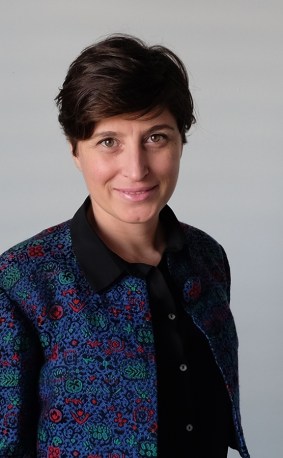
Neslihan Demirkol

She holds an M.A and PhD from Bilkent University. She worked as a lecturer between 2014-2016, and as an assistant professor between 2016-2019 in the Department of Turkish Language and Literature at the Social Sciences University of Ankara, Turkey. She spent one year in the Islamic Studies Department within the Institute for Asian and Oriental Studies at the University of Zurich, for her postdoctoral studies as a Swiss Government Excellence Scholarship holder for the 2018-2019 academic year.


Her research and teaching interests are modern Turkish literature, literary theories, literary history, translation studies, adaptations and translations of One Thousand and One Nights in Turkish and their influences in Turkish literature. Her MA thesis focuses on the definition of loyalty in literary translations from a cultural perspective. Her Ph.D dissertation criticizes the mainstream discourse of Turkish literary modernization and provides a new perspective to the literary history with emphasize on the literary translations using Pierre Bourdieu’s sociological approach to the dynamics of cultural production. She has experience in teaching academic writing in Turkish and Ottoman language classes.

Demirkol was a member of the Expert Committee for Intercultural Dialogue of the Turkish National Commission for UNESCO between 2008 and 2013. She has been a member of ÇEVBİR (Professional Association of Translators) since 2006. She has been on the editorial board of Kebikeç, a peer-reviewed academic journal in the field of humanities and social sciences, since 2011; and fe journal, an international peer-reviewed academic journal in the field of feminist critique and gender studies, since 2018.

Selected Publications:

Demirkol, N. (2016). “Lutf ile, ta’bîr eyle “: Kaya Sultan and Melek Ahmed Paşa anlatısında rüyaların işlevi. In  H. Çolak, Z. Kocabıyıkoğlu-Çeçen & N. I. Demirakın (Eds.), Ayşegül Keskin Çolak’a armağan tarih ve edebiyat yazıları (pp. 39-51). Ankara: Kebikeç Yayınları.

Demirkol, N., & M. Kalpaklı. (2014). Eternal narratives of the silk road: The Thousand and One Nights from Samarkand to Istanbul. Bulletin of IICAS, 19, 81-97.

Demirkol, N. (2013). Gathering around a table: Meals and cuisine as a means of interculturality. In E. Ölçer-Özünel & N. Tunsu (Eds.), Sharing the same taste: The Turkish and Romanian Common Traditional Cuisine Workshop Proceedings (pp. 23-30). Ankara: UNESCO.

Demirkol, N. (2011). Çeviride sadakatin yeni tanımları: Shakespeare’in A Midsummer Night’s Dream’i için Can Yücel’in Bahar Noktası bir ihtimal midir? Kebikeç, 32,  187-237.

Demirkol, N. (2011). Hüsn ü Aşk’ta Hüsn’ün âşık rolünün imkânsızlığı üzerine. Journal of Turkish Studies, 35, 193-204.

Demirkol, N. (2010). The role of women in the interaction and transfer between the Turkish and Macedonian cuisine culture. In M. Kalpaklı, N. Demirkol et. al. (Eds.), Sharing the same taste: The Turkish and Macedonian Common Traditional Cuisine Workshop Proceedings (pp. 74-78). Ankara: UNESCO.

Demirkol, N. (2010). The role of gender in the performances of traditional music. In M. Ö. Oğuz, M. Kalpaklı, et al. (Eds.), The Existing Musical Forms and Traditional Cultures of the Peoples of the Border Regions of Turkey and Bulgaria Workshop Proceedings (pp. 43-49). Ankara: UNESCO.

Demirkol, N., & M. Kalpaklı (Eds.). (2010). Binbir Gece’ye bakışlar. İstanbul: Turkuaz Yayınları.

Demirkol, N., & M. Kalpaklı, et. al. (Eds.). (2010). Sharing the same taste: The Turkish and Macedonian Common Traditional Cuisine Workshop Proceedings. Ankara: UNESCO.


Work for CID:

Neslihan Demirkol translated KC3: Intercultural Competence and KC5: Intercultural Communication into Turkish.


Universität der Bundeswehr München job ad: Conflict Research (Germany)

Universität der Bundeswehr München Germany announces a position as a research assistant to the Professorship in Intercultural communication and Conflict Research. The position is announced as supporting teaching and research of the professorship as documented on the website of the professorship.

Applicants will be required to show a good command of German in speaking, reading and writing. However, non-native speakers are welcome.

For further details and for how to apply please refer to the full announcement.

**

Universität der Bundeswehr München

An der Professur für interkulturelle Kommunikation und Konfliktforschung an der Fakultät für Humanwissenschaften ist zum nächstmöglichen Zeitpunkt – vorerst befristet auf 2 Jahre – eine Stelle als

Wissenschaftliche Mitarbeiterin / Wissenschaftlicher Mitarbeiter
Entgeltgruppe E13 TVöD

zu besetzen. Die Stelle ist teilzeitfähig.

Aufgaben:
• Mitwirkung bei Forschungsvorhaben der Professur, insbesondere bei gegenwärtigen und daraus für die Zukunft zu entwickelnden Forschungsgegenständen im Sinne der auf der Homepage dokumentierten Arbeitsfelder (vgl. http://www.unibw.de/icc),
• Mitwirkung bei der Gestaltung und Durchführung der Lehre im B.A.-Studiengang Bildungswissenschaft und im M.A.-Studiengang Bildungswissenschaft, insbesondere interkulturelle, Medien- und Erwachsenenbildung,
• Mitwirkung bei der Betreuung von Seminar- und Abschlussarbeiten,
• Mitwirkung beim Erstellen von Publikationen
• Mitwirkung bei Verwaltungsaufgaben des Lehrgebietes.

Die Möglichkeit zur Promotion, bzw. bei Vorliegen einer einschlägigen und exzellenten Promotion zur Habilitation ist gegeben.

Voraussetzungen:
• Sehr guter Abschluss eines universitären Studienganges mit fachlicher Einschlägigkeit zu der Professur,
• Sehr gute Kenntnisse in dem interdisziplinär angelegten Forschungsfeld der interkulturellen Kommunikation,
• Sehr gute Englischkenntnisse und Interesse an Publikationen in englischer Sprache.

Die Universität der Bundeswehr München strebt eine Erhöhung des Frauenanteils an, Bewerbungen von Frauen werden ausdrücklich begrüßt. Personen mit Handicap werden bei gleicher Eignung besonders berücksichtigt.

Bei Fragen wenden Sie sich bitte an Prof. Dr. Dominic Busch.

Bewerbungen mit den üblichen Unterlagen (Lebenslauf, Zeugnisse, Bescheinigungen) richten Sie bitte bis 25. Mai 2016 im pdf-Format per E-Mail an Prof. Dr. Dominic Busch.

Refugees, Germany, Willkommenskultur and Intercultural Communication

Guest PostsResponse to Dominic Busch’s guest post by Peter Praxmarer

I find myself in almost full agreement with what Dominic Busch writes.

In particular, I find his reflections on language in what he calls “internal social discourse,” pertinent and well taken. Also, the fact that “the cultural argument” has been hijacked by the far right and the national populists, in our times, is not surprising. This would, by the way, merit a little more research: attention to the culture of others has more often than not been a child of animosity, enmity, hostility, rejection if not outright war, as the history of exclusion, but also of conquest, colonialism, imperialism, and domination in general, amply testifies. As we (should) know, the very idea of “intercultural communication” as a more or less independent field of study, research and practical application was born during WWII, as part of the “war effort” of the US (viz. Leeds-Hurwitz). From this, also, stems the particular and sometimes incongruent vocabulary of the field, which is utterly US-social-science-lingo dominated, with some inroads from languages which still claim their droit de cité in the global social science supermarket (or, more benignly stated, the Global Republic of Letters), e.g. French and German. The field of study called intercultural communication became less war-related only later (but not everywhere), when  nation- and culture-crossing processes and constellations other than war started to play a more important role in the modern world-system (to follow Immanuel Wallerstein’s still pertinent terminology, preferring it to the shallow term “globalization”) – but it has kept its very peculiar vocabulary, at least in the mainstream.

Aside from that, while reflecting upon the present discourse on refugees in Germany and the “cultural” problems of the more or less autochthon residents (the “Old Germans”, as Busch cites a fellow professor in his piece) with them, it is worthwhile also to reflect on the position of the very term Kultur in Germany. In Germany, and not only during Nazi times, there has long existed an attitude which was described as Am deutschen Wesen mag/soll die Welt genesen, meaning that German culture is the remedy for all other (cultural) ills, all over the world. The Allied Propaganda posters, both in WWI as in WWII, took up this cultural theme. Thus, e.g., US War Propaganda during WWI showed a Mad German Brute holding a club with written Kultur on it, or an US Sleeping Beauty by the name of Civilization, calling every man, woman and child to war  – these and similar illustrations were meant to convey that deutsche Kultur is not so peaceful as other civilizations. In historical perspective, one has to agree. Looking into what was done in the name of German Kultur and how Kultur was used during WWII and before, would just confirm the very xenophobic and worse essence of it, inhumanely and most horrendously. (Caveat: Allied war propaganda is not presented here as an authoritative source, but only to provide a stark illustration of the use of the cultural argument; and many other than German “cultures” and “civilizations” certainly also have their share in war, conquest and violence-in-the-name-of-culture, epitomized, e.g., by “The White Man’s Burden” or the “mission civilisatrice”.)

Therefore, and also in view of the fact that the populist right wing and nationalistic parties have been able to hijack the term “culture” for their purposes, it is so good to see how civil society in Germany has constructed a new culture which is not national or völkisch, nor aggressive or expansionist, but welcoming: Willkommenskultur. In addition, even the counterpart to civil society, the German state, not least through its Chancellor, is, to varying degrees and for various reasons, in favor of taking in refugees, as is, again for still other reasons and purposes, the economy and a great part of the media. A beautiful page in the otherwise not always so beautiful book of contemporary Europe. And also a great example of (co-)constructed (inter-)culture, as well as of the fact that  “culture” never stands alone and cannot be meaningfully explained without taking into account history, society, economy, the polity, as well as, in our day and age, the many influences and experiences of mediated virtual reality in all its forms.

Yet, I also want to mention a point of potential disagreement with what Busch writes, regarding the role of Intercultural Communication Studies and Research. It is certainly true that the term “culture” has been critically evaluated, and the field is rapidly moving away from an essentialist and relatively static position to a more constructivist interactional and dynamic view of culture, in very simple terms privileging “communication” and “inter” over “culture”. However, by and large the main concern of intercultural communication research has been predominantly either relatively elite or middle-class or strictly utilitarian, covering, e.g. management or other professional groups, hospitals, schools, the military, police, development cooperation, etc. Relatively rarely concerned with, e.g., social integration per se (if not in special trainings for social workers, etc.), or with social integration from below (viz. the reference to Conflict Discourse Ethnocentrism in Busch’s text). In other words, the field has been center- and middle-class- or elite-focused, and not periphery- and non-elite, and where non-elite, then mostly only in terms of social management of deviations from norms or dangers from (culturally defined) others. This has also impacted our methodology: we have not always tried to understand, but we have been “overstanding”, as Raimon Panikkar so masterly phrased it already a quarter of a century ago. This is exacerbated when interculturalists (have to) jump on data-driven “fast science” jets instead of cultivating philosophy-fertilized “slow science” gardens, since this leaves no time to reflect either on the cui bono question or on participative methods or more sophisticated research questions than the ones required and funded by the global social science marketplaces – and it most certainly does not give a voice to those directly researched upon and with. Also for these reasons (conceptual, exemplified by “culture”, as well as methodologically), I would argue, we have so little to say when it comes to refugee crises, or to horrorism/terrorism, or to many other social “problems”. One reason why “the cultural argument” has been so successfully hijacked by the right and the nationalists, could therefore probably be that the interculturalists have far too long worked – even if engaging in what Busch calls a “sophisticated” debate – with a de-historisized, de-socialized, de-materialized, de-economized, de-politicized and overly value-oriented and psychologized concept of culture (and communication, for that matter). In other words, if one wants to understand (parts of) social reality in terms of culture and communication (and “inter” dynamics and processes), one has to look at it as what Busch calls, following Michel Foucault a “Dispositiv” (“dispositif” or “apparatus” in Foucault’s terminology). Likewise, it is necessary to overcome the “Unbearable Lightness of Communication Research”, as The International Communication Gazette tellingly titles its forthcoming 2016 Special Issue.

This critical look at the field is of course not meant to belittle the many initiatives of academic interculturalists in Germany, of which “Helfern helfen” of the intercultural campus of the Interkultureller Hochschulverband is but one. Or the numerous other initiatives undertaken by people who have studied intercultural communication and want to put their knowledge to good use; not to forget all those who practice sustainable – and sustained — intercultural communication in their daily dealings with the Stranger, the Migrant, the Refugee, the Other. It is simply a call for more “social” intercultural communication studies – more social in more than one sense.

Download the entire post as a PDF.

