U Leuven Job Ad: Media Effects (Belgium)

Full time (assistant/associate/full) professor in Media Effects at KU Leuven (Belgium) at KU Leuven — University of Leuven
Deadline: March 15, 2017

REQUIREMENTS
• Ph.D. degree in Social Sciences or an equivalent diploma, with extensive expertise in the domain of Media Effects Research

Excellent research record and very good teaching and training skills
High-level international publications
A vision on teaching in academic programmes

CFP AHRI 2017: Promotion & Enforcement of Human Rights

2017 AHRI CONFERENCE
The Promotion and Enforcement of Human Rights by International and Regional Organizations: Achievements, Challenges and Opportunities
27-28 April 2017, Leuven, Belgium

Deadline for abstract submissions: 2 January 2017

The Association of Human Rights Institutes (AHRI), the FRAME Project and the Leuven Centre for Global Governance Studies (KU Leuven) are pleased to announce a call for papers for the 2017 AHRI Conference, which will be held in Leuven. This international conference aims to take a broad and comparative view of the achievements and potential, but also of the challenges of international and regional organizations in promoting and enforcing human rights. Further details of the call can be found in the attached document.

Ghent U PHD Support: Sociolinguistics (Belgium)

MULTIPLES (Research Centre for Multilingual Practices and Language Learning in Society) seeks to recruit a PhD candidate to work on a project titled “Language and employability. A sociolinguistic ethnography of the activation of migrant job seekers in Flanders”, financed by the Special Research Fund at Ghent University.

Project description
The research is situated in the domain of sociolinguistics. The project proposes an ethnographic analysis of the activation trajectories in which migrant job seekers are inserted in Flemish Belgium. The project’s goal is to acquire insight in the role of language in the different stages of these trajectories, focusing on the relation between small-scale interactional practices, policy requirements and public macro-discourses on integration, linguistic diversity and work. The project will analyze the implementation of language policies in daily institutional practice, the logics that underpin these policies, the ways in which counselors, teachers and job seekers negotiate these policies, and the eventual outcomes of these policies for the different actors involved. Data will be collected through conducting participant observation in the Flemish employment agency and its partner organizations, interviewing counselors, teachers and job seekers and collecting policy documents.

Your profile
–       master’s degree in linguistics, communication, anthropology or a related discipline, obtained with good grades before the start of the project
–       good social and communicative skills
–       capacity for independent research
–       willingness to carry out ethnographic fieldwork
–       excellent competence in Dutch
–       good academic skills in English

Your tasks
–       collecting and analyzing ethnographic data
–       preparing a PhD on the basis of the project
–       preparing individual and joint publications for national and international scientific journals
–       presenting research at national and international conferences

We offer: a 48-month PhD position at Ghent University (Research Centre MULTIPLES & Department of Translation, Interpreting and Communication), starting 1 January 2017.

How to apply
Applicants must submit the following documents:
–       a motivation letter, curriculum vitae and copy of the master’s degree, merged into one PDF document
–       a piece of writing (e.g. a student paper) in English or in Dutch which demonstrates the applicant’s academic competences

Applications are to be sent by e-mail to prof. dr. Sarah Van Hoof (sarah.vanhoof[at]ugent.be). The deadline for application is 5 December 2016, 23:59 (CET).

More information
For inquiries, please contact Sarah Van Hoof (sarah.vanhoof[at]ugent.be).

Johanna Maccioni Profile

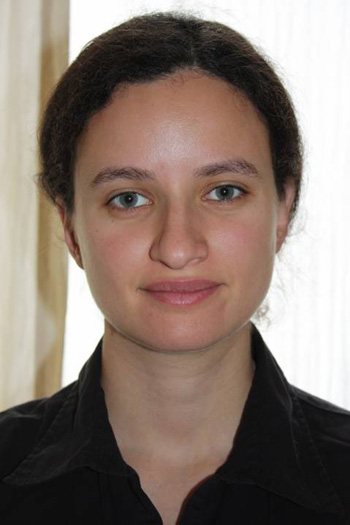
ProfilesJohanna Maccioni is a a clinical psychologist in Brussels, Belgium. After 5 years study in psychology, she obtained a D.E.S. (Diplôme d’Etude Spécialisé) in adult psychotherapy and passed the “Agregation” (which enables her to teach within universities).

Johanna Maccioni

She worked in hospitals in oncology and other units for ten years (in Belgium and in Martinique-France). For four years at Brugmann Hospital, she coordinated a project funded by the Belgian National Cancer Plan to improve migrants’ hospital care. In 2010, this project won the Gert Noel prize from the Belgian King Baudouin Foundation (the foundation supports justice, democracy and diversity in society), and this project inspired other units in other hospitals. After that, Maccioni began teaching Social Psychology, Intercultural Psychology, Group Dynamics and Clinical Systemic Therapy at the Haute Ecole Leonard de Vinci, a school specializing in paramedical training. As of September 2015, she is teaching a course on “Interculturalism in Health” (this is the second course on the subject offered in Belgium, after “Health and Culture” given by Dr. Louis Ferrand in Anvers University for doctors). She also trains doctors and paramedics who are currently working on this subject. In addition, she participates in a group project on how to improve migrants’ hospital care, organized by the Interfederal Center for Equal Opportunities (UNI-A: Centre Interfédéral pour l’Egalité des Chances, a public institution fighting discrimination).

Publications include:

Maccioni, J. (2019). Le-La patient.e étranger.ère et sa famille face au cancer: Un projet d’accompagnement multiculturel. In A. Heine & L. Licata (Eds.), La psychologie interculturelle en pratiques (pp. 189-200). Bruxelles : Mardaga.

Maccioni, J. & Heine, A. (2019). Dispositif de formation des soignant.e.s aux compétences interculturelles. In A. Heine & L. Licata (Eds.), La psychologie interculturelle en pratiques (pp. 373-384). Bruxelles : Mardaga.

Maccioni, J., & Juliens, C.  (2016). Sur les compétences interculturelles: Enjeux et pratiques. Special issue of Les Politiques Sociales, 3/4.

Maccioni, J. (2014). Vers la compétence interculturelle dans les soins. Contact, 139, 11-12.

De Pauw, S., Maccioni, J., & Efira, A. (2014). Patients drépanocytaires: Quel accompagnement médical spécifique lors de l’adolescence? Revue médicale de Bruxelles, 35, 87-95.

[Création de livret]. (2012). Entre soignants et patients croyants: 4 représentants religieux nous informent. Question Santé ASBL, 1-27.

Maccioni, J., Etienne, A., & Efira, A. (2012). Le patient étranger face au cancer : projet d’accompagnement multiculturel. Santé Conjuguée, 59, 13-17.

Maccioni, J., Etienne, A., & Efira, A. (2011). Accompagnement multiculturel de patients étrangers. Agenda Interculturel, 289, 18-20.


Work for CID:

Johanna Maccioni wrote Constructing Intercultural Dialogues #1: Lullabies, as well as a guest post, Overlanding from Brussels to Kuala Lumpur: A few comments on interactions along the way. She also has served as a reviewer for French.

Postdoc: Language Policy in Heteroglossic Schools (Belgium)

The Langues et Discours research centre of the Université Libre de Bruxelles (ULB) is looking for a postdoctoral researcher to work on “Between the devil and the deep blue sea. Implementing language policy in urban heteroglossic schools”, a new project funded by the Belgian Fund for Scientific Research (FNRS).

Project description: The project sets out to investigate how teachers implement monolingual policies in distinctly heteroglossic urban schools. Its goals are to investigate how teachers articulate a monolingual policy, to what extent and in what way teachers are responsive to linguistic diversity, and which conditions facilitate either of these realisations. These questions will be explored in four Belgian secondary schools. Data have already been collected for two of these schools by the project promotor. These data will be revisited and compared with new data to be collected by the postdoctoral researcher through ethnographic fieldwork in one or two secondary schools in Brussels (French- and Dutch-medium), depending on the applicant’s command of Dutch and/or French.

Research domains: sociolinguistics, educational linguistics, linguistic anthropology, linguistic ethnography

Tasks:
– carrying out linguistic-ethnographic fieldwork
– analysing interaction in the classroom
– preparing research output for international journals
– presenting research at international conferences
– contributing to occasional supervision of MA students and/or course teaching

We offer:
– a 24-month position, renewable with two years, funded by the Belgian National Science Foundation (FNRS), from 1 October 2016.

Requirements:
– PhD in sociolinguistics or related disciplines (predoctoral applicants must have obtained their PhD at the latest by 30 September 2016).
– Relevant research experience in studying interactional processes, preferably in classroom settings
– Excellent skills in Dutch or French
– Excellent skills in English
– Applicants must not have obtained their PhD prior to 1 October 2010.

Deadline for application is 1 June 2016. Applications (motivation letter + CV + recommendation letter + one paper the applicant is proud of) should be sent in electronic format to prof. dr. Jürgen Jaspers (jurgen.jaspers@ulb.ac.be). Notification of acceptance will be sent before 1 July 2016.

Starting date: 1 October 2016

Place of work: the applicant will be based at the Solbosch Campus of the Université Libre de Bruxelles (ULB) (Avenue F.D. Roosevelt 50, CP 175, 1050 Brussels, building A).

Global Governance Summer School (Belgium)

For students and practitioners everywhere, the Leuven Centre for Global Governance Studies (University of Leuven) and the Dean Rusk International Law Center (University of Georgia School of Law) are delighted to announce a new opportunity to study international law and global governance. Applications are welcome for a brand-new Global Governance Summer School, spanning 3 weeks at the centuries-old University of Leuven, located in a beautiful city a short train ride from Brussels and easily accessible to many European capitals. Students in law and related disciplines, from the United States, Europe, and across the globe, are welcome to enroll. All students will receive a certificate, and U.S. law students also may earn 4 American Bar Association-approved credits.

Deadline: April 4, 2016

Through lectures, discussions, and group research projects, students will explore global governance – how state, regional, and international legal regimes, plus individuals, corporations, intergovernmental and nongovernmental organizations, networks, and other nonstate actors, interact. A range of global challenges will be discussed, such as trade and sustainable development, peace and security, trafficking and other crimes, intellectual property, the environment, human rights and the rule of law, and migration.

Four cutting-edge, English-language courses will be given. In addition, the summer course offers field trips to European and international institutions in Brussels and Luxembourg and an expert conference on global governance in Brussels. The summer school aims to bring together students from all over the world and different disciplines fostering interdisciplinary and intercultural dialogue.

This summer school is intended for:
• Advanced students in international law, international relations, international political economy, international and European studies
• Practitioners and policy experts from the international policy community who want to update their knowledge on current developments in global governance and international law

U.S.-based law students are eligible to earn 4 American Bar Association-accredited hours in the three weeks of courses.

Daan Bauwens Profile

ProfilesDaan Bauwens has an M.A. in psychology and is a journalist for the Belgian and international press, combining narrative and anthropological journalism in newspaper articles and prose.

Daan Bauwens

By way of extensive ethnography, since 2008 his research focuses strongly on the influence of culture on interpersonal and intercultural communication. His main interests are conflicting worldviews with violent or non-violent consequences, the influence of religiosity on communicative behavior and the effects of a diaspora on native cultures.

Research topics and publications include: the Israeli mindset and youth culture, the Kurdish cultural struggle in Southeast Turkey, gender and Arab-Berber conflicts in Morocco, Japanese business culture and gender issues, and the structure of political processes in Belgium and the European Union.

In 2014, Daan Bauwens received a Fulbright grant for long-term research and a series of publications on the deep effects of multiculturality and superdiversity on the urban culture of Manhattan and Brooklyn. This research takes place in 2015, with the support and collaboration of New York City ngo City Lore.

NOTE: CID facilitated the connection between Bauwens and City Lore.

A month of tolerance in Belgian schools

Belgium’s response to intolerance is one example of applied intercultural dialogue:

“After the attacks in Paris and in Copenhagen, Belgium launches “the month of tolerance”, the Francophone Education Minister Joelle Milquet said. She announced that during the month of March there will be an intensification of the initiatives aiming to promote intercultural dialogue in the schools of Wallonia and Brussels. External partners, including journalists, along with lawyers and the Movement against Racism, Anti-Semitism and Xenophobia, will support teachers in activities aimed at promoting dialogue of young students on democracy, terrorism, freedom of expression and intolerance. An initiative that through videos, documentaries, theater and more will try to inform students on the  current events by spreading the values of intercultural and interreligious dialogue.”

Original publication: Battista, Paola. (24 February 2015). A month of tolerance in Belgian schools.

CFP Social Networking in Cyber Spaces by European Muslims

Call for Papers: Social Networking in Cyber Spaces: European Muslims’ Participation in (New) Media
29 May 2015
KU Leuven University, Belgium

Keynote Speakers:
*Vít Šisler – Assistant Professor at the Faculty of Arts at Charles University in Prague, Member of the Editorial Board of the Journal of Religion, Media and Digital Culture, Managing Editor of CyberOrient, a peer reviewed journal of the virtual Middle East.
*Heidi Campbell – Associate Professor at the Department of Communication  and an Affiliate Faculty in the Religious Studies Interdisciplinary Program at Texas A&M University. She studies religion and new media and the influence of digital and mobile technologies on religious communities.[5] Her work has covered a range of topics from the rise of religious community online, religious blogging and religious mobile culture within Christianity, Judaism and Islam, to exploring technology practice and fandom as implicit religion and religious framings within in digital games.

Key words: Social Networks and Media, Social Movements, Networking, European Muslims, Transnationalism, Cyber Communities, iMuslims

The increasing growth of the Internet is reshaping Islamic communities worldwide. Non-conventional media and social networks such as Facebook and Twitter are becoming more popular among the Muslim youth as among all parts of the society. The new channels of information and news attract new Muslim publics in Europe. The profile of the people using these networks range from college students to Islamic intellectual authorities. Such an easy and speedy way of connecting to millions of people across the globe also attracts the attention of social movements, which utilize these networks to spread their message to a wider public. Many Muslim networks and social movements, political leaders, Islamic institutions and authorities use these new media spaces to address wider Muslim and also non-Muslim communities, it is not uncommon that they also address and reach certain so-called radical groups.

Much attention also has been given to the use of social media technologies and their ability to spark massive social change. Some commentators have remarked that these connection technologies, ranging from smartphones to Facebook, can cause revolutionary digital disruptions, while others have even gone so far as to suggest that social media platforms such as Facebook and Twitter may have incited the Arab Spring. During the Arab Spring or Revolutions, the role of social media as an important and effective tool that had a political force to mobilize people, has been commonly acknowledged. Zeynep Tüfekçi of the University of North Carolina quotes that, “Social media in general, and Facebook in particular, provided new sources of information the regime could not easily control and were crucial in shaping how citizens made individual decisions about participating in protests, the logistics of protest, and the likelihood of success.” However, many scholars argue today that the reason of the revolutions were not social media, they also commonly agree that information dispersion, whether by text or image, was pre-dominantly managed through social media. Hence similar arguments were made in part of the Gezi Protests that took place in Turkey, in the late spring of 2013, where the protesters declared themselves journalists as they spread images and information through social media; such information they claim was censored by the mainstream media.

While many researches have focused primarily on the Internet that has played a role in Muslim radicalization, there is less emphasis on the Internet that is also being utilized to encourage Muslims to advocate for gender equality, citizenship and human rights within an Islamic framework, more generally. The social, political and cultural participation of Muslims via Internet open new discussions topics and research areas on Muslims living in Europe. Discussions groups, Facebook communities and all other cyber activism are interlinked with the debates on public sphere and citizenship. The never ending space of cyber activism transform the old debates on Islamic knowledge, authority, citizenship, Muslim communities and networks. The way that this transformation comes out is that young Muslims who are familiar with online platforms, use these spaces to enter debates and get a be-it informal space to present and represent their identities, ideologies, aspirations and even solutions. These platforms can offer the periphery voices to raise their experiences with stereotypes and marginalization. According to some scholars, bloggers and internet forums challenge the traditional media landscape by contributing to public constructions of Islam. The cyber space not only offers internet-natives platforms to argue about social problems but it also allows them to ask questions and find immediate and updated answers to problems concerning their own religious obligations and ethical concerns. Social media provides information accessible to Muslims all over the world, who can connect. It also provides them spaces to argue about belonging to a minority religion of a country they are a citizen of, and how to balance their cultural-religious sensibilities with their citizenship duties.

During this workshop we want to address the politics of identity construction and representations of Muslims in Europe through having a look at the updated mediascape based on but not limited by following headlines:
1. Muslim networks and movements in Western Europe : Formation of transnational communities
There are current debates about the links Muslims in Europe have with Muslims around the globe, and whether these links create a separate global Muslim identity in contrast to an integrated European identity. There is also the debate as to whether such links create a passage to radicalism. This section focuses on how Muslims in Europe “link” with other Muslims and Muslim groups across the globe. It looks into how Muslim networks across the globe influence Muslims in the West in terms of integration, social-political participation, education, etc. It also looks into how these groups influence each other, and how they reflect on issues concerning Muslim in Europe and across the globe.

On a second level it ask the following questions; how do communication technologies create a new transnational Muslim community? How are transnational Muslim communities regardless of ethnic differences created through the use of mass media and social media? How is Islamic discourse spread through mass media, how is an Islamic thought developed and dispersed through social (mass) media? How do virtual communities bring about social change? What are the dynamics between Muslim intellectuals, mass media, and knowledge dispersion? What are the relationships between diaspora’s and online networking?

2. Social networking and Muslims in the West
This section focuses on how Muslims connect online to learn more about their religion, for online dating/marriage, to share experiences of stereotyping/victimization/racism/islamophobia, to present/represent their ideology. It also looks into how through social media, Muslims create a space of debate, construct and share aspirations-imaginaries-products. How is consumerism among Muslims affected by shared images on these networks? How does the common sharing of certain video’s and texts, create a global common culture among Muslim youth?

3. (Social) Media and Participation: Muslims in Europe
This section focuses on how social media and the press influences political tendencies of Muslims in Europe. How do Muslims construct a sense of belonging and political responsibility in Western Europe, and does social media and the press have an effect on these phenomena? How does media create a common sense of awareness and how does this awareness in the global and local scene have an impact on their social participation? How do Muslim charity organizations function within the sphere of media and social media?

Tuition Fees
Presenters and participants are expected to pay the costs of their travel and accommodation. The organizers have a reduced prize from hotel ‘La Royale’ in Leuven.
The tuition fees to attend the workshop will be arranged as follows:
Speakers and delegates: 50€. The registration fee includes a conference dinner and refreshments.

Outcome
*A proceedings book of the workshop with ISBN code will be printed and distributed in advance of the workshop itself.
*Within six months or a maximum 1 year of the event, an edited book will be produced and published by the GCIS with Leuven University Press, comprising some or all of the papers presented at the Workshop, at the condition that they pass a peer review organized by the publisher. The papers will be arranged and introduced, and to the extent appropriate, edited, by scholar(s) to be appointed by the Editorial Board. Copyright of the papers accepted to the Workshop will be vested in the GCIS.

Selection Criteria
The workshop will accept up to 20 participants, each of whom must meet the following requirements:
– have a professional and/or research background in related topics of the workshop
– be able to attend the entire programme

Since the Workshop expects to address a broad range of topics while the number of participants has to be limited, writers submitting abstracts are requested to bear in mind the need to ensure that their language is technical only where it is absolutely necessary and the language should be intelligible to non-specialists and specialists in disciplines other than their own; and present clear, coherent arguments in a rational way and in accordance with the usual standards and format for publishable work.

Timetable
1. Abstracts (300–500 words maximum) and CVs (maximum 1 page) to be received by 10th January 2015.
2. Abstracts to be short-listed by the Editorial Board and papers invited by 20th January 2015.
3. Papers (3,000 words minimum – 5,500 words maximum, excluding bibliography) to be received by 10th March 2015.
4. Papers reviewed by the Editorial Board and classed as: Accepted – No Recommendations; Accepted – See Recommendations; Conditional Acceptance – See Recommendations; Not Accepted, by 20th March 2015.
5. Final papers to be received by 15th April 2015.

Workshop Editorial Board
Leen D’Haenens, KU Leuven
Johan Leman, KU Leuven
Merve Reyhan Kayikci, KU Leuven
Saliha Özdemir, KU Leuven

Workshop Co-ordinators
Merve Reyhan Kayikci, KU Leuven
Saliha Özdemir, KU Leuven
Mieke Groeninck, KU Leuven

Venue
KU Leuven University

The international workshop is organized by KU Leuven Gülen Chair for Intercultural Studies. It will be entirely conducted in English and will be hosted by KU Leuven Gülen Chair in Leuven.

Papers and abstract should be sent to Merve Reyhan Kayikci.

For more information please contact:
Merve Reyhan Kayikci
KU Leuven Gülen Chair for Intercultural Studies
Parkstraat 45 – box 3615
3000 Leuven


Altay A. Manço Profile

ProfilesAltay A. Manço has a doctorate in social psychology at the Université de Liège (Belgium).


Altay Manço

He has done a lot of work in the areas of educational psychology and social integration and the psycho-sociology of immigration, especially Turkish. Since 1986, he has worked as a consultant for many institutions and associations on this topics in various European countries and, more recently, in Canada. Manço has also been working with the Université de Paris V since 1998, and with the Université de Sherbrooke in Quebec. Since 1996, he has been the Science Director of the Institut de Recherche, Formation et Action sur les Migrations. IRFAM is a source body set up by stakeholders in the field as well as university researchers for social action, educational professionals, etc. As a continuing education association mandated to develop diversity in our societies, IRFAM manages the collection “Compétences interculturelles” from Éditions Harmattan (Paris) and publishes a quarterly Internet newsletter called “Diversités et Citoyennetés.”

Selected recent books

A. MANÇO et C. BARRAS. 2013. La diversité culturelle dans les PME. Accès au travail et valorisation des ressources, Paris, L’Harmattan.

A. MANÇO et C. ASCHENBROICH. 2013. Migrants solidaires, projets jumelés. Pratiques et coopérations transnationales, Paris, L’Harmattan.

A. MANÇO et P. ALEN. 2012. Appropriation du français par les migrants. Rôles des actions culturelles, Paris, L’Harmattan.

S. AMORANITIS, A. MANÇO. 2011. Migration et développement en Europe. Politiques, pratiques et acteurs, Bruxelles, EUNOMAD.

A. MANÇO et S. AMORANITIS. 2010. Migrants et développement. Politiques, pratiques et acteurs en Belgique, Paris, L’Harmattan.

S. AMORANITIS, D. CRUTZEN, A. MANÇO et al. 2010. Développer le mainstreaming de la diversité. Recueil analytique d’outils d’intervention pour la valorisation de la diversité, Liège, IRFAM.

A. MANÇO et C. BOLZMAN (éds). 2010. Transnationalités et développement. Rôles de l’interculturel, Paris, L’Harmattan.

K. HADDAD, A. MANÇO et M. ECKMANN (éds). 2009. Antagonismes communautaires et dialogues interculturels. Du constat des polarisations à la construction des cohésions, Paris, L’Harmattan.

M. SARLET et A. MANÇO (éds). 2008. Tourismes et diversités : facteurs de développement ?, Paris, L’Harmattan.

J. DEPIREUX et A. MANÇO (éds). 2008. Formations d’adultes et interculturalité. Innovations en pays francophones, Paris, L’Harmattan.

A. MANÇO (éd.). 2008. Valorisation des compétences et co-développement. Africain(e)s qualifié(e)s en immigration, Paris, L’Harmattan.

A. MANÇO. 2006. Processus identitaires et intégration. Approche psychosociale des jeunes issus de l’immigration, Paris, L’Harmattan.

A. MANÇO (Coord.). 2006. Turcs en Europe. L’heure de l’élargissement, Paris, L’Harmattan.

M. VATZ LAAROUSSI et A. MANÇO (éds). 2003.  Jeunesses, citoyennetés, violences. Réfugiés albanais en Belgique et au Québec, Paris, L’Harmattan.

D. CRUTZEN et A. MANÇO (éds). 2003. Compétences linguistiques et sociocognitives des enfants issus de migrants. Turcs et Marocains en Belgique, Paris, L’Harmattan.

A. MANÇO. 2002. Compétences interculturelles des jeunes issus de l’immigration. Perspectives théoriques et pratiques, Paris, L’Harmattan.

Selected recent bibliography in English:

A. MANÇO & P. ALEN. 2012.  Newcomers in Educational System: The Case of French-Speaking Part of Belgium. Sociology Mind, 2(1), 116-126.

A. MANÇO & S. AMORANITIS (Eds.). (2005). Recognition of Islam in European Municipalities: Actions Against Religious Discrimination. Migrations Letters, 2(3).