Jane Yau Profile

Profiles

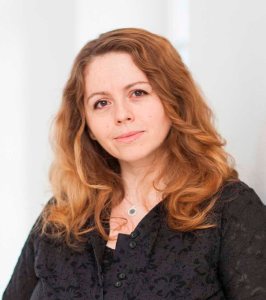
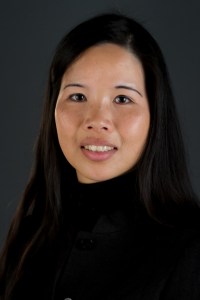
Jane Yau is a senior researcher at the Leibniz Institute for Research and Information in Education in Germany.

Jane YauShe is a member of the Global Young Academy and co-led the Science Education for Youth and UN SDGs working groups from 2022-24. She is also a member of the International Science Council and an expert member of the Science Education consultative working group. In addition, she is an Advisory Committee member of the Smithsonian Science Education Center based in Washington DC. Previously, she was a Visiting Researcher at the UNESCO Institute for Lifelong Learning, Hamburg.

She is currently the Program Manager of a Horizon Europe project – GREAT Realising Effective and Affective Transformation (2023-26), that aims to use games as an effective global communication channel between citizens and policy-makers. Via games, citizens’ attitudes on climate policies are collected with the aim of supporting policy-makers to make policies more suited to their needs. She has published over 80 articles in Mobile Learning, Learning Analytics and Educational Technologies.


Work for CID:

Jane Yau is participating in an expert group organized by the Center.

Ping Yang Profile

Profiles

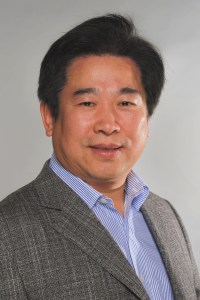
Ping Yang holds a PhD in Linguistics from Macquarie University in Australia, and is Senior Lecturer in the School of Humanities and Communication Arts at Western Sydney University.

Ping Yang

His teaching and research areas of expertise are intercultural verbal and nonverbal communication, socio-cultural linguistics, educational linguistics, TESOL teacher education, and translation studies. He also publishes and supervises PhD candidates in these areas.

Dr. Yang is an associate editor of international peer-reviewed journals, such as SAGE Open, Current Trends in Translation Teaching and Learning E and Humanities & Social Sciences Communications. He is an editorial board member of Australian Review of Applied Linguistics and English Language Teaching. He has been invited to peer-review book manuscripts for world-renowned publishers, including Routledge, SAGE, and Springer Nature. He is also an internationally recognised reviewer for many peer-reviewed journals of different disciplines. See details at https://orcid.org/0000-0002-3646-438X.

Selected publications:

Yang, P. (2024). Interpreting ethics in crisis in the conflict zones: A focus on the Afghanistan War. In C. J. M. Declercq & K. Kerremans (Eds.), The Routledge handbook of translation, interpreting and crisis (pp. 187-199). Routledge. https://doi.org/10.4324/9781003207580-16

Susilo, A., Yang, P., & Qi, R. (2023). Developing critical intercultural awareness through video clip-assisted intercultural tasks. Higher Education Pedagogies, 8(1).
https://doi.org/10.1080/23752696.2023.2235337

Yang, P. (2022). Co-constructing intercultural identity in the work-integrated learning: Pre-service TESOL teachers’ professional development. In K. Sadeghi & F. Ghaderi (Eds.), Theory and practice in second language teacher identity: Researching, theorising and enacting (pp. 121-135). Cham, Switzerland: Springer International Publishing. https://doi.org/10.1007/978-3-031-13161-5_9

Yang, P. (2020). Intercultural responsiveness: Learning languages other than English and developing intercultural communication competence. Languages, 5(2), 1-13.
https://doi.org/10.3390/languages5020024

Yang, P. (2020). Informal learning: Approaching Chinese language and culture in authentic contexts. In M. Tian, F. Dervin, & G. Lu (Eds.), Academic experiences of international students in Chinese higher education (pp. 101-124). New York: Routledge.
https://doi.org/10.4324/9781003026143-7

Alkhlaifat, E., Yang, P., & Moustakim, M. (2020). Code-switching between Arabic and English in Jordanian GP consultations. Crossroads: A Journal of English Studies, 30(3), 4-22.
https://doi.org/10.15290/CR.2020.30.3.01

Yang, P. (2019). Intercultural dialogue as constructive and positive communication: From intercultural communication to global peacebuilding. In P. Samuel (Ed.), Intercultural and interfaith dialogues for global peacebuilding and stability (pp. 30-49). IGI Global.
https://doi.org/10.4018/978-1-5225-7585-6.ch002

Yang, P. (2016). Intercultural communication between East and West: Implications for students on study abroad programs to China. In D. M. Velliaris & D. Coleman-George (Eds.), Handbook of research on study abroad programs and outbound mobility (pp. 755-777). Hershey, PA: IGI Global. https://doi.org/10.4018/978-1-5225-0169-5.ch030 

Yang, P. (2010). Managing miànzi (face) in Mandarin Chinese talk-in-interaction: A nonverbal perspective. Semiotica, 181(1/4), 179-223. https://doi.org/10.1515/semi.2010.041


Work for CID:

Ping Yang is the author of KC112: Intercultural Nonverbal Communication and is participating in an expert group organized by the Center. He also has served as a reviewer of translations into Simplified Chinese.

Maja Nenadovic Profile

ProfilesMaja Nenadovic holds a Ph.D. from the University of Amsterdam, and is the co-founder of the Croatian Education and Development Network for the Evolution of Communication – HERMES and of Reflectory, a consultancy in the fields of conflict transformation, social cohesion and civic engagement.

Maja Nenadovic

Maya is a monitoring and evaluation specialist, dialogue facilitator, human rights & civic education specialist, debate coach, critical pedagogy practitioner, and program design consultant. She has worked in 40+ countries worldwide. Since 2012, she has implemented “Across Divides – Training Workshops for Depolarizing Communication,” a methodology that she developed and tested in the field through a series of workshops and dialogues with both individuals using discriminatory and hate speech rhetoric, and with people and groups targeted by it. In addition she serves as a Board member of the Global Dialogue Collective.


Work for CID:

Maja Nenadovic participated in a CID/UNESCO focus group for the Futures of Education Initiative, and is participating in an expert group organized by the Center.

Polina Ivanova Profile

ProfilesPolina Ivanova is a postdoctoral researcher at the University of Bremen, in Germany.

Polina Ivanova


Her research interests lie in the areas of migration and migrant integration, focusing on international students, refugees and asylum seekers, and highly skilled migrants. She is also interested in intercultural communication, particularly in the context of higher education. Her work primarily centres on Japan, with comparative analyses extending to Australia, the United Kingdom, and the United States. Her recent books include Civil Society and International Students in Japan: The Making of Social Capital (Routledge, 2023) and Refugees and Asylum Seekers in East Asia: Perspectives from Japan and Taiwan (Palgrave Macmillan, 2024).


Work for CID:

Polina Ivanova will be participating in an expert group for the Center.

Yehuda Silverman Profile

Profiles

Yehuda Silverman is a peacebuilding pracademic (practitioner/academic) who specializes in conflict prevention, analysis, and transformation. He is currently an Instructor at Northwestern University’s Civic Education Project (in the US) and occasionally teaches at Brock University (in Canada).

Yehuda Silverman

At Acquaint, he serves as a Cultural Exchange Assistant, with an emphasis on cultivating partnerships to foster inclusivity on their free online global platform, where people engage in one-on-one conversations with individuals from over 100 nations. He has also developed and facilitated micro-courses on intercultural communication, along with mentoring many participants.

He is additionally a Facilitator at Civic Synergy and the International Center for Religion and Diplomacy in collaboration with AMIDEAST, and a Transatlantic Educators Dialogue Fellow at the University of Illinois: European Union Center. He also mentors emerging peacebuilders through UNESCO Global Youth Community, Initiatives of Change, and United People Global. He previously had a postdoctoral academic appointment as the Faculty Diversity Fellow at Ursuline College, where he developed and taught the course Intrapersonal Peace and Conflict Prevention.

Some of his research interests connect directly to his previous United Nations fellowships, which includes being a UNAOC Fellow, UNESCO MGIEP Fellow, and WFUNA Peace Fellow. In these capacities and beyond, he focuses on understanding the root causes of conflict and reimagining peace, particularly in transforming education. His specialization also comprises advancing autoethnography in the peacebuilding field to cultivate social cohesion. Yehuda’s Ph.D. is in Conflict Analysis and Resolution with a concentration in International Peace from Nova Southeastern University, and he is also a certified Facilitator in Intercultural Dialogue from the UN Habitat and Kingian Nonviolence Conflict Reconciliation from the University of Rhode Island.

Selected publications:

McIntyre, S., & Silverman, Y. (2024). Reimagining the 9/11 aftermath: Transforming violent extremism in a case study about youth, prevention, heritage, and resiliency. In L. Lixinski & Y. Zhu (Eds.), Heritage, conflict, and peace-building (pp. 206-223). Routledge.

McIntyre. S., & Silverman, Y. (2024). Cultivating social cohesion through conflict transformation in educational environments. Proceedings of the H-Net Teaching Conference, 2(1), 9-18.

Silverman, Y. (2020). The dynamics of intrapersonal conflict resolution. The Eurasia Proceedings of Educational and Social Sciences, 17, 18- 23.

Lee, K. S., Silverman, Y., Fouda, I., Stalter, S., Corvalán, A., Ferreira, E., & Cvetković, K. (2019). Recommendations made by the alumni of UNAOC programs to the United Nations Envoy on Youth, UNAOC, Summary Report.

Silverman, Y. (2018). Addressing the root causes of violent extremism: Analyzing intrapersonal frameworks to avert radicalization, United Nations Alliance of Civilizations, Final Report.

Georgakopoulos, A., Duckworth, C., Silverman, Y., & Redfering, K. (2017). Supporting literacy and peace education with youth: A community mentorship study. Peace Studies Journal, 10(2), 24-41.


Work for CID:

Yehuda Silverman participated in the CID/UNESCO focus groups for the Futures of Education Initiative, and is participating in an expert group organized by the Center.

U California Global Programs (USA)

“JobLead Program Specialist, Global Programs, University of California Education Abroad Program, Goleta, CA, USA. Deadline: 27 October 2024.

The Lead Program Specialist is a technical leader with a high degree of knowledge in the overall field and recognized expertise in specific areas; problem-solving frequently requires analysis of unique issues/problems without precedent and/or structure. May manage programs that include formulating strategies and administering policies, processes, and resources; functions with a high degree of autonomy. Applies advanced, specialized student services expertise, advises on complex student issues. Identifies systemic problems and issues and proposes solutions to management. Reporting to the Managing Supervisor (Manager) the Lead Program Specialist provides leadership to the Program Specialist team and serves as the primary operating liaison between the University of California Education Abroad Program, Systemwide Office (UCEAP) and (a) UC Study Center staff worldwide; (b) Study Abroad offices on the UC campuses; and (c) UC students participating in UCEAP. Directly responsible for supervision of Study Abroad Advisors and all operational and logistical activities pertaining to an assigned portfolio within the approximately 6,000 UCEAP program participants each year, in over 40 countries worldwide. Collaborates with all program teams to develop and integrate best practices and provide back-up support. Works to ensure these processes are as advanced and efficient as possible. Maintains primary responsibility for communicating policies pertaining to all operational aspects of students’ programs within their assigned portfolio (applications, visa requirements, housing, on site logistics, non-academic health accommodations and disability issues, host institution acceptance) to the staff abroad, campus offices, UCEAP staff, and students on UCEAP.

Rice U: Assistant Director of Study Abroad (USA)

“JobAssistant Director of Study Abroad, Rice University, Houston, TX, USA. Deadline: 30 October 2024.

The mission of the Office of Study Abroad is to provide Rice undergraduates substantial, transformational experiences that complement their Rice curriculum through academically rigorous and culturally enriching long-term international opportunities. Under supervision of the director, the Assistant Director is responsible for providing guidance and continuous support to students on all aspects of study abroad, during the entire process spanning from choosing the right program to returning from overseas. This includes information sessions as well as one-on-one advising before and during the application process, pre-departure guidance, support while overseas, and re-entry guidance.

Abdeslam Badre Profile

Profiles

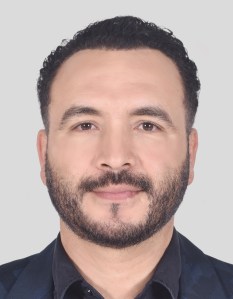
Abdeslam Badre is is a policy development expert, and associate professor at Mohammed V University in Rabat, Morocco.

Abdeslam Badre

His research seeks to analyze current norms that hamper the progress and livelihood of migrants, women, and youth as social groups. He aims to generate evidence-based recommendations to inform national and regional policies, and provide comparable data across borders for key countries in MENA and Southern Mediterranean regions, while addressing the causes of entrenched marginalization and socio-economic transformation. Badre has worked with/for a number of international organizations (including Fulbright, EU-JRC, ERASMUS+, InterAcademy Partnership (IAP), Konrad-Adenaeur Foundation (KAS), Global Young Academy (GYA), Next Einstein Forum (NEF), African Institute for Mathematical Sciences (AIMS), Institute for Cultural Diplomacy (ICD), ECSA Global, Arab Council for Social Sciences (ACSS), American Political Sciences Association (APSA), and EDU4U, among others, on various projects. He has also held visiting professor positions and research fellowships at Alfred University in New York, Monterey Institute for International Studies in California, University of North Carolina, all in the United States, as well as Aalborg University in Denmark, Institute for Cultural Diplomacy in Germany, and Babes Bolyai University in Romania. He is an Editor of the Social Science Section for Elsevier and the journal Scientific African.

Recent publications include North-South Economic Diplomacy: EU-Morocco Free Trade Negotiation (Germany, 2020); Enjeux Culturelles (Morocco, 2020); Voices of Early Career Researchers in and out of the Academy: A Pan- African Perspective (coauthored book, Germany, 2020). Currently, he is a coordinator of and author for the EuroMeSCo Joint Study Group 2021: Algeria, Morocco, Tunisia: A Comparative Perspective on Maghreb Countries Migration Cooperation with their West African Neighbours.


Work for CID:

Abdeslam Badre is part of an expert group organized by the Center.

Centers & Organizations Lists Updated

About CIDThe Center for Intercultural Dialogue maintains lists of other centers and organizations around the world having overlapping interests.

As we do every few years, we have just updated these lists, deleting links that no longer lead to functioning websites. As always, dozens of links showed up as broken, so those entries have been deleted. Where possible, we have replaced them with valid links, but in many cases, we did not find a current link that works.

If your center or organization used to be on our list, and no longer shows up, please email a current functioning link. Of course, if you have not been on our list previously but wish to be listed now, you are invited to send in a link as well.

BAEF: Fellowships for Graduate Study or Research (Belgium)

FellowshipsFellowships for graduate study or research in Belgium, Belgian American Educational Foundation, Belgium. Deadline: varies by program.

The Belgian American Educational Foundation offers fellowships for graduate study and for research for Americans who wish to do the work in Belgium, or Belgians who wish to do the work in the United States. The primary purpose of the BAEF is to instill in Belgium as well as in the United States a deep respect and appreciation for the other’s country and people. The Foundation has selected education to achieve this purpose, with a special emphasis on the younger generation. Education implies excellence in teaching, research, professional practice, management, as well as citizenship. BAEF fosters the higher education of deserving Belgians and Americans through its fellowship program between the United States and Belgium.

Graduate study for Americans to go to Belgium – Deadline: 31 December 2024.

Research for Americans in Belgium – Deadline: 31 December 2024.

Graduate study for Belgians to go to the US – Deadline: 31 October 2024.

Research for Belgians in the US – Deadline: 31 October 2024.