CFP Intercultural at ECA 13

**CALL FOR PAPERS**

INTERCULTURAL COMMUNICATION INTEREST GROUP
EASTERN COMMUNICATION ASSOCIATION
104th ANNUAL CONVENTION
“Confluence”
April 24- 28th, 2013
Omni William Penn Hotel
Pittsburgh, Pennsylvania

The Intercultural Communication Interest Group is seeking paper and program submissions for ECA’s Annual Convention to be held at the Omni William Penn Hotel located in downtown Pittsburgh, April 24-28, 2013. The convention theme is “Confluence.” This theme is exemplified by the long tradition of communication research bringing together ideas from various perspectives of communicator, message, channel, and context to better understand how humans create meanings and relationships. The theme clearly reflects the best in our interdisciplinary scholarship. Given this year’s conference theme, the intercultural communication interest group strongly encourages works that explore one or more of following areas of intercultural communication for submission:
Critical Intercultural Communication
Queer Intercultural Communication
Transnationalism, Diaspora, and Migration

In addition to:
African Communication and Culture
Asian Pacific Communication Studies
Disabilities Issues
Gender (Feminist, Women’s and/or Men’s) Communication Studies
Gay-Lesbian-Bisexual-

Transgender-Queer (GLBTQ) Communication Studies
Latino/Latina Communication StudiesAll submissions must be made electronically and received by October 14, 2012.Individual Paper Submissions:
Individual papers are completed papers that report original research, provide an extensive literature review or state of the art, or showcase some other form of scholarship. Papers that are to be considered will be no more than 25 pages (excluding title page, abstract, references, and appendices) and comply with the guidelines set forth in APA 6th edition. Submit two files (see below) concerning your submission, saved in Microsoft Word (.doc files) to Dr. Shinsuke Eguchi at shinsuke.eguchi@gmail.com. Include in the email subject line the abbreviation “ECA” and the title of your paper. Include in the text of the email any requests for presentational aids (please see the technology statement listed below). Each submission must adhere to the following guidelines:

*       The first file should include the completed paper; a one-page abstract; and a title page with the author name(s) and contact information (affiliation, mailing address, phone number, email address), the word “debut” if the author has not presented previously at a regional or national conference, an indication of who will present for multi-authored papers, and the statement of professional responsibility which appears below.

*       The second file should include the completed paper beginning with a one-page abstract. Please mark the word “debut” on the top right corner of the abstract page if the author has not presented previously at a regional or national conference.  All author-identifiers (excluding previous scholarly works cited in the paper and listed on the reference page) should be removed from this file.

Program Submissions:
We welcome submissions for a variety of programs including papers’ panels, round tables, and symposia. Feel free to contact the program planner with any ideas before you submit; we are happy to help with arrangements or contact potential participants.  Panels should strive to include as many different institutions as possible.

Submit one copy of your proposal saved in Microsoft Word (.doc) to Dr. Shinsuke Eguchi. Include in the email subject line the abbreviation “ECA” and the title of your program.  Include in the text of the email any requests for presentational aids (please see the technology statement listed below). Each submission must include the following:
*       A title page with a thematic title for the program; panelists’ names and contact information (affiliation, mailing address, phone number, email address); and the statement of professional responsibility that appears below.
*       Names of the chair and respondent, if any (note: individuals may not simultaneously chair, respond, and/or participate – a variety of individuals is required for panels)
*       A rationale for the program.
*       A title and (maximum) 150 word abstract for each presentation.
*       A description of the panel (maximum 75 words) to appear in the final program.

Important Notes:
*       All submissions must include ECA’s Statement of Professional Responsibility: “In submitting the attached paper or proposal, I/We recognize that this submission is considered a professional responsibility. I/We agree to present this panel or paper if it is accepted and programmed. I/We further recognize that all who attend and present at ECA’s annual meeting must register and pay required fees.”
*       ECA’s Technology Policy: Equipment rental is very expensive. Therefore, before requesting technology, please read ECA’s statement on technology.
*       Submissions that do not comply with the guidelines listed above will be returned.
*       For additional information about the convention, including short courses and other programming, please see the ECA website.
*       For additional information about this call for papers, please contact the Intercultural Communication Interest Group Program Planner:

Shinsuke Eguchi, Ph.D.
Assistant Professor of Intercultural Communication (Starting from August, 2012)
Department of Communication & Journalism
University of New Mexico
MSC03 2240
Albuquerque, NM 87131-0001

History of Technology Fellowship

The Karen Johnson Freeze Fellowship Fund invites young and early career scholars in the field of history of technology in Central, Southeastern, and Eastern Europe to apply for funding. The fund is an initiative of the Foundation for the History of Technology (SHT) and the Society for the History of Technology (SHOT).

The Karen Johnson Freeze Fellowship Fund seeks to encourage scientific research and facilitate active participation of early career scholars in Central, Southeastern, and Eastern Europe, in particular in Albania, Belarus, Bosnia and Herzegovina, Bulgaria, Croatia, Czech Republic, Estonia, Greece, Hungary, Kosovo, Latvia, Lithuania, Macedonia, Moldova, Montenegro, Poland, Romania, Russia, Serbia, Slovakia, the Ukraine, and Turkey.

The fund was established in memory of Karen Johnson Freeze, who broadened the perspective of the history of technology through the inclusion of Eastern, Central, and South Eastern Europe. She was responsible for the early contacts with young scholars in the region and pointed out existing preconceptions and biases, while bridging the scholarly divisions created as a result of Cold War politics. Through her efforts, the history of technology has begun to develop as a field in Central and Eastern Europe. Within Society for the History of Technology (SHOT), she served as a very active chair of the International Outreach Committee.

Who Should Apply? The Karen Johnson Freeze Fellowship Fund supports early career scholars preferably working in Central, Southeastern, and Eastern Europe in their pursuit of either pre- or postdoctoral research in the field of history of technology. The award may be used for travel and/or small stipends to provide a basic income for a few months. Through the fund, early career scholars will be allowed to attend international conferences or visit distant archives.

How to Apply? Send an application to the Foundation for the History of Technology. In your application you should include:
a research statement about your ongoing or future research (2-3 pages)
a description of how you plan to use the Karen Johnson Freeze Fellowship within the context of your work (1 page)
your curriculum vitae
a reference letter of someone knowledgeable about your work
Please, send your application by regular mail or e-mail to:
Foundation for the History of Technology
Dr. Jan Korsten, Business Director
C/o Eindhoven University of Technology
IPO-Building 2.31
P.O. Box 513
5600 MB Eindhoven
The Netherlands

Application Deadline: Two fellowships will be awarded annually. The next application deadline is July 31, 2012. The 2012 fellows will be announced during the Tensions of Europe / SHOT meeting in Copenhagen, October 3-7, 2012.

Selection Committee: Fellows are selected by a committee consisting of Prof. Dr. Luda Klusakova (Charles University, Prague, Czech Republic), Prof.Dr. Ruth Oldenziel (Eindhoven University of Technology, the Netherlands), Dr. Dobrinka Parusheva (University of Plovdiv, Bulgaria) and Prof. Dr. Steve Usselman (Georgia Institute of Technology, USA).

What are the conditions? A Karen Johnson Freeze Fellow will be granted an award of a maximum of €2,000.–. The expenses will be paid directly to the fellow after submission of a statement of expenses and the original receipts. In emergency cases, an advance payment may be available. Expenses are refunded in accordance with the regulations of the Foundation for the History of Technology.

Fellows are required to publish a report/article in the Tensions of Europe Newsletter and the SHOT Newsletter. Additionally, the Fellows will be offered the opportunity to publish their report in the Tensions of Europe Working Paper series.

ICA 2012

The International Communication Association convention was held from May 23-28, 2012, in Phoenix, AZ. I presented a paper co-authored with Yves Winkin, of the École Normale Supérieure de Lyon entitled “Walk Like a Local: Pedestrian Behavior in the US, France, and China” to the Urban Communication Foundation Preconference.

(Thanks to Casey Lum for both organizing the event, and for the photo of me at the Seminar.) I also served as respondent to a panel entitled “Narrative and Community in Intractable Conflicts.” In addition, the Language and Social Interaction Division honored me with a panel entitled ” Constructing Communities of Scholars: Celebrating the Work of Wendy Leeds-Hurwitz” (thanks to Theresa Castor for organizing the event, and to Liliana Castañeda Rossmann, Teri Harrison, Beth Haslett and Saskia Witteborn for participating).

We continued the tradition of holding a mini-meeting of those members of the Advisory Board of the Center for Intercultural Dialogue who were present at a conference (this time it was Donal Carbaugh and Michael Haley) along with the past and current Presidents of our parent organization, the Council of Communication Associations (Patrice Buzzanell and Linda Steiner).

While at ICA I connected with many international scholars, including some of those I had met or visited during the last year or two of travels: Simon Harrison (met in France, now based in Germany), Ifat Maoz (Israel), Saskia Witteborn (Hong Kong), Vivian Chen (Singapore), and Carla Ganito (Portugal).

Wendy Leeds-Hurwitz, Director
Center for Intercultural Dialogue

Human Rights fellowship

Vacancy: E.MA Fellow 2012/2013
The European Inter-University Centre for Human Rights and Democratisation (EIUC) is looking to appoint a highly qualified individual specialised in International Human Rights Law as E.MA Fellow for the 2012/2013 academic year in Venice-Lido, Italy.

The position involves a combination of academic and administrative responsibilities connected with the E.MA Programme. This is an exciting opportunity for a committed young scholar willing to actively participate in a unique Master’s programme, to advice our postgraduate students, to liaise with a prestigious faculty and to support our dedication to human rights and democratisation.

The assignment is for an initial period of six months, from 27 August 2012 to 31 January 2013, with the possibility of renewal subject to performance and funding.

For details, please visit our E.MA Fellow 2012/2013 page.

Closing date for receipt of applications: 1 June 2012

CFP Middle East Dialogue

Call for Proposals:
Middle East Dialogue 2013- New Directions in the Middle East

The Policy Studies Organization (PSO) invites proposals for the Middle East Dialogue 2013 focused on new directions in the Middle East. The Dialogue will be held at the Whittemore House in Washington, DC on Thursday, February 21, 2013. The purpose of the conference is to promote dialogue about current policy concerns and to provide a civil space for discussion across the religious and political spectrum.

We encourage proposals to be sent in before our early deadline of September 15, 2012 for priority consideration to PSO executive director Daniel Gutierrez-Sandoval at dgutierrezs@ipsonet.org. For more information, visit our website.

The Policy Studies Organization publishes 11 journals and 3 book series. We promote discussion of policy concerns and further research and dissemination of policy scholarship.

Dana Kauffman
Policy Studies Organization
Communications Director
1527 New Hampshire Ave NW
Washington, DC 20036
Phone: 202-349-9284
Fax: 202-483-2657
http://www.ipsonet.org

CFP African Americans living abroad

Call for Book Chapters and Book Chapter Proposals
Working Title: The Hidden Lives of African Americans
Living Abroad Series, Book 1: Articulating the Opportunities and Challenges of Living Internationally.
Edited by Kimberly D. Campbell, Ph.D.

Rationale: For years African American writers, entertainers, soldiers, diplomats, activists, artists, and intellectuals have travelled, and at times, have relocated to countries outside of the U.S.A. W.E.B. Dubois moved to Ghana, James Baldwin and Josephine Baker moved to Paris. Despite the well documented impact and contributions of African American celebrities to countries outside of the U.S.A., and despite increased global market integration which has dramatically increased the number of Americans projected to work in overseas locations during the 21st century, little understanding of the “everyday” communicative, cross cultural experiences of African American expatriates is understood. While anecdotal data indicate that the experiences of African Americans living abroad qualitatively differs from those of European Americans, there is a substantial lack of scholarship that investigates the ways in which national and ethnic identities are expressed (and experienced) cross culturally by Black Americans living overseas. In many ways, the everyday lived experiences of African American expatriates living abroad remain unknown – and largely neglected by mainstream media and academic research. This series seeks to examine and highlight what life is like for African Americans living abroad.

The African Americans Living Abroad series has one goal: to be the best source of authentic reflections on the lived experiences of African Americans living abroad. Book one seeks to address a scholarly gap by articulating the contemporary “everyday” experiences and meaningful interactions of African Americans who live, work, love, and raise families while navigating personal, cultural, racial, and national identities in countries outside of the U.S. for extended periods of time (e.g., nine consecutive months or more). Essays that highlight critical incidents and experiences of African Americans living in Africa, Asia, Australia/Oceania, South America, Europe, North America, and Antarctica are welcomed. This call solicits engaging essays that encompass a range of authentic experiences abroad – the good, the bad, the ugly, the insightful, and especially the life-enriching and transformational. Essays that vividly highlight the experiences of African American expatriates!
in previous and contemporary eras are welcomed.

Target Audience: The target audiences of this text are both popular and academic. The teacher or business professional contemplating overseas employment will find the essays engaging and useful in providing frames of reference for imagining overseas life. The scholar interested in cross cultural communication and identity research will find the essays authentic, multidisciplinary, contemporary, and suitable for undergraduate and graduate students. Artists, playwrights, and practitioners in the fields of communication studies, journalism, training and development, anthropology, sociology, Black studies, American studies, international affairs, history, geography, and cultural studies will find the essays suitable for engaging contemporary issues of race, class, gender, and culture in a global context. Additionally, the book will be a useful reference for anyone interested in global learning, studying abroad, and/or traveling overseas.

Suggested Chapter Topics
Submissions focusing on (but not limited to) the following topics are encouraged:
•       Defining African American: (re) Negotiating cultural and national identity overseas
•       What it’s like to be the only African American in the country
•       “But you don’t have blonde hair or blue eyes” : Encountering and overcoming stereotypes of the “All American” image abroad
•       “How do they treat Black people there?” Addressing the pre-departure fears of friends
•       The African American and the European American Expats: Similarities & Differences
•       The African American and the European Expat: Similarities and Differences
•       Perceptions of African Americans abroad
•       When the new neighbor is African American: Living in non-expat neighborhoods abroad
•       African American Image in Overseas Advertising
•       The Obama Effect: African Americans overseas in the era of the Obamas
•       Renting and buying property overseas
•       Raising African American children overseas: challenges and opportunities
•       Dating and loving overseas
•       African American sexuality: encounters relating to perceptions of AA body type, masculinity, femininity, and/or other aspects of sexuality
•       The African American woman overseas and/or The African American man overseas
•       African American families overseas
•       African American gays and lesbians overseas
•       Gendered experiences of African Americans living overseas
•       Professional experiences of African Americans working overseas
•       African American students living and learning abroad (student and parent perspectives)
•       Returning to the U.S. and Readjusting to Home

Submission Guidelines: Prospective contributors should submit an abstract, approximately 100 words in length, explaining the purpose, objectives, and/or focus of the proposed chapter on or before August 15, 2012. Abstracts should include contact information for all authors, a C.V. or resume, and a brief 50-word bio for each author. Authors of accepted proposals will be notified by September 15th.

Chapter submissions of original work should be no more than 8,000 words, including title, abstract, and references, and should be submitted as one document. Completed chapters are required by October 15th and must be APA formatted with 12-pt Times New Roman font. Works should not be previously published or under review for publication elsewhere.
All inquiries and submissions should be sent to Kimberly Campbell.

CFP Creative production in digital environments

Call for Working Group Members:
Evaluating Creative Production in Digital Environments

Social media have dramatically popularized practices of evaluation, especially of cultural products and expressions. We are able to rate and “like” pretty much any shared content on social networking sites, from music to blogs, videos to news reports. Artists are developing reputations and careers now through a complex blend of online social reputation and distribution platforms and more longstanding forms of market and professional evaluation.

We are seeking researchers to participate in a working group that will collectively chart this new terrain. Selected researchers will receive a stipend and support to participate in a set of working meetings in the coming academic year. The aim of the working group will be to produce an edited volume that will define the landscape of contemporary work on how the evaluation of creative production is being transformed in the digital era. The working group is funded by, and will contribute to the larger initiative focusing on digital media and learning sponsored by the Digital Media and Learning Research Hub at the University of California, Irvine and supported by the MacArthur Foundation.

The Working Group on Evaluating Creative Production in Digital Environments seeks researchers who strive to understand and examine the emergence of new or alternative modes of evaluation in digitally enabled or displayed ¬ creative practices including fine arts, literature, digital storytelling, films, documentaries, performances, animation, digital arts, and gaming.  The goal of this Working Group is to explore the implications and methods of new or alternative evaluating mechanisms in the digital environment, such as competitions, contests, rating, ranking, “liking,” digital badge rewards, and open critiquing and feedback. In doing so, we will be addressing a variety of questions. These include:

*      What are the predominant and emerging practices related to the gaining of value and/or the managing of reputations linked to creative works in digital media environments?
*      What is at stake in the evaluation of creative works in digital environments?
*      How can “liking” practices on social networking sites be conceptualized as a form of evaluation?
*      Who and what determine the value of the arts in the digital environments?
*      What are the alternative forms of evaluation, and how do they impact aesthetic tastes?
*      How do the politics of aesthetic taste and subjectivities in the judgment of creativity intersect with the market-driven digital economy?
*      Can artistic evaluation taking place in digital environments facilitate learning?

The Working Group will be
1)    Examining the new modes of evaluation tools on the digital media/social media environments, such as contests, competitions, ranking, and ratings;
2)    Understanding the differences between digital evaluations taking place in traditional educational/learning settings vs. non-traditional, interest-driven learning environments;
3)    Investigating criteria/assessment for evaluations of artistic works and aesthetic tastes;
4)    Questioning what is at stake as digital/social media environments play a role in the evaluation of creative works;
5)    Exploring the benefits and potential shortcomings/dangers of the new era of evaluations of creative productions in the digital media environments.

This Working Group is particularly interested in proposals that focus on “learning” aspects that are rewarded with badges, to be aligned with the 2012 Digital Media and Learning’s theme on “Badges for Lifelong Learning,” but other relevant considerations and contributions are welcome as well.

The members of working group will be required to attend at least 2 or 3 meetings throughout the year 2012-2013 to discuss, exchange research ideas, and receive updates on each others’ research progress, as well as share challenges and shortcomings.  The ultimate goal for the members is to each produce a chapter for a co-produced book in the making.

During this year, the members of the work group will be asked to each prepare a research presentation of about 10-20 min. Discussions and feedback will follow.  In addition to meetings, further discussion will continue via Skype, or email, as needed throughout the year. Participation of scholars who are abroad is welcome and will join via Skype.

To be considered, please send a 350-word abstract of your research proposal and a short bio to:

Principal Investigator:
H. Cecilia Suhr
suhrhc@muohio.edu

The Working Group is funded by a grant award from the Digital Media and Learning Research Competition (http://dmlcompetition.net).  Selected participants will receive an honorarium of $1000 each.

Deadline: June 20th
Notifications: July 20th
Meeting Dates and Locations: TBA

CFP Mobile media in Brazil

Convergence: The international journal of research into new media technologies
SPECIAL ISSUE Mobility and mobile media in Brazil

Edited by:
Adriana de Souza e Silva (North Carolina State University)
Isabel Froes (IT University of Copenhagen)

Important dates:
Full papers: June 15th, 2012 (8000/9000 words, including references) in English.
*       Full papers will undergo a double blind-review process;
*       Submissions may be in the form of empirical research studies or theory-building papers;
*       For formatting guidelines, please see: http://www.uk.sagepub.com/msg/conv.htm#HOWTOSUBMITYOURMANUSCRIPT
*       Papers must also include:
o       a brief biography of the author(s),
o       250-word abstract, and
o       6 keywords.

Proposals and inquiries should be sent electronically to Isabel Froes (icgf@itu.dk).
Early submissions are greatly appreciated!

By the second decade of the 21st century, mobile phones have reached saturation levels in many countries in the world, surpassing the number of landlines and personal computers. Although initial scholarly interest on the social use of mobile phones focused on Europe, Asia, and the United States, the impact of mobile phone on the developing world (or Global South) is increasingly evident and perhaps much more profound. For many, the mobile device is the first phone, the first internet connection, the first TV set, and the first global positioning system.

Among developing nations, Brazil is a key site for studying the social dimension of mobile technologies. The country is part of the so-called BRIC (Brazil, Russia, India and China), an acronym that refers to fast-growing developing economies. Brazil is the fastest growing economy in Latin America, and has over 217 million mobile phones, which represents an average of 111 working devices per 100 inhabitants. The country has also experienced one of the fastest mobile phone growth rates in the world since 2005 (averaging 16.6% annually); is the largest mobile phone market in Latin America; and is the fifth-largest mobile market in the world in absolute numbers, with roughly 217 million subscriptions as of September 2011. However, numbers alone reveal little if not analyzed within a broader social, cultural, and economic framework. The focus on a homogeneous large-scale market leads to overly sanguine perspectives that often obscure how socioeconomic diversity causes and reflects mobile phone use. As in many developing countries, Brazil has astounding income gaps among different sectors of the population, which influence and are influenced by technology development and use. For example, the use of high-end services such as mobile banking, and location-based services like Foursquare and Yelp is an intrinsic part of the daily mobile practices of the high-income population in the country. Conversely, the lower-income population in Rio de Janeiro is familiar with the diretão-a mobile phone that allows users to make clandestine calls to anywhere in the world with the use of an illegal sim card. However, Brazil has also been at the forefront of an experimental and innovative approach towards new technologies, forecasted in cultural events that focus on art, music and film festivals dedicated to new and creative uses of mobile technologies, such as the Mobilefest and Arte.mov.

Despite this cultural and socio-economic diversity, and the relevance of its marketing, the social use and development of mobile phones in Brazil is largely under theorized and poorly studied. With the goal of contributing to bridge this gap, this special edition invites essays that critically investigate the inter-relations among mobile technologies, culture, and social development within the Brazilian society.

Submitted manuscripts are encouraged (but not limited) to focus on:
(1) History of mobile phones in Brazil. Essays are encouraged to explore the development of mobile phones in Brazil, comparing them to the landline infrastructure and internet growth within the Latin America socio-economic and political framework. Authors may explore the development and use of new mobile services, such as the mobile internet, text messaging, mobile apps, etc.
(2) Social uses and appropriation of mobile phones. We welcome essays as empirical or theoretical studies dealing with the use and appropriation of technology by low-income communities. Of special interest are essays that explore how mobile and wireless technologies reconfigure the life of community dwellers and how people find new and unexpected uses for existing technologies.
(3) Mobile art and games. We invite essays that investigate mobile phones as artistic and gaming interfaces, including essays that explore uses of hybrid reality, location-aware and pervasive activities in educational contexts, media arts, and gaming.
(4) Location-based services. Submitted essays should investigate the uses and development of location-based services in Brazil, such as mobile annotation, location-based social networks, and mobile mapping.

About the editors:
Adriana de Souza e Silva is Associate Professor at the Department of Communication at North Carolina State University (NCSU), affiliated faculty at the Digital Games Research Center, and Interim Associate Director of the Communication, Rhetoric and Digital Media (CRDM) program at NCSU.Dr. de Souza e Silva’s research focuses on how mobile and locative interfaces shape people’s interactions with public spaces and create new forms of sociability. She teaches classes on mobile technologies, location-based games and internet studies. Dr. de Souza e Silva is the co-editor (with Daniel M. Sutko) of Digital Cityscapes-Merging digital and urban playspaces (Peter Lang, 2009), the co-author (with Eric Gordon) of the book Net-Locality: Why location matters in a networked world (Blackwell, 2011), and the co-author (with Jordan Frith) of Mobile interfaces in public spaces: Control, privacy, and urban sociability (Routledge, 2012).

Isabel Fróes has received her Masters degree from the Interactive Telecommunications Programme at New York University (NYU) and a Bachelor’s degree in psychology from Pontifícia Universidade Católica, Rio de Janeiro, PUC-RJ in Brazil. She is a lecturer at the IT University of Copenhagen (Denmark), where she works both as a practitioner and scholar in the fields of communication, mobility, art and design. With a focus towards valuable interactions between people and technology, her research analyzes the future implications and current uses of digital media. In her courses she taps into the value of interactive elements in every arena and explores how they could affect the ways new concepts and activities are developed in distinct fields. She has presented some of these thoughts at various events such as the AAM conference (2009), and the IXDA South America (2010,2011). She has taught various courses at Danish institutions such as IT University of Copenhagen, University of Copenhagen and Kolding School of Design as well as Tecnológico de Monterrey, Campus Querétaro in Mexico.

Proposals and inquiries should be sent electronically to Isabel Froes.

University of Coimbra

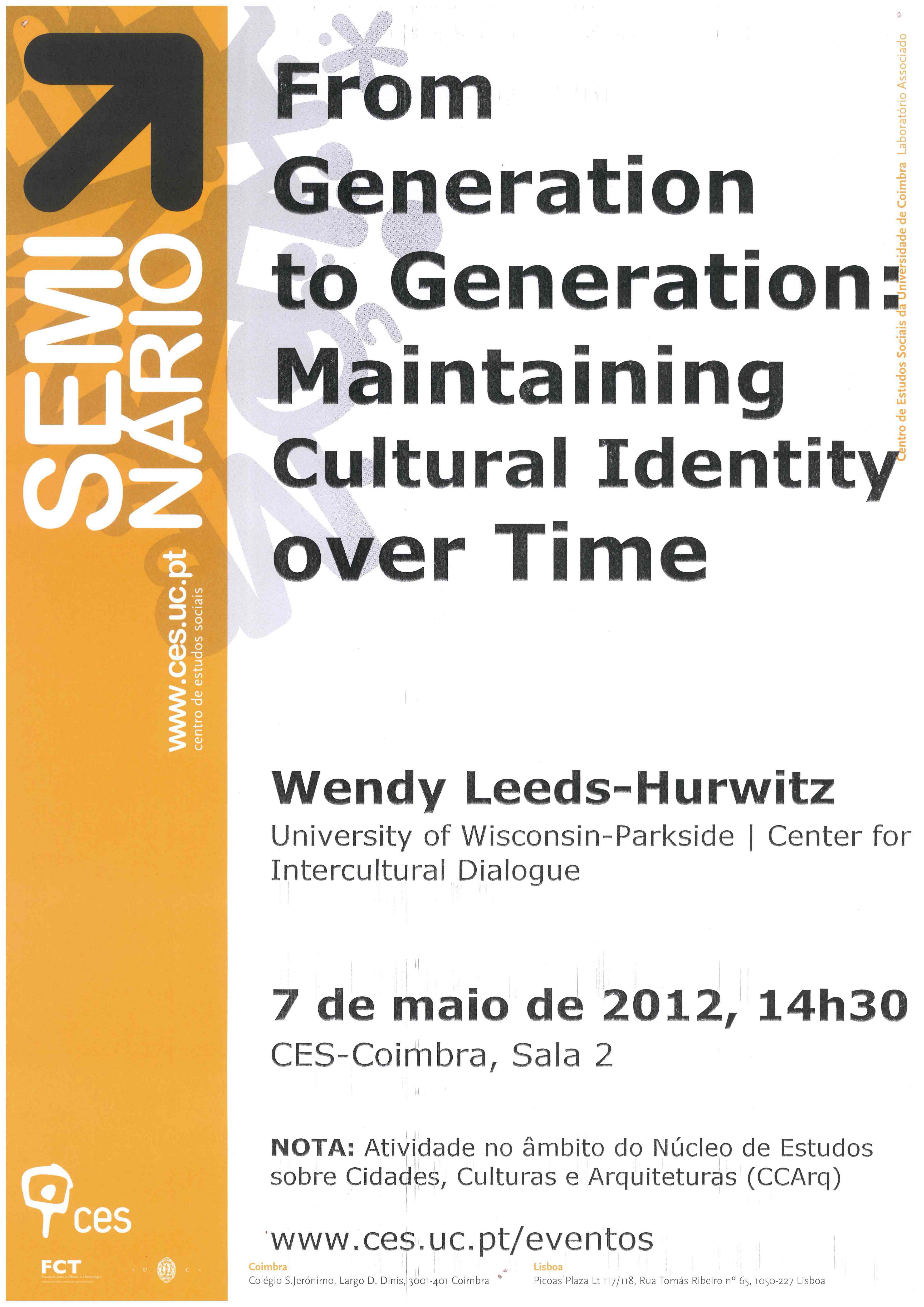
On May 7, 2012 I presented a talk entitled “From Generation to Generation: Maintaining Cultural Identity Over Time” to Centro de Estudos Sociais (CES) da Universidade de Coimbra, in Coimbra, Portugal. One of the uncommon aspects of CES is the way it combines multiple disciplines, including sociology, economics, law, anthropology, history, literature, international relations, geography, architecture, geographers, engineering, biology and medicine. Of course not all of these were represented in my audience, but I was delighted to discover two architects in the group.

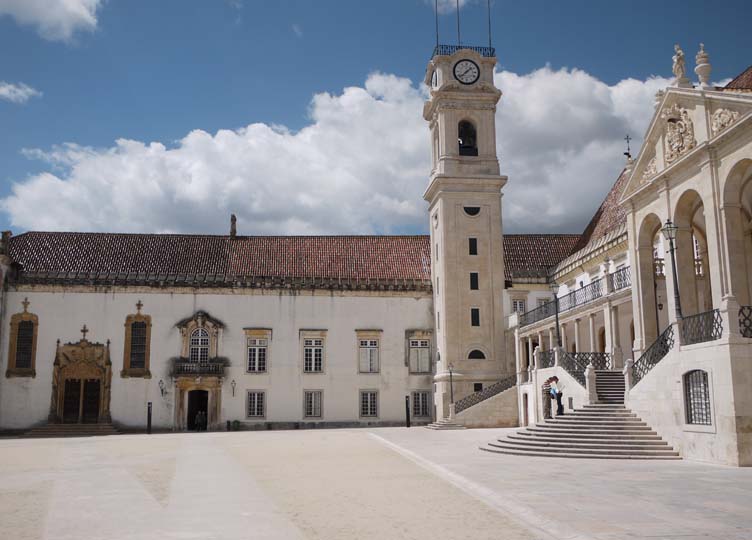
The University of Coimbra is one of the oldest universities in the world. Visitors are not allowed to take photographs in the library, but it alone is worth the trip. Here is the main square, and the tower, visible from nearly anywhere in the city.

My thanks to Dr. Nancy Duxbury, a Canadian scholar currently based at CES, for the invitation, and for organizing the talk as well as dinner afterwards. I met Nancy several years ago at a UNESCO meeting in Paris, and it was a pleasure to connect again. Nancy’s recent research has focused on cultural sustainability and approaches to linking culture and sustainability in community planning initiatives.

Wendy Leeds-Hurwitz, Director
Center for Intercultural Dialogue

CFP Information identities

CALL FOR PAPERS
SIGCIS Workshop 2012
Information Identities: Historical Perspectives on Technological and Social Change
Sunday October 7, 2012 – Copenhagen, Denmark

DEADLINE for submissions: 15 June 2012

The Society for the History of Technology’s Special Interest Group for Computers, Information and Society (SIGCIS) welcomes submissions for a one-day scholarly workshop to be held on Sunday, October 7, 2012 in Copenhagen, Denmark.  As in previous years, SIGCIS’s annual workshop will be held at the end of the SHOT annual meeting on the day that SHOT has reserved for SIG events.

SIGCIS invites proposals that examine the relationships between computer and information technologies and changes to individual and/or group identities, such as those shared by a nation, company personnel, or members of a virtual community. Such papers might consider:
* Specific ‘information identities,’ a term that we invite scholars to interpret broadly and creatively than has been articulated in the recent or distant past
* Relationships between information technologies and political change
* The rhetoric and discourses of globalization that have been linked to information and computer technologies
* National identity and its relation to information technology
* National and transnational strategies for joining or creating an information society, a network society, an information economy, or related concepts
* Transnational and international organizations, such as IFIP, UNESCO, the European Union, or standard-setting committees.
* Ways in which particular information technologies acquired new meanings and fulfilled new roles through interaction with local practices and identities
* The emergence of new kinds of community and identity around information technologies.

SIGCIS encourages submissions along these and similar lines of inquiry, but it also maintains a proud tradition of welcoming all types of contributions related to the history of computing and information, whether or not there is an explicit connection with the annual theme.  Our membership is international and interdisciplinary, and our members examine the history of information technologies and their place within society.

Proposals for entire sessions and individual presenters are both welcome. We hope to run special sessions featuring dissertations in progress and other works in progress. The workshop is a great opportunity to get helpful feedback on your projects in a relaxed and supportive environment. All proposals will be subject to a peer review process based on abstracts.

All submissions should be made online via the SIGCIS website.  Limited travel assistance for graduate students and other scholars without institutional support is available.  Questions about the 2012 SIGCIS workshop should be addressed to Andrew Russell (College of Arts & Letters, Stevens Institute of Technology), who is serving as chair of the workshop program committee. Email arussell@stevens.edu.