ICA 2013

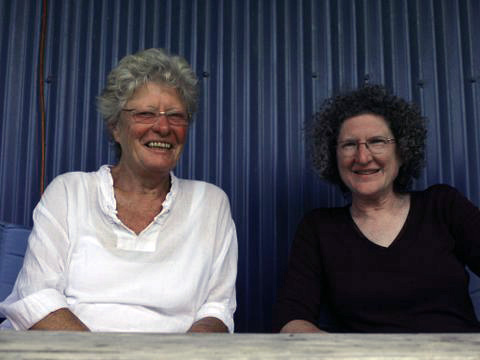
icaOn June 17, 2013, I was one of three co-authors of a paper entitled “Robert E. Park’s contribution to the history of intercultural communication” for the New Histories of Communication Study Preconference, at the International Communication Association convention in London. My co-authors were Filipa Subtil and José Luis Garcia, who I met last year while in Portugal. Dave Park, Peter Simonson and Philip Lodge did a great job of organizing the preconference. A group photo of 60 of the 80 participants is available here.

And after the preconference came the conference proper. ICA has really worked on becoming a more truly international organization (it’s now up to about 45% international members). As a result, this conference was the perfect ending for the last six months of travel because I connected again with other scholars I had last met in the countries where they live and work: China (Jiang Fei and Kuo Huang), Saila Poutiainen (Finland), John Wilson (Northern Ireland), Saskia Witteborn and Ling Chen (Hong Kong), Todd Sandel (Macau), Tamar Katriel, Esther Schely-Newman and Ifat Maoz (Israel), Cindy Gallois and Jeff Pittam (Australia). And Casey Lum, who I last met in Hong Kong, though he lives in the US. Of course, I also met a variety of friends and colleagues, both international and from the US (Richard Buttny, Theresa Castor, Don Ellis, Larry Gross, Beth Haslett, Evelyn Ho, Klaus Krippendorff, Dave Park, Jeff Pooley, Jeff Robinson, Karen Tracy and Bob Craig, Steve Wilson, Cynthia Stohl, Bill Eadie, Natasha Shrikant, François Cooren (Canada), Akiba Cohen (Israel), Olga Ivanovna Matyash (Russia), among many others – sorry not to be able to name everyone!), as well as several directly connected with this Center or the Council that is its parent organization (Linda Steiner, Brenda Berkelaar, Michael Haley). And I was glad to discover new international colleagues (Sheila Lodge, UK; Marion Wrenn, now at Princeton, but shortly to be in Abu Dhabi; John Laprise, Qatar; Zrinjka Peruško, Croatia; Boguslawa Dobek-Ostrowska, Poland; Raul Fuentes Navarro, Mexico; Peter Putnis, Australia, among others). As a result, some new researcher profiles and guest posts will be appearing on this site over the next month or so. Some of the conversations were about the possibilities permitted by social media and new publishing choices, so stay tuned for additions to this site as a result.

Wendy Leeds-Hurwitz, Director
Center for Intercultural Dialogue

Culture in EU external relations

A general call is being circulated – feel free to respond directly, as described below.

“We would like to hear from you – what role should culture play in EU external relations?

In 2012 a consortium consisting of eight members, led by the Goethe Institute, Brussels, was tasked by the European Commission to carry out the preparatory action ’Culture in EU external relations” launched by the European Commission and approved by the European Parliament.

The purpose of the action is to facilitate an on-going process of research, exchange of knowledge and support policy reflection in strengthening the role of culture in external relations.

In particular, the preparatory action will contribute to formulating recommendations for a strategy on culture in EU’s external relations on basis of the comprehensive mapping exercise and consultation process involving 54 countries worldwide. Watch and hear Professor of Cultural Policy Studies Yudhishthir Raj Isar, team leader, shortly explaining the aim and purpose of the Preparatory Action.

The Preparatory Action is running until mid-2014 along with the online discussion. To sum up the process, we converge the results into a final conference in April 2014 where future recommendations for policy makers are made and the strategic approach towards mobilising action on culture in external relations is presented.

It is our goal to raise awareness of the project and make the debate on Culture in EU external relations as strong as possible by involving wider public, civil society, culture institutions, artists, public bodies and individuals who have knowledge to add and comments to share. So, please tell us what do you think?

Please visit our website/blog and join the discussion, or post a video, picture or comment #CultExtRel on Facebook, Twitter or LinkedIn. And subscribe to our Newsletter to be on top on the latest research in the field – and add your perspective and knowledge to it.

We are looking forward to passing on your recommendations to the policy makers, the European Parliament and interested parties.”

All the best,

Maiken Høj
Web-Editor, Culture in EU’s external relations
www.cultureinexternalrelations.eu

Nat U Singapore 3 job ads

The Department of Communications and New Media at the National University of Singapore (NUS) has posted ads and seeks to hire for three positions, one at the Assistant Professor level and two at the Associate Professor level. For application info, please visit this website.

NUS

1) A tenure track Assistant Professor in Health Communication for July 2014. Candidates must have a Ph.D. in Communication or a closely related field. ABDs are encouraged to apply, but a Ph.D. degree is required by date of appointment. The successful candidate should demonstrate a clear promise of research excellence in health communication. We are interested in candidates who explore health communication using participatory and culture-centered methodologies or approaches. The successful candidate will teach a range of courses in Health Communication and Communication Management/Public Relations, and work closely with the Center for Culture-Centered Approach to Research and Evaluation (CARE) at NUS. CARE is a global hub for health communication research that uses participatory and culture-centered methodologies to develop community-driven health communication solutions. Application deadline for this position is: September 30, 2013.

2. Associate Professor in Health Communication and/or Communication Management. Candidates must have a Ph.D. in Communication or a closely related field, and demonstrated excellence in teaching and research.  We are interested in scholars who approach communication through new and emergent media perspectives and value diverse research methods. The successful candidate will be expected to teach a range of courses in health communication and communication management/public relations, and play active roles in developing the Department’s graduate program and mentoring graduate students.

3. Associate Professor in Media Studies/New Media. The successful candidate should have a Ph.D. in Communication or a closely related field, who has demonstrated excellence in teaching and research.  We seek a colleague to conduct teaching and research in one or more of the following specializations in New Media: (a) Freedom of Speech, Regulation, and Control, and (b) Public Discourse and Public Participation. We are interested in scholars with a record of research or a research interest in Asian contexts.

Application deadline for positions two and three: August 31, 2013.

Intercultural dialogue research

I am currently preparing an entry on intercultural dialogue for the International Encyclopedia of Language and Social Interaction. This is a general call for anyone who has published on the topic to send me an email (intercult.dialogue@gmail.com) with a citation you propose for potential mention in the entry. It needs to be a specific discussion of intercultural dialogue, not of intercultural communication more generally. And it needs to be about language and/or interaction, not media, not even social media, given the publication context.

If you want to know what I have already read and am currently considering for inclusion in the discussion, see the list of publications on intercultural dialogue posted to this site (although this includes far more sources than can be mentioned). As a thank you for the time you take in sending in suggestions, I will add all relevant citations received to this publications list, so that others may learn about them.

Thanks!

Wendy Leeds-Hurwitz, Director
Center for Intercultural Dialogue

Soliya

Soliya is an entrepreneurial non-profit organization with offices in New York and Cairo dedicated to improving relations between Western & predominantly Muslim societies by combining best practices from conflict resolution and cross-cultural education with innovative application of new communication and media technologies.

Since its founding in 2002, Soliya has developed a groundbreaking online cross-cultural education program, the Connect Program, that has been integrated into curriculum at over 80 universities in 25 countries across the Middle East, North Africa, Asia, Europe & North America. In 2009, Soliya launched a new initiative called The Network, where young adults use the latest in media and communication technologies to expose people in the general public to alternative perspectives and enable them to interact in a constructive, respectful way about the issues currently dividing Western & predominantly Muslim societies. Thousands of young adults from extraordinarily diverse backgrounds have engaged in intensive facilitated dialogue and/or received extensive online training in facilitation or media production through Soliya’s programs resulting in a vibrant and active global volunteer community.

Exchange 2.0 is the primary way we are doing that, based on the belief that, in the 21st Century, it should become the norm for students to have a profound cross-cultural experience as part of their education, whether it is in person or online. We have established an Exchange 2.0 Coalition with key partners to collaboratively make that vision a reality.

The Connect Program is our flagship program that demonstrates the potential of Exchange 2.0. It is an online cross-cultural education program that has been implemented in over 100 universities in 27 countries across the Middle East, North Africa, South Asia, Europe and North America since 2003.

To provide ongoing engagement opportunities to alumni from these programs and to ensure we have dependable pool of high-quality facilitators for them, we also offer Advanced Training programs.

Finally, Civil Media, is the term we use to describe a new strategic model we are developing, which empowers the emerging community of young adults from our programs to amplify voices from civil society that are not commonly heard and catalyze constructive and respectful discourse across divisions about important socio-political issues.

[adapted from the Soliya website]

Save

CFP Globally distributed virtual teams

Special issue
connexions • international professional communication journal

December 2014

Today, information and communication technologies (ICTs) allow individuals located in different nations to collaborate almost as easily as if they were located in the same physical office.  As a result, globally distributed virtual teams now support the work of organizations across the spectrum of products and services.  Such teams are used by a range of for-profit and non-profit organizations including businesses, government organizations, the military, and educational institutions.  These organizations are increasingly employing individuals located in different nations to engage in various types of collaborative work via ICTs.

As a result of such factors, much of the modern workforce is now migrating toward a virtual model of work, and forces associated with globalization are changing the nature of competitiveness in the new economy.  Individuals, in turn, must often adapt rapidly to virtual environments and do so with little or no formal preparation in the types of professional communication practices essential to success in such contexts.  As a result, individuals working in internationally distributed teams must generally learn from their mistakes, an effective but often costly approach.  Moreover, individuals must also often adapt to working in an environment in which they are regularly paired with new colleagues and clients from different nations, cultures, and language groups.

Thus, the modern distributed workplace requires employees to account for and address three central factors—technology, culture, and language—in order to succeed in most work-related tasks.

An all-important question arising from this situation is, “How can we better prepare these individuals for this international, online context?”

A 2012 IEEE Transactions on Professional Communication special issue on global training reveals, however, that very little information on training—particularly global virtual communication training—has been published in the major professional communication journals in the last ten years.  Such a gap needs to be closed if educators and trainers alike wish to prepare adult learners to be successful participants in current (and future) business practices and processes.

This special issue on education and training for globally distributed virtual teams seeks to address this topic through articles on how best to prepare individuals to succeed in this new workplace.

In particular, the editors are interested in articles that answer questions such as:
*What types of education and training are most desired by managers and participants of global virtual teams?
*How can organizations best prepare virtual team members for working across boundaries of language? What issues affect translation and terminology?  What do team members most need to know about World Englishes, English as a Second Language, or English for Specific Purposes?
*How can organizations better prepare employees to collaborate and cooperate online and across cultural boundaries?
*How can social media be used to prepare individuals for working in intercultural online contexts?
*What legal issues can affect or should be included in global virtual team training?  What should participants in global virtual teams know about proprietary information and privacy?

In addition, the editors of this special issue welcome articles such as:
*Critical analyses of the many published task/technology models that support global virtual teams.
*Critical analyses of virtual team studies in areas such as technical training, adult education, human resources development, educational technology, human performance technology, technical communication, and user experience design.

The guest editors are also interested in discussing other prospective topics with potential contributors.

Types of articles
connexions publishes four types of articles:
*Original research articles of 5,000 to 7,000 words in length
*Review articles of 3,000 to 5,000 words in length
*Focused commentary and industry perspectives articles of 500 to 3,000 words in length
*Teaching cases of 3,000 to 5,000 words in length

Submission Guidelines
Interested individuals should send a 150-200 word proposal to
connexionsspecialissue@gmail.com
Proposals should be sent as a .docx, .doc, or .rtf file attached to an email message with the subject line:
“Proposal for Special Issue on Globally Distributed Virtual Teams.”
All proposals should include the submitter’s name, affiliation, and email address as well as a working title for the proposed article.

Production Schedule
The schedule for the special issue is as follows:
15 Jan. 2014 –Proposals due
15 Feb. 2014 – Decisions on proposals sent to proposal submitters
15 June 2014 – Manuscripts due
15 Aug. 2014 – Reviewer comments to authors
15 Oct. 2014 – Final manuscripts due to editors
Dec. 2014 – Publication of special issue

Contact Information
Completed proposals or questions about either proposal topics or this special issue should be sent to Pam Estes Brewer and Kirk St. Amant at connexionsspecialissue AT gmail.com

Save

U Mass endowed chair

The University of Massachusetts Amherst invites applications for the Endowed Chair in the Study of Nonviolent Direct Action and Civil Resistance, a new position that focuses on the scientific study of nonviolent direct action and civil resistance.

The Chairholder may be from any discipline. Departmental home and appointment at the Full or Associate level will be determined by the Chairholder’s expertise.

The Chairholder will be an integral member of the Psychology of Peace and Violence Program and pursue interdisciplinary collaboration, scholarship, and graduate training on issues involving peace, conflict, nonviolent direct action, and civil resistance. The Chairholder must apply scientific research methods to large-scale social phenomena and will provide leadership in the field. The position will begin as soon as a qualified candidate has been found.

QUALIFICATIONS: Ph.D.; an excellent scholarly record in the scientific study of peace, nonviolent direct action, and civil resistance; and exceptional promise as a national/global leader in advancing the field at UMass Amherst. A record of inclusive and multi-cultural skills in scholarly activity is strongly preferred.

RANK AND SALARY: Commensurate with experience and qualifications.

NOMINATIONS AND APPLICATIONS: Review of applications will begin on 17 September 2013 and will continue until the position has been filled.  Applications comprising a cover letter expressing interest and describing research program, a vitae, and a list of at least three references should be sent to Kelly Smiaroski or Office of the Provost, 373 Whitmore Administration Building, University of Massachusetts, 181 President’s Avenue, Amherst, MA 01003-9313.  Electronic submissions strongly preferred.

UMass Amherst is an Affirmative Action/Equal Opportunity employer. It is strongly committed to increasing the diversity of faculty, students, and curriculum, and particularly encourages applications from women and minorities.

Save

Nanzan U job ad

[This is an unofficial English summary prepared from the official Japanese announcement. Please refer to the official Japanese version for clarifications.]

Position Announcement for Specialist in Communication Studies
The Department of British and American Studies, Faculty of Foreign Studies at Nanzan University invites applications for a full-time Assistant Professor/Associate Professor in Communication Studies position as follows.

Job Title: Assistant Professor or Associate Professor
Appointment to: Department of British and American Studies, Faculty of Foreign Studies
Courses to be taught: “Political Communication” and/or “Interpersonal Communication,” “Introduction to Communication Studies,” “Special Topics in Communication Studies,” “Seminar,” and other courses including departmental English language courses and university-wide general courses
Areas of Specialization: Communication Studies
Starting Date of Appointment: 1 April 2014

Minimum Qualifications:
1. The candidate must hold a doctoral degree (PhD) in Communication Studies or related areas as of the time of appointment.
2. The candidate must be able to teach Communication Studies within the framework of British and American Studies.
3. The candidate must be able to teach Communication Studies in English and Japanese.
4. As a regular faculty member, the candidate must be willing and able to assume those non-academic administrative duties normally undertaken by faculty members.
5. Japanese citizenship is NOT a prerequisite. However, the candidate must possess sufficient Japanese skills to fulfill all administrative duties normally undertaken by staff members.
6. After hiring, the candidate must reside in an area within reasonable commuting distance of Nanzan University’s Nagoya Campus.

Application Deadline: 30 June 2013 (All documents must be received by this date.)

Required Documents:
1. Curriculum vitae—Applicant’s education and employment history should be clearly noted.
2. List of published research (papers, books, and monographs, including the MA and PhD theses) and a summary of teaching achievements.
3. Abstract of each publication listed in 2 above. (Approximately 400 characters in Japanese.)
4. Offprints or copies of the three most recent major publications. (In the list of publications, please indicate these with a circle.)
5. Proof of the highest academic degree achieved (Copy of diploma or certificate is acceptable. Please do not send original as documents cannot be returned), or a document indicating the clear prospect of acquiring PhD by the time of appointment (free format).
6. One letter of recommendation. (The relationship between the applicant and referee must be made clear in the reference. Please submit in a sealed envelope.)
Applicants who pass the document screening will be invited to come to Nanzan University for an interview at their own expense. They may be asked to demonstrate their teaching ability at the interview.

Letter of application and accompanying documents should be submitted to:
Communication Studies Position Search Committee
Department of British and American Studies
Office of the Faculty of Foreign Studies
Nanzan University
18 Yamazato-cho, Showa-ku, Nagoya 466-8673 Japan

For further inquiries, please contact:
Professor William F. PURCELL, Chair
Department of British and American Studies
E-mail: purcell AT nanzan-u.ac.jp

Notes:
1. Please note that all submitted documents cannot be returned. Please do not send originals of diplomas, certificates, or documents which cannot be replaced. Originals of papers, books, and monographs will be returned after the final screening.
2. All personal information provided on the application will be handled with utmost care in accordance with university privacy regulations. The information will not be used for any purpose other than screening candidates for the position.
3. In the case of foreign nationals (excluding those with Special Permanent Resident status) employment will begin with a two-year contract, renewable at the mutual agreement of both parties. During the third year of employment, if both parties agree, renewal from the fifth year can include an unlimited term contract (i.e. tenure).

Save

IUFM d’Auvergne

I have just spent a delightful week at the Institut Université Formation des Maîtres (IUFM) d’Auvergne, part of the Université Blaise Pascal de Clermont-Ferrand, in France. While there, I worked with three different groups. On June 4, 2013, I gave a talk and workshop for a general audience of faculty and graduate students entitled “If Learning Matters, How do I Teach Differently?” On June 5, I first worked with the faculty involved with the new diplôme enseigner dans le supérieur  (diploma for higher education pedagogy, the equivalent of a certificate in the US), and then presented a talk entitled “The Transformation of US Higher Education Pedagogy” to the students in that diploma. The talks were related to the book co-authored as a result of a stay at the Ecole Normale Supérieure de Lyon, published last fall, entitled Learning Matters. My focus was on the ways in which the Scholarship of Teaching and Learning (SoTL) has changed teaching and learning in the US, and what implications these changes have for France. Given the new diploma at IUFM, there was interest in learning about the various techniques of student centered learning.

WLH at UBP
My thanks especially to Prof. Didier Jourdan, the Director of IUFM d’Auvergne, for inviting me, and to Dr. Nathalie Younès, Maître de conférences, the responsable (person in charge of) the new diploma, for organizing the events.

WLH at UBP
Younès, Leeds-Hurwitz, Raphael Coudert, Jourdan

Since I was in Clermont-Ferrand for a week, there was also time to see some of the attractions in the area, including not only small medieval villages, but also lakes, and a row of mostly dormant volcanoes (especially Puy-de-Dôme, the tallest) and the town of Royat (a spa town with thermal springs, due to the volcanoes, and also an excellent restaurant, Le Paradis, with a great view of the region).

Nathalie_me
Leeds-Hurwitz and Younès

Wendy Leeds-Hurwitz, Director
Center for Intercultural Dialogue

Save

Internet policy post-doc

Internet Policy Observatory Post-Doctoral Fellowship or Scholar in Residence
Center for Global Communication Studies
ANNENBERG SCHOOL FOR COMMUNICATION
UNIVERSITY OF PENNSYLVANIA

The Annenberg School for Communication at the University of Pennsylvania is currently soliciting applications for the Internet Policy Observatory Post Doctoral Fellowship or Scholar in Residence at the Center for Global Communication Studies.  The Post Doctoral Fellow will help develop and manage existing research programs surrounding the Internet Policy Observatory, and develop his/her own independent related research agenda in the area of global internet policy.

Annenberg’s Center for Global Communication Studies (CGCS) is a leader in international education and training in comparative media law and policy. The Center’s research and policy work addresses issues of media regulation, media and democracy, measuring and evaluation of media development programs, public service broadcasting, and the media’s role in conflict and post-conflict environments.

The Internet Policy Observatory is a multi-component project with a collaborative network and the goal of assessing incipient Internet policy and governance shifts in key national fora where restrictive approaches are being considered. The project will examine trends and efforts where national decisions have significance for the formation of global Internet policy. In addition to sponsoring research and collaborations with key global research and academic organizations, the Internet Policy Observatory will undertake its own research initiatives to establish data on the social and political context of online communications within targeted countries. Some topics the Internet Policy Observatory will engage in include:
•       The evolution of mechanisms and processes that affect domestic Internet policy;
•       The legal, political, economic, and social factors (domestic and international) that influence the implementation or non-implementation of such policies;
•       The relationship between national efforts and international policy formations;
•       The role of civil society in domestic Internet policy processes and control; and
•       The role of public opinion as a mode of determining a “demand side” for useful Internet policy developments.

Applicants should hold postgraduate qualifications at PhD level or equivalent in a field related to internet policy studies, law or policy, communication,  media/cultural studies.  Applicants should possess a track record of publishing in high quality international journals or other appropriate refereed publications, as well as teaching experience.  Experience in research proposal development and implementation of research projects involving both quantitative and qualitative methodologies is an required. This one-year position comes with a stipend of $40,000 to $50,000 (depending on years of prior experience), health insurance, $2,000 in travel and research support, office space with computer and telephone, and full access to the Penn library system. Annenberg welcomes domestic and international applicants.  If applicant has not completed graduate studies in English, the University of Pennsylvania’s TOEFL standards apply.  The fellowship is a one year term. To apply, please send an application package with CV, statement of interest, and a brief (2-3 page) proposal for a research project related to the study of global internet policy to bsmith AT asc.upenn.edu.  Research projects may expand existing research or propose new lines of inquiry. Please contact the same email address if you have any questions.  Application deadline: June 21, 2013 with a start date tentatively (flexible) August  15, 2013.

Save