Nordic Network Intercultural Comm conference

Separation vs. integration: Challenges of bridging cultural contrasts
20th Nordic Network for Intercultural Communication Conference

The 20th NIC symposium is organised by the Institute of Germanic, Romance and Slavonic Languages  and Literatures, University of Tartu and will be held on 28- 30 November 2013 in Tartu, Estonia. Conference call has been extended to 1 November 2013.

This conference welcomes papers from all areas of intercultural communication but aims to focus on the issues of separation and integration that have always been on the agenda in the Baltic States but have become particularly acute and sensitive for the last twenty years, after the collapse of the Soviet Union.

Two cultures, Russian and Estonian have co-existed for more than two hundred years starting from the early 18th century when the Russian Empire gained control over Estonian lands by winning the war with Sweden.  Since then, numerous generations have had the opportunity to deal with the issues of separation and integration. Unfortunately, mainly due to political reasons, the integration process has not been as successful as expected.   This is where we found our inspiration for the main theme of the conference. We believe that via cooperation and discussion among intercultural communication researchers and practitioners we may manage to find solutions to problems faced by culturally different communities living side by side on a daily basis in any part of the world.  We also believe that power issues and negotiations over power are relevant to the problems involved in intercultural communication in such situations.

Therefore, we welcome contributions from all academic disciplines, including anthropology, sociology, cultural studies, political science, media and communication studies, business studies, organisational studies, educational studies, applied linguistics and sociolinguistics. We are particularly interested in case studies or theoretical papers which address issues of separation, assimilation, marginalisation and integration, as well as (discursive) power negotiations.

One of the main focuses of the Nordic Network for Intercultural Communication (NIC) is to enhance cooperation among Nordic and Baltic researchers exploring the field of intercultural communication. The main NIC activity for the last two decades has been the organisation of the annual international conference on intercultural communication, open to participants from all over the world.

ORGANISING COMMITTEE
*Krista Vogelberg, Professor at the Department of English Language and Literature
*Irina Koksharova, MA, Member of the Conference Organising Committee
Save

University at Albany

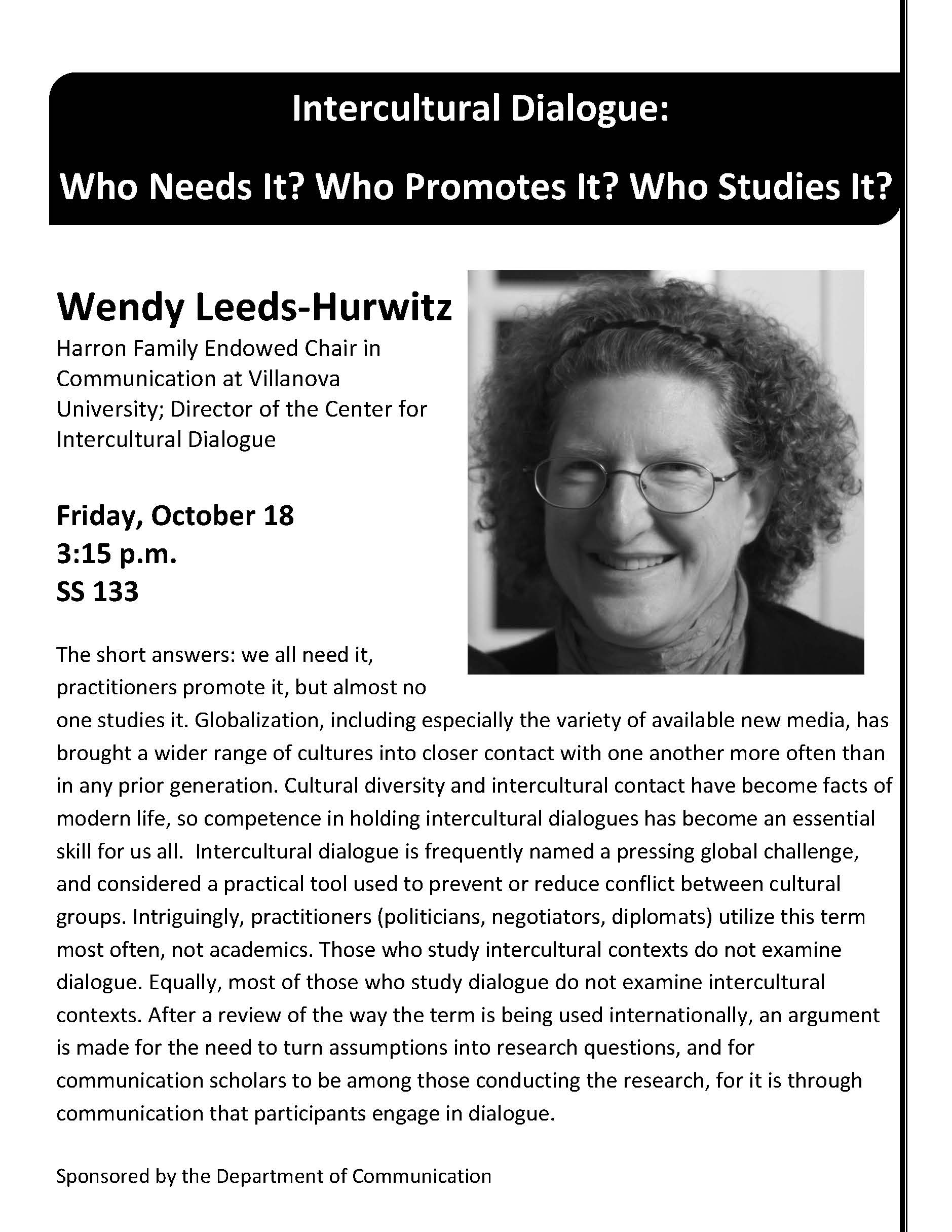
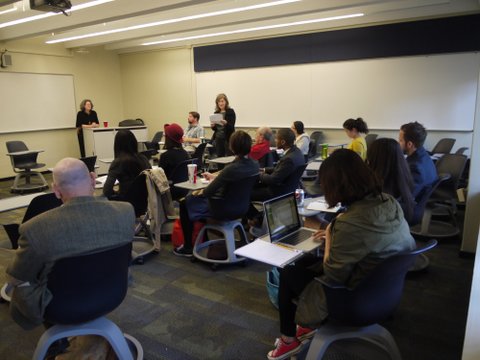
On October 18, 2013 I gave a talk at the University at Albany, State University of New York, entitled “Intercultural Dialogue: Who Needs it? Who Promotes it? Who Studies it?”

Albany flyer

My thanks to Prof. Teresa Harrison for organizing the event, and to Dr. Mihye Seo for integrating my talk into her Proseminar. While there I was able to catch up with several colleagues who I have known for many years (including Profs. Anita Pomerantz, Robert Sanders and Annis Golden) as well as meet several I had not yet met (Drs. Emilie Gould, Matthew Matsaganis).

U at Albany talk

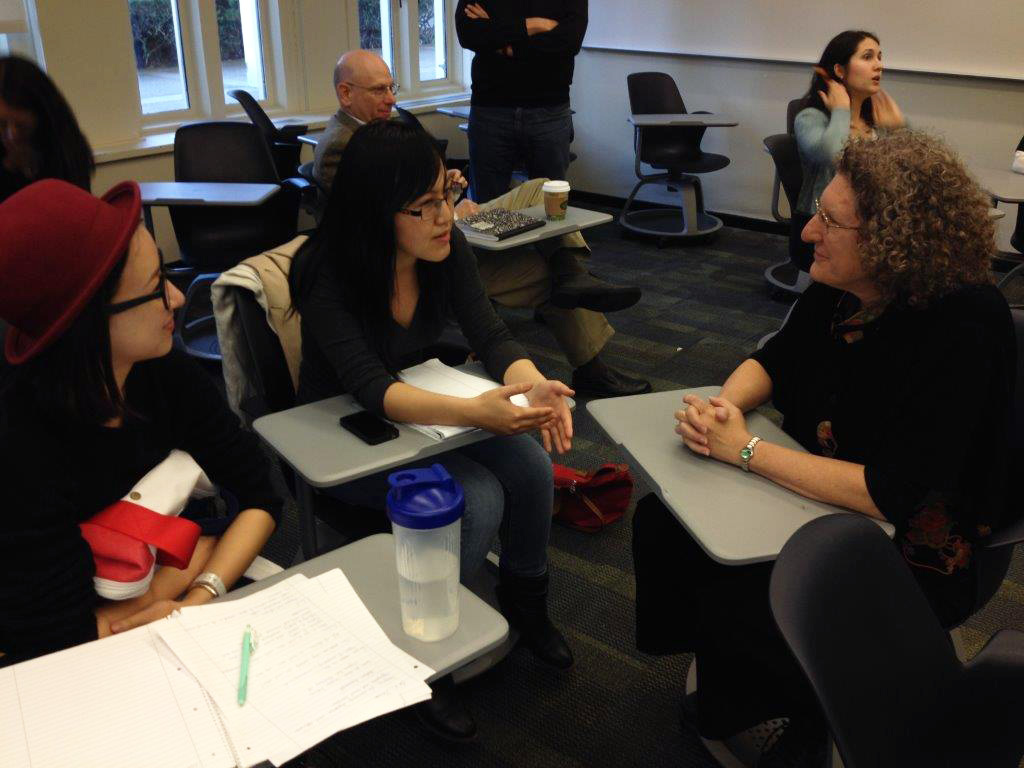
I also had the chance to talk with some of the graduate students, including Erting “Sa Sa” Sa and Sunny Zhao, below.

Albany students

Wendy Leeds-Hurwitz
Director, Center for Intercultural Dialogue

Summer Academy Peacebuilding & ICD

2nd International Summer Academy in Peace-building & Intercultural Dialogue
17.08 – 27.08.2014
Baar, Switzerland

IPD logo

The Institute for Peace and Dialogue is very glad to announce its next International Summer Academy in Peace-building & Intercultural Dialogue, which is going to be held in Switzerland 2014.  Its image as one of the most favourable places for traveling has made it more interesting to offer an exited and comprehensive program for our participants. Our experts, who are professionals in their fields will contribute to this event, with many years of experience in peace and conflict studies.

Nowadays unfortunately several frozen or ongoing conflicts between or within states still exist. Conflicts are different and if we look to the world mankind, how they are facing many new challenges, coupled with new dangerous situations, i.e. terrorist acts, non-legal arming of conflict sides, re-determination of borders, establishing new countries in the world map, non-providing territorial integrity, trafficking of arms, drugs and human; disputes on the implementation of transnational energy projects, democratization and false elections, revolution and internal political conflicts, armed guerrilla movements, violation and discrimination by nationalists, world economic crisis, climate change and unsafely biodiversity etc. Unfortunately the list is long. Conflicts are related and an integral part of human beings, as conflicts cause violation of human rights.

Existing conflicts weaken every kind of cooperation between nations and states. Without mutual cooperation and understanding, the future prosperity of the region would remain only as a good dream. Taking into consideration of peaceful behavior and engagements, we can make a decision on the strict belief, that opportunities for solving conflicts are feasible. Because in every conflict situation and tension forms we consequently face the below mentioned common situations:

1. Desperate situation and non-solving problems are not eternal;
2. It is possible to make common decision which both sides;
3. We can find common values, traditions and similar situation among conflict parties;
4. Protracted conflicts on the same time endanger regional development and prosperity;
5. Any mediation and negotiation actions are better than nothing.

Main Goal
The main goal of the summer academy is to support institutional academic peace education and strengthen peace-building skills and intercultural dialogue of the international society.

Language of the program
The International Summer Academy will be held in English.

Further information, and application, available from the Institute for Peace and Dialogue.

Massey U job ad

The College of Business at Massey University is searching for a Head of School for the School of Communication, Journalism and Marketing, to be located at either the Palmerston North or Wellington campus. Location at the Albany campus could be considered, although is not preferred.

Massey University

The Head of School provides academic leadership and strategic management of the School within the strategic framework of the College and wider University. He or she contributes to the mission and strategic objectives of the College as a member of the College Board and College Executive Team.

The successful candidate will be a dynamic, innovative and effective academic leader who will work with the Pro Vice-Chancellor to lead a large and diverse School across three campuses. The College’s strategic priorities are academic excellence, engaged staff and stakeholders, impactful research, an enterprising culture and outstanding reputation.

Employment will be on an ongoing (tenured) basis with the appointment as Head of School being an initial term of three years after which time a further term may be available or the appointee would take up an academic position within the School. The Head of School should be appointable at Professor Level.

In 2013 Massey University was ranked New Zealand’s fifth most attractive employer in in the annual Randstad Awards, an international survey conducted across 14 countries. It was also the education sector winner. The College of Business has a proud history, with New Zealand’s longest running MBA, journalism and entrepreneurship/small business programmes. The College comprises five schools: Accountancy; Aviation; Communication, Journalism & Marketing; Economics & Finance; and Management. We have programmes on three campuses (Albany, Palmerston North, and Wellington) plus New Zealand’s oldest and most substantial distance education offering. We are accredited by AACSB and AMBA, alongside several discipline-specific endorsements.

The Palmerston North campus is located in the Manawatu region, set between the Tararua and Ruahine ranges in the east and the vast Tasman Sea in the west. Manawatu combines the charm of rural New Zealand with the sophisticated city appeal of Palmerston North. It has a thriving arts and sport scene and is reputed to have the highest number of restaurants, eateries and cafe bars per capita in New Zealand.

Wellington is New Zealand’s capital, with a population of approx. 400,000. The 2010 Mercer Quality of Living Survey ranked Wellington 12th in the world. In 2011 Lonely Planet named Wellington as fourth in its Top 10 Cities to Visit, referring to the New Zealand capital as the “coolest little capital in the world”.

Closing date: 08 January 2013
Reference number: A359-13SF

Intercultural Survey

The Center for Intercultural Dialogue has been asked to help circulate the following notice:

We are currently running a survey on the nature of the intercultural profession with three goals in mind:

1. Gain an understanding of the nature of the intercultural profession globally in 2013

2. Provide guidance for newcomers in the intercultural field

3. Show the development of the intercultural profession over the last 10 years (this will be done based on the results of surveys from 2004 and 2008 from K. Berardo and G. Simons)

We are asking all  who work in the intercultural field (*), be it as educators, trainers, coaches, academics, youth workers or others, to please take time to complete the survey.

Here’s the link to the 15 mins survey: http://www.surveymonkey.com/s/ICProfessionSurvey2013

Thank you all for this collective effort to shed light on our field and the way we work.

Best regards,

Anja Franz (Lecturer and Research Associate at Institute of Educational Science (IEW), Otto-von-Guericke-University Magdeburg, Germany | M.A. Sociology and Education)

Susan Salzbrenner (Intercultural Trainer and Owner of “Fit Across Cultures”, Paris, France | M.A. Psychology)

Tanja Schulze (Program Officer for German-Indian Relations at Robert Bosch Stiftung, Stuttgart, Germany | 2011-2013 President of Young SIETAR | M.A. Romance Languages and Literature,Intercultural Business Communication, History of Economics)

(*) For the purposes of this study, ‘intercultural work’ is defined as work that focuses on the subject of culture and aims to facilitate communication and interaction across cultures. It may involve, though is not limited to, such activities as teaching, training, and consulting. We do keep the term “cross-cultural” as well since it’s commonly used in some parts of the world.

Mudra Institute Comm (India) job ad

Mudra Institute of Communications, Ahmedabad (MICA), India
Faculty Position Openings

Established in 1991, Mudra Institute of Communications, Ahmedabad (MICA) is India’s premier postgraduate institute in Communications Management dedicated to meeting the communication needs of the industry, government and community.  MICA offers  a two-year program  leading to  a Post Graduate Diploma in Management (Communication), a one-year certificate program in Crafting Creative Communication, a three-year doctoral program in communication, and a number on online programs.

MICA invites applications for the following faculty positions from bright and high calibre individuals who possess a proven track record of quality independent research and innovative pedagogical approaches. Alignment with MICA’s culture of professionalism, creativity, generosity and appreciation of diversity is highly desirable for all positions. Remuneration for all positions will be on par with the best academic institutes in India, with generous funding for research projects and to present in international conferences.

MICA invites applications for a tenure-line, open-rank faculty position in one or more of the following areas:
*       Organizational Communication
*       Strategic Leadership  & Communication
*       Brand Communication
*       Health Communication/Communication for Social change
*       Intercultural Communication
*       New Media (Digital Communication)

The desired qualification for the faculty positions is a Ph.D. in communication, organizational behaviour, psychology or a related field. Candidates must demonstrate evidence of strong scholarship, successful teaching, and a deep commitment to institute and community service. ABDs may be considered, but those hired ABD must earn their doctoral degree within six months of being hired.

Please email your application clearly specifying the position applied for and area in the subject line   by October 31, 2013. Application should have (a) covering letter, (b) Curriculum Vitae, (c) Copies of the last two relevant publications, (d) Teaching evaluations, and (e) Three references.

Interviews are scheduled during the NCA 99th Annual Convention on November 22, 2013 which will convene at the Marriott Wardman Park Hotel, Woodley Road, Washington DC.  Please let us know if you are not attending the NCA Conference so that we can organize alternate ways to connect with you.

This institution chooses not to disclose its domestic partner benefits policy.

Save

Penn State job ad Int’l Comm

International Communication Faculty Position in Media Studies
Penn State University
College of Communications

The Department of Film-Video and Media Studies is seeking candidates with the ability to contribute to the broad intellectual and creative life of an interdisciplinary media studies program.  To that end, a tenure-track assistant professor position in international communication is available starting August 2014.

Candidates should have demonstrated scholarly interest and teaching expertise in international communication and related topics (e.g., comparative media systems). Key responsibilities include teaching two courses per semester and student advising (including the possibility of graduate-level teaching and mentoring), service on departmental and college committees and the active pursuit of a substantive agenda for scholarly/creative work.  An earned Ph.D. in Mass Communication, Media Studies, or a related field is preferred, although ABD status will be considered.

The College of Communications at Penn State is home to four departments: Advertising/Public Relations; Film-Video and Media Studies; Journalism; and Telecommunications. In addition, the College offers a master’s degree program in media studies, and a Ph.D. program in mass communications. The University Park Campus is set in State College, a university town located in the heart of central Pennsylvania.  State College offers a vibrant community with outstanding recreational and cultural activities, and excellent public schools. The campus is also within a half-day drive to Washington, DC, Baltimore, Philadelphia, New York City and Pittsburgh.

To apply, send a letter describing qualifications, a c.v. detailing teaching and research/creative experience and the names of three to five references to International Communication Faculty Search Committee, College of Communications, Penn State University, 201 Carnegie Building, University Park, PA  16802.  Electronic submissions should include “International Communication Position” in the subject heading.  Screening of applications will begin immediately and will continue until the position is filled.  Penn State is committed to affirmative action, equal opportunity and the diversity of its workforce.

This institution offers benefits to same-sex and different sex domestic partners.

Save

Chase Mitchell Profile

Profiles

Chase Mitchell is Assistant Professor in the Department of Media and Communication at East Tennessee State University.

Chase MitchellHe teaches courses in multimedia production, media management, branding, and public relations. He also coordinates the department’s Adobe Certified Associate program. Chase has 10+ years of experience in strategic communication and higher education, and has lived and worked in the U.K., Southeast Asia, and the United States. He holds a Ph.D. in Technical Communication & Rhetoric from Texas Tech University, where his dissertation explored the International Coffee Organization’s rhetoric of economic sustainability. Chase’s research interests include brand and media strategy, technical communication, and metaphor.

Zrinjka Peruško Profile

ProfilesZrinjka Peruško is professor of sociology and teaches communication and media studies at the Faculty of Political Science, University of Zagreb, Croatia.

Zrinjka Peruško

Peruško is founder and Chair of its Centre for Media and Communication Research. She holds a PhD (in sociology) from the Faculty of Philosophy at the University of Zagreb. Her research expertise covers media systems democratization dynamics and media cultures in Central and Eastern Europe. She has received research funding from the Croatian Ministry of Education, Science and Sport, the Council of Europe, Open Society Institute (Budapest), Friedrich Ebert Stiftung (Croatia), UNESCO (Paris), the Croatian Foundation for the Development of Civil Society (Zagreb), and was involved in major international research networks funded by the EU COST initiative and UNESCO.

Her publications include Assessment of Media Development in Croatia, based on UNESCO Media Development Indicators (UNESCO, Paris, 2011) and Croatian Media System (according to the UNESCO Media Development Indicators) (in Croatian, Zagreb: FPZ, 2011), as well as earlier books (all in Croatian) on Democracy and the Media (Zagreb: Barbat, 1999), Media and Civil Society (Zagreb: Jesenski Turk, 2008), Introduction to Media (Zagreb: Jesenski Turk, 2011). Several articles on CEE & SEE media systems will be published in 2013 (Comparing Post-Socialist Media Systems (in Croatian), Politička misao, Vol. 50, No. 2, 2013; Media Pluralism Policy in a Post-socialist Mediterranean Media System: The Case of Croatia. Central European Journal of Communication, Vol. 6, no. 2.; Rediscovering the Mediterranean Characteristics of the Croatian Media System. East European Politics and Societies and Culture, 2013). She has also published book chapters and journal articles on media policy, television and the public interest, media concentration and pluralism, and media bias. Her current research focuses on comparative understanding of the southeast European media systems development. Her new research interest is in the relationship between popular television and politics.

Peruško was member of the Advisory Panel on Media Diversity (2000-2004), the Group of Specialists on Media Diversity of the Council of Europe (2005-2008) which she chaired in 2006 and 2007, Croatian representative to the UNESCO International Program for Development of Communication (IPDC) (2000-2003, 2005-2008), 2011-2015), Croatian National Commission for UNESCO (2004-2010). She is expert member of the Committee on Information, Informatization and the Media of the Croatian Parliament (2004-2007, 2013-2015), and serves as expert for the Media division of the Council of Europe. She is member of ICA, ECREA, Croatian Sociological Association, Croatian Political Science Association, Centre for Law and Democracy Miko Tripalo, and associate member of ORBICOM.

How does one find international collaborators?

When I was a kid my father talked to everyone. He made best friends with random strangers in the checkout line. As a middle schooler I hated it. It was weird, awkward, and completely embarrassing. Couldn’t we just get the groceries and go home?

Fast forward more than a few years later. As a graduate student, I remember being puzzled about how I could find international collaborators for the NSF grant for which I wanted to apply. I ended up sending emails to some researchers in some non-U.S. institutions. It felt awkward. Thankfully a few scholars had pity on me. I didn’t get the grant, but I learned that cold calls weren’t for me.

Now I let the process be more serendipitous, driven by my curiosity about other people and what interests them, rather than exploring potential collaborations. For example, this past summer I spent a few days with a colleague in Cyprus. How did we meet? He was an engineering graduate student at the school where I got my first tenure-track job. I was sitting in the Engineering Building before our orientation meeting and he said hello (likely to avoid working on the dissertation, which we’ve all done). I asked about his research—the de facto first question of all academic conversations–and we started talking, happening upon overlapping interests between our research and professional lives. Three years later I ended up visiting Cyprus where he was working after he finished his Ph.D. so that we could begin putting together a research project that we’d been discussing for a few years. How was I able to afford the visit? I tagged it onto another international trip. Since I was already in Europe, the trip to Cyprus cost me very little extra (plus, now I know that the Center offers some nice mini-grants for exactly such trips).

Certainly I’ve met international colleagues at international conferences; however, many of the connections happened on my “home” turf—in the United States where I work—myself an international import from Canada. (It may be hard to believe but Canada and the United States are different countries). The best collaborations have come when I have not tried to seek collaborations but rather simply expressed interest in other people’s work—and also when people have connected me with other people who could add a different perspective to the work I was doing. In both cases, if the conversation continues, then I propose a project. Not every conversation becomes a collaboration—but on my best days by being open to new people and new perspectives, I leave open the door to such conversations. And if you’re wondering who I am, I’m that person who now makes friends in the grocery line and the conference line—and just wherever the interest strikes me. Thanks Dad.

————————————————————–
Brenda Berkelaar
Assistant Professor | Communication Studies
The University of Texas at Austin