UNESCO: Intercultural Dialogue for Conflict Transformation (France but Online)

Events

Intercultural Dialogue for Conflict Transformation Briefs Series, UNESCO, Paris, France, 1 April 2025, 3-4:30 pm (Online).

In an era where geopolitical power struggles disrupt traditional peacebuilding, where identity and misinformation fuel divisions, and where trust in institutions is eroding, UNESCO’s Intercultural Dialogue for Conflict Transformation briefs series presents an adaptable, culturally grounded, and people-centered approach to peacebuilding. With 89% of conflicts worldwide occurring in countries with limited capacity for intercultural dialogue, this series takes an essential first step in examining dialogue as a powerful practice for preventing conflict, fostering reconciliation, reimagining transitional justice, and strengthening social cohesion.

Through actionable recommendations, each brief in this series provides practitioners, policymakers, and civil society with the essential guidance needed to tailor and embed intercultural dialogue in their respective contexts, thereby making peace processes more inclusive, locally led, and sustainable.

Join for an engaging 90-minute online event, where keynote speakers and expert panelists-including the authors of the briefs-will unpack key recommendations and engage in an insightful conversation on how dialogue can foster a more peaceful, cohesive, and just world.

NOTE: after the event, the video was publicly made available. And, as of March 2026, three of the projected four briefs have now been published and are available for free, those on social prevention, cohesion, and social justice. The fourth, on reconciliation, is apparently still in process.

LSE Fellow in Early Modern International History (UK)

FellowshipsFellow in Early Modern International History, London School of Economics and Political Science, London, UK. Deadline: 4 April 2025.

The Department of International History at LSE invites applications for an LSE Fellow in the academic session to commence in September 2025 with expertise in the following areas: Early Modern International History; Historical Methods and Historiography. This expertise will enable the Fellow to teach the following courses at undergraduate level: HY118 Faith, Power and Revolution: Europe and the Wider World, c.1500-c.1800; HY120 Historical Approaches to the Modern World.

The postholder will contribute to the scholarship and intellectual life of the School by conducting teaching and research which will enhance the School’s reputation as a research-led teaching institution, with appropriate mentoring from the Department. They will be expected to participate in teaching for up to a maximum of six classroom contact hours per week. They will have time to undertake research and will be expected to participate in the administrative and social activities of the Department.

The postholder will have completed or be close to completing a PhD in Early Modern International History by the post start date and will have relevant teaching experience. The successful candidate will have expertise in early modern International History and a particular interest in teaching historical methodology and historiography; A developing research record in the field; Excellent communication and presentation skills and the ability to work in close partnership with fellow teachers, as well as on a one-on-one basis with students and in small groups, and to provide effective support, as necessary.The ability to supervise and mark dissertations and assessments at both undergraduate and postgraduate level is also required. Previous use of Virtual Learning Environment would be desirable.

Fergal Lenehan Profile

Profiles

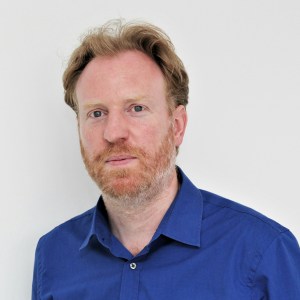
Fergal Lenehan is adjunct Professor (ausserplanmäßger Professor) at the Friedrich-Schiller-University of Jena, in Germany. He received a BA and an MA from University College Dublin, Ireland, and a PhD from the University of Leipzig, Germany.

Fergal LenehanHe also completed the German Habilitation – the formal, second PhD which allows you to officially become a Professor – at the Friedrich-Schiller-University of Jena. He is also journalistically active and has written for the Dublin Review of Books and The Currency, among other publications.

He has had a varied research profile, but intercultural questions have remained central. He has written a monograph on the intellectual history of the European idea, Intellectuals and Europe: Imagining a Europe of the Regions in Twentieth Century Germany, Britain and Ireland (2014), and a monograph on German depictions of Ireland, Stereotypes, Ideology and Foreign Correspondents: German Media Representations of Ireland, 1946-2010 (2016).

In recent years, he has been a central figure in the research co-operative ReDICo: Researching Digital Interculturality Co-operatively. As part of ReDICo he has been co-editor of a number of open-access publications dealing, theoretically and empirically, with the topic of digital interculturality. These include a special issue of the journal Interculture Journal on Cyber-Utopia / Dystopia? Digital Interculturality between Cosmopolitan and Authoritarian Currents (2022), and the edited volumes: Language and Interculturality in the Digital World (2024), Lifewide Learning in Postdigital Societies (2024), and Reimagining Digital Cosmopolitanism (2025). He is also co-editor, with Luisa Conti, Roman Lietz and Milene Mendes de Oliviera, of the book series Studies in Digital Interculturality. ReDICo has also developed educasts, a podcast series, and the scholarly platform, the ReDICo-Hub. He recently published the article Examining realised and unrealised contacts: theoretical thoughts on digital interculturality (2024) in the journal Language and Intercultural Communication.

Work for CID:

Fergal Lenehan has written a guest post for the Center, The Need for a Cosmopolitan Perspective, as well as writing KC114: Digital cosmopolitanism, and then translating it into German.

U Manchester: International Business (UK)

“JobLecturer or Senior Lecturer in International Business, University of Manchester, Manchester, England, UK. Deadline: 14 April 2025.

Applications are invited for the post of Lecturer/Senior Lecturer in International Business at Alliance Manchester Business School. The successful candidate is expected to conduct research at the highest level, publish it in top-tier journals, attract research funding, teach at Undergraduate and/or Postgraduate levels in International Business and related subject areas, and where suitable take on leadership roles.

The post is based within the International Business Research group, which is composed of internationally renowned researchers. The research conducted by successful candidates will complement existing areas of expertise and specialism of the group, which currently include global market and non-market strategies, innovation-technology-knowledge, sustainable development and emerging markets, global corporate governance, and IB and institutional environments. The Alliance Manchester Business School is home to numerous research institutes, it facilitates and promotes cross-disciplinary research.

Western Kentucky U: Advisor, Global Learning (USA)

“JobAdvisor, Global Learning, Western Kentucky University, Bowling Green, KY, USA. Deadline: 27 March 2025.

Global Learning and International Affairs at Western Kentucky University is seeking a dynamic individual to join their team as the Advisor, Global Learning. The overall responsibilities of the successful candidate will include but are not limited to:

  • Facilitates academic and cultural advising in various modalities (individual, virtual, group, peer to peer mentoring, email);
  • Provides follow-up and support for students throughout their global learning experience starting from the exploration stage through completion of a program and beyond;
  • Guides students on how to leverage their international experience for future success;
  • Cultivates strong working relationships with campus departments, program providers, and partner institutions;
  • Contributes to overall program marketing, recruitment, and outreach initiatives through informational events and presentations;
  • Compiles and analyze data on students participating in global learning initiatives;
  • Assist with training and development of student employees and Global Learning Ambassadors.

CFP Marginalized Identities and Change in SWANA Region (USA)

ConferencesCall for panelists: Marginalized Identities and Change in SWANA Region, South West Asia and North Africa (SWANA) caucus, National Communication Association, 20-23 November 2025, Denver, CO, USA. Deadline for abstract: 29 March 2025.

The South West Asia and North Africa (SWANA) caucus invites scholars and activists for a special discussion panel on how marginalized identities, such as expats, women, religious minorities, racial minorities, and LGBTQ+ communities, balance the social struggles for recognition within their communities and the broader national/regional/global context. We invite scholars and activists whose focus is one of the countries within the SWANA region, such as Iran, Cyprus, Egypt, Morocco, Iraq, Afghanistan, Syria, etc, to submit abstracts addressing one or more of the following questions for their specific country:

  • Given the socio-political constraints, how do marginalized groups communicate and mobilize within the region?
  • How do activists within marginalized communities strike a balance between advocating for change within their groups and fighting for broader rights and recognition within the mainstream in the region?
    In what ways can media professionals contribute to more accurate and nuanced representations of diversity within the region?
  • What are the effects of alternative media on shaping youth attitudes and beliefs in relation to diversity and inclusion in the region?
  • How do the region’s alternative and independent media outlets contribute to pluralism and diversity in news coverage?
  • How can communication strategies be developed to more effectively address sexual health and rights within culturally sensitive contexts in the region?

CFP Nordic Network for Intercultural Communication Conference 2025 (Finland)

ConferencesNordic Network for Intercultural Communication, University of Helsinki, Finland, 13-15 August 2025. Deadline for abstract: 10 April 2025.

The 31st Nordic Network for Intercultural Communication Conference will be arranged in Helsinki on 13–15 August 2025. The NIC 2025 conference theme is “Evolutions in intercultural communication: New concepts and methodologies”. With this theme, we wish to encourage discussion of conceptual and methodological development in the field of intercultural communication, drawing connections between research, teaching and practice.

In addition to those addressing the theme, we also welcome proposals that explore related aspects of intercultural communication. These are, for example:

  • Critical evaluations of theories of intercultural communication, education, or management
  • Migration and new or alternative forms of language, interaction, and communication
  • Challenges of trans/poly/cross/intercultural encounters and relationships
  • Decolonization and the knowledge on culture and communication
  • Diversity, equity, inclusion, and justice in different spaces and settings
  • New questions on education and learning in multicultural societies

Intercultural communication is an interest to and researched by scholars in a wide variety of fields and disciplines such as language, media and communication, multilingual and/or multicultural education, sociolinguistics, social interaction, international management, discourse studies, cultural studies, ethnic relations, and cross-cultural psychology. We welcome submissions from all.

Abstract submission

Please submit your max 250-word abstract using the abstract form below. The abstracts will be anonymously peer reviewed. Note that all submissions should be in English and those submitting the abstract should be prepared to attend the conference in person. The deadline for submitting your abstract is April 10th, 2025. If the abstract includes citations, please provide the appropriate references (the list of references is not included in the word count).

Organizing committee: Saila Poutiainen (Chair), Mélanie Buchart, Yoonjoo Cho, Niina Hynninen, Janne Niinivaara

U Warwick: PHD Studentship in the Peaceful Return of Victims of Forced Displacement (UK)

“Studentships“

PhD Studentship in PEACERETURN: The Peaceful Return of Victims of Forced Displacement, University of Warwick, Warwick, England, UK. Deadline: 14 April 2025.

The Department of Politics and International Studies, University of Warwick, welcomes applications: (1) for an independent project focusing on the institutional trade-offs involving returnees in a future international mediation in Ukraine and/or the global impact of the Russian invasion on displacement; and (2) on the topic of Gender and Return in Post-Conflict Societies. Candidates will be considered for a full-time, 3.5-year PhD position plus a stipend at UKRI rates. Positions are open to both home and international students through a grant funded by the UKRI- Horizon Europe Guarantee (ERC) project PEACERETURN (PI: Professor Neophytos Loizides) at the University of Warwick.

(1) PhD theme: Displacement and Return in Ukraine

Supervisors: Professor Neophytos Loizides (University of Warwick)

(2) PhD theme: Gender and Return in Post-Conflict Societies

Supervisors: Professor Neophytos Loizides (University of Warwick) & Professor Betül Çelik (Sabanci University)

U Deusto: Postdoc in Re-shaping Attitudes about Refugees and Gender Minorities in Spain and Portugal (Spain)

Postdocs

Postdoctoral Researcher: Re-shaping Attitudes about Refugees and Gender Minorities in Spain and Portugal, University of Duesto, Bilbao, Spain. Deadline: 28 March 2025.

The Faculty of Social and Human Sciences at the University of Deusto is seeking a motivated and highly qualified Postdoctoral Researcher to join the project Re-shaping Attitudes about Refugees and Gender Minorities in Spain and Portugal. This project explores how negative public opinion and social attitudes can be transformed using cutting-edge quantitative methods, particularly survey experiments. The postdoctoral researcher will assist the PI in devising and testing alternative human-rights-based narratives about refugees and gender minorities to counter hate speech and marginalising far-right narratives that target these vulnerable/disadvantaged groups.

Penman Guest Post: Dialogue in the Interests of Justice

Guest Posts
Dialogue in the interests of justice. Guest post by Robyn Penman.

I propose that the dialogic form can act as an aspirational model: it is an orientation to a way of communicating, a commitment to doing it better and, only occasionally, an accomplishment.

In one way, the link between dialogue and justice seems obvious, at least as far as social justice is concerned. As Kathryn Sorrells (2015) noted in her discussion of social justice Key Concepts on Social Justice, intercultural dialogue is critical to both the process and goal of social justice because it enables us to reach across difference to creatively engage with others. Yet, even appreciating how critical that link is, there is so much more that needs to be considered. In particular, as Sorrell sums up, there is a critical need for more interdisciplinary work on understanding the importance of communication in building relationships and systems based on social justice.

The critical need for taking communication into account is reflected in such questions as: How exactly does the key role of dialogue for meeting social justice goals get played out in practice? How is it possible to even create the conditions for dialogue in unjust circumstances? And what does dialogue have to do with the common idea of social justice as the equitable distribution of resources and rights? These questions open up a whole new vista of possibilities, even to a re-consideration of what justice itself can mean.

Download the entire guest post as a PDF.