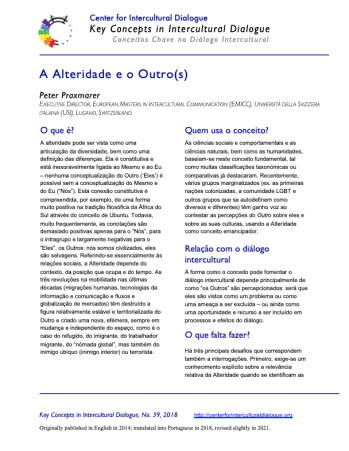
KC39 Otherness and the Other(s) Translated into Portuguese

Key Concepts in ICDContinuing translations of Key Concepts in Intercultural Dialogue, today I am posting KC#39: Otherness and the Other(s), which Peter Praxmarer wrote for publication in English in 2014, and which Filipa Subtil has now translated into Portuguese.

As always, all Key Concepts are available as free PDFs; just click on the thumbnail to download. Lists of Key Concepts organized chronologically by publication date and number, alphabetically by concept, and by languages into which they have been translated, are available, as is a page of acknowledgments with the names of all authors, translators, and reviewers.

KC39 Otherness_PortuguesePraxmarer, P. (2018). Otherness and the Other(s) [Portuguese]. (F. Subtil, trans). Key Concepts in Intercultural Dialogue, 39. Retrieved from: https://centerforinterculturaldialogue.org/wp-content/uploads/2021/05/kc39-otherness_portuguese-v2.pdf

If you are interested in translating one of the Key Concepts, please contact me for approval first because dozens are currently in process. As always, if there is a concept you think should be written up as one of the Key Concepts, whether in English or any other language, propose it. If you are new to CID, please provide a brief resume. This opportunity is open to masters students and above, on the assumption that some familiarity with academic conventions generally, and discussion of intercultural dialogue specifically, are useful.

Wendy Leeds-Hurwitz, Director
Center for Intercultural Dialogue

U Oregon Job Ad: Global Education Advisor (USA)

Job adsGlobal Education Oregon (GEO) Advisor, University of Oregon, Eugene, OR. Deadline: September 18, 2018.

The Office of International Affairs is seeking two Advisors to provide support to students considering and participating in study abroad programs and international internships. This GEO Study Abroad Advisor will report to the Assistant Director-Advising and is responsible for providing support to students considering and participating in study abroad programs and international internships. The primary duties of this position will be to advise and recruit students, interview applicants, participate in the selection process, and lead pre-departure orientations. This position will also assist the GEO Institutional Relations unit with publicity efforts, which requires excellent written and verbal communication skills. Additionally, the Advisor will assist in managing applications and tracking enrollments and admissions for GEO programs.

Institute for Study Abroad Job Ads: Vice President; Assistant Field Directors (USA)

Job adsThe Institute for Study Abroad (IFSA) based in Indiana, USA currently has 4 open positions:

Vice President for Academic Affairs (VPAA)

This position provides a unique opportunity to shape an evolving organization and the long-term impact of education abroad on participants. Open until filled; posted August 20, 2018, screening begins September 24, 2018.

Assistant Field Director: 3 positions available

The Assistant Field Director position is a full-time, salaried, non-exempt position based in Indianapolis at the IFSA office. Assistant Field Directors assist in developing university relationships and promoting IFSA programs to study abroad professionals, faculty, academic advisors, and students. Assistant Field Directors will provide support to the University Relations team by traveling extensively within Field Director regions, visiting current partners and cultivating relationships and growing overall student enrollment in IFSA programs. Open until filled; posted August 20, 2018.

Continue reading “Institute for Study Abroad Job Ads: Vice President; Assistant Field Directors (USA)”

European U Institute Job Ad: Religious Diversity (Italy)

Job adsResearch Assistant, Robert Schuman Centre for Advanced Studies, European University Institute, Florence, Italy. Deadline: 10 September 2018.

GREASE – Radicalisation, Secularism and the Governance of Religion: Bringing together European and Asian Perspectives – is an international and interdisciplinary project on the governance of religious diversity in Europe and other world regions including East Eastern Europe, the MENA region, South and Southeast Asia, and the Asia Pacific. The successful candidate will work under the close supervision of Prof. Anna Triandafyllidou in the starting phase of the project. His/her tasks will be both academic and organizational…The successful candidate will have expertise in one or more of the following areas: issues of governance of cultural and religious diversity (the EUI team is responsible for southern Europe so a southern Europe focus is desirable but wider comparative expertise will be appreciated), multiculturalism theory and practice, secularism theory and practice, religious radicalization and issues of resilience and combatting radicalization. Essential: PhD in the social sciences, preferably sociology or political science.


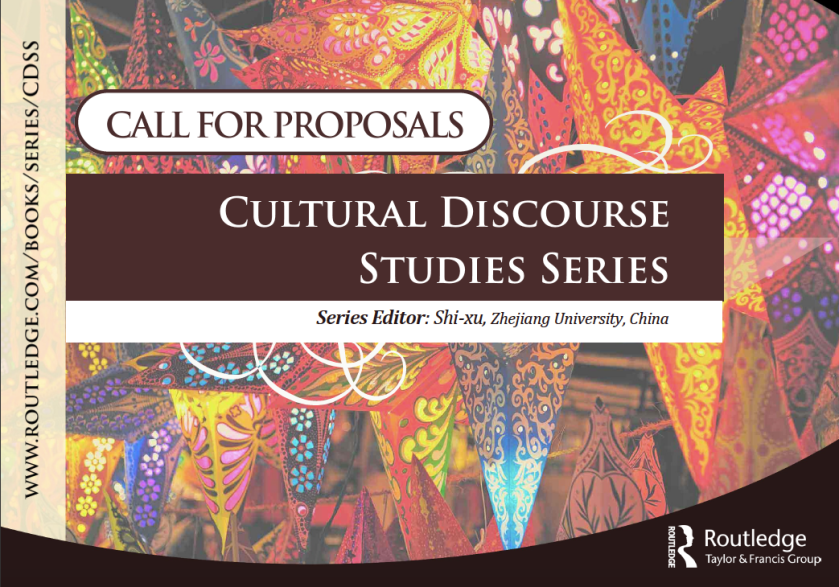
CFP Cultural Discourse Studies Series

Publication OpportunitiesCFP Cultural Discourse Studies Series, Routledge. Series editor: Shi-Xu, Zhejiang University, China.

Cultural Discourse Studies Series

A cultural-innovation-seeking platform in discourse and communication studies, the Cultural Discourse Studies Series aims to deconstruct ethnocentrism in the discipline, develop culturally conscious and critical approaches to human discourses, and facilitate multicultural dialogue and debate in favour of research creativity. Ultimately, it is designed to contribute to human cultural coexistence, harmony and prosperity.

NOTE: Shi-xu is also Editor-in-Chief of the Journal of Multicultural Discourses at Routledge.

CFP ICA 2019 (USA)

ConferencesCFP International Communication Association, 24-28 May 2019, Washington, D. C. Submission deadline: 1 November 2018.

The ICA 2019 conference theme of Communication Beyond Boundaries aims for an understanding of the role of communication and media in the crossing of social, political and cultural boundaries that characterize contemporary society, and encourages research that crosses the boundaries of research domains, of particular fields of research interest, and of academia and the outside world.

OECD Fellowships 2018/19

FellowshipsFuture of Work Fellowship Scheme 2018/19, The Organisation for Economic Co-operation and Development (OECD). Deadline: 14 September 2018.

The OECD Future of Work Fellowship Scheme aims to promote new and innovative doctoral research in the fields of economics, statistics, sociology and other related social sciences which will provide better evidence to help policy makers across OECD countries respond to the following issues:

  • How globalisation, demographics and technological change are affecting labour markets – including the quantity and quality of jobs that are available, as well as how and by whom they are carried out.

  • How the demand for skills and skills use are evolving and what can be expected as the digital revolution progresses.

  • The impact these trends are having on inequality, productivity and growth.

  • What are the challenges for government policy in the areas of: skills, social protection, active labour market programmes, labour market regulation, and social dialogue?

  • What are innovative policy tools that can help governments address these challenges and turn them into opportunities and better lives for all?

The Fellowship scheme funds ongoing as well as new research in the above areas – as long as the outputs are delivered within the timeframe set by the Fellowship (12 months starting from the acceptance of the Fellowship offer).

Who is eligible? Any PhD student and postdoctoral researcher currently enrolled at university may apply, regardless of the year they are in. There are no restrictions with regards to nationality, or the location of the institution to which you are affiliated. All research should be written in one of the OECD’s official languages (either English or French). Fellows maintain their affiliation whilst they are completing their Fellowship and are not expected to spend any time at the OECD in Paris (except for when they come to present their work).

Fatemeh Hippler (Kamali-Chirani) Profile

ProfilesFatemeh Hippler (birth name: Kamali-Chirani) is currently a research associate at the Hannah Arendt Institute for Research on Totalitarianism (HAIT), TU Dresden (Dresden University of Technology), in Germany.
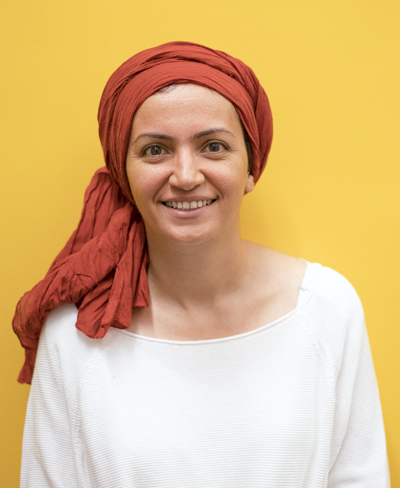
Fatemeh Kamali-Chirani

She received her BA (in Journalism) and her MA (in North American Studies) from Tehran University, Iran, where she was a journalist and NGO activist.

Fatemeh completed her PhD (2012-2018) at the University of Augsburg in Germany with a scholarship from Brot für die Welt (Bread for the World) on the subject of intercultural dialogue between Western and Muslim countries. From 2020 until January 2022, Fatemeh worked in Pakistan as a Visiting Research Fellow at SDPI (a development organization) and was a Visiting Faculty Member at Quaid-e-Azam University, Islamabad.

Her publications are in the areas of intercultural dialogue, foreign cultural policy, sustainable development, migrants and refugees (especially Afghans) in Germany and Pakistan.

She is currently working on the project “Women who migrated from, to and within Germany,” focusing on acculturation of Afghan women in Germany, as a researcher at HAIT, TU Dresden (Dresden University of Technology).

For further details, see her LinkedIn profile.

Selected publications:

In English

Kamali-Chirani, F. (2019). Review of Afiya S. Zia’s  Faith and feminism in Pakistan: Religious agency or secular autonomy? Digest of Middle East Studies, pp. 1-4. https://doi.org/10.1111/dome.12192

Kamali-Chirani, F. (2019). Does intercultural dialogue matter? The role of intercultural dialogue in the foreign cultural policy of Iran and Germany. Münster, Germany: Lit Verlag.

Kamali-Chirani, F. (2019). Review of Mohammad Zaman’s Islam in Pakistan: A history. Digest of Middle East Studies, 28(1),  1-5.

Hippler, J., & Kamali-Chirani, F. (2018). Cultural civil war. In European Union National Institutes for Culture, Culture Report: EUNIC Yearbook 2017/2018 (pp. 36-41). Stuttgart, Germany:  European Union National Institutes for Culture.

Kamali Chirani, F. (2018). Review of Baumgartner and Towner’s The Internet and the 2016 presidential campaign. International Journal of Communication, 12, 2940–2943.

Kamali Chirani, F. (2018). Review of Miriam Müller’s A spectre is haunting Arabia: How the Germans brought their communism to Yemen. Middle East Media and Reviews, 6(3).

Kamali Chirani, F. (2018) Review of Yadullah Shahibzadeh’s The Iranian political language: From the late nineteenth century to the present. Digest of Middle East Studies, 27(1), 157-160.

Kamali Chirani, F. (2017). Incapability of institutional structures as an obstacle for the intercultural dialogue between Iran and Germany. In O. Ernst (Ed.), Iran-Reader 2017 (pp. 109-111). Sankt Augustin/Berlin: Konrad-Adenauer Stiftung.

In German

Kamali Chirani, F. (2013). Dialog unter staatlicher Aufsicht [Dialogue under state supervision]. Welt-Sichten Journal, 6, 46-47.

In Farsi

Kamali Chirani, F. (2018). Potānsielhāy-e Goftoguy-e Farhangi dar Jāme’ey-e Ālmān [Potentials of intercultural dialogue in German society] Dialog Center of the Imam Musa Sadr Institut.

Shokrkhah, Y., &Shokrkhah, Y.Kamali Chirani, F. (2009). Ruznāmenegāri Hamrāh va Pušeš-e Xabari Jang-e Iraq: Motāle’āt-e Muredi-ye Foxnews [Embedded journalism and coverage of the 2003 Iraq war: Case study by Foxnews]. Iranian Journal of Cultural Research, 2(5), 156-171.


Work for CID:

Fatemeh Kamali-Chirani has written a guest post, Cultural diplomacy, intercultural dialogue, and sustainable development: A view of the cultural diplomacy potential of the city of Islamabad; and also written KC105: Acculturation, KC113: Assimilation, and KC117: Remote Acculturation. She has also translated KC14: Dialogue into German, and then KC14: Dialogue and KC105: Acculturation into Persian. In addition, she was interviewed about international relations and its connection to intercultural dialogue. See the description of her recent report on immigration to and from Pakistan, and also Constructing ICD #14: Intercultural case management: Addressing discrimination to empower migrants.

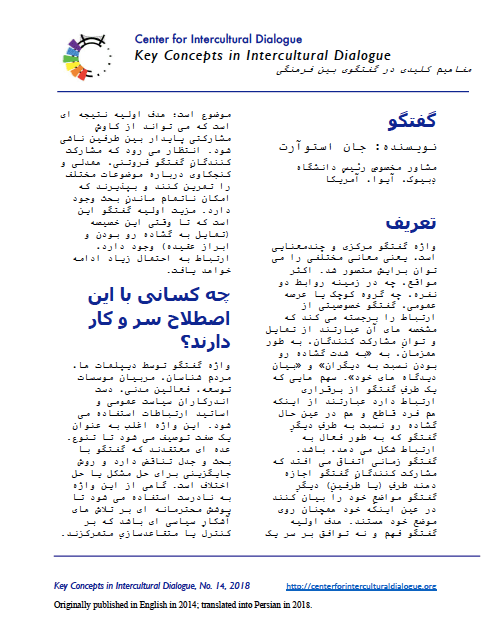
KC14 Dialogue Translated into Persian

Key Concepts in ICDContinuing translations of Key Concepts in Intercultural Dialogue, today I am posting KC#14: Dialogue, which John Stewart wrote for publication in English in 2014, and which Fatemeh Kamali-Chirani has now translated into Persian.

As always, all Key Concepts are available as free PDFs; just click on the thumbnail to download. Lists of Key Concepts organized chronologically by publication date and number, alphabetically by concept, and by languages into which they have been translated, are available, as is a page of acknowledgments with the names of all authors, translators, and reviewers.

KC14 Dialogue_PersianStewart, J. (2018). Dialogue [Persian]. (F. Kamali-Chirani, trans). Key Concepts in Intercultural Dialogue, 14. Available from:
https://centerforinterculturaldialogue.org/wp-content/uploads/2018/08/kc14-dialogue_persian.pdf

If you are interested in translating one of the Key Concepts, please contact me for approval first because dozens are currently in process. As always, if there is a concept you think should be written up as one of the Key Concepts, whether in English or any other language, propose it. If you are new to CID, please provide a brief resume. This opportunity is open to masters students and above, on the assumption that some familiarity with academic conventions generally, and discussion of intercultural dialogue specifically, are useful.

Wendy Leeds-Hurwitz, Director
Center for Intercultural Dialogue


Creative Commons License
This work is licensed under a Creative Commons Attribution-NonCommercial-NoDerivatives 4.0 International License.

U Glasgow Job Ad: Children’s Literature & Displacement (UK)

Job adsResearch Assistant, School of Education, University of Glasgow. Deadline: 17 September 2018.

Job Purpose: To make a contribution to the project: Children’s Literature in Critical Contexts of Displacement: Exploring how story and arts-based practices create ‘safe spaces’ for displaced children and young people (AHRC-GCRF Research Network). Specifically, the job requires expert knowledge in the area of intercultural education awareness, children’s literature and the arts and qualitative research methods. The post-holder will also be required to contribute to the formulation and submission of research publications and research proposals as well as help manage and direct this complex and challenging project as opportunities allow.