Emilija Jovanovska Profile

ProfilesEmilija Jovanovska is currently a Ph.D. student at the Department of Curriculum & Instruction at the University of Idaho, Moscow, Idaho. She is also an ESL and English Composition instructor at the Global Students Success Program and the English department at the University of Idaho.
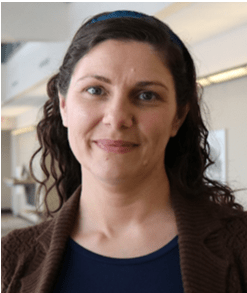
Emilija Jovanovska

Additionally, she enjoys the privilege of contributing to World education by teaching English Composition at the University of the People to students from all over the world. Her research interests are in the fields of Intercultural Communication, Academic Socialization, Leadership Studies, EdTech, and Curriculum Design. Her project “Language Socialization of Balkan Graduate Students into the Universities of the Palouse” was given an award by the Palouse Culture and Language Symposium, held annually at the University of Idaho.

Since one of her passions is educating educators, she dedicates part of her time to creating professional development projects for university educators, such as Navigating Academic Culture at US Universities by International Students, a lecture that she collaboratively delivered to the faculty at the University of Idaho and published on the Navitas Teaching & Learning website.

For more information about her, please follow the link to her website.


Work for CID:

Emilija Jovanovska has translated KC2: CosmopolitanismKC3: Intercultural Competence, and KC5: Intercultural Communication into Macedonian, and participated in a CID/UNESCO focus group for the Futures of Education Initiative.
UNESCO: Culture & COVID-19

Resources in ICD“ width=

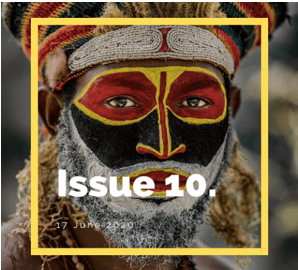
Culture & COVID-19: Impact and Response Tracker, UNESCO, Paris, France.

Culture & Covid Issue 10

To address the profound impact the COVID-19 pandemic will have on the culture sector, UNESCO has launched a weekly “Culture & COVID-19: Impact and Response Tracker” to provide an overview of the rapidly evolving situation. It explores both the immediate impact of the health crisis and examples of how countries around the world are adapting to the situation. This is one of several initiatives by the Organization to respond to the impact of the pandemic on the cultural sector worldwide.

Ten issues have already appeared, examining such issues as the impact on world heritage sites, tourism, museums, archaeological sites, and indigenous peoples.

The Future of Intercultural Training (Webinar)

EventsThe Future of Intercultural Training by Nicole Barile (President & Founder of NB Intercultural), offered by SIETAR Tri-State, USA, July 28, 2020, 11:00 am to 12:00 pm (EST), online event.

The future of work is here – and it’s global. No matter your industry, role, or where you work, you will be interacting with people from other cultures, even if you never leave home. Intercultural training is needed more than ever, but it needs to adapt to today’s modern worker. Technology is shaping how we do business, and it’s shaping how we learn. Traditional approaches to intercultural learning will need to make way for new solutions as technology advances. Find out what trends are shaping the next generation of intercultural training for expatriates and organizations, as well as where the field is headed.

2nd Prize in CID Video Competition – Shanoy Coombs

CID Video CompetitionCID’s third video competition is now over, and the judges have reviewed all the videos. As a reminder, the instructions were to show that listening is how intercultural dialogue starts, in 90-120 seconds, on video.

2nd prize goes to Shanoy Coombs,  who comes from Jamaica, and who is studying Intercultural Communication and International Development at the University of Sheffield, in the UK, where she blogs about communication, culture and Intercultural communication issues.

Title: Listen Towards Intercultural Dialogue

Description: “It’s easy to listen to others who are like you but not always those who think and act differently. Yet for Intercultural Dialogue to be effective, we have to listen to those who are different from us. This video highlights the many benefits of listening as a part of the conflict resolution process. The video specifically highlights the native voices of persons from different cultural backgrounds and each person shares one main benefit of listening as a part of the Intercultural Dialogue process. The video then transitions to a singular language and emphasizes the point about listening. The video therefore shows the importance of individuality in Intercultural Dialogue as well as collective aims of the process.”

There were first, second and third place winners, and an award of excellence. Each of these is being highlighted in a separate post, as they warrant our attention. My thanks to the judges of the competition, professionals who made time to review student videos. Thanks also to all the competitors, who took the time to really think about how listening is where intercultural dialogue starts, despite the pandemic.

Wendy Leeds-Hurwitz, Director
Center for Intercultural Dialogue

U Amsterdam: Media & Culture (the Netherlands)

“JobAssistant professor of Media and Culture, Department of Media Studies, Faculty of Humanities, University of Amsterdam, Amsterdam, the Netherlands. Deadline: 3 August 2020.

The Department of Media Studies is looking for an Assistant professor in Media and Culture who will bring to the position an innovative research agenda and relevant teaching expertise in cultural approaches to media. We are looking for a candidate with a strong research profile in media in film, television and cross-media studies.

The selected candidate will teach courses in the BA programme in Media and Culture, as well as in our MA programmes in Film Studies, Television and Cross Media Culture, and the Research MA Media Studies. Ideally, the candidate will be able to teach courses across a range of media, in particular television, film, and digital media, as well as their intersections.

NOTE: There is also a position available in Media and Information.

Latvian Academy of Culture: Multiple Positions (Latvia)

“JobMultiple visiting academic positions, Latvian Academy of Culture, Riga, Latvia. Deadline: 1 June 2021.

The aim of the project is to promote internationalisation and international competitiveness of the Latvian Academy of Culture by attracting foreign academic staff in the study direction Humanitarian Sciences and Arts. Minimum participation set at 6 months.

The specializations are quite specific, but also remarkably broad, including cultural diplomacy; Norwegian or Danish culture; Arts and entrepreneurship, strategic management in arts; current issues in creative business and society, business ethics, critical and lateral thinking, intercultural competences in global entrepreneurship; scriptwriting theory and practice in feature films, short films; structure, analysis and practice of TV series scripts; and history of the U.S. independent cinema, viewed through the presence and development of political themes in films.

Oslo Metropolitan U: PHD Fellowship (Norway)

FellowshipsPhD Fellowship on employment of vulnerable citizens in small and medium sized enterprises (ENGAGE), Centre for Welfare and Labor Research, Oslo Metropolitan University, Oslo, Norway. Deadline: 24 August 2020.

The PhD position is part of the project “Sustained employment of ‘hard-to-place’ citizens in small and medium sized enterprises: A mixed-method study in Norway and the Netherlands” (ENGAGE). The project is financed by the Norwegian Research Council and Oslo Metropolitan University, and it will run from September 2020 to August 2024.

The project will study employer engagement to promote sustained employment of people with work impairments or disabilities in small and medium sized enterprises. The project is interdisciplinary and finds inspiration in social policy and active labour market studies, Human Resource Management and organization studies, governance studies and studies vocational and occupational rehabilitation.

CFP Journal of Linguistic Anthropology: Race, Racism, Racialization

“PublicationThe Journal of Linguistic Anthropology is calling for papers on race, racism, and racialization. Submission type is open: full-length articles, theoretical pieces, fieldnotes, interviews, reflections, poetry, cartoons. Deadline for the submission of article manuscripts: September 15, 2020. Deadline for all other types of submissions: October 15, 2020.

Scholarly work intersecting with other approaches, including but not limited to criminal justice studies, critical race theory, education studies, gender & sexuality studies, legal studies, medical anthropology, STS, and visual anthropology, is especially encouraged. If you are interested in submitting your work, do familiarize yourself with the journal’s submission procedures, and write to Sonia Das (sonia.das AT nyu.edu) or Chaise LaDousa (cladousa AT hamilton.edu). If you are interested in writing a book review of a book pertaining to race, racism, and racialization, please write to JLA’s book review editor, Christina Davis (c-davis AT wiu.edu).

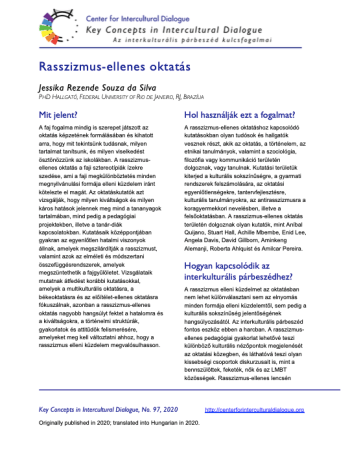
KC97 Anti-Racist Education Translated into Hungarian

Key Concepts in ICDContinuing translations of Key Concepts in Intercultural Dialogue, today I am posting KC#97: Anti-Racist Education, which Jessika Rezende Souza da Silva wrote for publication in English earlier this year, and which Timea Németh has now translated into Hungarian.

As always, all Key Concepts are available as free PDFs; just click on the thumbnail to download. Lists of Key Concepts organized alphabetically by conceptchronologically by publication date and number, and by languages into which they have been translated, are available, as is a page of acknowledgments with the names of all authors, translators, and reviewers.

KC97 Anti-Racist Education_Hungarian

Souza da Silva, J. R. (2020). Anti-racist education [Hungarian]. (T. Németh, trans.). Key Concepts in Intercultural Dialogue, 97. Available from:
https://centerforinterculturaldialogue.org/wp-content/uploads/2020/06/kc97_anti-racist-education_hungarian.pdf

If you are interested in translating one of the Key Concepts, please contact me for approval first because dozens are currently in process. As always, if there is a concept you think should be written up as one of the Key Concepts, whether in English or any other language, propose it. If you are new to CID, please provide a brief resume. This opportunity is open to masters students and above, on the assumption that some familiarity with academic conventions generally, and discussion of intercultural dialogue specifically, are useful.

Wendy Leeds-Hurwitz, Director
Center for Intercultural Dialogue


Creative Commons License
This work is licensed under a Creative Commons Attribution-NonCommercial-NoDerivatives 4.0 International License.

U Cincinnati Press Offers Free Racial Equity Books

Intercultural PedagogyPlatforms and Pathways in Social Innovation: Racial Equity, University of Cincinnati Press, Cincinnati, OH, USA.

The University of Cincinnati Press, established in 2017, is taking a different approach to open access for their publications than Cornell University Press and University of Minnesota Press. They are making multiple chapters from 11 of their books and/or journals available for free, with no expiration date, and encouraging conversation about the topics covered. Their statement says: “Platforms and Pathways for Social Innovation offers open content on a platform where author, reader and community members can come together to engage in thoughts, comments, and questions and share content and discussion with others. We believe open access content is a social justice right which provides equitable access to peer-reviewed writing, otherwise limited to those with academic privilege.”

Their titles include the journal Race & Society, and the books Rethinking America’s Past by Tim Gruenewald, and Across the Color Line by Mark Curnutte.