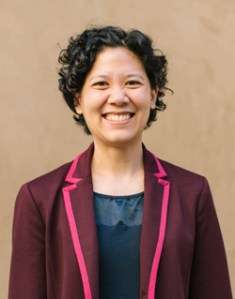
LIU Xue Profile

ProfilesLIU Xue, Ph.D., is assistant professor of the School of Journalism and Communication in Wuhan University, China.

Book:

Shan, Bo, Yibin Shi & Xue Liu. (Eds.). (2011). The intercultural turn of journalism and communication. Shanghai Jiaotong University Press.

Journal Articles:

Liu, Xue & Zongping Xiang (2011). The democratic concern in America’s media criticism and its problem. Commentary on China’s Media Development and Media Research (Zhongguo Meiti Fazhan Yanjiu Baogao).

Shan, Bo & Xue Liu (2011). A study of intercultural events in 2011. Commentary on China’s Media Development and Media Research (Zhongguo Meiti Fazhan Yanjiu Baogao).

Liu, Xue (2010). Pursuing the media ethic for intercultural communication. Social Sciences Abroad (Guowai Shehui Kexue), 3, 155-158.

Shan, Bo & Xue Liu (2009). Discourse bias & face-negotiation: Intercultural analysis on coverage of Wenchuan earthquake. Communication & Society (Chuanbo Yu Shehui Xuekan), 10, 135-156.

Liu, Xue & Zongping Xiang (2008). Civic media reform movement in the U.S.A: 1920s-2007. Mass Communication Research (Xinwenxue Yanjiu), 97, 179-229.

Shan, Bo & Xue Liu (2007). The democratic implications, inherent nature and problems of the American media reform movement. China Media Reports (Zhongguo Chuanmei Baogao), 23(3), 4-17.

Liu, Xue (2007). The transition of American media in recent thirty years. Hubei Social Sciences (Hubei Shehui Kexue), 10, 188-190.

Yu-Sheng Li Profile

ProfilesYu-Sheng Li received his Ph.D. in Communication Studies at the University of York, United Kingdom, and is currently an assistant professor at Ming Chuan University, Taiwan.

His principal interest is the psychology of social interaction, in particular cross-cultural communication and political communication.  He also has an ongoing interest in the impact of culture on technology use.  His latest English publication is below.

Li, Y.-S.  (2010).  Equivocation in ‘reunification’ for Taiwan and mainland China: Language, Politics, Culture. Lambert Publishing Company.

Recent publications in Chinese follow:

Li Y.-S. (2015). Formosa hakka radio station: The documentary of My Amazing Hakka Sisters. Global Hakka Studies, 5, 225-234.

Li Y.-S. (2015). Golden melody awards ceremony – across cultural communication between Hakka and mainstream. Global Hakka Studies, 6, 309-320.

Donald G. Ellis Profile

ProfilesDonald G. Ellis is Professor of Communication in the School of Communication at the University of Hartford.

His Ph.D. is from the University of Utah, where his doctoral dissertation on Conflict Interaction in Groups won the National Communication Association Golden Anniversary Dissertation Award, and he has been on the faculty of Purdue University and Michigan State. He is interested in communication issues related to ethnopolitical conflict with particular emphasis on conflict resolution, intractable conflicts, intercultural communication, and democracy. Dr. Ellis is the past editor of the journal Communication Theory and the author of numerous books and articles including Crafting Society: Ethnicity, Class, and Communication Theory, as well as Transforming Conflict: Communication Approaches to Ethnopolitical Conflict. His most recent book (2012) is Deliberative Communication and Ethnopolitical Conflict. He was a fellow at the Asch Center for the Study of Ethnopolitical Conflict at the University of Pennsylvania, and a Fulbright Scholar in Israel in 2004-2005. He participates in various national organizations and lectures and writes in the fields of communication, conflict resolution, intercultural communication, and related topics. Some recent publications are below.

In press. Reconciling intergroup conflict. Handbook of intergroup conflict. Howard Giles (Ed.)

2010 Donald G. Ellis, Argument and Ethnopolitical Conflict, Communication Methods and Measures, 4, 98-113.

2010 Donald G. Ellis, Democratic Argument and Deliberation Between Ethnopolitically Divided Groups, In Giles and Harwood (Eds.) Intergroup Communication (pp. 129-139). Peter Lang.

2010, Donald G Ellis. Online deliberation between Ethnopolitically divided groups. Landscapes of violence

2010 Donald G. Ellis and Yael Warshel, The Contributions of Communication and Media Studies to Peace Education, In G. Saloman and E. Cairns (Eds.) Peace Education (pp. 135-153)

2010, Donald G. Ellis, Intergroup Conflict, In C.R. Berger, M.E. Roloff, & D.R. Roskso-Ewoldsen (Eds.), Handbook of Communication Science, (pp. 291-308). Sage Publications

2008, Ifat Moaz & Donald G. Ellis, Intergroup Communication as a Predictor of Jewish-Israeli Agreement with Integrative Solutions to the Israeli-Palestinian Conflict: The Mediating Effects of Outgroup Trust and Guilt, Journal of Communication, 58, 490-507

2008, Ifat Maoz & Donald G. Ellis, Misperceptions and Miscommunication in Ethnopolitical Conflict. Encyclopedia of Violence, Peace and Conflict, (pp. 1-8). Elsevier.

2007, Donald G. Ellis & Ifat Maoz, Online Argument between Israeli-Jews and Palestinians. Human Communication Research, 33, 291-309.


Work for CID:

Donald Ellis wrote KC32: Ethno-Political Conflict.

Sara DeTurk Profile

Profiles

Sara DeTurk is a professor of communication at the University of Texas at San Antonio.


Her research focuses on education, training, dialogue, identity (especially whiteness), alliances across difference, and social change activism. Her doctoral dissertation (Arizona State University, 2004) was a phenomenological study of an intergroup dialogue program. She also holds an M.Ed. in international education and a B.A. in psychology. Her publications include the following:

DeTurk, S. (2019). Social and cultural diversity in training and group facilitation. In J. D. Wallace & D. Becker (Eds.), Handbook of Communication Training: A Framework for Assessing and Developing Competence (pp. 414-421). London: Routledge.

DeTurk, S., & Briscoe, F. (2019). Equity vs. excellence: Is “tier-one” status compatible with social justice? Journal of Hispanic Higher Education, 18 (2), 1-17.. DOI: 10.1177/1538192719836197

DeTurk, S. (2018). All students are special (though some are more special than others). In A. Atay and D. Trebing (Eds.), The discourse of “special populations”: Critical intercultural communication pedagogy and practice (pp. 11-22). New York, NY: Routledge.

DeTurk, S. (2017). Intercultural alliance. In Y. Y. Kim (Ed.), International Encyclopedia of Intercultural Communication. Hoboken, NJ: Wiley & Sons. Intercultural Communication. Hoboken, NJ: John Wiley & Sons. DOI: 10.1002/9781118783665.ieicc0224

DeTurk, S. (2016). “The social conscience of the city”:  Strategies and challenges of a multi-issue social change organization.  In K. Sorrells & S. Sekimoto (Eds.), Globalizing intercultural communication (pp. 269-278). Thousand Oaks, CA: SAGE Publications.

DeTurk, S. (2015). Activism, alliance building, and the Esperanza Peace and Justice Center. Lanham, MD: Lexington Books.

Kristjánsdóttir, E., & DeTurk, S. (2013). Cultural insiders to cultural outsiders: Structure, identity, and communication in the adaptation of domestic, involuntary migrants. Howard Journal of Communications, 24, 194-211.

DeTurk, S. (2011). “I need to know”:  Conditions that encourage and constrain intercultural dialogue.  Journal of Intergroup Relations, 35 (1), 37-60.

DeTurk, S. (2010). “Quit whining and tell me about your experiences!”:  (In)tolerance, pragmatism, and muting in intergroup dialogue. In R. T. Halualani & T. K. Nakayama (Eds.), The Handbook of Critical Intercultural Communication. Malden, MA: Wiley-Blackwell.

DeTurk, S., &  Foster, E. (2008). Dialogue about dialogue:  Investigating intersubjectivity in interview research. Qualitative Research Journal, 8 (2), 14-27.

DeTurk, S. (2006).  The power of dialogue:  Consequences of intergroup dialogue and their implications for agency and alliance building.  Communication Quarterly, 54, 33-51.


Work for CID:

Sara DeTurk wrote Constructing Intercultural Dialogues #3: Intergroup Dialogue & Service Learning.

Yoshitaka Miike Profile

ProfilesYoshitaka Miike is Professor of Intercultural Communication at the University of Hawai‘i at Hilo, where he has been on the faculty since 2004 and chaired the Department of Communication from 2013 to 2015.
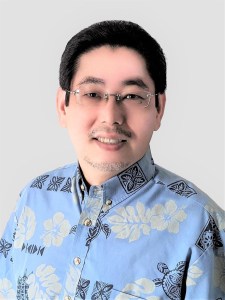
 

He is also Senior Fellow at the Molefi Kete Asante Institute for Afrocentric Studies. He specializes in Asian communication theory and philosophy, non-Western traditions of communication ethics, and Japanese culture and communication. He holds one of the first M.A.s in Communication Studies from Dokkyo University (Japan) and earned his Ph.D., with distinction, in Intercultural Communication from the University of New Mexico (USA). He received a 2004 Distinguished Scholarship Award from the International and Intercultural Communication Division (IICD) of the National Communication Association (NCA) for the 2003 Outstanding Article of the Year.

Dr. Miike is best known as the founding theorist of Asiacentricity. He co-edited The Handbook of Global Interventions in Communication Theory (Routledge, 2022) and The Global Intercultural Communication Reader (Routledge, 2008; 2014). He also guest-edited four journal special issues and themed section on Asian theories of communication. His original essays have appeared in a number of academic journals and scholarly books such as Communication Monographs, Communication Theory: The Asian PerspectiveEncyclopedia of IdentityHandbook of Communication Science, Handbook of Critical Intercultural Communication, Howard Journal of Communications, Intercultural Communication: A Reader, International and Intercultural Communication Annual, International Encyclopedia of Communication Theory and Philosophy, Journal of International Communication, Keio Communication Review, Review of Communication, and Routledge Handbook of Cultural Discourse Studies. Some of his pioneering work has been translated into Chinese and Korean.

Dr. Miike was Chair (2013-2014) of the NCA’s IICD and a member (2012-2014) of the NCA’s Legislative Assembly. He was Review Article Editor of the Journal of Multicultural Discourses for 2011-2016 and the 3rd Vice President of the Pacific and Asian Communication Association for 2006-2008. He has served on the editorial boards of Bodhi: An Interdisciplinary Journal, China Media Research, Intercultural Communication Studies, International Encyclopedia of Intercultural Communication, Journal of Black Studies, Journal of Content, Community and Communication, Journal of International and Intercultural Communication, and Universal Write Publications. He has reviewed manuscripts for many national and international journals including Communication Yearbook, International Communication Gazette, Journal of Intercultural Communication Research, and Language and Intercultural Communication.

Selected Publications:

Miike, Y. (2024). Asiacentricity and the field of Asian communication theory: Today and tomorrow. In Shi-xu (Ed.), The Routledge handbook of cultural discourse studies (pp. 45-69). London, UK: Routledge.

Miike, Y. (2024). Culture as text and culture as theory: Asiacentricity and its raison d’être in intercultural communication research. In T. K. Nakayama & R. T. Halualani (Eds.), The handbook of critical intercultural communication (2nd ed., pp. 129-150). Hoboken, NJ: Wiley-Blackwell.

Miike, Y. (2022). An anatomy of Eurocentrism in communication scholarship: The role of Asiacentricity in de-Westernizing theory and research. In W. Dissanayake (Ed.), Communication theory: The Asian perspective (2nd ed., pp. 255-278). Manila, Philippines: Asian Media Information and Communication Center.

Miike, Y. (2022). The question of Asianness in Asian communication studies: Notes on Asiacentricity and its critics. In Y. Miike & J. Yin (Eds.), The handbook of global interventions in communication theory (pp. 155-187). New York, NY: Routledge.

Miike, Y. (2022). What makes multicultural dialogue truly multicultural? Rethinking cultural convergence, theoretical globalism, and comparative Eurocentrism. Journal of Multicultural Discourses, 17(1), 34-43.

Miike, Y. (2019). Intercultural communication ethics: An Asiacentric perspective. Journal of International Communication25(2), 159-192.

Miike, Y. (2019). The Asiacentric idea in communication: Understanding the significance of a paradigm. Seinan Studies in English Language and Literature, 60(1), 49-73.

Miike, Y. (2018). Asiacentricity. In Y. Y. Kim (Ed.), The international encyclopedia of intercultural communication (Vol. 1, pp. 39-46). Hoboken, NJ: John Wiley & Sons.

Miike, Y. (2017). Between conflict and harmony in the human family: Asiacentricity and its ethical imperative for intercultural communication. In X. Dai & G.-M. Chen (Eds.), Conflict management and intercultural communication: The art of intercultural harmony (pp. 38-65). London, UK: Routledge.

Miike, Y. (2017). Non-Western theories of communication: Indigenous ideas and insights. In L. Chen (Ed.), Handbooks of communication science: Vol. 9. Intercultural communication (pp. 67-97). Berlin, Germany: De Gruyter Mouton.

Miike, Y. (2016). Asian communication studies at the crossroads: A view to the future from an Asiacentric framework. Journal of Content, Community and Communication, 3, 1-6.

Miike, Y. (2016). Theoretical perspectives on culture and communication: An Asiacentric bibliography. China Media Research, 12(4), 93-104.

Miike, Y. (2015). “Harmony without uniformity”: An Asiacentric worldview and its communicative implications. In L. A. Samovar, R. E. Porter, E. R. McDaniel, & C. S. Roy (Eds.), Intercultural communication: A reader (14th ed., pp. 27-41). Boston, MA: Cengage Learning.

Miike, Y., & Yin, J. (2015). Asiacentricity and shapes of the future: Envisioning the field of intercultural communication in the globalization era. In L. A. Samovar, R. E. Porter, E. R. McDaniel, & C. S. Roy (Eds.), Intercultural communication: A reader (14th ed., pp. 449-465). Boston, MA: Cengage Learning.

Miike, Y. (2014). The Asiacentric turn in Asian communication studies: Shifting paradigms and changing perspectives. In M. K. Asante, Y. Miike, & J. Yin (Eds.), The global intercultural communication reader (2nd ed., pp. 111-133). New York, NY: Routledge.

Miike, Y. (2014). Intercultural communication as a field of study: A selected bibliography of theory and research. In M. K. Asante, Y. Miike, & J. Yin (Eds.), The global intercultural communication reader (2nd ed., pp. 515-556). New York, NY: Routledge.

Asante, M. K., & Miike, Y. (2013). Paradigmatic issues in intercultural communication studies: An Afrocentric-Asiacentric dialogue. China Media Research, 9(3), 1-19.


Work for CID:

Yoshitaka Miike wrote the guest post, On Inheriting the Fields of International and Intercultural Communication: A Personal Reflection, and KC24: Asiacentricity. He translated KC24: Asiacentricity and KC23: Afrocentricity into Japanese, and has reviewed translations into Japanese.

Yael Warshel Profile

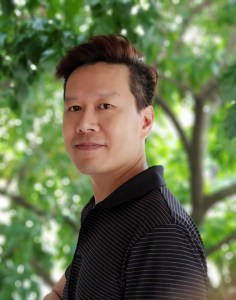
ProfilesDr. Yael Warshel is a Penn State university-wide Rock Ethics Institute core faculty and Assistant Professor of Telecommunications at Pennsylvania State University. She works at the intersection between international media, child, and conflict analysis, practice and policy.

Yael Warshel

She is fluent in and/or has studied five languages and conducted fieldwork in the Middle East, North and Sub-Saharan Africa, the Balkans and Latin America. An award-winning scholar, Dr. Warshel is the recipient of three top dissertation awards, including one in peace studies, and two in global and international communication, which she received from the International and National Communication Associations; together with several more awards in communication, public service, Middle Eastern and African studies. She is advancing a book manuscript assessing the reception of peacebuilding versions of Israeli and Palestinian Sesame Street; continuing fieldwork to analyze North West African youth’s uses of digital media to construct their citizenship; and separate of that, about the comparative determinants of international coverage of conflicts, per the contrast between frames and agendas set, and the magnitude and intensity of conflicts. Her past publications addressed the contributions of communication and media studies to peace education, Middle Eastern children and youth’s media uses and reception, and election studies. She wrote Experiencing the Israeli-Palestinian Conflict: Children, Peace Communication and Socialization (Cambridge University Press, 2021), and co‐edited (with Elihu Katz), Election Studies: What’s Their Use? She serves as Chair of E-Book Reviews for the Digest of Middle East Studies, is a Board Member of the American Institute for Maghrib Studies (AIMS), and has been quoted by a broad range of international media sources.

Before joining Penn State, Dr. Warshel taught at UCLA, UCSD and American University as an Assistant Professor of International Communication and Associate Faculty of International Peace and Conflict Resolution. She coordinated communication policy for UNESCO, worked as photojournalist with the Zimbabwe‐Inter‐Africa‐News‐Agency, and conducted policy‐relevant research with the Center for International Development and Conflict Management, the Jerusalem‐based Truman Institute for the Advancement of Peace, the Center for Middle East Development, and the Center for Research on Peace Education.

Areas of Expertise
Peace communication and social change; comparative and global African, Middle Eastern and Saharan media (including systems, ethics, practices, uses, reception, effects and contexts); children and ethnopolitical conflict; ethnography of violence; public opinion; citizenship/human rights; borderlands and (forced-) migration; social-psychology; assessment and evaluation.

Regional Expertise
Middle East and Africa (both North and Sub-Saharan)

Education

PhD in communication, UC San Diego; MA in communication, Annenberg School, University of Pennsylvania; BA studies in still photography, USC School of Cinema‐Television; BA in interdisciplinary studies, UC Berkeley.

Contact:
Assistant Professor, Telecommunications Research Associate, Rock Ethics Institute
Pennsylvania State University
http://yaelwarshel1.blogspot.com
http://comm.psu.edu/people/individual/yael-warshel
https://personal-psu.academia.edu/YaelWarshel
Twitter: @ywarshel
ywarshel [at] gmail.com


Work for CID:
Yael Warshel wrote KC91: Peace Communication.

Meina Liu Profile

Profiles

Meina Liu (Ph.D., Purdue University, 2006) is an Assistant Professor in the Department of Communication at the University of Maryland, College Park.

Her research and teaching, at both undergraduate and graduate levels, focus on Intercultural Communication, Organizational Communication, and Negotiation and Conflict Management. A major strand of inquiry that Dr. Liu undertakes is concerned with whether people from different cultures engage in different cognitive and emotional processes, and if so, what effect might these differences have on the way they negotiate, manage conflict, and provide emotional support to distressed others. Her current research investigates culture’s main and moderating effects on the process through which negotiators’ emotions influence their own, as well as their counterpart’s, bargaining tactics and negotiation outcomes. This line of research is primarily quantitative, utilizing sophisticated statistical techniques, such as multilevel modeling and structural equation procedures, to analyze data collected from simulated negotiation interactions. Works from this line of research are published in the field’s premier journals, such as Human Communication Research and Communication Research, as well as key specialty journals, such as Journal of International and Intercultural Communication, Journal of Cross-Cultural Psychology, and Negotiation and Conflict Management Research. Two of the conference papers received the Top Paper Awards, one from the Interpersonal Communication Division and the other from the Intercultural Communication Division of the International Communication Division. One of her journals articles received the 2010 Outstanding Scholarly Work Award from the ICA Intercultural Communication Division [Liu, M. (2009). The intrapersonal and interpersonal effects of anger on negotiation performance: A cross-cultural investigation. Human Communication Research, 35, 148-169.]

Dr. Liu also conducts research exploring culture and communication from a social constructionist, critical-interpretive perspective, using qualitative research methods such as interviews, textual analysis, and grounded theory techniques. Early in her career she was involved in a collaborative research project investigating gendered workplace processes, particularly as they relate to career communication and work-life conflict, as embedded in working mothers’ workplace pregnancy and maternity leave discourses. One of her ongoing projects examines bi-cultural identity (re)construction of second-generation immigrants as a contested space for meaning making. These qualitative works are also published in some of the field’s premier journals, such as Communication Monographs, Human Relations, and Journal of Applied Communication Research, as well as key specialty journals, such as International and Intercultural Communication Annual, Journal of Business Communication, and Journal of Family Communication. It has also resulted in a Top Four Paper Award from the Organizational Communication Division of the National Communication Association, and three Outstanding Published Article Awards, one from the NCA Applied Communication Division, and two from the Organization for the Study of Communication, Language, and Gender. Dr. Liu’s published articles can be found at http://terpconnect.umd.edu/~liu/.

Robert Shuter Researcher Profile

ProfilesRobert Shuter is Director and Founder of the Center for Intercultural New Media Research.  A pioneer in intercultural communication studies, Dr. Shuter is Professor Emeritus at Marquette University (USA).

A noted researcher on communication across cultures, he has published over 60 articles and books in major scholarly journals including Journal of Social Psychology, Journal of Communication, Communication Monographs, Management Communication Quarterly as well as popular press outlets like the New York Times and Wall Street Journal. His recent article on emerging interpersonal norms of text messaging in India and the US appeared in the July 2010 issue of the Journal of Intercultural Communication Research.  He edited a special forum (2011) on intercultural new media research for the Journal of International and Intercultural Communication as well as a special issue (2012) of the Journal of Intercultural Communication Research on new media research across cultures.


NOTE: Robert Shuter passed away May 4, 2021. He was a long time colleague in Milwaukee. He was interviewed by CID a few years ago: Intercultural Dialogue and New Media Research: An Interview with Robert Shuter. Further information about his life and work can be found in his ASU obituary.


Evelyn Ho Profile

ProfilesEvelyn Y. Ho (PhD, University of Iowa) is Professor of Communication Studies, Asian Pacific American Studies, and Critical Diversity Studies and a Faculty Chair of the Honors College at the University of San Francisco.

Evelyn HoBeginning with an understanding that communication is a cultural activity and that health care systems and beliefs are profoundly cultural, Prof. Ho’s teaching and research focus broadly on the intersections of health, culture and communication. Health care in the United States is increasingly confronted with a variety of domestic and international-based alternatives and complementary therapies to western biomedicine and her research studies the discursive construction of holistic, complementary, and integrative medicine especially in relationship to biomedicine.

A recent project called Integrative Nutritional Counseling combines Chinese medicine and Chinese medicinal foods principles with western biomedical nutrition for Chinese Americans with type 2 diabetes and heart health. Other recent projects include:

  • Discourse analysis of Chinese American patients (using English, Cantonese or Mandarin) and primary care providers discussing complementary and integrative therapies and/or mental health.

  • Understanding the use of informal/unlicensed Chinese medicine practices (such as foot reflexology, postpartum practices, Chinese medicinal foods) in Singapore

  • Systematic review of provider-patient communication about complementary and integrative health care.

Previous research has examined public health acupuncture clinics in Seattle and in San Francisco, the use of acupuncture and massage therapy use for HIV–related neuropathy, and patient education about how to discuss complementary and integrative medicine with doctors.

At USF Prof. Ho teaches courses in Communication and Culture, Ethnography of Communication, Qualitative Research Methods, Communication and Health Disparities, Complementary and Integrative Health, Sanctuary and Immigration, and Asian Pacific American Studies. She has been a guest/visiting professor at the University of Helsinki (2018) and the National University of Singapore (2015). In 2014, she co-taught USF’s first ever Pacific Islander course — the Davies Forum — Pondering Paradise: Contemporary Issues Through a Pacific Lens.

She has previously chaired both the Health Communication Division and the Language and Social Interaction Division of the International Communication Association and the LSI Division of the Western States Communication Association.

Selected publications

Ho, E. Y., Acquah, J., Chao, C., Leung, G., Ng, D., Chao, M. T., Wang, A., Ku, S., Chen, W., Yu., C. K., Xu, S., Chen, M., & Jih, J. (2018). Heart healthy integrative nutritional counseling (H2INC): Creating a Chinese medicine + Western medicine patient education curriculum for Chinese Americans with heart disease. Patient Education & Counseling, 101, 2202-2208. https://doi.org/10.1016/j.pec.2018.08.011

Chi, H.-L., Cataldo, J., Ho, E. Y., & Rehm, R. S. (2018). “Can we talk about it now?” Recognizing the optimal time to initiate end-of-life care discussions with Chinese-American older adults and their families. Journal of Transcultural Nursing, 29, 532-539.
 https://doi.org/10.1177/1043659618760689

Leung, G., Ho, E. Y., Chi, H.-L., Chen, Y., Ting, I., Huang, S., Zhang, H., Pritzker, S., Hsieh, E., & Seligman, H. (2018). “We (Tang) Chinese”: Contemporary health management and identity positioning among Cantonese Chinese Americans with type 2 diabetes. Journal of International and Intercultural Communication, 11, 271-285.
https://doi.org/10.1080/17513057.2018.1487071

Chi, H.-L., Cataldo, J., Ho, E. Y., & Rehm, R. S. (2018). “Please ask gently: Using culturally targeted communication strategies to initiate end-of-life care discussions with older Chinese Americans. American Journal of Hospice and Palliative Medicine, 35, 1265-1272.
https://doi.org/10.1177/1049909118760310

Ho, E. Y., Lie, S., Luk, P. P. L., & Dutta, M. J. (2018). Speaking of health in Singapore using the Singlish term heaty. In M. Scollo & T. Milburn (Eds.), Cultural discourse analysis in situated contexts: A tribute to Donal Carbaugh, (pp. 3-19). Fairleigh Dickinson University Press.

Hamblin, T., Ho, E. Y., & Dhruva, A. (2017). Integrative medicine: Combining Ayurveda and biomedicine. In A. du Pré & E. B. Ray (Eds.), Case Studies: Real-Life Scenarios in Health Communication, (pp. 73-78). Oxford, England: Oxford University Press.

Ho, E. Y., Lalancette, C., & Leung, G., (2015). “Using Chinese medicine in a Western way”: Negotiating integrative Chinese medicine treatment for type 2 diabetes. Communication & Medicine, 12, 41-54.
doi: 10.1558/cam.v12i1.25993.

Ho, E. Y., Tran, H., & Chesla, C. A. (2015). Assessing the cultural in culturally sensitive printed patient education materials for Chinese Americans with Type 2 diabetes. Health Communication, 30, 39-49.
https://doi.org/10.1080/10410236.2013.835216 

Ho, E. Y. (2015). Qi (Chinese). In K. Tracy, C. Ilie & T. Sandel (Eds.). The International Encyclopedia of Language & Social Interaction. Boston: John Wiley & Sons.

Ho, E. Y. (2014a). Complementary and alternative medicine. In T. L. Thompson (Ed.). Encyclopedia of Health Communication (Vol. 1, pp. 65-70). Thousand Oaks, CA: Sage. 

Ho, E. Y. (2014b). Socio-cultural factors in health communication. In N. G. Harrington (Ed.). Exploring Health Communication from Multiple Perspectives. (pp. 212-239). New York: Routledge.


Work for CID:

Evelyn Ho was one of the participants at the National Communication Association’s Summer Conference on Intercultural Dialogue in Istanbul, Turkey, which led to the creation of CID.

SHAN Bo Profile

ProfilesSHAN Bo, Ph.D., is Professor at the School of Journalism and Communication and Director of the Center for Studies of Media Development at Wuhan University in Wuhan University, China.

He also serves as Chair of The Chinese Association for History of the Idea of Communication, and Vice Chair of the Chinese Association for History of Journalism and Mass Communication. He has been guest professor of the Université Michel de Montaigne: Bordeaux 3, in France, and a member of the editorial advisory board of Communication & Society (Hong Kong) and Chinese Journal of Communication (Hong Kong).


Selected Books:

*Shan, Bo, & Xinya Liu (Eds.). (2017). National Image and Intercultural Communication. China Social Sciences Literature Publishing House.
*Shan, Bo, & Jun Xiao (Eds.). (2015). The Cultural Conflict and Intercultural Communication, China Social Sciences Literature Publishing House.
*Shan, Bo, & Clifford Christians. (2015). The Ethics of Intercultural Communication. Peter Lang Press.
*Shan, Bo. (2014). Academic Imagination and Educational Reflection on Journalism and Communication, China Social Sciences Literature Publishing House.
*Shan, Bo. (2011). The Nine Horizons of the Mind: The Spiritual Space of Tang Junyi’s Philosophy. Beijing University Press.
*Shan, Bo. (2010). The Issues and Possibilities of Intercultural Communication. Wuhan University Press.
*Shan, Bo. (2001). Chinese Journalism and Communications in the 20th Century. Fudan University Press.

Selected Journal Articles:

*Shan, Bo. (2018). Constructing the Reflectiveness of Chinese Communication from a New Body-function Perspective. Chinese Journal of Journalism & Communication, 2.
*Shan, Bo, & Xiayu Zhou. (2018). Discoveries and Innovations: A Review of 2015-2017 Western Intercultural Communication Research. Journal of Journalism & Communication Review, 1.
*Shan, Bo, & Yu Hou. (2017). The Shadow of Thoughts: Critical Review of the Ancient Greek Origin of Western Communication. Journalism & Communication,12.
*Shan, Bo. (2017). On the Possibility of Cross-Cultural Turn of National Image. Journal of Lanzhou University (Social Sciences), 5.
*Shan, Bo, & Yuxin Sun. (2017). New Perspectives and New Trends in Intercultural Communication Research. Journal of Nanchang University.
*Shan, Bo. (2016). Sinologists and Different Types of the Construction of “Cultural China”: From an Intercultural Perspective. Studies on Cultural Soft Power, 2.
*Shan, Bo, & Jihai Feng. (2016). How do Western Communication Theories Connect with Marxism?  Journalism Bimonthly, 3.
*Shan, Bo, & Li Lin. (2016). New Trends in Comparative Journalism. Journal of Shanxi University ( Philosophy & Social Science), 4.
*Shan, Bo, & Yuan Wang. (2016). Intercultural Interaction and Foreign Missionaries’ Image Perception of China. Journalism & Communication.
*Shan, Bo. (2016). The Issues of Others in the Perspective of Cross-cultural Communication. Journal of Academic Research.
*Shan, Bo. (2015). The Encounter and Comparison Between China and the West. Global Media Journal, 2.
*Shan, Bo, & Zhenxin Wang. (2015). Journalist’s Privilege: A Historical Review, Modern Communication (Journal of Beijing Broadcasting Institute), 37(12).
*Shan, Bo, & Xinya Liu. (2014). Marginal Experience and Intercultural Communication. Journalism & Communication, 6.
*Shan, Bo, & Jincao Xiao. (2014). The Communicative Wisdom in the analects of Confucius: a Comparative Perspective. Chinese Journal of Journalism & Communication, 6.
*Shan, Bo. (2013). The Problem and Method of Sino-Western Comparative Journalism Study. Journalism & Communication, 9.
*Shan, Bo. (2013). Intercultural Self-contradiction in “Geo-localization” and its Settlement. Journal of Xinjiang Normal University (Social Sciences), 3.
*Shan, Bo. (2011). Basic theoretical propositions of intercultural communication. Journal of Huazhong Normal University (Humanities and Social Sciences), 1.