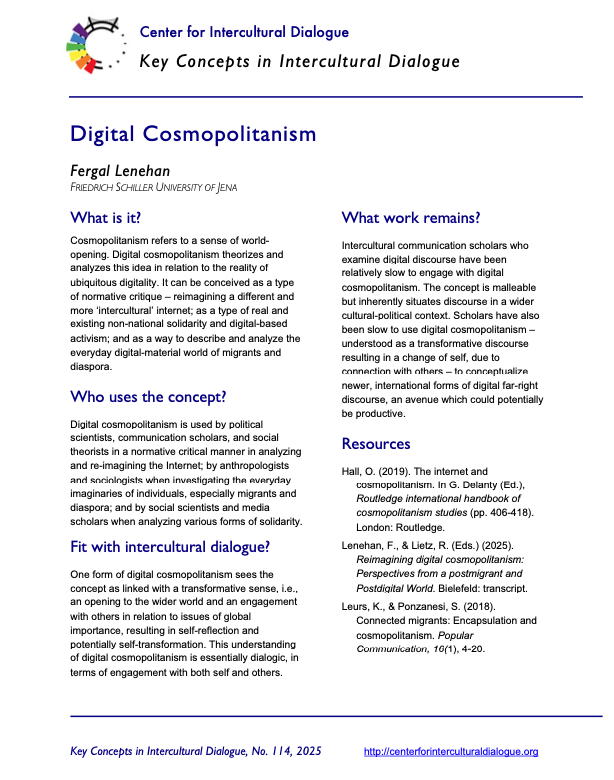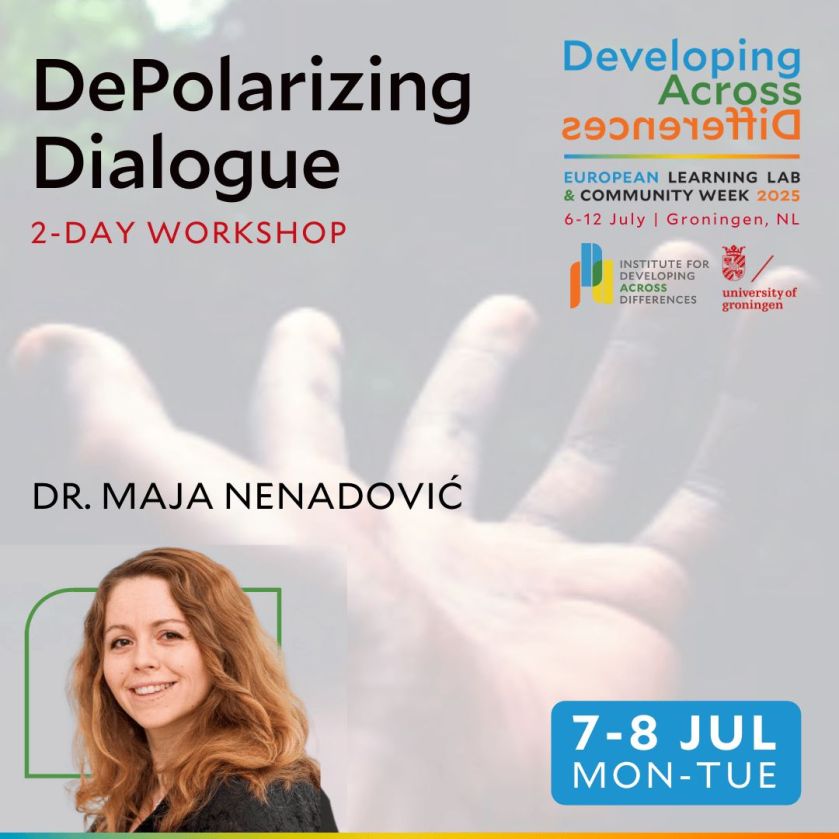
CFP Nordic Network for Intercultural Communication Conference 2025 (Finland)

ConferencesNordic Network for Intercultural Communication, University of Helsinki, Finland, 13-15 August 2025. Deadline for abstract: 10 April 2025.

The 31st Nordic Network for Intercultural Communication Conference will be arranged in Helsinki on 13–15 August 2025. The NIC 2025 conference theme is “Evolutions in intercultural communication: New concepts and methodologies”. With this theme, we wish to encourage discussion of conceptual and methodological development in the field of intercultural communication, drawing connections between research, teaching and practice.

In addition to those addressing the theme, we also welcome proposals that explore related aspects of intercultural communication. These are, for example:

  • Critical evaluations of theories of intercultural communication, education, or management
  • Migration and new or alternative forms of language, interaction, and communication
  • Challenges of trans/poly/cross/intercultural encounters and relationships
  • Decolonization and the knowledge on culture and communication
  • Diversity, equity, inclusion, and justice in different spaces and settings
  • New questions on education and learning in multicultural societies

Intercultural communication is an interest to and researched by scholars in a wide variety of fields and disciplines such as language, media and communication, multilingual and/or multicultural education, sociolinguistics, social interaction, international management, discourse studies, cultural studies, ethnic relations, and cross-cultural psychology. We welcome submissions from all.

Abstract submission

Please submit your max 250-word abstract using the abstract form below. The abstracts will be anonymously peer reviewed. Note that all submissions should be in English and those submitting the abstract should be prepared to attend the conference in person. The deadline for submitting your abstract is April 10th, 2025. If the abstract includes citations, please provide the appropriate references (the list of references is not included in the word count).

Organizing committee: Saila Poutiainen (Chair), Mélanie Buchart, Yoonjoo Cho, Niina Hynninen, Janne Niinivaara

U Warwick: PHD Studentship in the Peaceful Return of Victims of Forced Displacement (UK)

“Studentships“

PhD Studentship in PEACERETURN: The Peaceful Return of Victims of Forced Displacement, University of Warwick, Warwick, England, UK. Deadline: 14 April 2025.

The Department of Politics and International Studies, University of Warwick, welcomes applications: (1) for an independent project focusing on the institutional trade-offs involving returnees in a future international mediation in Ukraine and/or the global impact of the Russian invasion on displacement; and (2) on the topic of Gender and Return in Post-Conflict Societies. Candidates will be considered for a full-time, 3.5-year PhD position plus a stipend at UKRI rates. Positions are open to both home and international students through a grant funded by the UKRI- Horizon Europe Guarantee (ERC) project PEACERETURN (PI: Professor Neophytos Loizides) at the University of Warwick.

(1) PhD theme: Displacement and Return in Ukraine

Supervisors: Professor Neophytos Loizides (University of Warwick)

(2) PhD theme: Gender and Return in Post-Conflict Societies

Supervisors: Professor Neophytos Loizides (University of Warwick) & Professor Betül Çelik (Sabanci University)

U Deusto: Postdoc in Re-shaping Attitudes about Refugees and Gender Minorities in Spain and Portugal (Spain)

Postdocs

Postdoctoral Researcher: Re-shaping Attitudes about Refugees and Gender Minorities in Spain and Portugal, University of Duesto, Bilbao, Spain. Deadline: 28 March 2025.

The Faculty of Social and Human Sciences at the University of Deusto is seeking a motivated and highly qualified Postdoctoral Researcher to join the project Re-shaping Attitudes about Refugees and Gender Minorities in Spain and Portugal. This project explores how negative public opinion and social attitudes can be transformed using cutting-edge quantitative methods, particularly survey experiments. The postdoctoral researcher will assist the PI in devising and testing alternative human-rights-based narratives about refugees and gender minorities to counter hate speech and marginalising far-right narratives that target these vulnerable/disadvantaged groups.

Penman Guest Post: Dialogue in the Interests of Justice

Guest Posts
Dialogue in the interests of justice. Guest post by Robyn Penman.

I propose that the dialogic form can act as an aspirational model: it is an orientation to a way of communicating, a commitment to doing it better and, only occasionally, an accomplishment.

In one way, the link between dialogue and justice seems obvious, at least as far as social justice is concerned. As Kathryn Sorrells (2015) noted in her discussion of social justice Key Concepts on Social Justice, intercultural dialogue is critical to both the process and goal of social justice because it enables us to reach across difference to creatively engage with others. Yet, even appreciating how critical that link is, there is so much more that needs to be considered. In particular, as Sorrell sums up, there is a critical need for more interdisciplinary work on understanding the importance of communication in building relationships and systems based on social justice.

The critical need for taking communication into account is reflected in such questions as: How exactly does the key role of dialogue for meeting social justice goals get played out in practice? How is it possible to even create the conditions for dialogue in unjust circumstances? And what does dialogue have to do with the common idea of social justice as the equitable distribution of resources and rights? These questions open up a whole new vista of possibilities, even to a re-consideration of what justice itself can mean.

Download the entire guest post as a PDF.

Northeastern U: Assistant Director Global First-Year Programs (USA)

“JobAssistant Director, Global First-Year Programs – London Scholars, Northeastern University, Boston, MA, USA. Deadline: open until filled; posted 24 February 2025.

The primary role of the Assistant Director – Global Network First-Year Programs – London Scholars is to provide quality customer service to students and parents (both prospective and committed). Through excellent verbal and written communication, the Assistant Director plays a key role in ensuring that Northeastern University (NU) is responding to prospective and current students’ and parents’ needs thoroughly, professionally, and proactively. The Assistant Director will practice active listening, empathy, and professionalism when responding to requests.

The Assistant Director – Global Network First-Year Programs – London Scholars is expected to maintain a working knowledge of applicable NU programs to answer all inquiries with confidence and ease, to provide high-level triage for unique and ad hoc inquiries, escalating as appropriate, and to take proactive steps to enhance existing protocols and systems of daily communication. In addition to providing excellent customer service, the position supports event planning and performs general administrative tasks. This role will support the London Scholars Program and the efforts of the Associate Director – Global Network First-Year Program – London Scholars to develop strong relationships with Northeastern University London campus partners.

As a part of the Global Network First-Year Programs team, the Assistant Director will participate in rotating Emergency Phone duties with other team members during the academic year. This will include triage and response to emergency issues outside of office hours; escalating issues as appropriate to management; and managing any escalated student/parent problems or concerns before arrival, upon arrival, and regarding the transition to Northeastern University.

The Assistant Director – Global Network First-Year Programs – London Scholars will also be responsible for developing and maintaining a strong working relationship with the Global First-Year Programs Customer Service team and gaining knowledge of the customer service protocols and systems in place to support communication with prospective and enrolled London Scholars and their families.

U Illinois at Urbana-Champaign: International Training & Programming (USA)

“JobInternational Training and Programming Specialist – International Student and Scholar Services, Illinois International – University of Illinois Urbana-Champaign, IL. Deadline: 20 March 2025.

International Student and Scholar Services at the University of Illinois Urbana-Champaign has an opening for an International Training and Programming Specialist. International Student and Scholar Services is committed to providing culturally sensitive services of the highest quality. They strive to create an environment that is conducive to a successful educational, personal, and professional experience. They serve our international population and campus units through advising, immigration services, programming, advocacy, and outreach. There are 15,000 international students and scholars at the University.

Serve the campus community by creating and providing training and materials to enhance the collective intercultural competency of University of Illinois faculty, staff, and students and by creating and coordinating programming for international students and scholars to enhance their international educational experience.

CFP Communication as Social Construction Division for NCA 2025

Conferences

Call for submissions: Communication as Social Construction Division, National Communication Association, 20-23 November 2025, Denver, CO, USA. Deadline: 31 March 2025.

 The Communication as Social Construction (CASC) Division invites inquiries that explicitly cite social construction literature and use social construction approaches to study face-to-face, cultural, and mediated communication. Referencing foundational texts of social construction is highly encouraged. Some influential scholars may include, but are not limited to the following: Burr, V.; Blumer, H.; Chen, V.; Davis, K.E.; Galanes, G.; Gergen, K.J.; Gergen, M.; Leeds-Hurwitz, W.; Littlejohn, S.W.; Pearce, W.B.; Spano, S.; and Tomm, K.

The Communication as Social Construction division encourages submissions that explore how we communicate in ways that may elevate (1) the communicative construction of identity and relationships within any socially significant context; (2) the communicative construction of context itself; (3) the social construction of discord and the potential of communication to transform conflict into more harmonious relationships; (4) the social construction of regard, concern and esteem; (5) metatheoretical, theoretical, and methodological developments relevant to constructionist research, teaching, and application; (6) examinations of similarities and differences between social construction and other approaches to communication studies and practices, and (7) comparative analyses of approaches to communication as social construction across cultures or across levels of analysis.

Members of the Communication as Social Construction (CASC) Division are committed to promoting conversation and community among scholars whose work advances the idea that we create and recreate social worlds through interaction. CASC scholars take a Communication Perspective to acknowledge communication processes as central to academic inquiry and practice with recognition of the transformative potential of communication teaching and research. The division is interested in topics related to social constructions of identity and relationships, discord and transformative conflict, and social constructions of the contexts we live in today. Examples of socially constructed contexts to examine may include relationships, media, technology, health, organizations, the classroom, and culture.

FMSH: Trilateral “Villa Vigoni” Workshops (France, Italy, Germany)

GrantsTrilateral “Villa Vigoni” workshops (France, Germany, Italy), Fondation Maison des Sciences de l’Homme (FMSH), Paris, France. Deadline: 13 April 2025.

In order to promote the exchange between researchers active in France, Germany, and Italy and the construction of scientific networks within the humanities and social sciences, as well as to explicitly encourage the use of French, German, and Italian as scientific languages, the Fondation Maison des sciences de l’homme (FMSH), the Deutsche Forschungsgemeinschaft (DFG), and the Villa Vigoni have set up the “Trilateral Workshops” program. Applications for this program can come from all disciplines of the humanities and social sciences. They will be selected on the basis of a competitive evaluation procedure.

Each trilateral workshop consists of a series of three scientific meetings, organized at the rate of one meeting per year. They will all take place at Villa Vigoni (located on the shores of Lake Como). The participants in the Workshops form a core group of 12 (minimum) to 16 (maximum) researchers coming, if possible in a balanced way, from the three partner countries and from different institutions within the same country. This group will remain the same for all meetings.

The submission of the project and the coordination of each workshop are ensured by a group of three researchers active respectively in France, Germany and Italy. The project leaders guarantee that they have an institutional affiliation (university, research organization, etc.) for the duration of the proposed project.

The participation of researchers at the beginning of their career is highly desirable. In order to facilitate the submission of a project, postdocs (up to 6 years after the defense of the thesis) may choose to submit their application in a reduced format. This variant is only possible if at least two of the three project leaders and at least half of the participants are in the post-doctoral phase defined above. In this case, the conditions are as follows: support for two years for two (instead of three) meetings and with a group of 9 (minimum) to 12 (maximum) participants; each of the three partner countries must be represented by at least 2 (if there are more than 9 participants, by at least 3) persons.

CFP International & Intercultural Communication Division for NCA 2025

Conferences

Call for submissions: International and Intercultural Communication Division, National Communication Association, 20-23 November 2025, Denver, CO, USA. Deadline: 31 March 2025.

The International and Intercultural Communication Division (IICD) of the National Communication Association is committed to promoting works that explore different issues using intercultural communication frameworks. We understand culture broadly, not as a preexisting phenomenon but as a contested terrain of meaning-making, making it central to social interactions and human existence itself.

The year 2025 has brought severe sociopolitical turmoil in its wake. Given this context, the division seeks submissions from scholars, teachers, practitioners, and performers, among others, that related to the 2025 convention theme, “Communicate to Elevate,” introduced by NCA’s First Vice-President, Dr. Tina Harris. Specifically, they invite works that engage this theme in ways that illuminate the theoretical and political potential of intercultural communication in being an agent of social change. Which voices, projects, analytics, and geopolitical contexts and perspectives, among others, are elevated in communication studies in general and intercultural communication in particular? Conversely, which issues remain elided and to what effect? Are there voices that remain subdued despite (performative) attempts to the contrary and why? Furthermore, when is it prudent to not elevate certain voices or analytics (as their strength derives from their ability to evade mainstream attention)? What are the implications of trying to “communicate” and “elevate” in times of rampant misinformation and in a political context that is hostile to investigations of socioeconomic and other inequities? Is it possible to elevate historically marginalized voices without hoping for substantial structural changes? What trends or interdisciplinary collaborations are emergent in intercultural communication that help elevate human well-being? These are a few provocations offered for your consideration.

Cole Foundation Grants: ICD Through Theatre 2025 (Canada)

Intercultural Conversations-Conversations Interculturelles programme, Cole Foundation, Montreal, Canada. Deadline: 28 March 2025.

Twice a year the Cole Foundation’s Intercultural Conversations-Conversations Interculturelles (IC-CI) program disperses hundreds of thousands of dollars to support professional Montreal theatre companies to produce, commission and translate plays that show diversity on stage. This encourages greater understanding of Montreal’s intercultural reality by having audiences both learn about and see their stories presented.

The Cole Foundation is committed to celebrating the vibrant multi-cultural mosaic of Montreal, Quebec and the rest of world by supporting professional theatre that features the stories of different (racial, ethnic or religious) cultures. We hold a bi-annual competition, awarding grant funding to the production, creation, and translation of plays that bring to the stage the voices of such cultures.