International Translation Day 2025

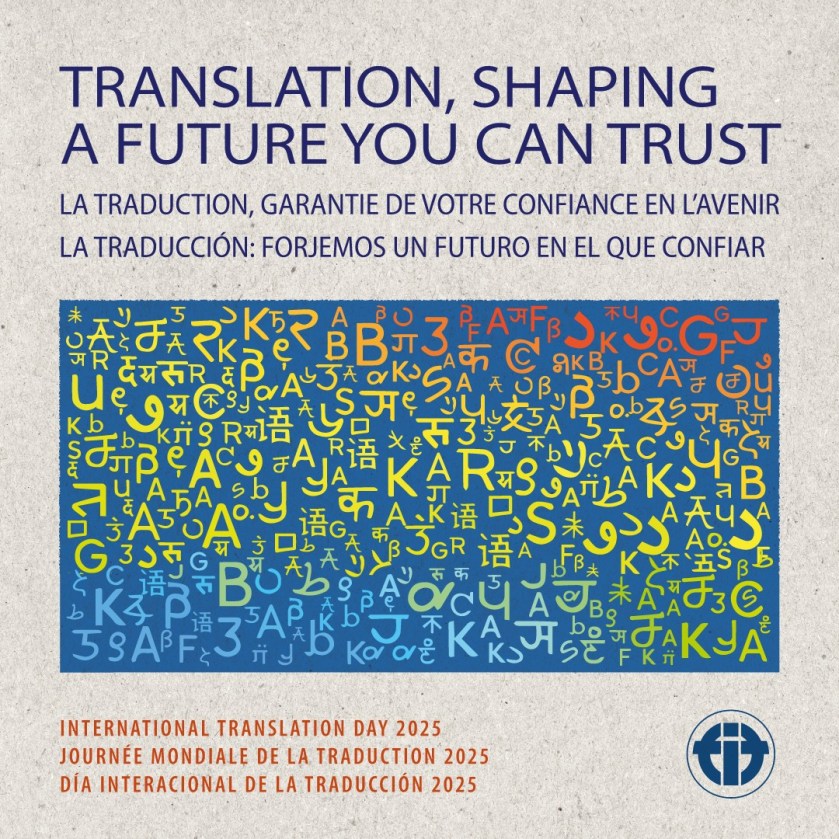
EventsHappy International Translation Day, a celebration  established by the United Nations in 2017, occurring on 30 September every year.

International Translation Day is an opportunity to pay tribute to the work of language professionals, which plays an important role in bringing nations together, facilitating dialogue, understanding and cooperation, contributing to development, and strengthening world peace and security. A number of organizations are planning events, as described in a prior post.

“Words travel worlds. Translators do the driving”. – Anna Rusconi

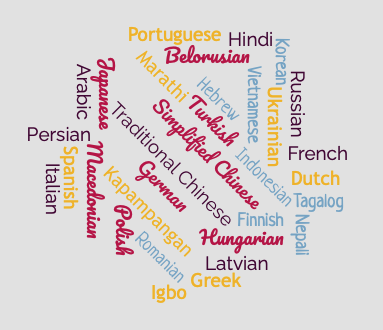
This is an appropriate occasion on which to thank all of the translators who have taken time from other responsibilities to help CID prepare translations of our publications into a remarkable 32 different languages. We could not do this without you! 

NOTE: If you want to translate one of the publications into a language in which you are fluent, please contact us before you start, to learn whether anyone else is already working on that publication in that language.


Yizhe Jiang Profile

Profiles

Yizhe Jiang (姜一哲) is an Assistant Professor in Chinese Language Education at the University of Macau (June 2025 – Present). She earned her Ph.D. in Multilingual Language Education from The Ohio State University and her M.A. in Foreign Language Education from New York University.
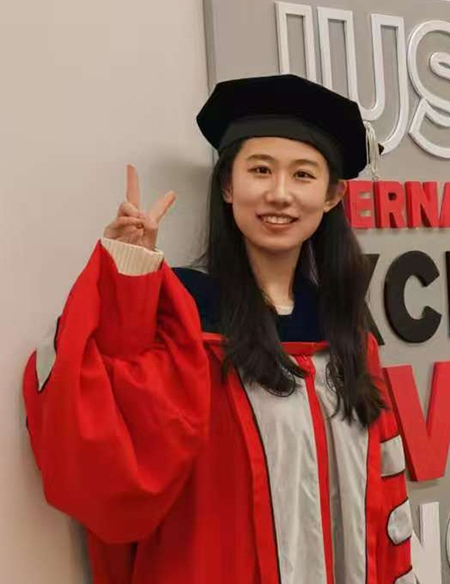
 

Yizhe’s research interests include bilingual and multilingual language education, varieties of Chinese as heritage languages, translanguaging pedagogies, teaching Chinese as a foreign language, and technology-enhanced language education. More information can be found on her website.

Her Ph.D. dissertation is based on two and a half years of ethnographic fieldwork in a rural county, 锦屏 (Jinping), in Guizhou Province, where approximately 90% of the population belongs to the Miao (Hmong) and Dong (Kam) ethnic groups. Through participant observation, semi-structured interviews, artifact analysis, and other qualitative data sources, her research examines the language practices, functions, and ideologies of four Miao and Dong children as they navigate their ethnic languages (Miao and Dong), the regional Chinese dialect (Jinpinghua), the national language (Putonghua), and English as a school subject.

Recent publications:

Jiang, Y. (2024). Having dumplings with a fork: Language use and ideologies of a Fuzhounese-American youth. Journal of Multilingual and Multicultural Development, 1-17.

Jiang, Y., & Troyan, F. J. (2024). Varieties of Chinese as heritage languages: A research synthesis. International Journal of Bilingual Education and Bilingualism, 27(1), 131-143.

Jiang, Y., Wang, Q., & Weng, Z. (2022). The influence of technology in educating English language learners at-risk or with disabilities: A Systematic Review. Center for Educational Policy Studies Journal, 12(4), 53-74.

Jiang, Y. (2021). Language mixings in heritage language education: A systematic review. International Journal of Language and Literary Studies, 3(2), 21-36.

Iswandari, Y. A., & Jiang, Y. (2020). Peer feedback in college EFL writing: A review of empirical research. LLT Journal: A Journal on Language and Language Learning, 23(2), 399-413.


Work for CID:

Yizhe Jiang was recently interviewed by Casey Man Kong Lum, Associate Director of the Center; the result is An ethnographic study of ethnic minority students’ multilingualism in rural China.

Institute for Islamic, Christian, and Jewish Studies: 2 Positions (USA)

“Job2 positions available at the Institute for Islamic, Christian, and Jewish Studies, Towson, MD, USA. Deadline: 15 October 2025.

Organization description: The Institute for Islamic, Christian, and Jewish Studies (ICJS) is an independent, educational nonprofit advancing interreligious dialogue and understanding in order to build and sustain a multireligious democracy in the United States. Through educational programming, public-facing scholarship, and relationship-centered fellowships and workshops, ICJS models a new conversation in the public square that affirms religious diversity and creates opportunities for participants to practice the art of interreligious dialogue. Their audiences include the general public, civic leaders, teachers, chaplains, clergy, congregational leaders, seminarians, librarians, museum professionals, and higher-ed faculty.

Operations and Events Associate: The Operations and Events Associate plays a role in nearly all functions of the organization, bringing their energy and focus to building and maintaining a smoothly functioning work environment. This position handles a broad range of responsibilities from event planning (both online and in-person) to program assessment to facility management. The ideal candidate is a team player with a wide range of interests and skills.
The Operations and Events Associate stays alert to potential improvements in organizational systems and will recommend and develop new operations and procedures as needed. They will contribute to program enhancement through strategizing about participant engagement, being part of the public event planning team, and building a culture of assessment. The Associate will assist with financial tracking and will maintain a safe, well-kept facility for employees and visitors. This position reports to the Senior Director for Program, Scholarship, and Operations.

Marketing Manager: The Marketing Manager elevates the mission, programs, and public presence of ICJS by developing and executing strategic marketing efforts. The Marketing Manager identifies and targets key audiences—such as clergy, teachers, civic leaders, librarians, museum professionals and academics—with compelling content and campaigns that build awareness, deepen engagement, and drive participation in ICJS offerings. With an eye toward both brand integrity and innovation, the Marketing Manager manages digital and print communications, paid promotions, and organizational messaging, while collaborating across departments to amplify ICJS’s impact. This role ensures that ICJS’s vision of interreligious learning and connection reaches wider and more diverse communities. The Marketing Manager is a member of the Communications team and reports to the Director of
Communications and Marketing.

Texas A&M: Assistant Professor of Global Media (USA)

“JobAssistant Professor of Global Media, Texas A&M University, College Station, TX, USA. Deadline: 20 October 2025.

The Department of Communication and Journalism in the College of Arts and Sciences at Texas A&M University invites applications for a tenure-track Assistant Professor position in its Humanities & Critical/Cultural Studies Division, with a focus on global media. Successful candidates will be expected to publish, teach undergraduate and graduate courses, and engage in service activities. This full-time, 9-month academic appointment has an anticipated start date of August 1, 2026.

Ideal candidates will have a robust research agenda centered on global media studies. Candidates investigating media systems, audiences, media economies, industrial practices, platforms, and texts in global contexts, are welcome to apply. They are interested in research that addresses social issues and phenomena including those that reinforce department strengths within rhetorical studies, political communication, organizational communication, media studies, and/or journalism.

Mother Tongues: Participation & Learning Coordinator (Ireland)

“JobParticipation and Learning Coordinator, Mother Tongues, Dublin, Ireland. Deadline: 10 October 2025.

Mother Tongues is a non-profit organisation based in Ireland, dedicated to empowering bilingual children through creativity and the arts. Our mission is to help these children grow up with confidence in their linguistic and cultural identities. We are committed to promoting multilingualism and fostering intercultural dialogue in Ireland.

Mother Tongues aims to define and reach out to audiences currently unaware of its services by engaging a Participation and Learning Coordinator, whose primary focus will be to target specific audiences.

The initial phase of this position will involve researching and identifying communities in South Dublin and the surrounding counties that are not yet engaging with Mother Tongues’ programmes and services. The successful candidate will be asked to identify a small number of suitable communities and to develop relationships with them. To ensure a smooth transition and handover, the successful candidate will build on the foundation laid by the former coordinator and will shadow her for the first five weeks of the role.

The ideal candidate will be an enthusiastic advocate for multilingualism and cultural diversity, with excellent communication and community engagement skills.

Quilt of Belonging: A Place for All

Applied ICD

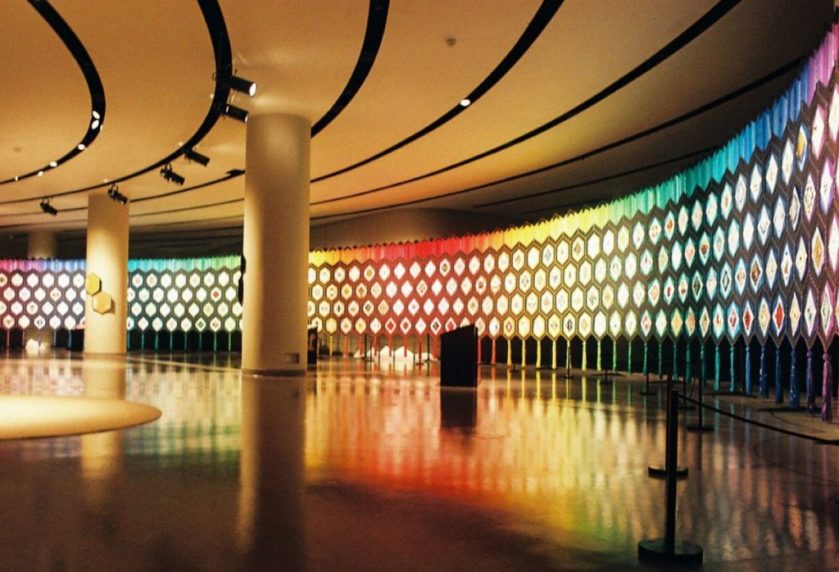
Quilt of Belonging: A Place for All, primarily created in Glengarry Village, Williamstown, ON, Canada.

The Quilt of Belonging: A Place for All is a collaborative work of art whose mission is “to recognize Canada’s diversity, celebrate our common humanity and promote harmony and compassion among people.” A richly hued portrait of the human family, Quilt of Belonging is a 120 foot (36 metres) long collaborative textile art project. Its 263 blocks portray the rich cultural legacies of all the First Peoples in Canada and every nation of the world at the dawn of the new Millennium. The goal of those who created it is to “tell the stories of Canadians of all generations throughout our history, from First Nations to new settlers to the new citizens of today, to all from coast to coast to coast who call this wonderful country home.”

The Quilt of Belonging was begun in the fall of 1998 by artist Esther Bryan. In 1995 she went on a life-changing journey to Slovakia with her parents to find the family and home her father had left behind 43 years earlier. The dream of making this artwork was born as she recognized that everyone has a story to tell, each culture has a unique beauty and that the experiences and values of our past inform who we are today. Volunteers were found from each cultural identity to create the 263 diamond shaped textile blocks. Help was provided as needed with design, research and needlework to ensure that each piece reflects the unique beauty and character of the culture depicted. In this textile mosaic, each person can experience a sense of belonging and find a place in the overall design – there is “A Place for All.” Together they record human history in textile, illustrating the beauty, complexity and sheer size of the human story.

Canada’s immigration records showed that as of January 1st, 2000 at least one person from every country of the world was living in Canada. It took over 6 years for volunteers to find a representative from each of the 263 cultural groups on the quilt. Thousands of calls, letters and countless visits were made to organizations, immigration centres, native bands, churches, embassies, and individual contacts – in short every possible source was considered. Appeals were also made in the media, needlecraft publications and numerous “in-progress” exhibitions.

Blockmakers were found to create the 9-inch diamond shaped textile “block”. Volunteers assisted them with materials, design and sewing expertise. Countless hours of research supplied information on design, fabrics and techniques and provided the historical, cultural context from which to make the artwork and develop texts for books and web-site.

Over 3 million visitors have seen the Quilt while the Quilt of Belonging companion book is available in English or French, and the 48-minute documentary is free to watch online. This artwork is also used in a variety of projects and education programs, creating an impact nationally and around the world. As of 2025, it is housed at TriSisters Art House in St Jacobs, Ontario, when not on tour.

Stories Lived, Stories Told: CMMi Podcasts

PodcastsStories Lived, Stories Told, Coordinated Management of Meaning Institute (CMMi) for Personal and Social Evolution, Arizona, USA.

The invitation reads: “The purpose of Coordinated Management of Meaning (CMM) is to create better social worlds through better communication. This podcast is about empowering and equipping all of us in our communication to see ourselves as curious and active participants with the ability to create meaningful change in our relationships and social worlds.

Our practice of CMM is about embodying a ‘communication perspective,’ which asks us to ‘look at communication, rather than through it.’ To take a communication perspective is to consider what we’re making and how we’re making it through our communication practices. This means we look at patterns, contexts, stories, and relationships; and that we use curiosity, mindfulness, collaboration, and dialogue to create better social worlds for ourselves. So, join us as we take CMM from theory to practice, engage in collective learning together, and apply a communication perspective to make meaning in our conversations.”

A few examples:

On Relational Construction with Sheila McNamee

On Creating Relational Resilience Through Reflecting Dialogue with Deb Nathan

On Designing Complex Conversations with Celiane Camargo-Borges

You can listen to this series of podcasts on Spotify, Substack, or Apple.


CFP ICA 2026: Intercultural Communication Division (South Africa)

ConferencesCall for papers: Intercultural Communication Division, International Communication Association, Cape Town, South Africa, 4-8 June 2026. Deadline: 1 November 2025.

“The Intercultural Communication (ICC) Division welcomes research that applies, extends, or develops theory, method, and analysis to explore how communication intersects with culture in local, national, international, and transnational contexts. We are committed to supporting interdisciplinary research that examines culture, identity, history, and geopolitical relations, and especially invite work grounded in non-Western, decolonial, Indigenous, and underrepresented perspectives from across the globe.

This year’s conference theme, “Communication and Inequalities in Context,” calls on us to reckon with how communication both reflects and reproduces the deep structural inequalities that mark our world. For intercultural communication scholars, this theme underscores the urgency of examining how power operates across and within cultural boundaries through colonial legacies, migration policies, linguistic hierarchies, digital divides, and uneven access to resources. These dynamics are not abstract: they shape people’s lives, sense of belonging, and ability to communicate with dignity and agency.

We therefore invite submissions that interrogate how intercultural communication research can confront, resist, or reimagine these inequalities. What communicative practices foster solidarity, healing, and justice across borders? How do marginalized communities navigate cultural difference amid systemic oppression? What responsibilities do scholars bear in addressing epistemic, material, and institutional imbalances within the field itself? How can our work amplify the voices, languages, and knowledges that are often silenced?

In line with the theme, the ICC Division seeks submissions that ask bold, justice-centered questions and that push our field to think more critically about how we engage difference, power, and global inequities. We particularly encourage contributions that attend to intercultural communication as a site of both struggle and possibility in the face of rising authoritarianism, climate crisis, digital surveillance, and social unrest.”

International Translation Day Events 2025

EventsInternational Translation Day, established by the United Nations in 2017, occurs on 30 September every year. A number of organizations are planning events.

International Translation Day

The International Federation of Translators is holding a webinar this year to celebrate, with the theme Celebrating Translation, Peace and Trust. In turbulent times, where peace often hangs in the balance and global communications and relations are infiltrated by a lack of trust, the ITD 2025 theme highlights the important role of human trust. Specifically, the role of translators, interpreters and terminologists in ensuring trustworthy communication, building dialogue and trust between parties and providing oversight to AI-generated text and machine translation.

English PEN will be holding both in person and online events in London to celebrate, with a two-part conversation exploring pressing questions for the craft, business and ethics of translation: How can literary translation thrive in the face of global turmoil? And how can literary translation thrive in the face of artificial intelligence?

UNESCO and Translation Commons are organizing a joint virtual event to celebrate the International Translation Day within the context of The International Decade of Indigenous Languages. This event will explore the evolving roles of Indigenous language professionals in the digital age, emphasizing the irreplaceable value of human expertise in ensuring accurate, culturally sensitive, and trusted translations. They will navigate the ethical considerations of AI in this field, focusing on community-led approaches to leverage technology responsibly for Indigenous language preservation and revitalization, ultimately creating a future where these languages are not only thriving but also safe.

CID LinkedIn Group being Discontinued

About CID

The Center for Intercultural Dialogue’s LinkedIn group will be discontinued. Daily posts will appear instead on the Center’s LinkedIn page. Please follow that instead.

This summer CID was swamped by nearly 800 requests to join our LinkedIn group, most identified as based in Ethiopia, and most obviously fake accounts. In addition to the sorting process being terribly time-consuming, I’ve been advised that this is probably some sort of scam, likely an attempt to gain access to legitimate members, by pretending to shared interests. After discussion with several other organizations, it seems the best road forward is to simply post to the Center’s organizational page on LI, which is here, and encourage current and future group members to follow that page. That way you can still see all the posts on the LI platform, if you prefer that to subscribing directly to the website.

If instead you prefer to now switch to the website, just enter your email in the box at the top right of any page if you view the site on a laptop, or just below the current posts if you visit using a phone. You get to choose whether you receive posts daily or weekly. Despite the common misunderstanding that we send out a newsletter, we do not; rather, followers receive regular notices directly from the website.

In order to give everyone time to move from the LI group to the LI page, the group will not be deleted until October 15. But no new members will be admitted between now and then.

My apologies for the inconvenience of changing how you follow the Center. However, beyond the few minutes spent changing from the group to the page, or to another platform, given that nearly all followers just read the posts and do not offer their own contributions, it seems unlikely to be a huge problem for very many. And the protection from potential spam attacks seems worth the inconvenience.

Wendy Leeds-Hurwitz, Director
Center for Intercultural Dialogue

Update 9/24: I just checked, and lots of you have already moved to follow the LI page – thanks for the quick response!