Institute of Current World Affairs: Fellowships 2026-28

Fellowships

Fellowships, Institute of Current World Affairs, Washington, DC. Letters of interest for 2026-28 appointment are due 15 June 2025.

ICWA advances deep understanding of global cultures and affairs by sending outstanding young professionals on independent writing fellowships abroad. Fellows submit monthly dispatches about their research, travel and life during two years of cultural immersion. Many go on to become leaders in their fields.

In a letter of interest, you would write up a description of you would do if you had a two-year, self-designed writing fellowship overseas and why you’re the right person to carry it out. There is no fixed length for the letter. The deadline for submitting an initial letter of interest is June 15, 2025. Selected candidates will be invited to submit a full application. The final fellowship selection will be made in mid-November. New fellows are expected to begin within six months.

CFP Communication & Sport: Sport, Media, and Migration: A Cross-Cultural Perspective

“Publication

Call for submissions: Communication & Sport special issue: Sport, Media, and Migration: A Cross-Cultural Perspective. Deadline: 1 September 2025.

Special issue editors: Sean R. Sadri (University of Alabama), Mahdi Latififard (Tarbiat Modares University, Iran), and Lindsey Meân (Arizona State University).

This special issue aims to explore the intersection of sport, media, and migration, examining how these elements influence global migratory patterns, public discourse, and media representations of athletes, coaches, and other sports figures. The guest editors welcome submissions employing a variety of methodological approaches and theoretical frameworks from disciplines such as communication, sociology, media studies, cultural studies, and political science. Topics of interest include (but are not limited to): race, identity, gender, nationalism, and the role of media in shaping sports migration narratives. Both qualitative and quantitative studies, as well as interdisciplinary perspectives, are encouraged.

CFP ELAN: Linguistic Anthropology in Europe: Past, Present, Futures (Netherlands)

ConferencesCall for papers, inaugural ELAN conference: Linguistic Anthropology in Europe: Past, Present, Futures, Leiden University, 6-7 November 2025. Deadline: 15 May 2025, extended to 1 June 2025.

The goal of this first conference of ELAN, the Linguistic Anthropology Network of EASA (European Association of Social Anthropologists), is to bring together a wide range of scholars interested in doing and defining linguistic anthropology in the European context, whether Europe is their fieldsite, institutional base, or European scholars are simply key interlocutors.

In this conference, organizers invite linguistic anthropologists, broadly defined, to come together to explore the range of theoretical and methodological approaches that have composed and now compose linguistic anthropological scholarship in Europe and to imagine future possibilities and directions for carrying out linguistic anthropological research in and on Europe. They welcome papers, panels, and roundtables that showcase scholars’ own linguistic anthropological scholarship, examine intersections and dialogues between different theoretical traditions, and/or reflect on the past, present and future of linguistic anthropology in Europe.

Lenehan and Lietz Guest Post: The Need for a Cosmopolitan Perspective

Guest Posts
The need for a cosmopolitan perspective. Guest post by Fergal Lenehan and Roman Lietz.

The very malleability of the cosmopolitan concept – which can sometimes make it seem incoherent – is actually the great advantage of the notion. The concept has the potential to greatly help scholars, as we argue in our book Reimagining Digital Cosmopolitanism: Perspectives from a Postmigrant and Postdigital World, to conceive of the relationship between human beings, their cultural contexts, and the wider communicative world in relation to digital technologies, in new and interesting ways which can potentially advance scholarship. This may be seen in relation to the theoretical re-thinking of the internet as a global and connecting technology, in terms of analyzing of those who use the internet, while the cosmopolitanism discourse also helps scholars when theorizing about the online spaces of encounters and the myriad of digital connections contained by, and possible with, digital technologies.

Download the entire guest post as a PDF.

Munich U of Applied Sciences: Business English & Intercultural Competence (Germany)

“JobProfessor of Business English and Intercultural Competence, Munich University of Applied Sciences, Munich, Germany. Deadline: 5 May 2025.

To further strengthen their team, HM Business School is seeking to appoint a Professor of Business English and Intercultural Competence for the winter semester 2026/2027. You will teach English language courses on specialized topics in business, economics, and intercultural communication at HM Business School in both undergraduate and advanced degree programs. Your in-depth knowledge of English-language business communication and your professional experience will enable you to successfully implement integrated modules and projects in business studies. You are a highly motivated individual (m/f/d) with academic expertise and professional experience in English business communication.

Wesleyan U: Global Language & Outreach Fellow (USA)

“JobGlobal Language and Outreach Fellow, Wesleyan University, Middletown, CT, USA. Deadline: open until filled; posted 18 March 2025.

Are you passionate about understanding other cultures and learning languages? Would you love to foster this same passion in students through creative programming? Do you believe that languages are one of the keys to intercultural understanding? Such traits are crucial for the success of Wesleyan’s Fries Center for Global Studies (FCGS), a unit committed to collaborating with all members of the Wesleyan community to advance the knowledge, language and intercultural skills, self-awareness, and empathy needed for responsible participation in our increasingly interdependent world.

Reporting to the Director of Language Resources and Technology, the Global Language and Outreach Fellow is responsible for developing, implementing, and managing high-impact initiatives that support campus internationalization through the lenses of language learning and multilingualism; and for promoting engagement with these initiatives through the FCGS’s social media and other channels.

The position works closely with colleagues in the Fries Center for Global Studies and collaborates with Wesleyan language faculty and Wesleyan student groups to further build culture- and language-based communities of practice across campus.

UNESCO: Youth as Researchers (Central Asia)

Applied ICDLaunch of the Youth as Researchers Project in Central Asia, organized by UNESCO Almaty Regional Office, UNESCO Office in Tashkent, International Centre for the Rapprochement of Cultures, and Kazakhstan National Federation of Clubs for UNESCO.

This exciting project empowers young people across Kazakhstan, Kyrgyzstan, Tajikistan, Turkmenistan, and Uzbekistan to engage in research on critical themes that impact their communities. Through this initiative, nine youth research groups have been selected to focus on five key topics:

  • Promotion of Science
  • Peace and Intercultural Dialogue
  • Gender Equality
  • Youth Mental Health
  • Ethics of Artificial Intelligence

Over several months, these youth groups will undergo comprehensive training in research methodologies, particularly in the social and human sciences. This training will equip them with the necessary tools to develop impactful knowledge products, which will contain recommendations on the selected topics. The findings will be shared with the National Commissions and Permanent Delegations to UNESCO of the participating countries.

The Youth as Researchers (YAR) programme, which is part of a global UNESCO initiative, is designed to empower young people to conduct research that addresses the issues they face. By equipping youth with research skills, YAR fosters evidence-based advocacy, encourages active participation in policy discussions, and strengthens their roles as agents of change in society.


4th Annual World Council for Intercultural & Global Competence: Global Forum 2025 (USA but Online)

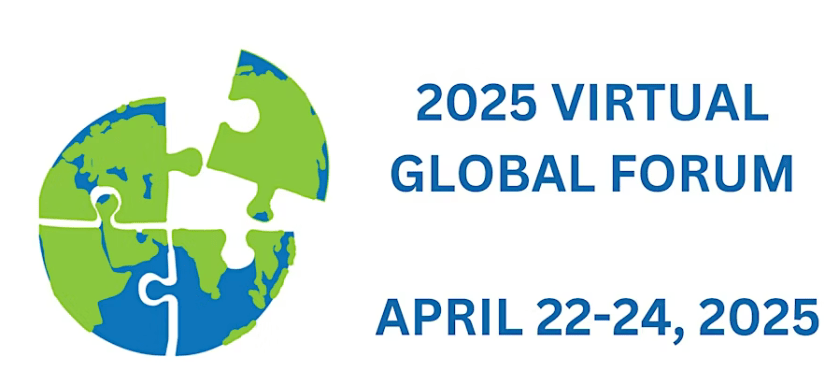
Events4th Annual Global Forum of the World Council on Intercultural and Global Competence, 22-24 April 2025, Online.

Join the 4th Annual Global Forum of the World Council on Intercultural and Global Competence for a virtual gathering of experts, educators, policymakers, practitioners, policymakers, researchers, students, and changemakers from around the world to discuss intercultural competence and global understanding. This online event will feature engaging keynote speakers including Irina Bokova, Lily Arasaratnam-Smith, and Carlos Cortes, practitioner panels, discussions, networking opportunities, and poster presentations. Whether you’re a seasoned professional or just starting to explore the world of intercultural and global competence, this forum is the perfect place to connect, learn, and grow. Don’t miss out on this unique opportunity to be part of a global conversation on Our Shared Humanity, as well as issues around cultural diversity and global competence.

The cost for forum registration is $100 (note that registration is non-refundable; sessions will be recorded).

CFP History of Digital History between East and West (Luxembourg)

ConferencesHistory of Digital History between East and West, Centre for Contemporary and Digital History, University of Luxembourg, Luxembourg, 5-6 February 2026. Deadline for abstract: 29 May 2025.

In histories of digital history, as in digital humanities in general, much emphasis has been placed on the two commonly recognized centers of the development of historical computing since the 1950s: the United States and Western Europe. As a result, crucial developments elsewhere have been overlooked, including in the Nordic countries as well as the Soviet Union and the various states of the Eastern bloc. The consequence of this omission is not merely a lack of knowledge about specific countries and a skewed understanding of digital history’s manifold early trajectories. It also creates epistemological blind spots regarding the political dimensions of the development of early historical computing and, given the latter’s networked nature within a general context of ‘East-West’ scholarly exchange in the Cold War period, obscures the transnational dimensions of the early history of digital history.

This workshop will address these blind spots by focusing attention on the question of how the local and the transnational intersected in the technology-inflected reshaping of historical research practices and how political backgrounds, contexts and constraints fed into this process. Organizers therefore seek papers that focus on local case studies in a transnational ‘East-West’ context, as well as those that consider comparative perspectives. Papers that ask what resources are available to support research in this area are similarly welcome.

CFP Tourism and Cultural Change Book Series

“Publication

Tourism and Cultural Change Book Series, Multilingual Matters/Channel View Publications. Deadline: Rolling.

Co-editors: Mike Robinson (Nottingham Trent University, UK) and Alison Phipps (University of Glasgow, UK)

Understanding tourism’s relationships with culture(s), and vice versa, is of ever-increasing significance in a globalising world. Tourism and Cultural Change is a series of books that critically examine the complex and ever-changing relationship between tourism and culture(s). The series focuses on the ways that places, peoples, pasts, and ways of life are increasingly shaped, transformed, created and packaged for touristic purposes. The series examines the ways tourism utilises/makes and re-makes cultural capital in its various guises (visual and performing arts, crafts, festivals, built heritage, cuisine etc.) and the multifarious political, economic, social and ethical issues that are raised as a consequence. Theoretical explorations, research-informed analyses and detailed historical reviews from a variety of disciplinary perspectives are invited to consider such relationships.