The LUT School of Engineering Sciences, the academic discipline of global communication sciences at the Department of Social Sciences, is looking for a post-doctoral researcher in global communication sciences to strengthen its global communications, soft power and strategic narratives area and work on projects related to these themes.
The ideal candidate will have a track record of internationally excellent publications or a trajectory for achieving this. Specifically, we are looking for a curious mind who is interested in longer-term academic career and is passionate about constant learning and making the world a better place to live through science.
The ideal candidate must have a PhD degree in a relevant field (preferably communication studies, global communications, media and communications studies, news media and journalism studies or communications and AI). Alternatively, you may hold a degree in another social science field, such as sociology, political science, social psychology or international relations and wish to use that knowledge to contribute to communication sciences, particularly to global communication, soft power, disinformation and strategic narratives research. You might also hold two degrees, with the other one in computer or data science, and be interested in applying that to the field of communication sciences.
Culturally responsive teaching was one of the main themes in my second annual summer study abroad program on Intercultural Perspectives on Teaching and Learning at NYU London (July 3-17, 2023).
A defining measure of culturally responsive teaching is how, and the extent to which, teachers use “the cultural characteristics, experiences, and perspectives of ethnically diverse students as conduits for teaching them more effectively. It is based on the assumption that when academic knowledge and skills are situated within the lived experiences and frames of reference of students, they are more personally meaningful, have higher interest appeal, and are learned more easily and thoroughly” (Gay, 2002, p. 106).
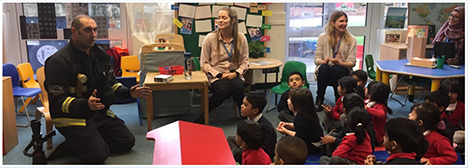
A class in session at Mayfair Primary School. (Photo credit: Mayfair Primary School)
This has been a useful concept to the graduate learners in my program this summer. Several of these learners are themselves in-service public-school teachers (from pre-K to middle school) in New York City with expertise in the like of music education, early childhood education, special education, etc. With from five to more than 25 years of teaching experiences among them, these learners have witnessed a steady influx of immigrant students from diverse national backgrounds and cultural heritages in their increasingly multicultural classrooms (e.g., Bardolf et al., 2023). While the diversity offers exciting possibilities for enhancing intercultural awareness among the students, it also presents a multitude of challenges in language teaching (e.g., ESL), intercultural adaptation, family support or engagement, professional development of the teaching staff, and so on. Hence, one of the course’s main learning objectives has been to identify the challenges facing their counterparts in London who teach in similarly multicultural settings, as well as how the latter address these challenges or take advantage of what these challenges may present.
In this regard, we visited two elementary schools and two secondary schools in London, Mayflower Primary School and St. Andrew’s (Barnsbury) CofE Primary School, as well as Parliament Hill School (an all-girls school) and William Ellis School (an all-boys school). These four public schools are in part defined by the multicultural and multilingual backgrounds of their respective student populations, while Mayflower Primary, located in the eastern borough of Tower Hamlets in London, has the distinction of enrolling about 90% of its students from multiple generations having Bangladeshi family heritage. While our field study did not uncover any one-size-fits-all curricular design or teaching method, we did discover that storytelling has been an effective culturally responsive pedagogy in these four schools.
Identifying itself as “a storytelling school,” for example, Mayflower Primary uses storytelling as a pedagogy throughout its curriculum, beginning with nursery school. Dependent upon the grade level, and with input from multiple sources (including teachers in the schools, students and their families, members from the school’s community, etc.), a number of stories are chosen to become an integral part of every class’s teaching and learning materials. Throughout the school year, teachers and their students engage in various reading, writing, discussion, interpretation, and re/telling of these stories, some of which are culturally relevant to the heritage backgrounds of the students. According to Heba Al-Jayoosi, Mayflower Primary’s Assistant Headteacher and Inclusion and Research Leader, storytelling has been an effective tool in helping students promote their skills in reading, writing, language development, communication, and so on.
Equally important is that storytelling can also promote students’ intercultural competence (Arasaratnam, 2014) which can, in turn, help facilitate intercultural dialogue (Leeds-Hurwitz, 2014) in the long run. In a special presentation on “Storytelling and the Early Years” to my students in the summer program, Alice Jones Bartoli of King’s College London spoke about how storytelling plays an important role in helping facilitate young children’s social and emotional development. Through dialogic reading, sustained shared attention, and re/telling of stories, especially those relevant to their heritage backgrounds, students come to develop their reading and writing or literacy skills, their self-confidence or self-image, as well as their creative expression abilities. Storytelling in such a teaching and learning context also enhances students’ exposure to stories with cultural or heritage elements that are at first unfamiliar to them, as they gain opportunities to listen to, reflect upon, and comprehend or understand cultural narratives other than their own.
All the learners in the program expressed in their individual final field research reports that they plan to utilize what they learned in London this summer either in furthering their graduate studies in social work or world language education or in acting as agents of change when they return to teach in their public schools in New York City. Of course, it is quite early to tell how and to what extent their experiences and the wonderful work of our professional colleagues in London can be applied to the New York context. But I hope to report on such impact in a future update.
Casey Man Kong Lum, Associate Director
Center for Intercultural Dialogue
YES Specialist, AFS-USA, New York, NY, USA, hybrid position. Deadline: posted 11 August 2023, open until filled.
AFS-USA is part of a worldwide network of AFS partner organizations that work together to advance global education and foster meaningful connections across cultures. As the network’s largest partner, AFS-USA works to increase the global competency of U.S. citizens by providing a variety of international and intercultural learning experiences to individuals, families, schools, and communities.
This position is within the Sponsored Programs Department at AFS-USA, which manages several programs of the Bureau of Educational and Cultural Affairs at the U.S. Department of State, providing scholarships for adolescents to participate in international exchange. Specialists focus on a specific portfolio of grant-funded program(s), which, depending on the size and scope of programs, may encompass more than one program or may mean working in tandem with other staff on some part of a larger program or project. The YES Abroad Specialist will work most closely with the Manager of Outbound Sponsored Programs, as well as other department and division staff.
This position will focus on sending American participants on the Kennedy-Lugar Youth Exchange and Study (YES) program, known as YES Abroad, including designing and implementing programmatic components. Core responsibilities of the role include carrying out program requirements, such as conducting orientations, managing projects, communicating with participants and domestic and international partners, communicating with volunteers, working on participant orientations and travel/logistics, carrying out program-focused projects, and reporting to the sponsor.
Edinburgh Napier University is recruiting a part-time Lecturer in Intercultural Business Communication on the Learning and Teaching/Research/Enterprise or Professional pathways, to support and develop the delivery of this subject area within the Tourism and Languages Subject Group. This is a part-time but permanent position. This post will allow you to contribute to the design and delivery of Intercultural Business Communication modules at a particularly exciting time in the development of our portfolio / curriculum, as the department will soon introduce two new undergraduate programmes in Intercultural Business Communication and Marketing, and Intercultural Business Communication and Tourism, designed to enhance students’ understanding of culture and its significance in our communications and interactions with others. The university is also continuing to grow and develop a successful MSc in Intercultural Business Communication.
Executive Director, WorldChicago, Chicago, IL, USA. Deadline: Open until filled; posted 14 August 2023.
As Chicago’s official host for U.S. government-sponsored international visitors, WorldChicago has served over 70,000 guests from 190 countries since 1952. By connecting Chicagoans with international peers, WorldChicago promotes mutual understanding and fosters global dialogue and innovation. Citizen diplomats shape global relations one handshake at a time.
WorldChicago is dedicated to promoting citizen diplomacy through programs that connect the Chicago community with the world. Citizen Diplomacy is the idea that individuals have the right and responsibility to help shape U.S. foreign relations through person-to-person interactions with citizens of other countries.
As our world becomes more globally connected and new opportunities and challenges arise, the role of citizen diplomacy and WorldChicago has never been more important. The next Executive Director will have the opportunity to work with a motivated and professional Board of Directors and hardworking, dedicated staff to elevate the profile of WorldChicago, increase its role in promoting citizen diplomacy in the Chicago region, and develop the next generation of citizen diplomats.
The next Executive Director of WorldChicago is a dynamic leader with a deep-seated commitment to citizen diplomacy and with experience in driving growth and impact within the organization and across the country. Candidates for the position must bring a sense of creativity, innovation and a sense of collaboration with local and national partners and governments (national and foreign) to the role.
While leading this effort, the next leader must also be a steward who builds upon WorldChicago’s success while growing and evolving for the future. The ideal candidate is a proven leader who understands the power of collaboration and has extensive experience and success leading high performing teams that foster a culture of excellence, from programming to the Fellowship and exchange experience.
UNESCO’s Social and Human Sciences Sector has launched the UNESCO Series of Regional Expert Consultations on Intercultural Competencies for Peacebuilding. Through these consultations, UNESCO aims to explore the potential of the development of intercultural and socio-emotional skills to serve as an enabler for peace in fragile, conflict-affected and post-conflict contexts.
The fourth of the six regional editions of online expert consultations will focus on Latin America and the Caribbean and will be held on Thursday 14 September 2023, from 17:00 to 19:00 GMT+2 (via Zoom). The fourth edition will bring together experts and practitioners to discuss the main challenges to intercultural understanding in the region, the role of intercultural skills in building trust among different parties, and ways of improving intercultural competence to better promote peacebuilding efforts, paying particular attention to the role of women and youth.
To register for the online event, please click here.
CID has been asked to share the following announcement:
In 2020, ECCAR established a Working Group on Anti-Muslim Racism. For the past two and a half years, the working group has focused on producing a comprehensive Guidebook for local authorities working closely with several contributors, including ECCAR member cities, researchers, activists, and NGO representatives. The result is a high-quality policy text that local decision-makers, journalists, researchers and activists can benefit from. With its diverse range of good practice examples produced by 17 European ECCAR member cities from nine countries, policy recommendations, and “lessons learnt,” the Guidebook is a significant and first-of-its-kind publication for local European policies against anti-Muslim racism. We are particularly pleased to announce that the Guidebook has been translated into French, German, Italian, Polish and Spanish. All PDF versions of the Guidebook will be released on the day of the launch.
You can download the preliminary programme of the high-level launch event that will be opened by Gabriela Ramos, Assistant Director-General for Social and Human Sciences of UNESCO, followed by thematic panels with researchers, representatives from ECCAR cities and activists.
Registrations are open until 13 September. To ensure a smooth registration process, please pre-register for the event. The event will be held in English spoken language. If you need interpretation services in German, French or Spanish, please register in advance.
You are welcome to share the registration link with your colleagues, partners, and people who would benefit from this programme. Please note that we kindly ask all participants to register via the link provided above. After you have registered, you will receive a confirmation email with the Zoom access data for the meeting.
Wege Prize is an annual competition that ignites game-changing solutions for the future by inspiring college/university students around the world to collaborate across institutional, disciplinary, and cultural boundaries to redesign the way economies work. Participants contend for $65,000 (USD) in total cash prizes, all while learning—and helping to show the world—what the future of problem solving looks like. Deadline: 8October 2023.
College/university students from around the world apply as transdisciplinary teams of five, representing different academic disciplines, institutions, and degree levels. Teams advance through up to four distinct phases, receiving feedback from experts and professionals in related fields along the way. Each team must leverage its transdisciplinary makeup to collaboratively design and propose a product, service, business model, or other solution to a wicked problem of their choosing that can help us transition from a linear economic model to a circular economic model.
Wege Prize is organized by Kendall College of Art and Design’s Wege Center for Sustainable Design with support from the Wege Foundation, both based in Grand Rapids, Michigan.
Through an international competition, the Center offers 9-month residential fellowships. The Wilson Center invites scholars, practitioners, journalists and public intellectuals to take part in its flagship international Fellowship Program. Fellows conduct research and write in their areas of interest, while interacting with policymakers in Washington and Wilson Center staff and other scholars in residence. The Center accepts policy-relevant, non-advocacy fellowship proposals that address key challenges confronting the United States and the world.
Dr. Jessica M. F. Hughes is an associate professor of digital communication and cultural studies at Millersville University in Lancaster County, Pennsylvania, USA.
Jess researches at the intersection of critical discourse and disability studies. Her scholarship focuses on discourse around disability, neurodiversity, & social justice. Her most recent work analyzes digital activism in disability rights and justice movements. She is also working on open educational resources on inclusive pedagogy and communication studies. She has recently co-edited the anthology Disability in Dialogue for John Benjamins’ Dialogue Series (with Mariaelena Bartesaghi).
Jess was born in Florida, grew up outside Pittsburgh, and studied at the University of Colorado Boulder; Lancaster University; Boston University; and the Technische Universitaet Dresden.
Selected publications:
Hughes, J. M. F. (2023). Death and traumatic affect on Twitter. In J. M. F. Hughes & M. Bartesaghi (Eds.), Disability in dialogue. John Benjamins.
Pfannenstiel, A. N., Baldys, E., Hughes, J. M. F., Licata, A. M., & Rice, K. (Eds). (2023). Inclusive teaching practices. OER Commons.
Hughes, J. M. F. (2022). Anti-racism [lesson module]. OER Commons.
Hughes, J. M. F. (2018). Progressing positive discourse analysis and/in critical discourse studies: Reconstructing resistance through progressive discourse analysis. Review of Communication, 18(3), 193-211. DOI: 10.1080/15358593.2018.1479880
Hughes, J. M. F. & Tracy, K. (2015). Indexicality. In K. Tracy, C. Ilie, & T. Sandel (Eds.), International encyclopedia of language and social interaction. Boston: John Wiley & Sons. DOI: 10.1002/9781118611463/wbielsi078





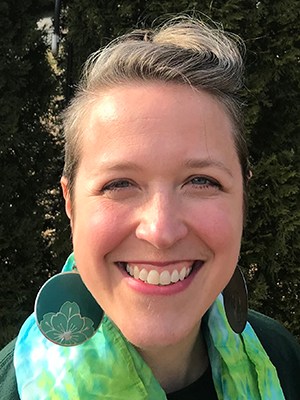 Jess researches at the intersection of critical discourse and disability studies. Her scholarship focuses on discourse around disability, neurodiversity, & social justice. Her most recent work analyzes digital activism in disability rights and justice movements. She is also working on open educational resources on inclusive pedagogy and communication studies. She has recently co-edited the anthology Disability in Dialogue for John Benjamins’ Dialogue Series (with Mariaelena Bartesaghi).
 Center for Intercultural Dialogue