Inclusive Public Space (Webinar)

EventsInclusive public space: is placemaking the solution?, Council of Europe Intercultural Cities Webinar, 7 July 2023, 11am-12:30pm CEST.

Marta Popiolek and Ramon Marrades from Placemaking Europe will discuss “placemaking”, an approach to urban planning and public space design that places social innovation, the commons, and local communities at the heart of a co-creative process to shape healthier, more resilient, and more equitable public spaces lasting for the future. They will also tell us more about the pilot project “Cities in Placemaking”, aimed at developing a roadmap to a more holistic and sustainable approach to urban development that harnesses placemaking as a city-wide strategy. Six intercultural cities are participating in the pilot and will be happy to share their experience with you/ Get ready to ask questions and be inspired!

You are welcome to register here and forward the link to your colleagues. The webinar is open to everyone!

Please note that this webinar will only be available in English.

Eithne Knappitsch Profile

Profiles

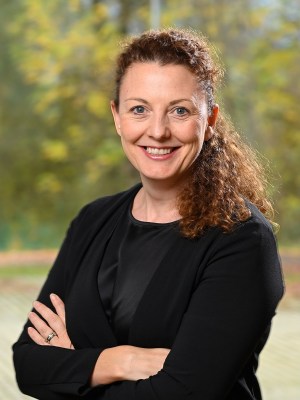
Dr. Eithne Knappitsch is Professor of Intercultural Management at Carinthia University of Applied Sciences (FH Kärnten), Villach, Austria. Additionally, she is a corporate trainer and consultant, bringing her expertise to organizations seeking to enhance intercultural teamwork dynamics, leadership, Diversity and Inclusion (D&I), and sustainability.
Eithne Knappitsch

Eithne is passionate about the interplay between people, culture, communication (and language), and connectivity. She is dedicated to promoting conscious personal and professional leadership in her training and teaching endeavors. And she considers herself a “pracademic,” bridging the gap between academic and practitioner contexts.

Based in the tri-border region of southern Austria, which includes Slovenia and Italy, Eithne has a special affinity for borderscapes, both physical and virtual. She grew up in Inishowen on the Ireland-Northern Ireland border and spent some time working as a researcher for the Culture, Arts & Leisure Committee of the Northern Ireland Assembly. She describes herself as a “border person,” having developed a sense of comfort in liminal or in-between spaces. Eithne is a founding member of the Transfrontier Euro-Institut Network, a network established in 2010 with 17 university, research institution, and training partners from 9 border regions in Europe. TEIN focuses on strengthening European integration and cross-border cooperation, embodying Eithne’s commitment to practical intercultural collaboration in Europe.

Drawing upon her expertise in Intercultural Management, Eithne equips her learners with the necessary competencies and perspectives for success in a globalized world and the opportunities of New and Remote Work. Her ability to bridge academic theory and practical application enhances the development of essential skills among her learners.

Eithne’s contributions extend beyond academia. She served as the President of SIETAR Austria (Society for Intercultural Education, Training, and Research) from 2019 to 2022, actively promoting intercultural understanding and competence. Moreover, Eithne co-founded the Global Case Study Challenge, a non-profit organization dedicated to cultivating a future-oriented movement of global, conscious, and sustainable thinkers, doers, and leaders. The GCSC offers an award-winning Virtual Exchange/COIL program, focusing on intercultural communication, digital collaboration, and sustainability competencies. In addition, she is involved in the Transcultural Competence Expert group at the Leadership Excellence Institute at Zeppelin University, a Delphi study on transcultural competence, and active in a working group for the World Council for Intercultural and Global Competence

Selected publications:

Knappitsch, E. (2023). A new narrative of leadership in the context of global virtual teams? In J. B. Montecinos, T. Grünfelder, and J. Wieland (Eds.), A relational view on cultural complexity: Implications for theory and practice (pp. 367-389). Cham: Springer.

Knappitsch, E. (2017). Bias mindfulness and perceptual shift: Key to managing a diverse workforce. In SIETAR Europa Congress Proceedings Cultural Dexterity for Turbulent Times, 22-27 May, 2017. Dublin: SIETAR Europa.

Knappitsch, E. (2008). 10 October commemorations in Carinthia: Promoting unity or division? Debatte: Journal of Contemporary Central and Eastern Europe, 16(2), 171-187.

Knappitsch, E., & Caliskan, S. (2017). Managing bias in HR: From recruiting to retaining a diverse workforce. In B. Covarrubias Venegas, K. Thill, & J. Domnanovich (Eds.), Internationales Personalmanagement. Rollen – Kompetenzen – Perspektiven: Implikationen für die Praxis. SpringerGabler.

Buko, S., Knappitsch, E., Zinenko, A., & Covarrubias-Venegas, B. (2022). The Global Case Study Challenge: A virtual exchange developing global work competencies. European Conference on e-Learning, 21(1), 32-41.

Deckert, C., Schomaker, R., & Knappitsch, E. (2022). Cultural impacts on national innovativeness and entrepreneurship. In Innovation and entrepreneurship: Theory and practice (pp. 57-84). WSB University.

Döring, T., Knappitsch, E., & Aigner, B. (2010). Political competences within the EU and their significance for the Western Balkans. European Perspectives, 2(2/3), 15-39.


Work for CID:

Eithne Knappitsch wrote a guest post on The Global Case Study Challenge: Competencies for the Future of Work in Virtual Environments in 2023, and on Empowering Remote-Ready Graduates: The Transformative Role of Virtual Exchange in Career-Oriented Education in 2024.

International Day for Countering Hate Speech

EventsInternational Day for Countering Hate Speech, as established by the United Nations in 2017, occurs on 18 June every year.

Words can be weaponsThe International Day of Countering Hate Speech was established by the United Nations in July 2021.

Hate speech incites violence, undermines diversity and social cohesion, and threatens the common values and principles that bind us together.

It promotes racism, xenophobia and misogyny; it dehumanizes individuals and communities; and it has a serious impact on our efforts to promote peace and security, human rights, and sustainable development.

Words can be weaponized and cause physical harm.

– António Guterres


Maynooth U: Applied Linguistics (Ireland)

“JobAssistant Professor / Lecturer in Applied Linguistics (English) School of Modern Languages, Literatures and Cultures, Maynooth University, Maynooth, Ireland. Deadline: 2 July 2023.

Maynooth University is seeking an excellent academic to join their staff as an Assistant Professor in Applied Linguistics with a specialism in English-language Pedagogy. Given the SMLLC’s plans for strategic development in the coming years, they would be especially interested in candidates whose research focuses on English as a Medium of Instruction (EMI), English-Medium Education (EME), TESOL, Integrated Content and Language Learning in Higher Education (ICLHE), TESL, and/or the intercultural dimensions of teaching of, and through, English in a higher-education context.

The person appointed will have a proven record of teaching, research, and publication, appropriate to career stage. They will be expected to make a strong contribution to the teaching programme of the School and to undertake teaching duties on the School’s undergraduate and postgraduate programmes, as well as the supervision of Master’s and PhD students.

Open Call for DEMO (Democracy, Elections, Mentorship, Organizing)

Applied ICD

Open Call for D.E.M.O. – Democracy, Elections, Mentorship, Organizing Programme, European Alternatives, France / Germany / Italy. Deadline: 30 June 2023.

The “D.E.M.O.” programme aims at encouraging and facilitating the active engagement of a wide network of European citizens through both training & hands-on action, in the context of the upcoming 2024 European Elections. They have just launched the open call to identify and select 50 change-makers from at least 8 countries (Austria, Bulgaria, Czechia, Greece, Slovakia, Slovenia, Romania, Sweden and others) to participate in the D.E.M.O. programme. Those selected change-makers will receive the necessary tools to re-imagine democracy in their local communities and to encourage democratic participation.

The project will achieve this through a series of eight training sessions: 2 residential and 6 online, accompanied by additional informal skill-sharing sessions, peer-to-peer exchange, mentorship sessions, etc. After the training process, the participants will be encouraged to implement two activities in their local communities that engage other people, based on the skills acquired through the content of the training sessions.

Some of these activities may be participatory art creations, podcasts, videocasts, workshops, lectures, etc. In addition, the project will be presented as part of the programME of significant events around Europe in 2023-2024. “D.E.M.O.” will specifically engage people who often feel underrepresented in their locality and whose voice remains unheard when it is time for political and social decisions, such as women, people of colour, migrants, representatives of the LGBTQI+ community, etc.

The open call is for 50 change-makers with no specific age requirement; who are citizens or residents of the following countries (but not limited to): Austria, Bulgaria, Czechia, Greece, Slovakia, Slovenia, Romania, Sweden; and people who want to expand their skills in: community organizing, facilitation, political gatherings, political artistic creation, podcast production, video production.

CFP Korean Journal of Communication

“PublicationCall for papers: new journal established – the Korean Journal of Communication. Deadline: ongoing; first issue to be published in March 2024.

(Sponsored by the Korean American Communication Association. Do Kyun David Kim, Editor in Chief, and Yeonsoo Kim, Associate Editor.)

The Korean Journal of Communication (KJC) is a peer-reviewed publication dedicated to disseminating scholarly research, book reviews, insightful commentaries, and meticulous field notes and data analysis. The journal’s primary objective is to foster the advancement and wider dissemination of Korean communication studies. KJC places significant emphasis on the breadth of its scope, which encompasses theory-based research, pioneering theory development, and cutting-edge methodological approaches to Korean communication research. Furthermore, the journal highly values contributions from both the social sciences and humanities disciplines, recognizing their unique insights and perspectives. Consequently, manuscripts from disciplines other than communication scholarship are also welcomed and appreciated by the journal.

KJC comprehensively addresses a broad spectrum of topical areas, encompassing, but not limited to, Korean pop culture and media studies, language and social interaction, cultural studies, interpersonal communication, organizational communication, advertising, public relations, corporate communication, health communication, communication technology, traditional and new media, communicative social change, international communication, journalism, mass communication, and developmental studies.

MPI: Internships (USA)

“JobPaid internships: The Demetrios G. Papademetriou Young Scholars Program, Migration Policy Institute, Washington, DC, USA, onsite or remote. Deadline: 1 July 2023 for fall, 1 November 2023 for spring, 1 March 2024 for summer.

The Migration Policy Institute is an independent, nonpartisan, nonprofit think tank based in Washington, DC, and dedicated to the study of migration worldwide. The Demetrios G. Papademetriou Young Scholars Program, named in honor of MPI’s co-founder and first president, has trained more than 375 future global migration scholars and policy analysts, many of whom are now leaders in the field. MPI’s internship program has two goals: harnessing the valuable contributions of interns for MPI’s work and training the next generation of migration leaders. MPI is committed to recruiting and supporting interns who reflect the breadth of experiences, backgrounds, and perspectives in the countries where it works. As such, the Institute is committed to making sure that interns and staff members of all backgrounds work in an inclusive environment with equity and access for all.

Research Interns work within one of MPI’s four program areas: U.S. Immigration, International Migration, U.S. Immigrant Integration, or Latin America and Caribbean Initiative. There are also Communications and Event Internships, as well as Executive Office Internships. There are also MPI Europe Internships, also paid, but they follow a different timeline.

ReDICo: Cosmopolitanism in a Postdigital, Postimigrant Europe, and Beyond (Germany but Online)

ConferencesCosmopolitanism in a Postdigital, Postimigrant Europe, and Beyond, ReDICo, Germany but online, 27 June-7 July 2023.

The second Researching Digital Interculturality
Co-operatively (ReDICo) conference will be on “Cosmopolitanism in a Postdigital, Postmigrant Europe, and Beyond,” combining different themes from the field of digital interculturality. It may indeed be observed that ‘the digital world’ has been gradually intertwining with the material ‘analog world’, to an extent that the differences between these two spheres are no longer really visible (‘postdigitality’). At the same time, differences between ‘migrant’ and ‘indigenous or ‘native’ have also dissolved in modern migrant societies, a phenomenon that gives space to the challenges of an even more ambiguous and complex postmigrant society. Finally, this interplay influences how we, as people, meet each other on an equal footing as citizens of the world and offers new reflections on Cosmopolitanism in a Postdigital, Postmigrant Europe, and Beyond.

You can look forward to ten sessions (90 minutes each) spread over six days, during which 27 scholars from a variety of countries and fields will give short and precise presentations of 15 minutes. There will be extended discussions, reflections, and new contacts. Organizers wish to involve voices from civic society in the academic discourse, and so have invited six representatives and activists from non-governmental institutions to share their perspectives.

Keynote speakers: Professor Gerard Delanty (University of Sussex, on Tuesday, the 27th of June) and Professor Naika Foroutan (DEZIM Berlin, on Wednesday, the 5th of July).

Participation in the online conference, funded by the German Federal Ministry for Education and Research, is free. Registration via e-mail.

Global Case Study Challenge Virtual Exchange 2023 (Austria)

“Collaborative

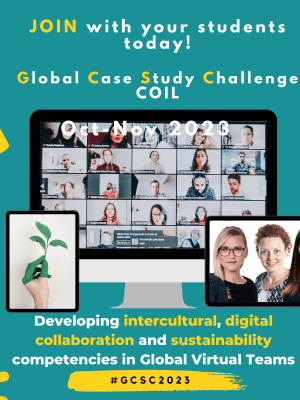
2023 Global Case Study Challenge Virtual Exchange/COIL, Global Work Competency Laboratory, Klagenfurt, Austria, 2 October-29 November 2023. Deadline: 7 July 2023.

 2023 GCSC COIL

The Global Case Study Challenge (GCSC) is an award-winning 8-week teaching and learning program for BA and MA-level students. It’s a high-impact career-oriented VE focusing on collaborative global virtual teamwork and the development of intercultural, digital communication and sustainability competencies.

Organizers are excited to be moving into the sixth iteration of the GCSC. To date, 1850 students and 60 educators from 36 universities across 22 different countries have worked together in the GCSC on real-life business cases in 415 Global Virtual Teams.

Feel free to share with interested colleagues across the globe.

Sign-up here.

World Learning: Program Associate (USA)

“JobProgram Associate (Global UGRAD, World Learning, Inc., Washington, D.C. (DC based, hybrid schedule). Deadline: 20 June 2023.

The Program Associate position is part of the Global Undergraduate Exchange Program (Global UGRAD) team and will report to the Program Officer. Funded by the U.S. Department of State, Bureau of Educational and Cultural Affairs, the Global UGRAD Program provides a diverse group of emerging student leaders with scholarships to attend US colleges/universities for one semester of non-degree study and exchange. The portfolio for this role includes students from Eastern Europe.