Salma T. Shukri Profile

Profiles

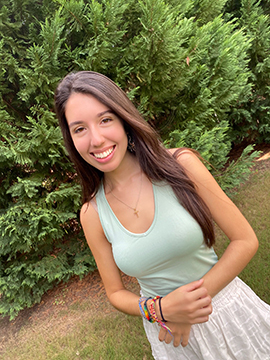
Salma T. Shukri (Ph.D., University of Denver) is an instructor of communication in the Leeds School of Business at the University of Colorado, Boulder.
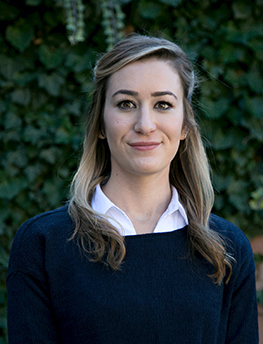
Salma ShukriHer areas of interest include intercultural communication, interpersonal communication, and conflict management. Specifically, she explores how communication—specifically, how we communicate about difference—serves as both an instrument and a barrier to inclusion and belonging. Along with having taught several intercultural communication courses at various institutions, Salma has also held several non-academic, professional positions with local and international organizations in the field of conflict mediation and cross-cultural dialogue.

Additionally, Salma engages in methodological research, advancing qualitative research methods through her work. She has published this work in top-tier journals, including the Journal of International and Intercultural Communication and in Text and Performance Quarterly. 

Recent publications:

Shukri, S. & Willink, K. (in press). Interpretive discernment: Feeling our way toward a performative understanding of interviewing. Departures in Critical Qualitative Research, 9(3).

Shukri, S. (2019). Review of Muslim women and white femininity: Reenactment and resistance. Text & Performance Quarterly, 39(4), 414-416. doi: 10.1080/10462937.2019.1657935

Willink, K., & Shukri, S. (2018). Performative interviewing: Affective attunement and reflective affective analysis in interviewing. Text & Performance Quarterly, 38(4), 187-207. doi: 10.1080/10462937.2018.1526409

Willink, K., Gutierrez-Perez, R., Shukri, S., & Stein, L. (2014). Navigating with the stars: Critical qualitative methodological constellations for critical intercultural communication research. Journal of International and Intercultural Communication, 7 (4), 289-316. doi: 10.1080/17513057.2014.964150


Work for CID:
Salma Shukri translated KC22: Cultural Identity, KC33: Moral Conflict, KC35: Media Ecology, KC53: Conflict Management, and KC68: Social Justice  into Arabic. She also has served as a reviewer for Arabic translations.

3rd Prize in CID Video Competition – Veronica Gutierrez

CID Video CompetitionCID’s third video competition is now over, and the judges have reviewed all the videos. As a reminder, the instructions were to show that listening is how intercultural dialogue starts, in 90-120 seconds, on video.

Veronica Gutierrez3rd prize goes to Veronica Gutierrez,  who was born in Monterrey, Mexico, and has been living in the United States since age 10, and who is studying Global Public Health at Concordia University Texas, in the USA, for her Bachelor’s degree.

Title: Learn to Listen – Listen to Learn

Description: “Now more than ever the communication between cultures is critical for prosperity.”

There were first, second and third place winners, and an award of excellence. Each of these is being highlighted in a separate post, as they warrant our attention. My thanks to the judges of the competition, professionals who made time to review student videos. Thanks also to all the competitors, who took the time to really think about how listening is where intercultural dialogue starts, despite the pandemic.

Wendy Leeds-Hurwitz, Director
Center for Intercultural Dialogue

Minderoo Centre for Technology and Democracy: Postdocs

PostdocsTwo Postdoctoral Researchers, Minderoo Centre for Technology and Democracy, Centre for Research in the Arts, Social Sciences and Humanities (CRASSH), University of Cambridge, UK. Deadline: 26 July 2020.

Applications are invited for a Postdoctoral Researcher for the Minderoo Centre for Technology and Democracy at CRASSH. The post will run for five years and applicants are expected to be in post as soon as possible.The successful candidate will undertake a research project with support and mentoring from the MCTD team. Applicants will need to demonstrate how their work intersects with:

  • The understanding and countering of public ignorance about the societal and personal impact of the technology. Building journalistic capacity in conjunction with major UK media organisations to foster informed coverage of tech issues, data-savvy investigative journalism and critical examination of tech narratives on AI, machine-learning, determinism and policy.
  • The significance and future of work in a digitally dominated world.
    Understanding and mitigating the environmental impact of digital technology.
  • Trust and accountability in the tech industry.
  • Identifying, mapping and fostering creative uses of digital technology for energising and revitalising constitutional democracy that have emerged in Europe over the past decade; become a convening point for dissemination and innovation in this space.
    We take this to include empirical work, critical theorisation, and research focusing on key issues in digital transformation as it affects cultural forms and practices, societies, archival issues, and knowledge production and dissemination.

Peace Research Institute: PHD Studentship (Norway)

“Studentships“Doctoral Researcher on Attitudinal Impacts of Refugees on Host Populations (TRUST), Peace Research Institute Oslo (PRIO) and Norwegian University of Science and Technology, Oslo, Norway. Deadline: 10 August 2020.

The Peace Research Institute Oslo (PRIO) invites applications for a three-year, full-time position as Doctoral Researcher. The position provides the opportunity to work in a leading international research institution with high academic standards and an interdisciplinary environment. Primary supervisor of the Doctoral Researcher will be Associate Professor Karin Dyrstad at the Norwegian University of Science and Technology (NTNU). Senior Researcher Andreas Forø Tollefsen at PRIO will serve as secondary supervisor.

This position is financed as part of a grant from the Research Council of Norway to PRIO for the project “TRUST: Attitudinal Impacts of Refugees on Host Communities in the Global South”, led by Research Professor Halvard Buhaug. Working within the fields of social sciences, the Doctoral Researcher to be employed in this project will conduct theoretical and empirical research on how the arrival and presence of refugee populations in various African contexts affect core sociopolitical attitudes among host communities, drawing on existing population survey data and other relevant source material. While statistical analysis of georeferenced survey responses will constitute the primary scientific tool, qualitative case study analysis may serve as a complementary analytical strategy. The work will result in an article-based PhD dissertation in English.

Why is it Worth Waking Up Every Morning? (Greece)

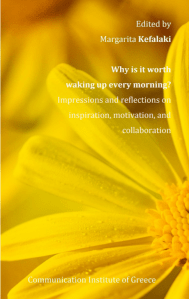
“Book NotesKefalaki, Margarita (Ed.). (2020). Why is it worth waking up every morning? Impressions and reflections on inspiration, motivation, and collaboration. Athens, Greece: Communication Institute of Greece.

This example of intercultural communication, this multilingual and multicultural co-creation, aims to become a voice that unites us all! – Margarita Kefalaki

Why is it worth waking up every morning?For their first collaborative project, the Vice Presidents of the Communication Institute of Greece (COMinG) have worked together to pass on a message of hope through their motivational book entitled: Why is it worth waking up every morning? This book was created as a sign of hope, especially during the difficult times we face as a global collective (e.g., the COVID-19 global crisis in 2020). It is a book of encouragement with impressions and reflections on inspiration, motivation, and collaboration.
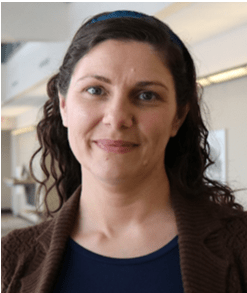
The VP Community of the Communication Institute of Greece includes: Karl-Heinz Pogner, Sophia Karanicolas, Michael A. Altamirano, Christian Schnee, Ailson J. De Moraes, Fotini Diamantidaki, Robert J. Bonk, Carolin Rekar Munro, and Jürgen Rudolph, who have all  shared their viewpoints on why it is, or is not, worth it to wake up each morning.

Note: Follow the link provided to download a free copy of the ebook.

Emilija Jovanovska Profile

ProfilesEmilija Jovanovska is currently a Ph.D. student at the Department of Curriculum & Instruction at the University of Idaho, Moscow, Idaho. She is also an ESL and English Composition instructor at the Global Students Success Program and the English department at the University of Idaho.

Emilija Jovanovska

Additionally, she enjoys the privilege of contributing to World education by teaching English Composition at the University of the People to students from all over the world. Her research interests are in the fields of Intercultural Communication, Academic Socialization, Leadership Studies, EdTech, and Curriculum Design. Her project “Language Socialization of Balkan Graduate Students into the Universities of the Palouse” was given an award by the Palouse Culture and Language Symposium, held annually at the University of Idaho.

Since one of her passions is educating educators, she dedicates part of her time to creating professional development projects for university educators, such as Navigating Academic Culture at US Universities by International Students, a lecture that she collaboratively delivered to the faculty at the University of Idaho and published on the Navitas Teaching & Learning website.

For more information about her, please follow the link to her website.


Work for CID:

Emilija Jovanovska has translated KC2: CosmopolitanismKC3: Intercultural Competence, and KC5: Intercultural Communication into Macedonian, and participated in a CID/UNESCO focus group for the Futures of Education Initiative.

UNESCO: Culture & COVID-19

Resources in ICD“ width=

Culture & COVID-19: Impact and Response Tracker, UNESCO, Paris, France.

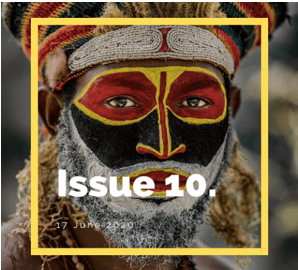
Culture & Covid Issue 10

To address the profound impact the COVID-19 pandemic will have on the culture sector, UNESCO has launched a weekly “Culture & COVID-19: Impact and Response Tracker” to provide an overview of the rapidly evolving situation. It explores both the immediate impact of the health crisis and examples of how countries around the world are adapting to the situation. This is one of several initiatives by the Organization to respond to the impact of the pandemic on the cultural sector worldwide.

Ten issues have already appeared, examining such issues as the impact on world heritage sites, tourism, museums, archaeological sites, and indigenous peoples.

The Future of Intercultural Training (Webinar)

EventsThe Future of Intercultural Training by Nicole Barile (President & Founder of NB Intercultural), offered by SIETAR Tri-State, USA, July 28, 2020, 11:00 am to 12:00 pm (EST), online event.

The future of work is here – and it’s global. No matter your industry, role, or where you work, you will be interacting with people from other cultures, even if you never leave home. Intercultural training is needed more than ever, but it needs to adapt to today’s modern worker. Technology is shaping how we do business, and it’s shaping how we learn. Traditional approaches to intercultural learning will need to make way for new solutions as technology advances. Find out what trends are shaping the next generation of intercultural training for expatriates and organizations, as well as where the field is headed.

2nd Prize in CID Video Competition – Shanoy Coombs

CID Video CompetitionCID’s third video competition is now over, and the judges have reviewed all the videos. As a reminder, the instructions were to show that listening is how intercultural dialogue starts, in 90-120 seconds, on video.

2nd prize goes to Shanoy Coombs,  who comes from Jamaica, and who is studying Intercultural Communication and International Development at the University of Sheffield, in the UK, where she blogs about communication, culture and Intercultural communication issues.

Title: Listen Towards Intercultural Dialogue

Description: “It’s easy to listen to others who are like you but not always those who think and act differently. Yet for Intercultural Dialogue to be effective, we have to listen to those who are different from us. This video highlights the many benefits of listening as a part of the conflict resolution process. The video specifically highlights the native voices of persons from different cultural backgrounds and each person shares one main benefit of listening as a part of the Intercultural Dialogue process. The video then transitions to a singular language and emphasizes the point about listening. The video therefore shows the importance of individuality in Intercultural Dialogue as well as collective aims of the process.”

There were first, second and third place winners, and an award of excellence. Each of these is being highlighted in a separate post, as they warrant our attention. My thanks to the judges of the competition, professionals who made time to review student videos. Thanks also to all the competitors, who took the time to really think about how listening is where intercultural dialogue starts, despite the pandemic.

Wendy Leeds-Hurwitz, Director
Center for Intercultural Dialogue