Peacebuilding through Dialogue N Ireland

For the second year , Gonzaga University‘s Master’s Program in Communication and Leadership Studies is offering a graduate course in Derry, Northern Ireland to MA and PhD students. January 2, 2014-Januray 12, 2014 Peacebuilding through Dialogue in Northern Ireland.

Program Overview:
This hybrid on-line and study abroad program, sponsored by the Master’s Program in Communication and Leadership Studies provides a unique opportunity for students to develop understanding and the skills necessary for fostering peacebuilding and storytelling.  With pre and post online components as well as eight days of residency in Derry, Northern Ireland, and a day excursion to Belfast, Northern, Ireland.  Additionally there is a free travel day to the Northcoast of Ireland.  The aim of this course is to introduce concepts from the field of communication that enable an understanding of how local peacebuilding can build bridges across conflicting groups in deeply divided societies. Communication and dialogue are closely intertwined and together act at the heart of establishing shared space and creating a common future. It is in this shared space that the process of peace has begun to take shape.  However as Bakhtin (1981) insists, “each word tastes of the context and contexts in which it has lived its socially charged life” (p.293).

The course will reflect on the causes and history of The Troubles (1969-1998) as well as the tortuous peace process following the Belfast Agreement in 1998. Based on that agreement, Northern Ireland’s devolved government finally became reality in 2008. Local peacebuilding through dialogue is central to understanding how peace has been maintained.

Dialogue requires responsiveness which is made possible by qualities of thought and talk allowing transformation to take place: transformation in how people understand the self, the other, and the societies they inhabit. These qualities of thought and talk include a willingness to risk change in one’s own perspective and a commitment to embracing and struggling with others whose worldviews may be different from and threatening to one’s own.

In addition, working with former combatant’s of these troubles, students will complete a profile writing component of using storytelling and photography to tell the story of a local community member for our Faces and Voices of Derry Project.

Course Objectives:
Given full participation in the course, the student will be able to:

  • Explain the role of dialogue in communication.
  • Analyze the causes and history of The Troubles and the post-1998 peace process.
  • Recognize the development of shared community.
  • Interview and tell a story in a photojournalistic style of a one of the citizens of Derry using the class blog/website.
  • Explain the role dialogue can play in effective leadership in contemporary America.

Program Highlights:

  • Meet with peace practitioners, former combatants and local leaders from both the Nationalist and Unioninst communities in Northern Ireland
  • Walk the famous 17th century wall of Derry with an experience local guide
  • Visit the Shankhill and Falls Road areas of Belfast, their murals, and “peace walls” with former combatants from the Nationalist and Unionist communities as guides
  • Hear first hand how local peace leaders have created projects to work toward understanding and healing
  • Learn interviewing and facilitation skills for building dialogic practices
  • Create daily photo and storytelling blog.

Additional Information: See an archive of the student work and reflections in the program.
Save

Sarah Bishop-Microgrant Report

NCA Micro Grant Report
Sarah Bishop, University of Pittsburgh

With generous support from the Center for Intercultural Dialogue and the National Communication Association, I traveled to San Jose, Costa Rica March 29-April 7, 2013 to gather the reflections of graduate students who had studied abroad at universities in the United States for academic credit.  My goal, in short, was to discover how international academic travel influenced an individual’s sense of national identity.  In preparation for the trip, I worked to familiarize myself with the relevant research about study abroad.  Additionally, I read many of the multitudinous study abroad testimonies written by students and currently available on study abroad websites at numerous institutions.  By the time I boarded the flight for San Jose, I felt confident about the kinds of effects academic travel had on students, and I looked forward to adding the dimension of “effects on national identity” to the impressive canon of existing research.  During the interviews themselves, however, I was surprised to find that the interviewees reported experiences, emotions, and challenges about multiple aspects of the academic traveling experience that I had not encountered in any of the relevant literature.

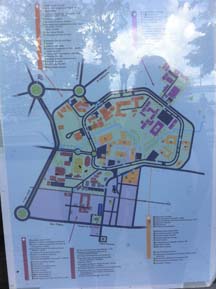
The preparation for this project included a two-month process of correspondence with the Director and other relevant staff at the Office of International Affairs at the University of Costa Rica (UCR).  I owe my deepest gratitude to this staff, including Ana Sittenfeld and Fatima Acosta, especially, for providing me with a list of interested participants as well as details regarding the group’s areas of research and U.S. destinations.  In addition, I completed extensive oral history training from Dr. Ron Zboray at the University of Pittsburgh.  One unexpected challenge arose when I estimated (based on flight costs at the time), that round-trip airfare to San Jose would cost no more than $800 USD.  The Center for Intercultural Dialogue generously granted this amount, but between the time the grant application was due and the time of my actual travel, flight costs had risen by more than $300, and I had to use my savings account to cover the remainder of the flight.  In the future, I will account for fluctuations in flight costs before finalizing my budgets.  Another challenge arose when I realized that none of the roads around the University of San Jose, where I conducted my research, are named.  In the absence of road signs, I relied on an iPhone photograph I had taken of a map I found on UCR’s campus and the patience of students willing to forgive my uncertain Spanish for direction.

UCR-smIn an effort to understand the ways an academic travel experience affects an individual’s sense of personal and national identity, as well as the intersection between study abroad, intercultural competence, and career preparation, I spent approximately one hour interviewing each graduate student.  Our conversation ranged from issues surrounding the legal preparations required before traveling abroad to negotiating needed friendships while away from home.  While I have yet to code and transcribe all of the interviews, one unexpected theme became apparent: though study abroad programs have been especially credited with encouraging a sense of global—rather than national—citizenship, in my own interviews, I found that the majority of students reported that study abroad strengthened, rather than compromised, their sense of national or geographic identity.  This finding requires further exploration and I hope to have the opportunity to find out whether study abroad alumni in other areas of the world report similar outcomes.

While multi-sited, international research is logistically complicated and time-consuming, my time in San Jose confirmed that in cases where interpersonal interaction and nonverbal communication are central to a project, video conferencing remains a poor substitute for face-to-face interaction and exchange.  I am honored to have had the opportunity to conduct this research, and look forward to reporting my full findings at a later date.

GuestHouse-sm

[NOTE: Sarah Bishop’s original project proposal is available here.]

Summer 2013 Shanghai

Villanova University is hosting two fantastic summer programs in Shanghai, China, in 2013. The programs best fit the undergraduate students who are looking to have an international communication internship this summer and/or interested in intercultural communication, Chinese language (any level) and culture, double majors or major & minor in Communication and Business or Asian Studies (or related areas), or simply hope to become a globalized citizen and experience formal and informal learning in one of the world’s fastest growing economies. Shanghai has been rated as one of the world’s top-20 metropolitan cities and “#1 in attracting foreign capital investment and job-creating projects” (The Atlantic, 2011). Here are some highlights:
1.     Intern and Study in Shanghai, China (via Villanova School of Business or VSB)
*       Internship placements over 5 weeks of the program, for 150 hours total (past internship placements: Citibank, IPSOS, McKinsey).
*       A 3-credit course: ECO 3108 Transition of Chinese Economy.
*       A “Survival Chinese Language” training.
*       Cultural excursions: (a) Survival in Shanghai (inc. a boat tour, museum visit, and an acrobatic show) and (b) 2-week cultural excursion, inc. Shanghai to Shandong (Confucian and Taoist traditions), to Beijing (Forbidden City, Summer Palace, the Great Wall of China, Ming Tombs, and Chengde Summer Resort)
*       6 credits in total.
*       Dates: 6/26-8/13, 2013.
*       Cost: Approximately $7,700 (including tuition, housing, PRC visa, and tour; excluding airfare and meals).

2.     Intensive Chinese Language and Culture (via Global Interdisciplinary Studies or GIS)
*       Study and live in the heart of Shanghai.
*       Two 4-week-long courses: (a) Chinese language course (placed to different classes based on language level) and (b) a cultural course. Students may earn 6-9 credits depending on the Chinese language course level. The courses are sponsored by Shanghai Jiao Tong University.
*       Offers an opportunity for all students, at any Chinese language levels, to explore the Chinese language, culture, literature, history, art, theatre, business, society, and Chinese lifestyle.
*       Cultural excursions: (a) Survival in Shanghai (inc. a boat tour, museum visit, and a acrobatic show) and (b) 2-week cultural excursion, inc. Shanghai to Shandong (Confucian and Taoist traditions), to Beijing (Forbidden City, Summer Palace, the Great Wall of China, Ming Tombs, and Chengde Summer Resort)
*       Dates: 7/7-8/13, 2013.
*       Cost: Approximately $5,800 (including tuition, housing, host university health insurance, PRC visa, and tour; excluding airfare and meals).

Both programs are competitive. Please contact Dr. Qi Wang for application procedures or questions at q.wang AT villanova.edu.

Summer 2013 Ghana

Critical Reflections On Communication

The Department of Communication at Villanova University is inaugurating a pilot program this summer for what is expected to become a regular summer program offering in the department: a summer program in Ghana. During our six weeks in Ghana, we will explore issues related to communication in the classroom and in the broader culture.   In particular, we look to study, critically, the patterns of communication in the classroom with a focus on student/teacher interactions.  Our goal is for students to learn about the complexities, perspectives, and traditions of another culture.  Video production, as a universal tool of narrative exploration, will be used to enable students to share their own artistic perspectives while enhancing the conversations about Communication and Education.  We believe that through study, observation and personal experience, we will all leave Ghana with a new understanding of the Ghanaian culture.  Through the mutual exchange of information and ideology we will all grow and know better our responsibilities as global citizens. As a part of our course, we will visit Heritage Academy and work with the teachers and students on projects most relevant to their expressed needs and desires.

Dates: May 27th – July 5th
Location: Cape Coast, Ghana – University of Cape Coast
Course Credits:
Total of 6 credits
COM 3390: Special Topics in Interpersonal & Organizational Communication (3 Credits)
COM 3390: Special Topics in Media & Film (3 Credits)
Contact:
hezekiah.lewis AT villanova.edu

SJSU study abroad Finland

San José State University is hosting an Early Summer Study Abroad Program in Jyväskylä, Finland (May 27-June 13, 2013).

Please consider participating in this opportunity to earn 3 units in the lush, beautiful town of Jyväskylä, Finland. In just three weeks, explore Jyväskylä, and also, through guided excursions, also Helsinki (Finland), Tallinn (Estonia), Stockholm (Sweden) and St. Petersburg (Russia). Communication, Hospitality and Tourism, and Business students may be able to earn credit in their majors/minors. Courses will be taught in English by international faculty and will include students from around the world. Program costs are approximately $2000 plus travel and meals. To learn more, please contact Dr. Deanna Fassett at Deanna.Fassett AT sjsu.edu or Professor Minna Holopainen at Minna.Holopainen AT sjsu.edu

Participants may earn 3 units of credit in 3 weeks by taking courses ranging from creative leadership to international business speaking to Russian language and culture. Anyone, including graduate students, is welcome.

Sarah Bishop – micro grant

Sarah BishopSarah Bishop, a doctoral student in the Department of Communication at the University of Pittsburgh, received one of the National Communication Association’s micro grants in Fall 2012 to travel to San Jose, Costa Rica. In San Jose, Bishop will work with Dr. Ana Sittenfeld, Director of the Office of International Affairs at the University of Costa Rica (UCR), to gather and analyze the reflections of graduate students who have studied abroad from Costa Rica to the United States for academic credit. Costa Rica boasts an impressive history of successful study abroad programs and strong connections to U.S. universities in particular. As the country’s oldest and largest university, UCR has spearheaded a movement to send graduate students abroad to gain international teaching experience with the belief that this opportunity makes the students better prepared and attractive candidates for teaching careers within Costa Rican universities. Bishop is interested in the ways an academic travel experience affects an individual’s sense of personal and national identity, as well as the intersection between study abroad, intercultural competence, and career preparation. This project will utilize an oral history methodology that entails conducting and recording qualitative, in-depth interviews using open-ended questions, and will work to extend Bishop’s continued efforts to navigate the ways in which international academic travel functions as a mediated, value-laden experience.

Study abroad Greece 2013

RHETORIC STUDY ABROAD PROGRAM IN GREECE
5 weeks: May 19th to June 26th 2013

The Department of Communication at Villanova University announces its 2013 Summer Study Abroad in Greece program–and invites applications from undergraduate students across the United States. Admission is competitive; early action deadline for application is December 15, 2012. Interested students should contact the 2013 Program Director, Dr. Billie Murray (billie.murray AT villanova.edu), as soon as possible.

This unique five-week, 6-credit summer program is specially designed to give Communication students important insights into the origin of the discipline and its relevance to contemporary public discourse. The program travels throughout Greece–including stops in Athens, Delphi, and Tolo as well as the Greek islands of Mykonos, Santorini, and Crete–as it focuses on the history of the spoken word–and its relation to epic storytelling, oratory, drama, and the life of the polis.

The program consists of two team-taught courses, one focusing on ancient Greek rhetoric and democracy (taught by Dr. Billie Murray, Villanova University), and the other on the rhetorical function of myth (taught by Dr. Bryan Crable, Villanova University). The courses take place on ancient archaeological sites and on hotel grounds (including, often, the beach). The size of the program is also ideal, since two Villanova faculty members are accompanied by no more than 20 students, from universities across the country. This creates a unique learning environment, one that fosters a close intellectual and personal bond between students and faculty.

Scheduled site visits include the Athenian Acropolis, Agora, and Pnyx, Delphi,’s Temples of Apollo and Athena, Ancient Corinth, the Palace of Knossos on Crete, the sacred island of Delos, Agamemnon’s palace at Mycenae, and Epidaurus.  The program is housed in 3- and 4-star hotels throughout the duration of the trip, and program costs include tuition for 6 Villanova credits in COM, all land fees, all breakfasts, all site admissions, and in-country transportation via bus and ferry.

Peacebuilding Through Dialogue in Northern Ireland

Peacebuilding Through Dialogue in Northern Ireland

COML 513: Advanced Topics in Communication
Derry, Northern Ireland

Residency in Derry, Ireland: January 2-12, 2013
Entire course pre- and post- via Blackboard December 26, 2012 – January 26, 2013
Program Cost: Appx. $3850 plus airfare
Learn more about Derry, Ireland
Program Highlights
*       Meet with peace practitioners, former combatants and local leaders from both the Nationalist and Unioninst communities in Northern Ireland
*       Walk the famous 17th century wall of Derry with an experience local guide
*       Visit the Shankhill and Falls Road areas of Belfast, their murals, and “peace walls” with former combatants from the Nationalist and Unionist communities as guides
*       Hear first hand how local peace leaders have created projects to work toward understanding and healing
*       Learn interviewing and facilitation skills for building dialogic practices.

Course Description
The aim of this course is to introduce concepts from the field of communication that enable an understanding of how local peacebuilding can build bridges across conflicting groups in deeply divided societies.  Communication and dialogue are closely intertwined and together act at the heart of establishing shared space and creating a common future.

The course will reflect on the causes and history of The Troubles (1969-1998) as well as the tortuous peace process following the Belfast Agreement in 1998.  Based on that agreement, Northern Ireland’s devolved government finally became a reality in 2008.  Local peacebuilding through dialogue is central to understanding how peach has been maintained.

Dialogue requires responsiveness which is made possible by qualities of thought and talk allowing transformation to take place: transformation in how people understand the self, the other and the societies they inhabit.  These qualities of thought and talk include a willingness to risk change in one’s own perspective and a commitment to embracing others whose worldwide views may be different from and threatening to one’s own.

Faculty
John Caputo is Professor and Chair of the Master’s Program in Communication and Leadership Studies at Gonzaga University and the Walter Ong S.J. Scholar.  He founded the MA Program in 2004.  Dr. Caputo earned his Ph.D. from the Claremont Graduate School and University Center. His areas of expertise include communication theory, intercultural and interpersonal communication and media and social values.  He is the author of seven books and more than 25 articles in professional scholarly journals.  He has been honored as a Visiting Scholar In-Residence at the University of Kent at Canterbury, England.  Dr. Caputo directs the Gonzaga-in-Cagli Project, a cultural Immersion multi-media program in Italy each summer and has previously directed programs in Armagh, Northern Ireland.  He has been honored with Master Teacher Awards  by Western States Communication Association and the University of Texas at Austin and most recently received an Exemplary Faculty Award from Gonzaga University.

Ann Kelleher, Interim Executive Director of Gonzaga University’s Center for Global Engagement, earned a Ph.D. in International Studies.  In her over 30 years of university teaching, Dr. Kelleher has taught courses relevant to analyzing international violent conflicts including international relations, international conflict resolution, local peacebuilding in Northern Ireland and war and peace: theoretical and historical analyses.  In 2011 she received the Faculty Excellence Award in Teaching from Pacific Lutheran University. In addition, Dr. Kelleher has taught faculty-led study abroad courses in Albania, Namibia and Northern Ireland as well as facilitated groups to Jamaica, Thailand and Egypt.  In addition, she has developed programs in Ecuador and the United Kingdom. Dr. Kelleher’s relevant publications include “Religious Communities as Peacemakers: A Comparison of Grassroots Peace Processes in Sudan and Northern Ireland,” with Meggan Johnson, Civil Wars Vol. 10, No. 2, June 2008, 148-172.

Application Process
APPLICATION DEADLINE: October 29, 2012
Early Application is encouraged.  Applications will be reviewed on a rolling basis up to the application deadline or until the program is filled.  Operation of this program is subject to administrative approval and is dependent upon meeting the minimum enrollment. Click here to download application.
1.      Submit your completed Application Form along with $400 non-refundable deposit that is applied to the cost of the program.
2.      Provide an official copy of your Graduate Program standing; Gonzaga students do not need to submit a transcript.
3.      Upon receipt of these materials, your application will be reviewed by the Graduate Professional Studies Committee.  Upon notification of acceptance to participate in the course you will be sent a Financial Contract.  This Financial Contract needs to be signed and returned for your application to be considered.

Send all Application Materials to:
Shannon Zaranski
Gonzaga University
School of Professional Studies
502 E. Boone Ave., MSC 2616
Spokane, WA 99258-2616
509.313.3569 phone
509.313.3587 fax
zaranski@gonzaga.edu
www.gonzaga.edu/comlireland
Program Cost
ESTIMATED PROGRAM COST: $3,850
Cost includes: Tuition for three credits, accommodations, some group meals, local group transportation, AirMed, and International Student Identity Card.
Passport must be valid for six months after the end of the study abroad program.

Study abroad – Peru

Bring your classes to Peru! The Department of Communication at the Universidad San Ignacio de Loyola (USIL) is taking program requests for winter and summer faculty-led programs. We can help you design courses in communication studies as well as journalism and mass media classes. We are a bilingual, private university located in Lima with an extension campus in Cusco. We offer campus classroom space, intercultural opportunities, Spanish classes and a trip to Machu Picchu for 2-4 week classes.

Contact Dr. Anthony Spencer or International Student Coordinator Keith Annis for more information.

Anthony Spencer, Ph.D.
Director de Carrera de Comunicaciones
317-1000 Anexo 3256
Nextel 810*8739
Universidad San Ignacio de Loyola
Av. La Fontana 550. La Molina

Study abroad-Lisbon

The Study Abroad Umass in Lisbon Program.

UMass in Lisbon, sponsored by the UMass Dartmouth Center for Portuguese Studies with the support of the Luso-American Foundation, is a UMass system-wide program that offers American students the opportunity to spend a semester or year in the vibrant capital city of Lisbon learning about the vast Portuguese-speaking world and European Union.

As the only residential study abroad program in Portugal managed directly by a major American university, UMass in Lisbon provides unrivaled access to one of the world’s most strategic centers of language and culture. Through our partnership with The University Institute of Lisbon (ISCTE-IUL), students will have curricular choices in both English and Portuguese, to supplement the offerings of UMass courses taught on site by both UMass and Portuguese faculty. In addition, each student will take a course in language/culture study at her or his specific instructional level. A significant number of field trips will complement classroom learning, and living accommodations and classrooms will be shared with European ERASMUS and Portuguese university students.

Administrative assistance is available 24/7. A summer program offers additional UMass courses and access to courses and facilities of the Technical University of Lisbon’s Superior Institute of Economics and Management (ISEG-UTL).