Liberal Studies at New York University invites applications for a one year Visiting Clinical Assistant Professor position to begin September 1, 2026, pending administrative and budgetary approval. The Liberal Studies Core is a dynamic liberal arts curriculum that provides a global and interdisciplinary foundation for nearly 100 NYU majors. The Global Liberal Studies Bachelor of Arts is an innovative global studies major grounded in the spatial, conceptual, and temporal understandings of a highly interconnected world, with a program of study that is distinguished by experiential learning, study away, and independent research focused in an interdisciplinary concentration. In both the LS Core and the GLS major, small, seminar-style classes and close faculty-student interaction provide students with the benefits of a liberal arts college within a large urban research university. We are especially interested in hiring qualified candidates who can contribute their research, teaching and service to the intellectual diversity and excellence of Liberal Studies and NYU.
ARTS & CULTURES
PhD in the humanities, broadly conceived (Classics, English, Comparative Literature, Global Literature, Art History (including Museum Studies), Anthropology with a Humanistic Focus, Archaeology, Indigenous Studies, Music or related fields). They seek candidates with a specialization in the Ancient World or the Global Middle Ages and Renaissance, and with a preferred focus on premodern digital humanities, archival practices, or the arts of Asia. Candidates must be able to teach with a global, interdisciplinary, and intersectional focus in the Arts and Cultures sequence of the Core Curriculum. This sequence requires exposure, training, and methodological background to teach undergraduate students about literature, as well as visual, sonic, and/or performance arts produced around the world, including in traditionally underrepresented areas from antiquity to early modern times.
Liberal Studies at New York University invites applications for two Postdoctoral Faculty Fellow positions to begin September 1, 2026, pending administrative and budgetary approval. The Liberal Studies Core is a dynamic liberal arts curriculum that provides a global and interdisciplinary foundation for nearly 100 NYU majors. The curriculum emphasizes conceptual and spatial frameworks to trace the movement of ideas and the interconnectivity of material culture, through the study of different texts, histories, exchanges, structures and systems, languages, arts, and writing from early antiquity through contemporary times. Small seminar-style classes and close faculty-student interaction ensure the benefits of a liberal arts college within a large urban research university. They are especially interested in hiring qualified candidates who can contribute through their research, teaching and service to the intellectual diversity and excellence of the Liberal Studies community.
Liberal Studies Postdoctoral Faculty Fellows teach two courses each semester in the Core Curriculum. Fellows work closely with an assigned Faculty Mentor, they attend pedagogy workshops that explore innovative approaches to interdisciplinary global teaching, and they have the opportunity to lead faculty development workshops or host program wide events in their area of scholarly, creative, or pedagogical expertise.The initial appointment is for one (1) year, and it may be renewed for two additional years, based upon satisfactory performance reviews and mutual agreement. Postdoctoral Faculty Fellows are limited to a maximum of three (3) years in rank; they are non-tenure track.
GLOBAL WORKS AND SOCIETY
PhD in Political Theory, Philosophy, History, or related fields in the social sciences. Candidates must demonstrate the ability to draw on ancient and early modern sources in their teaching with a global emphasis in the Global Works and Society sequence of the Core Curriculum. Candidates must embrace interdisciplinary and intersectional approaches from a variety of global perspectives and must have the ability to examine relationships of power and to interrogate the historical roots of current challenges.
The NYU Center on International Cooperation (CIC) seeks a dynamic, innovative Director for its Prevention, Peacebuilding, and Protracted Crises program to drive and shape the center’s work around peace and security, humanitarian policy, and their role in the multilateral order. The ideal candidate should be an adept and credible leader with a practical background in peacebuilding and crisis management, and a proven track record of implementing impactful initiatives. The Director should have proven experience and knowledge of the United Nations (UN) system (with a focus on the UN, regional organizations, humanitarian actors, and the international financial institutions), solid practical and theoretical expertise on conflict and crisis prevention, resolution, post-conflict recovery and reconstruction, and humanitarian assistance (including field experience), and a commitment to elevating the voices of small- and mid-level powers in international debates. They should also have a strong interest and ability in leading data-driven analysis. Finally, the candidate should have proven expertise in navigating the complexities of field research in challenging environments, adhering to the highest standards of ethical conduct, risk management, and responsiveness. This position links together two areas of CIC’s work – prevention and peacebuilding, and humanitarian crises, and reports to the Executive Director.
Culturally responsive teaching was one of the main themes in my second annual summer study abroad program on Intercultural Perspectives on Teaching and Learning at NYU London (July 3-17, 2023).
A defining measure of culturally responsive teaching is how, and the extent to which, teachers use “the cultural characteristics, experiences, and perspectives of ethnically diverse students as conduits for teaching them more effectively. It is based on the assumption that when academic knowledge and skills are situated within the lived experiences and frames of reference of students, they are more personally meaningful, have higher interest appeal, and are learned more easily and thoroughly” (Gay, 2002, p. 106).
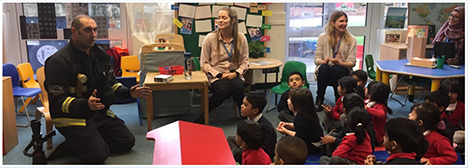
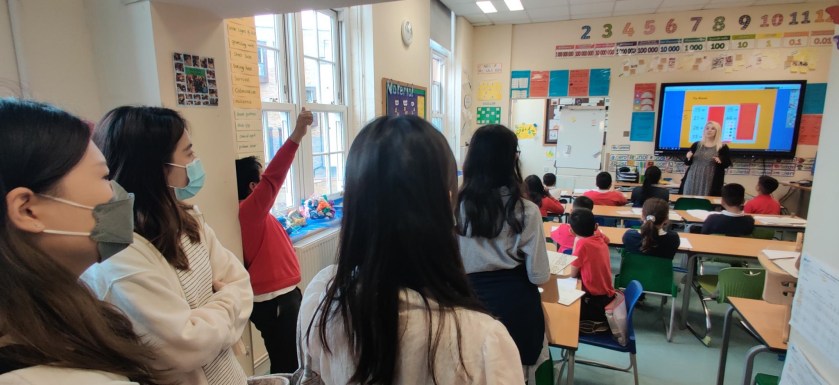
A class in session at Mayfair Primary School. (Photo credit: Mayfair Primary School)
This has been a useful concept to the graduate learners in my program this summer. Several of these learners are themselves in-service public-school teachers (from pre-K to middle school) in New York City with expertise in the like of music education, early childhood education, special education, etc. With from five to more than 25 years of teaching experiences among them, these learners have witnessed a steady influx of immigrant students from diverse national backgrounds and cultural heritages in their increasingly multicultural classrooms (e.g., Bardolf et al., 2023). While the diversity offers exciting possibilities for enhancing intercultural awareness among the students, it also presents a multitude of challenges in language teaching (e.g., ESL), intercultural adaptation, family support or engagement, professional development of the teaching staff, and so on. Hence, one of the course’s main learning objectives has been to identify the challenges facing their counterparts in London who teach in similarly multicultural settings, as well as how the latter address these challenges or take advantage of what these challenges may present.
In this regard, we visited two elementary schools and two secondary schools in London, Mayflower Primary School and St. Andrew’s (Barnsbury) CofE Primary School, as well as Parliament Hill School (an all-girls school) and William Ellis School (an all-boys school). These four public schools are in part defined by the multicultural and multilingual backgrounds of their respective student populations, while Mayflower Primary, located in the eastern borough of Tower Hamlets in London, has the distinction of enrolling about 90% of its students from multiple generations having Bangladeshi family heritage. While our field study did not uncover any one-size-fits-all curricular design or teaching method, we did discover that storytelling has been an effective culturally responsive pedagogy in these four schools.
Identifying itself as “a storytelling school,” for example, Mayflower Primary uses storytelling as a pedagogy throughout its curriculum, beginning with nursery school. Dependent upon the grade level, and with input from multiple sources (including teachers in the schools, students and their families, members from the school’s community, etc.), a number of stories are chosen to become an integral part of every class’s teaching and learning materials. Throughout the school year, teachers and their students engage in various reading, writing, discussion, interpretation, and re/telling of these stories, some of which are culturally relevant to the heritage backgrounds of the students. According to Heba Al-Jayoosi, Mayflower Primary’s Assistant Headteacher and Inclusion and Research Leader, storytelling has been an effective tool in helping students promote their skills in reading, writing, language development, communication, and so on.
Equally important is that storytelling can also promote students’ intercultural competence (Arasaratnam, 2014) which can, in turn, help facilitate intercultural dialogue (Leeds-Hurwitz, 2014) in the long run. In a special presentation on “Storytelling and the Early Years” to my students in the summer program, Alice Jones Bartoli of King’s College London spoke about how storytelling plays an important role in helping facilitate young children’s social and emotional development. Through dialogic reading, sustained shared attention, and re/telling of stories, especially those relevant to their heritage backgrounds, students come to develop their reading and writing or literacy skills, their self-confidence or self-image, as well as their creative expression abilities. Storytelling in such a teaching and learning context also enhances students’ exposure to stories with cultural or heritage elements that are at first unfamiliar to them, as they gain opportunities to listen to, reflect upon, and comprehend or understand cultural narratives other than their own.
All the learners in the program expressed in their individual final field research reports that they plan to utilize what they learned in London this summer either in furthering their graduate studies in social work or world language education or in acting as agents of change when they return to teach in their public schools in New York City. Of course, it is quite early to tell how and to what extent their experiences and the wonderful work of our professional colleagues in London can be applied to the New York context. But I hope to report on such impact in a future update.
Casey Man Kong Lum, Associate Director
Center for Intercultural Dialogue
Examine intercultural perspectives on teaching and learning across national borders. Explore the role that class, race, gender, economics, politics, religion, and cultural heritage play in the evolving dynamics in language policy, bilingual and world language education, and international education.
Participants in the Summer 2023 program in London will critically reflect upon the challenges and opportunities facing educators, school administrators, policy-makers, community organizers, students, etc., in language education, intercultural relations, and international education in the United Kingdom. Our studies will consider the impact of large-scale events across the UK and around the world, such as the anti-globalization forces behind Brexit, the COVID-19 pandemic on education and intergroup relations, the evolving Sino-British relationship over the political transformation in Hong Kong, cross-border infusion and adaptation of immigrants or refugees.
Through seminars and guided site visits in schools, community centers, NGOs, etc., we will share insights with scholars, teachers, policy-makers, writers, administrators, and immigrant community organizers in language, as well as international and intercultural education. Museum visits, theatrical performances, and day trips to important cultural sites are being planned to enrich our experience in intercultural learning positions.
For more info, such as scholarships, scheduled info session, etc., please visit this How to Apply page.
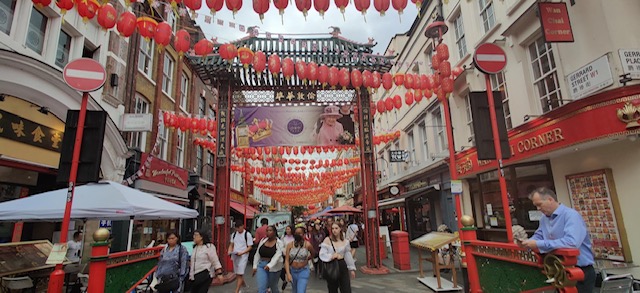
In addition to state (or public) primary and secondary schools, with students in my study abroad program, which ended on July 18, 2022, I visited two NGOs during our second week of study, the London Chinese Community Centre (CCC) in London’s Chinatown and the Islington Centre for Migrants and Refugees in the Islington district just north of the City of London. Our goal was to have direct exposure to how community-based organizations help newcomers in their intercultural adaptation in the U.K., as well as some of their challenges and successes in this regard.
London’s Chinatown, a communal center for generations of immigrants of Chinese heritage in the U.K. (Photo credit: Casey Lum)
During the initial stage of adaptation, one of the most immediate needs of new migrants is the acquisition of services in helping them settle into their new daily routines. Such can prove to be a difficult task, especially for those who do not have a sufficient level of social or functional English. As such, community-based NGOs like the two we visited last week can play a vital role. For example, CCC routinely assists their immigrant members with legal aid for securing social services from the local government or otherwise offering a place for them to build a new social network with their compatriots.
On the other hand, the Islington Centre also regularly helps their clients, many of whom are refugees from conflict regions, with various kinds of legal aids referral services to help them address issues such as political asylum status application, as well as various other everyday life matters related to poverty or job seeking, health maintenance (some of their clients do not know how to fill their medical prescriptions), housing or homelessness, learning about their rights like all other citizens, learning their way around the city, and so on.
One of the challenges facing the staff at these organizations has to do with how, and the extent to which, they can maintain a balance between their professional obligation to their clients and their own personal emotional well-being. On the one hand, one needs to be compassionate about the lives of the newcomers – especially since many of the refugees come from conflict or war-torn regions or escape from political persecution – and many of these people are going through an extremely traumatic stage of their lives. One legal aid staff member of the Centre confided that their day rarely concludes at the end of the workday as their clients’ (at times desperate) needs do not end then.
But there also are moments of joy and great satisfaction. Many members at the Chinese Community Centre enjoy taking part in the various Chinese arts and culture events and workshops, as well as English-language classes. This has been a source of encouragement for the center’s staff and volunteers to continue with their work. An executive at the Islington Centre told us that at times they organize field trips for their clients, to visit museums or attend cultural events across London. During these field trip events and various other such social activities, they sense noticeable joy among their clients. As their clients see or learn something new, their cultural experiences allow them to begin to regain some sense of normalcy in their intercultural adaptation to an otherwise unfamiliar social landscape.
Casey Man Kong Lum, Associate Director
Center for Intercultural Dialogue
The important role of bilingual education and storytelling in the social development of young students have been two recurring themes running throughout the first week of my summer study abroad program on United Kingdom: Intercultural Perspectives in Teaching and Learning at NYU London (July 4-18, 2022).
Summer study abroad students from NYU observing a class in session at Mayflower Primary School in London. (Photo credit: Casey Lum)
In her guest lecture to my students on “Rethinking Teaching Languages in European Schools (with a Focus on England): A Healthy Linguistic Diet Approach,” Dina Mehmedbegovic-Smith (July 5) emphasized the importance of bilingual education among the young in the United Kingdom nowadays. This topic was shared by Nicky Busch (July 6) in her special presentation on “The Intersectional Dynamics of Immigration, Intercultural Education, and Intergroup Relations in the United Kingdom,” in which she similarly acknowledged how acquiring English as a second or additional language can help immigrant students gain a voice of their own in their intercultural adaptation to life in the UK.
Our understanding of the above ideas – and many more others that this brief post simply cannot include – has been greatly enhanced by what my students and I witnessed “on the ground level” during our field visit at the Mayflower Primary School, a public school located in the eastern borough of Tower Hamlets in London. While the 2011 census in the UK reported that about one-third of the borough’s population came from Bangladesh, about 90% of the students at Mayflower Primary today are Bangladeshi. Many come from low-income families with a relatively low level of literacy, with parents who are not fluent in spoken English. These are some of the reasons why the school has adopted an approach that emphasizes developing their students’ competence in reading and storytelling in English. At the same time, the teachers encourage their students’ families to speak in their home language, in part to help promote bilingual fluency among the students.
From one practical (or pragmatic) perspective, the emphasis on reading is meant to help the students become savvy information seekers and users for personal and professional development purposes. On the other hand, it is believed that a high level of oracy – with a high degree of competence in taking in one’s experience of the world around them and then in being able to articulate or tell “stories” about their experience orally – can help the young build a solid foundation for acquiring writing skills.
But the above teaching and learning strategies do not and most likely will not automatically or by default lead to the development of students’ competency in intercultural communication, adaptation, or dialogue. For example, Heba Al-Jayoosi, the Assistant Head (Inclusion) at Mayflower Primary School, suggests that many of the parents have never been to London Bridge, which is not far from home. Hence, the school has embarked on a project to take the students and their families on a field trip to London Bridge. Such co-curricular activities are meant to help them gain more exposure to the larger social and cultural environment and help them better adapt. These field trips (similar to my current study abroad program in London) set the stage for follow-up discussion or storytelling among the participants afterward.
Casey Man Kong Lum, Associate Director
Center for Intercultural Dialogue
I will be directing and teaching a short-term summer study abroad program for New York University’s Steinhardt School of Education, Culture, and Human Development. Entitled “United Kingdom: Intercultural Perspectives in Teaching and Learning,” the program will be based at NYU London (July 4-18, 2022).
I have invited four distinguished colleagues to share their insights with students from NYU’s main campus on Washington Square in New York City. They include Nicky Busch (NYU London) on The Intersectional Dynamics of Immigration, Intercultural Education, and Intergroup Relations in the UK; Myria Georgiou (London School of Economics and Political Science) on Remote Teaching and Learning during the COVID-19: Challenges and Opportunities; Dina Mehmedbegovic-Smith (University College London) on Language Education in the UK; and Maria Tsouroufli (Brunel University London) on Gender Inequality in Education in the UK.
Examine intercultural perspectives on teaching and learning across national borders. Explore the role that class, race, gender, economics, politics, religion, and cultural heritage play in the evolving dynamics in language policy, bilingual and world language education, and international education.
Participants in the Summer 2022 program in London will critically reflect upon the challenges and opportunities facing educators, school administrators, policy-makers, community organizers, students, etc., in language education, intercultural relations, and international education in the United Kingdom. Our studies will consider the impact of large-scale events across the UK and around the world, such as the anti-globalization forces behind Brexit, the COVID-19 pandemic on education and intergroup relations, the evolving Sino-British relationship over the political transformation in Hong Kong, cross-border infusion and adaptation of immigrants or refugees.
Through seminars and guided site visits, we will share insights with scholars, teachers, policy-makers, writers, administrators, and immigrant community organizers in language, as well as international and intercultural education. Museum visits, theatrical performances, and day trips to important cultural sites are being planned to enrich our experience in intercultural learning positions.
NOTE: This course will be taught by Professor Casey Lum, Associate Director of the Center for Intercultural Dialogue.
The Vice Dean for Diversity, Equity, and Belonging (Associate/Full Professor, tenure or non-tenure track) will provide institutional leadership for and oversight of strategic initiatives to support and grow a culture committed to promoting equity, community partnerships, and a social justice agenda throughout NYU Steinhardt and beyond it. This position will serve as the primary point of contact on issues of equity and belonging within the School, working with appropriate stakeholders from students, faculty, administrators, and staff. The ideal candidate will have a strong history of academic leadership and scholarly productivity in research or creative work related to equity, belonging, and social justice, with a demonstrated capacity to work collaboratively with a variety of constituent groups, both inside and outside the University. This is a half-time administrative appointment for a Steinhardt faculty member who will conduct research, teach, and advise students in their home department. Application review will begin right away. For best consideration, please submit by February 1, 2022. Desired start date is September 1, 2022 or as soon thereafter as possible. Additional information about the position may be obtained from Search Committee Chair, Dr. Shondel Nero at shondel.nero@nyu.edu.

 Visiting Clinical Assistant Professor of Arts and Cultures, Liberal Studies, New York University, NY, USA. Deadline: 15 November 2025.

 Center for Intercultural Dialogue