8th Intercultural Seminar of Agence ITER (France)

8th Intercultural Seminar of Agence ITER France: The power of intercultural communication in sustainable organizations

Friday 14 October from 17h30 to 21h30
Building Multimedia, Faculte de Lettres, ave robert Schuman, Aix en Provence, France

Workshops, round table and discussions for professional and students in Intercultural Communication, Negotiation, Competence.

Participation is free of charge, but participants are asked to please sign up ahead of time.

The heart of the program will consist of 3 workshops (participants will choose one), as described below:

Workshop 1: Intercultural Communication in International Organizations by Aboubakr Jamaï,  Dean and Professor, School of Business & International Relations, Institute for American Universities

Workshop 2: The role of the Interpreter: From Words to Cultural Mediation by Shawn Simpson, Training Project Manager, Agence ITER France

Workshop 3: Global Understanding: Myth or Reality by Dr Delphine Paulet, ArnavA

Workshops will be followed by a roundtable discussion on intercultural negotiation with ITER organization expatriates

CFP IMéRA Institute for Advanced Study Fellowships (France)

IMéRA, Aix-Marseille Institute for Advanced Study, is issuing its calls for applications concerning fellowships during the academic year 2017-2018.

Aix-Marseille Institute for Advanced Study welcomes high level scientists in the fields of the humanities, the social sciences and related fields for periods of three to ten months, during the academic year 2017-2018.

Deadline for applications: Friday, November 18th, midnight (Paris time, France)

Applicants may request residencies for one of the following programs:
IMéRA: call for individual applications 2017-2018
IMéRA/Inserm: call for applications 2017-2018
IMéRA/LabexMed: call for applications 2017-2018
IMéRA/OT-Med: call for applications 2017-2018
IMéRA/BLRI: call for applications 2017-2018
IMéRA/AMSE: call for applications 2017-2018
IMéRA/MuCEM: call for applications 2017-2018
IMéRA/SIRIC: call for applications 2017-2018
IMéRA: call for applications of teams 2017-2018

CONDITIONS OF ELIGIBILITY 
Conditions of eligibility differ from one call to another. It is therefore necessary to refer to the description of each call for applications.

CALENDAR
Application deadline: November 18th, 2016
Publication of results: February 2017

Save

Save

New Grants Site: Fund┋It

What is fund┋it?

fund┋it collects and presents on a single site all research grants and fellowships (post-PhD) available for scholars in the social sciences and humanities. Want to come to France? Find a residential fellowship somewhere in the world? Or simply seek funding for your research project? fund┋it is there to support you in finding valuable information. We find it, you fund┋it!

Who is fund┋it for?

• Postdocs, senior scholars and advanced graduate students from outside France wishing to come to France

• French postdocs, senior scholars and advanced graduate students wishing to go abroad or to find funding opportunities

Nota : All international fellowships and funding opportunities listed on fund┋it are guaranteed to be open to French scholars or scholars affiliated with a French institution. However, in most cases other nationalities are also eligible.

Recent posts include:

Empowering scholars to go where they need to go – The H.F. Guggenheim Foundation research grants, tips and tricks by a former awardee

A fruitful field: Funding options in Islam, Near and Middle Eastern studies

Institute for Advanced Study in Toulouse : Understanding Human Behaviour and Culture

fund┋it is supported by the French Network of Institutes for Advanced Study (RFIEA), Fondation Maison des Sciences de l’Homme (FMSH) and the Centre national de la recherche scientifique (CNRS). Part of the Labex RFIEA+, fund┋it is supported by the Agence nationale de la recherche, Programme Investissements d’Avenir.

FMSH DEA Programme (France)

Associate Research Directors (DEA), France
Deadline : June 6th, 2016

Created in 1975 upon the initiative of Fernand Braudel, in collaboration with the French Secretary of State for Universities, Department for Higher Education and Research, the DEA Programme (Directeurs d’Études Associés, or Associate Research Directors) is the oldest international mobility programme at Fondation Maison des sciences de l’homme. It provides funding to invite international scientific experts from across the globe for one month to six weeks and enables them to carry out work in France (field enquiries, library work and archives).

Participation requirements
The programme is intended solely for professors and senior researchers with a PhD, or equivalent, working in institutions of higher education and research.
Applicants must be no older than 65 at the time of their stay.

Benefits
An allowance of 3 300 € is awarded for transport and stay expenses. In addition, FMSH provides support for visa applications and logistics (accommodation and access to libraries).

Applications and deadline
Applications must be submitted online the latest June 6th 2016.

Content of the application
A curriculum vitae (with date of birth)
A list of scientific publications
A research project of 4-5 pages with the dates of stay, and a bibliography
A letter of support by a French researcher is welcome

Applications should be sent via our online platform.

Once on the platform, in your online application for DEA, please select for the year of the call: 2017 and for the session of the call: Avril-Juin 2016.

For further information or if you encounter difficulties, contact us via email.

After a scientific expertise of the research projects, decisions regarding invitations are made by a commission made up of the administrator, scientific directors of the FMSH, as well as various specialists.

Results will be communicated directly to applicants by the end of October 2016.

The research stay must start no later than November 1st 2017.

April in Paris

For the month of April 2016, I was visiting professor at the Musée des Arts et Métiers in Paris, France. The museum is one part of the Conservatoire National des Arts et Métiers, a unique institution that really has no comparable body in the US. The museum is essentially the equivalent of the Smithsonian Institution in Washington, DC – the repository of objects that play important roles in science, engineering, or various arts and crafts. These range from Foucault’s pendulum to scientific instruments, to vehicles, to many early communication devices (from a visual telegraph to early motion picture cameras). 

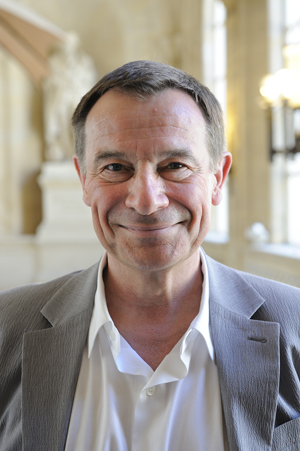
Yves Winkin

My thanks to Yves Winkin, the museum’s director, for the invitation, and the introductions to many of his staff. Specific thanks to Roubina Modely and Emmanuel Lacrois for all their help with the logistics of acquiring an apartment. Those I spent the most time with included Isabelle Taillebourg and Nirina Ramandraivonona of the Documentation Center, Nathalie Giuliani of Exhibits, and Jamila Al Khatib of the pedagogical unit.

Anne Jorro of CNAM graciously invited me to join a full-day international seminar, Arts et faire: Des gestes professionnels de transmission, diffusion, mediation on April 15. Participants came from around France, as well as Belgium and Switzerland. And I was able to meet later with one of Anne’s former doctoral students, Padma Ramsamy-Prat, currently working on a research grant at CNAM.


While in Paris, I had the chance to reconnect with Katérina Stenou, my contact since 2009 with UNESCO, and a member of the Advisory Board of the CID.

In addition, Casey Man Kong Lum stopped in Paris between a sabbatical stay in Tours and visits to Lisbon and Barcelona. He is one of the editors of a new book entitled Urban foodways and communication: Ethnographic studies in intangible culture food heritages around the world, for which I wrote the final chapter. [Update in May 2016: the book is now in print – follow the link added here to a description and table of contents.]

Casey Lum, Wendy Leeds-Hurwitz

I also had the opportunity to meet Johanna Maccioni, a Belgian psychologist and researcher who is one of the editors of a special issue of Les Politiques Sociales on intercultural competence. I was asked to write one of the articles last fall, which is currently under review, as a result of my role in preparing the UNESCO publication Intercultural competences: A conceptual and operational framework.

As long as I was back in France, Christine Develotte invited me to give a presentation on “Family Socialization to Cultural Identity: How Theory and Method Influence Research” to her doctoral seminar at the Ecole Normale Supérieure de Lyon, on April 8. Afterwards, I gave feedback to her students on questions related to their own research projects.

All in all, a busy month!
Wendy Leeds-Hurwitz, Director

Director, Collegium de Lyon job ad (France)

Director – Collegium de Lyon
Université de Lyon recruits the Collegium de Lyon Director

The Collegium de Lyon is an international and multidisciplinary Institute for Advanced Study (IAS), focusing on social sciences without excluding exact sciences. Its purpose is to create an academic community based on a culture of excellence, supporting exchanges between disciplines, cultures and languages.

The Institute benefits from Lyon’s overall academic environment, coupling its research to the scientific and educational potential of the city (universities and grandes écoles, research networks, institutions), with the vision of developing cross-disciplinary reflections and launching pioneering research.

The Collegium de Lyon’s primary ambition is to link the Institute’s research program to the diffusion of knowledge for action. In the domain of public policy, it should therefore act as an intermediary between the research sphere and political and social issues. Research undertaken within the Institute should comprise reflections informing the construction of public policy: urban policy and planning, health policy and risk management, cultural policy, international relations and urban powers, development of heritage sites, etc and should be linked with Université de Lyon strategic themes : Global Health and society / Sciences and Engineering for sustainable development / Humanities and urbanity.

ROLE
Promotion of the Collegium Strategy and responsibility for its implementation:
• Source of proposals for the Board of Directors and the Academic Board to lay out the strategy and to update it;
• Implementation of the Collegium strategy defined by the Board of Directors;
• Development of public and private partnerships with national and international actors;
• Setting out and execution of the fundraising and sponsorship strategy, in collaboration with the Fondation pour l’Université de Lyon;
• Steering of the Program of Action deployment.

Coordination of the academic animation:
• Scientific animation of the Collegium in collaboration with the territorial partners
• Definition of the communication strategy

Management
• Interface with the Fondation pour l’Université de Lyon
• Preparation with the Université de Lyon President of the Board of Directors meetings
• Budget preparation and implementation based on Board of Directors decisions.

REQUIREMENTS
• Extensive knowledge of scientific communities in humanities and social sciences
• Bilingual French/English. Knowledge of any other language is an asset;
• Project management and public-private partnerships skills;
• Good knowledge of national and international funding mechanisms;
• Knowledge of national and international research networks;

Successful fundraising experience would be an asset as well as a good knowledge of Université de Lyon academic sphere.

CONDITIONS
The position is open to all European candidates. This is a half-time position, with a two-year and renewable contract starting on March 15th, 2016.

How to apply
To apply for this post please provide a cover letter and a CV detailing your work experience and skills and your main scientific publications.

All applications should be sent before February 19th, 2016 to Université de Lyon President by email.

CFP The Communication Histories Project (France and England)

The Communication Histories Project

Call for Papers
SFSIC Congress: 8th-10th June 2016, Metz, France
IAMCR/AIECS/AIERI Conference: 27th-31st July 2016, Leicester, England

The International Association for Media and Communication Research (IAMCR) and the Société Française des Sciences de l’Information et de la Communication (SFSIC) will organize a series of events to encourage the building of international bridges between researchers across different communities.

The first workshop in this series will be dedicated to research in the histories of communication studies.

We invite contributions which are concerned with the ways in which contemporary social problems are addressed by our research into communication, information, and media.

We call for original historical analyses of the concepts, paradigms, methods, institutions, educational programmes, features and figures which have structured communication studies, and which are firmly located in the many contexts which have produced them.

Our aim is to gather a diversity of perspectives on the history of our field, that together will demonstrate its complexity and interdisciplinarity, as well as historical contestations and counter-narratives.

It is anticipated that there will be publications emerging from this project.

We call for interested colleagues to submit a 1,000-word proposal for presentation in a specific workshop at the SFSIC Congress (June 8-10th, 2016, in Metz, France) and/or IAMCR/AIECS/AIERI conference (July 27th-31st, 2016, in Leicester, UK). As these are separate workshop, the resulting papers will not be included in the conference proceedings.

Proposals will be accepted in English, French and Spanish, and should be sent for review by February 29th, 2016. Please make sure to specify if you are making a proposal for the SFSIC Congress, the IAMCR/AIECS/AIERI Conference, or for both events.

Send proposals to chp@iamcr.org, chp@sfsic.org

CFP Paris Institute for Advanced Study

The Paris Institute for Advanced Study welcomes applications from high level international scholars and scientists in the fields of the humanities, the social sciences and related fields for periods of five or nine months, during the academic year 2017-2018.

Deadline for applications: Tuesday, March 1st, 2016, 3:00pm (Paris, France time)


Applicants may request residencies for one of the following periods:
• September 1st, 2017 to January 31st, 2018 (5 months)
• October 1st, 2017 to June 30th, 2018 (9 months)
• February 1st to June 30th, 2018 (5 months)

CONDITIONS OF ELIGIBILITY
Researchers from all countries are eligible.
Applicants who have spent more than a total of 12 months in France during the 3 years prior to the application are not eligible.

This call for applications is open to:
• Senior university professors or researchers holding a permanent position in a university or research institution and having a minimum of 10 years of full time research experience after their PhD (at the time of the application).
• Junior scholars having the status of postdoctoral researcher or holding a position in a university or research institution, and having a minimum of 2 and maximum of 9 years of research experience after the PhD (at the time of the application).

CALENDAR
• Opening of the online application system: January 15th, 2016
• Application deadline: Tuesday, March 1st, 2016, 3:00 pm (Paris, France time)
• Preselection: Mid-March 2016
• Final selection: June 2016
• Publication of results: End of June 2016
• Starting dates of the fellowships: September 1st 2017; October 1st

Save

CFP Transatlantic Collaborative Digital Humanities Projects

Transatlantic program for collaborative work in the field of digital humanities – Call 2016
Deadline : 16 May 2016

The Fondation Maison des Science de l’Homme has published the third call of its grant program in digital humanities. Thanks to a generous grant from the Andrew W. Mellon Foundation, FMSH will co-finance transatlantic collaborative projects in the field of the digital humanities.

To strengthen its activity in the broad sphere of Digital Humanities, the FMSH seeks at present to implement a new international program of “digital philology”. To date, funded interactions in this area have been limited to exchanges within Europe. The purpose of this proposal is to create a formal organizational and funding structure for collaboration between the US and Europe in “digital literary studies”. For too long, Europe’s major projects in the digital humanities have been on a different track, as it were, from American projects. The present initiative is intended to help US and European researchers work together in an entirely new way in the field of digital literary studies, to share knowledge and methods, disseminate common practices and tools, and publicize their works.

The Program will support only research projects whose goal is to set up or to strengthen collaborations between US and European universities. It will co-finance up to 80% of the total cost of the research project per year.

Deadlines:
Applications due –  16 May 2016
Notification given – September 2016
Grant period commences – October 2016

Before submitting a proposal, potential applicants are encouraged to contact the FMSH.  Applications must be submitted electronically via the online application form

IMERA Call for Fellowship Applications (France)

IMéRA Calls for applications
IMéRA – Institute for Advanced Study of Aix-Marseille University – is issuing calls for applications for residencies between September 2016 and July 2017:
A general Call for individual applications: open to scientists and artists
Specific Calls for individual applications: open to scientists
A general Call for team applications: open to scientists and artists

Deadline: 27 November 2015 (included)
Announcement of the results: 19 February 2016
IMPORTANT NOTICE – Eligibility conditions vary according with applications:
General calls are open to scientists and artists with or without official status and residing outside France, and are not targeted;
Specific calls are open only to persons with university or researcher position in a foreign institution, and cover research disciplines or themes.

Applications can only be submitted on IMéRA’s website.