IUFM d’Auvergne

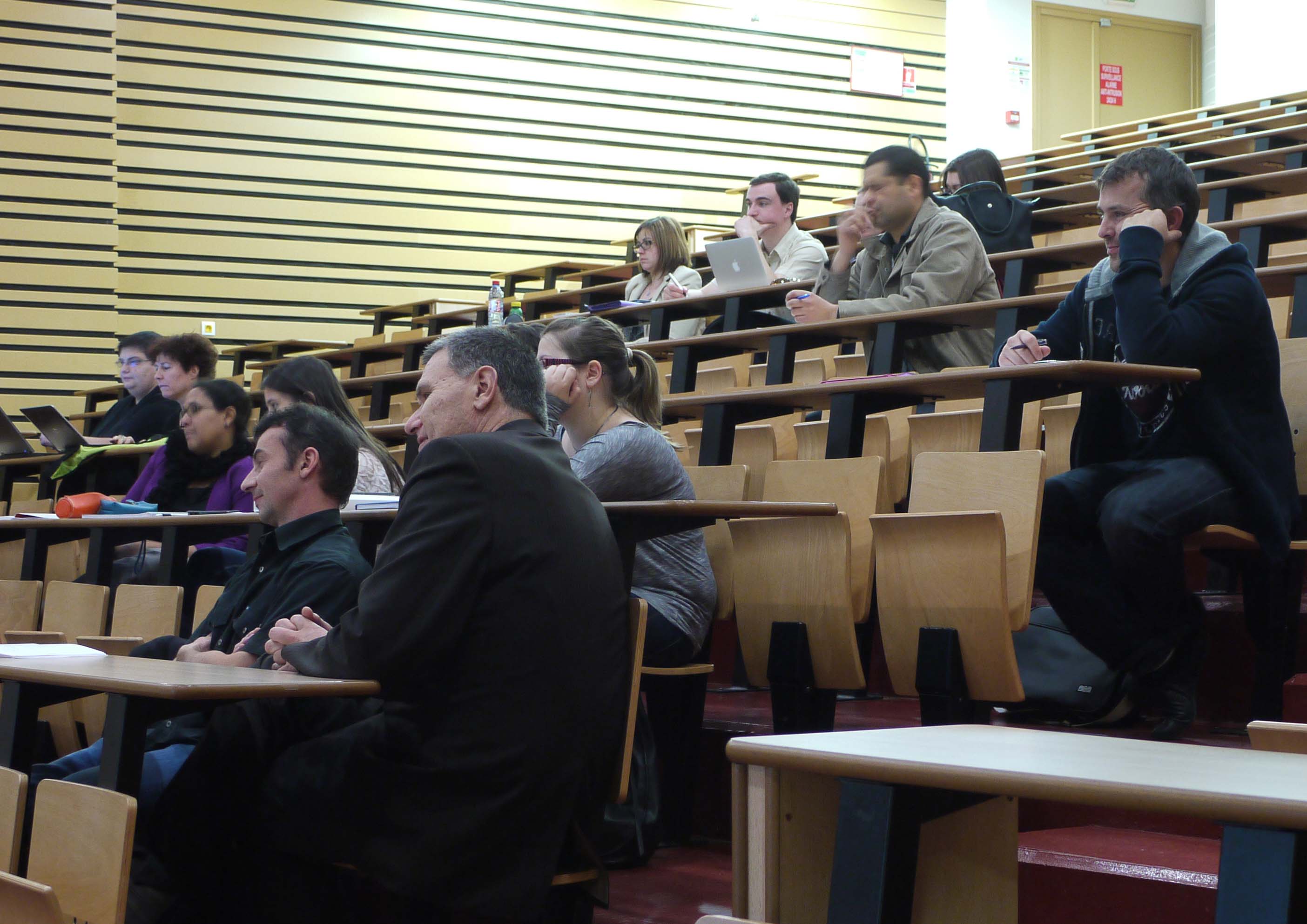
I have just spent a delightful week at the Institut Université Formation des Maîtres (IUFM) d’Auvergne, part of the Université Blaise Pascal de Clermont-Ferrand, in France. While there, I worked with three different groups. On June 4, 2013, I gave a talk and workshop for a general audience of faculty and graduate students entitled “If Learning Matters, How do I Teach Differently?” On June 5, I first worked with the faculty involved with the new diplôme enseigner dans le supérieur  (diploma for higher education pedagogy, the equivalent of a certificate in the US), and then presented a talk entitled “The Transformation of US Higher Education Pedagogy” to the students in that diploma. The talks were related to the book co-authored as a result of a stay at the Ecole Normale Supérieure de Lyon, published last fall, entitled Learning Matters. My focus was on the ways in which the Scholarship of Teaching and Learning (SoTL) has changed teaching and learning in the US, and what implications these changes have for France. Given the new diploma at IUFM, there was interest in learning about the various techniques of student centered learning.

WLH at UBP
My thanks especially to Prof. Didier Jourdan, the Director of IUFM d’Auvergne, for inviting me, and to Dr. Nathalie Younès, Maître de conférences, the responsable (person in charge of) the new diploma, for organizing the events.

WLH at UBP
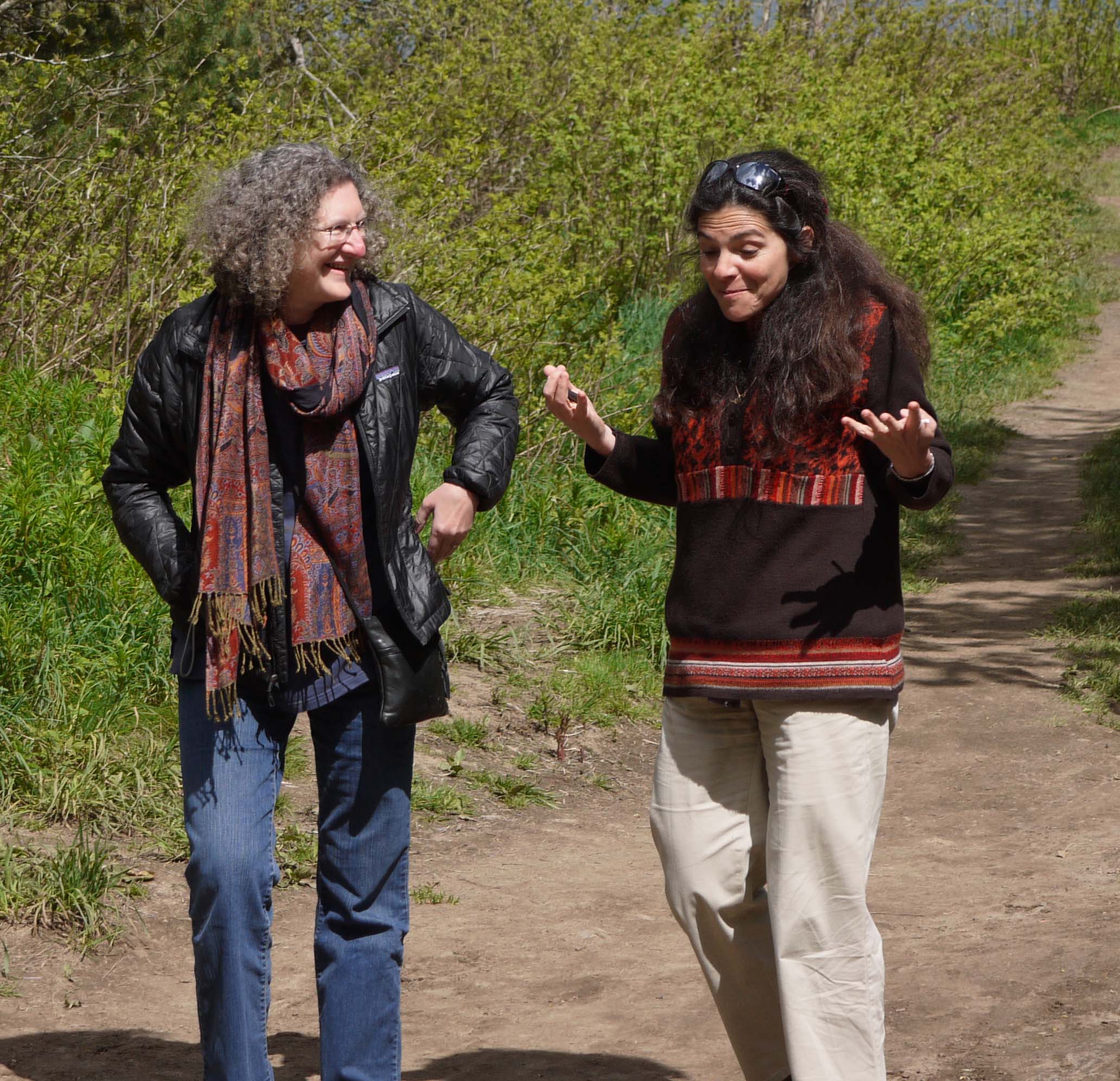
Younès, Leeds-Hurwitz, Raphael Coudert, Jourdan

Since I was in Clermont-Ferrand for a week, there was also time to see some of the attractions in the area, including not only small medieval villages, but also lakes, and a row of mostly dormant volcanoes (especially Puy-de-Dôme, the tallest) and the town of Royat (a spa town with thermal springs, due to the volcanoes, and also an excellent restaurant, Le Paradis, with a great view of the region).

Nathalie_me
Leeds-Hurwitz and Younès

Wendy Leeds-Hurwitz, Director
Center for Intercultural Dialogue

Save

Best Practices in Higher Education

On October 25, 2012, I presented a talk entitled “Best practices: How the Scholarship of Teaching and Learning solves the problems offered by today’s students” as part of Colloque “Le métier d’enseignant aujourd’hui et demain” [Colloquium on the Teaching Profession Today and Tomorrow]. The Colloquium was organized by the Institut Français de l’Éducation, part of the Ecole Normale Supérieure de Lyon, France, in collaboration with CDIUFM.

This was a summary of some of the content in my book that had been published a few days before, Learning Matters: The Transformation of US Higher Education, co-authored with Peter Hoff. The goal was to present information about what the US does so that French teachers might consider doing some of the same things with their own students.

My thanks to Luc Trouche, Sophie Fermigier, and Anne-Claire Husser, for inviting me to to participate in the colloquium for facilitating my talk. This was my third and last talk in France while in residence at the ENS de Lyon this fall. My other activities are summarized here.

Wendy Leeds-Hurwitz, Director
Center for Intercultural Dialogue

Save

Institute Français de l’Education 2

I returned to the Institute Français de l’Education for September and October of 2012. IFE is one part of the Ecole Normale Supérieure de Lyon. My primary project here is to document College for Kids, a program found across the United States, for the French. I have several other projects as a result of prior connections with scholars here, and will add notes about my progress over the next few months to this page…

… I’ve been so busy I haven’t had time to add much in the way of notes about what I’m doing. Most of my time the first month was spent reviewing book proofs for the book I was working on while at IFE last year, Learning Matters: The Transformation of US Higher Education. It’s co-authored with a former UW-Parkside colleague, Peter Hoff, who went on to become President of the University of Maine… It was published at the end of October, with a description, quotes, and further details provided here.

September 24, 2012: I participated in a meeting of the Comité Scientifique, La pédagogie universitaire à l’heure du numérique: Questionnement et éclairages et recherche  [Scientific Committee, University pedagogy in the digital age: Questions and research clarifications], at IFE.

September 27, 2012: I participated in the colloquium launching the new Michel Serres Institute for Resources and Public Goods. I’m one of the Founding members by virtue of sporadically helping them think about how to manage interdisciplinary, international and intercultural conversations.

October 2, 2012: I gave a talk about my project at IFE this year, entitled “Iterations: An Examination of Learning within a College for Kids course,” to the ICAR lab here, which stands for Interactions, Corpus, Apprentissages, Représentations. Very receptive group with lots of good questions after.

October 15, 2012: I gave a talk entitled “College for Kids = Hands-on Activities for Students, Professional Development for Teachers” for the Fondation La main à la pâte, in Paris, France, described in further detail here.

October 17-19, 2012: I participated in Journées ViSA [Vidéos des situations d’enseignement et d’apprentissage, or Videotapes of teaching and learning contexts], as a member of the Conseil Scientifique [Scientific Council], which was held at the Université Bordeaux Segalen, in Bordeaux, France. This is a research team I’ve been connected to for the past 4 years, and this was my 5th (and last) meeting with them. It has been a pleasure working with all of you!

October 25, 2012: I presented “Best practices: How the Scholarship of Teaching and Learning solves the problems offered by today’s students” as part of the Colloque “Le métier d’enseignant aujourd’hui et demain” [Colloquium on the Teaching Profession Today and Tomorrow] at the Ecole Normale Supérieure de Lyon.

IFE logo

Wendy Leeds-Hurwitz
Director, Center for Intercultural Dialogue

Lifelong learning-collaborative opportunity

As Managing Director of CEFRO, LLC based in Nice, France, I am looking for partnership and support for a training project designed to build and expand the reach of Adult Education and Lifelong Learning Programs in an international context. The project could be a basis for an international collaborative research in that field.

Developed as Lifelong Learning Training Courses for adults (provider for the European Program called Grundtvig), the project aims to provide continuing education in social and technology integration, with an emphasis on creating healthy, balanced and enriching workplaces. Since 2008, CEFRO provided courses for that European Lifelong Learning Program, and created four original and unique courses: “Enriching and diversifying the training environment”, “Balanced and healthy workplaces”,”Learning strategies for the elderly”, “Developing Emotional Intelligence in the workplace”. Additionally, it organized ten course sessions with participants from Austria, Bulgaria, Finland, Germany,Italy, Spain, and Romania.

The urgent purpose of my request for support is to maintain CEFRO’s current activity and status, in order to pursue projects on the field of science and society. CEFRO is looking for a potential international collaborator/an international research team, who is the beneficiary of a research grant and may be interested in to sharing their work with a partner/sub-contractor.

For basic information, please, find below the original document of CEFRO LLP Plan and my CV, and feel free to contact me for additional information.

Thank you for your consideration.
Kind regards,
Carmen Serghie Lopez, Ph.D
CEFRO-Conseil, échanges, formation
Nice 06000-FR
Tél./Fax: +33(0)4 93 79 80 20
Mobile +33(0)6 12 19 16 98
http://www.cefro.fr

ENS Cachan postdoc

One two-year postdoctoral position is available with the History of Social Science Group (H2S) at École normale supérieure de Cachan, France, starting October/December 2011.

We are currently looking to hire one postdoctoral fellow for a newly funded grant from the Agence nationale de la recherche (ANR) to study cross-disciplinary research ventures in postwar American social science.

* Requirements
Candidates should have completed their doctoral degree (within the past two years) in a relevant discipline or field, such as history of economics, history of science, history of social science, American Studies, U.S. history, American Civilization, higher education, sociology of science, and should have interest or expertise in cross-disciplinary research ventures in social science after WWII.

* Start date
Flexible

* Stipend (net)
2120 euros (monthly) plus research money for archival work and conference participation.

* Application Instructions
Please send an email describing briefly background, previous training and interests along with a CV and contact information for two references. Journal publications or other samples of scholarly writing may also be included. Please send application materials to Philippe
Fontaine at «philippe.fontaine@ens-cachan.fr».

* Deadline to Apply
Flexible

Institut Français de l’Éducation

On September 26, 2011, I presented a talk entitled “’A Curious Mixture of Passion and Reserve’: Understanding the Etic/Emic Distinction” to Prof. Christine Develotte‘s doctoral seminar at the Institut Français de l’Éducation, which is part of the Ecole Normale Supérieure de Lyon in France. Other faculty who participated in the discussion were Prof.  Jacques Cosnier, and Dr. Nicholas Guichon. The presentation described a manuscript in preparation with Christina Hahn (a recent Master’s student at the University of Duisberg-Essen, Germany) and Prof. Jane Jorgenson (University of South Florida). My thanks to Prof. Develotte for organizing the event and to the students for being a great audience.

On October 13-14, 2011, I was one of the respondents to a panel at Journées d’étude ViSA, presenting a paper entitled “A Metacomunicative perspective on the ViSA group analysis of data.” I am also on the Conseil scientifique of ViSA (Vidéos de situations d’enseignement et d’apprentissage), so in addition to participating in the 2 days of activities, I was part of the group discussing next year’s event and other future plans. My thanks to Andrée Tiberghien for again including me in ViSA. Other researchers who are involved are too numerous to mention as this is a group of several dozen scholars across France, with additional participants from Switzerland and Spain.

On October 17, 2011, I presented “Integrating new technologies into higher education pedagogy in the United States: What problems do they solve? What problems do they create?” as a public lecture at IFE. Prof. Denis Bédard (from the University of Sherbrook, Canada) was the other international speaker. My thanks to Profs. Catherine Loisy and Eric Sanchez for organizing the event, and to the participants for excellent questions.

IFE logo

Wendy Leeds-Hurwitz
Director, Center for Intercultural Dialogue

MA in Cultural Policy and Management

MA programme in Cultural Policy and Management
Interculturalism and Mediation in the Balkans

The University of Arts in Belgrade, Serbia, in cooperation with the University Lyon 2, France is organizing a joint MA programme in Cultural Policy and Management (Interculturalism and Mediation in the Balkans). This MA programme, taught in English and French, has gained an international reputation. Accredited by the University Lyon 2 and supported by other partner universities, professional organizations and guest experts from all over Europe, it attracts not only students from the Balkan region but also those coming from Europe and worldwide, who seek a new, stimulating and different study environment.

This programme enables students to be part of a creative capital and multicultural landscape of the Balkans. For its excellence in the promotion of intercultural cooperation and mediating capacities of culture, the MA in Cultural Policy and Management has been named UNESCO Chair in 2004.

The programme is implemented through lectures, project making, research based learning, problem solving, small group work, individual and group tutorials, internships in France and Balkan countries, seminars and workshops designed to help the student develop wider contextual understanding, research skills and awareness of professional issues.

Interested candidates are invited to apply by 13-15 June 2011 and 19-20 September 2011 respectively. For more information, please visit http://www.arts.bg.ac.rs/rektoraten/stud/?id=infobuduci

Globalization conference 2012

CALL FOR PROPOSALS

Communicating in a World of Norms: Information and Communication in Contemporary Globalization
Lille, France, March 7-9, 2012

Lille is located in Northern France and it takes 50 minutes by train to get to this beautiful city from the Charles de Gaulle airport (CDG), one of the two main Paris airports. For more information about Lille, please visit http://www.mairie-lille.fr/en

We hope that you will be interested in participating in this international event, which is co-sponsored by ICA [International Communication Association], the GERIICO [Group of studies and research on information and communication] and the SFSIC [French Society for Information and Communication Sciences]. It is the first time that ICA is sponsoring such an event in France, which will help us develop stronger scientific relationships between communication scholars all around the world.

The deadline to submit your 1,000 word abstract is September 30, 2011.

The proposals must without fail be submitted in French or in English. The main conference site is in French. Information about the conference is English is available here.

The authors will get an answer at the beginning of December 2011. Please see the attached APPEL A COMMUNICATIONS CMN (US) for more details.

Looking forward to seeing you there!
François Cooren, PhD
Past president (2010-2011)
International Communication Association

Border crossings conference

International Interdisciplinary Conference
Border crossings: bridging disciplines and research agendas

10 June 2011, 9:00 – 18:30
Aix-Marseille Institute for Advanced Studies (IMéRA), Salle de conférence de la Maison des Astronomes, Marseille, France

KEYNOTE ADDRESS (6pm)
Michèle Lamont, Harvard University
“Boundaries, recognition, social resilience, and other keys to successful societies”

“Over the past two decades, a gap has developed in the field of border crossing studies between scholars studying the building of walls and those caring about bonding and bridging, the division of labor sometimes reflecting disciplinary boundaries, with sociologists and anthropologists and social theorists enthused by “transnational practices” and legal scholars, political scientists and political philosophers worried about securitization and control before and at the border. There are signs that scholars interested in border control policies and those interested in flows across borders could not durably ignore one another. In France, there has been some recent work by anthropologists interested in borders and mobility (eg the French National Funding Agency Frontières project). In the US, after ignoring or deprecating policies, there has been an evolution and more emphasis has been put on the implementation of policies and local policy practices that affect migrants’ experience, strategies or quality of life (eg Light 2006).

It is time to study exactly how bordering, rebordering, bridging and bonding interact. What are the national and local policies that affect migrant practices? How have border control policies affected migrants’ social strategies, economic achievements and cultural practices? How do non-state actors and organizations assist migrants in bridging the ‘here’ and ‘there’ despite new forms of border enforcement?  How do efforts of internal rebordering and differentiation between members ‘of’ and persons ‘in’ the polity affect post-migration experiences and the emergence of bonding in the long term? How do the changing strategies of sending states vis-à-vis emigrants and the governments of their host countries influence the dynamics of bridging and bonding?  How do these effects vary depending on the life cycle of the individual and the family, the type of legal status and the forms of ethnicization and racialization migrants endure?

Answering these questions is challenging from a theoretical, analytical and methodological perspective.

Theoretically, a fruitful dialogue could emerge between scholars interested in cultural and social boundaries, those working on legal/state borders and their legitimacy, and those concerned by “transnational citizenship” (Bauböck 1994).

Analytically, we need to identify policies that may affect migrant flows in the home and destination countries and the type of life experiences affected by policy or legal frameworks. This should allow us to devise an analytical framework to understand the variety of policy/practices matrices and the factors that explain variation. In this way, we could empirically study whether and under which circumstances migrants take into account, ignore or circumvent policies.

Research design will also be a challenge. One needs to take into account the interaction of different levels of analysis. Individual decisions to migrate are often helped by meso-level organizations and infrastructures and take place within regional migration systems, yet they also depend partly on macro trends, and the structure of the “globalized” economy cannot be ignored. Once arrived, migrants’ experience may vary from one city or state to another depending on the enforcement of national or federal policies. Data collection is also an issue.  Large-scale surveys are typically produced within national boundaries and issued by national public authorities. This “methodological nationalism” is compounded by the relative lack of data in countries of emigration. While qualitative studies do not face this problem, they face others such as sample selection of interviewed migrants, and access to informants involved in intergovernmental negotiations.

This one day conference will bring together scholars from different disciplines that study border crossings and bridgings to discuss these theoretical, analytical and empirical challenges and open new research agendas.”

For further details, see the original post.

Study abroad-Italy, Turkey, France

Undergraduate and Graduate global communication opportunities this summer in Florence, Cagli and Urbino, Italy; Istanbul, Turkey; and Perpignan, France.

For the 10th year we will be taking students from around the country to Europe to participate in Backpack Journalism and Leadership courses.

Florence, Italy (Grad. students only):
Renaissance Rhetoric – May 27 – June 10
Renaissance Leadership – May 27 – June 10
Project Management Italy – June 10 – June 24

Cagli Project Italy – Grad. and Graduating Seniors only
Intercultural and Global story writing and Multimedia June 23 – July 9

Urbino, Italy:
Multimedia Journalism and Magazine Publishing June 9 – July 7

Perpignan, France:
Multimedia Journalism June 23 – July 23

Istanbul, Turkey:
Multimedia Journalism June 23 – July 21

For details of Graduate Communication and Leadership courses.
For the Gonzaga-in-Cagli Project.
For Graduate internship opportunities in each site.
For full program descriptions and undergraduate applications to Istanbul, Turkey; Urbino, Italy; or Perpignan, France.

Student participants come from many universities. The Department of Communication and Leadership Studies at Gonzaga is the host University for all graduate credits.

Email caputo@gonzaga.edu for more information.
John S. Caputo, Ph. D.
Professor of Communication and Leadership Studies
Distinguished Walter Ong, S.J. Scholar
Department of Communication and Leadership Studies
Gonzaga University
Spokane, WA. 99258-0001
Tel: 509-313-6656